
Small Apartment Storage Ideas
How to Choose a Compact Dryer for a Small Apartment With No Dryer Vent
Start by identifying the dryer class, then prove where moisture goes, what power the appliance needs, and how much body, door, exhaust or condensate, and maintenance space it consumes. A dryer is only a small-space win when its full operating system fits the apartment better than the existing rack or shared-dryer routine.
In This Guide
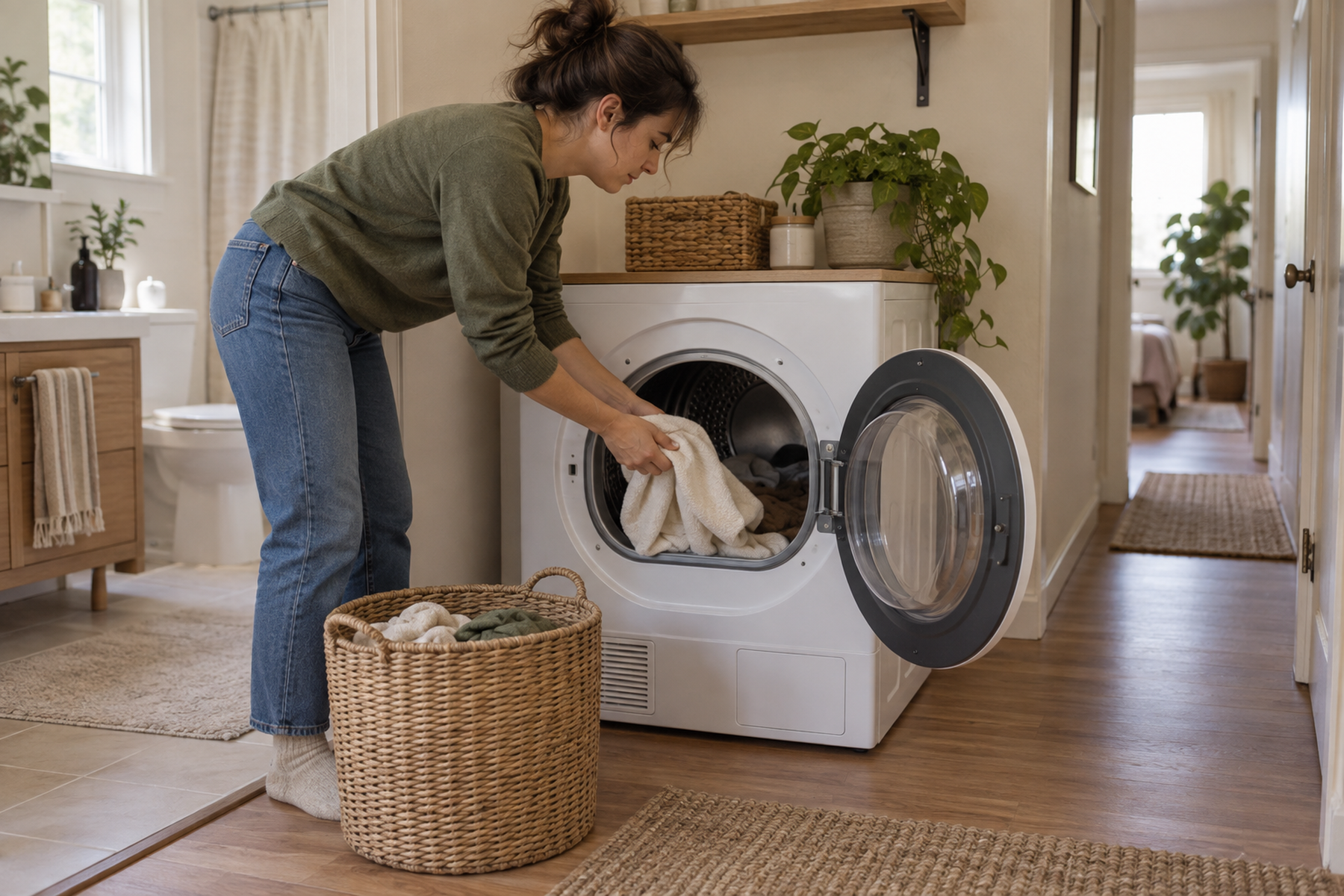
“Portable dryer” is not one technical category. A small 120V tumble dryer may still require a real exhaust route, while a ventless heat-pump dryer removes the exterior-duct problem by becoming a heavier, more installation-like appliance with condensate and service requirements.
That makes the first small-space question where does the moisture go? Classify the dryer first, then evaluate permission, power, operating footprint, capacity, maintenance, and whether the apartment actually benefits more than it would from a drying rack or shared dryer.
Quick Answer
Classify the Dryer Before You Spend the Floor Space
The correct apartment dryer is not simply the smallest machine. It is the dryer architecture whose moisture path, electrical needs, operating envelope, and maintenance routine the apartment can support without unsafe workarounds.
01
Ask where the moisture goes
A vented dryer needs a manufacturer-compliant exhaust route. A ventless heat-pump or condenser dryer still needs condensate handling. A spin dryer removes water mechanically but does not deliver the same endpoint as heated tumble drying.
02
Treat 120V, ventless, and portable as separate decisions
Current 120V BLACK+DECKER compact dryers are explicitly vented, while current ventless heat-pump dryers can weigh well over 100 pounds. One solved constraint does not automatically solve the others.
03
Match the dryer to the washer and the apartment
Measure the machine body, open door, exhaust or condensate service zone, lint-filter access, and user stance, then compare dryer capacity with the washer load and the existing shared-dryer or rack-drying fallback.
01
Identify the Dryer Class Before You Measure the Space
Start by classifying the technology, not by sorting product listings from smallest to largest. Vented tumble dryers, heat-pump dryers, condenser dryers, spin dryers, and heated drying cabinets solve different moisture problems.
A small 120V tumble dryer can look like the obvious apartment answer because the electrical requirement appears familiar. But current BLACK+DECKER BCED26 and BCED37 examples are still vented appliances, so the apartment must support the exhaust system in the exact manual.
A ventless heat-pump dryer removes the external exhaust-duct requirement, but it is usually a compact installed appliance rather than something the household casually stores after every load. Current LG and Miele examples sit in the roughly 24-inch appliance class and carry much more weight than mini portable dryers.
A centrifugal spin dryer belongs in another branch again. It can shorten later rack-drying time by mechanically extracting water, but clothes still need a final drying stage. Do not compare it with a heated tumble dryer as though both deliver the same result.
02
Check Permission, Moisture Route, and Power Before You Shop
Review the lease and building rules before solving the floor plan. A compact dryer may still introduce exhaust routing, electrical load, condensate drainage, stacking hardware, wall mounting, or another installation condition that the property controls.
Then trace the moisture path. For a vented dryer, the question is where the hot moist air and lint-bearing exhaust go according to the manufacturer and building requirements. For a ventless dryer, determine whether condensate drains through a hose, collects in a reservoir, or uses another model-specific system.
Do not substitute a generic indoor lint bucket or water-trap vent for a required exhaust route. Current user reports describe heat and humidity problems from indoor venting, while CPSC and U.S. Fire Administration guidance treats lint buildup and restricted exhaust as real dryer-fire risks.
Finally, verify power. A 120V dryer is not automatically compatible with every outlet or circuit, and ventless heat-pump models can use different electrical configurations. Use the exact model documentation rather than turning one manufacturer’s requirement into a category-wide rule.
Measure / Check First
Before comparing drum size or fold-away storage ideas, test the apartment against the dryer’s complete infrastructure and operating envelope.
Check Moisture Route, Electrical Fit, and Service Access First
01
The exhaust or condensate path
For a vented dryer, map the manufacturer-approved duct from the appliance to its permitted exhaust destination without crushing or sharply kinking it. For a ventless dryer, verify the reservoir or drain-hose routine and how the user reaches it.
02
The electrical connection and installation state
Confirm voltage, amperage, grounding, circuit guidance, outlet location, stacking or mounting requirements, and any extension-cord restrictions in the exact manual. Decide whether the dryer is genuinely movable or effectively installed.
03
The complete operating and maintenance envelope
Measure body width, depth, and height, then add open-door depth, laundry-basket stance, rear exhaust or service space, lint-filter access, condensate or filter access, and enough room to clean around the appliance.
If the dryer only fits by venting indoors against the manual, crushing a duct, blocking the door, hiding the lint filter, or using an unsupported electrical workaround, stop before purchase.
03
Measure the Body, Door, and Service Envelope
Compact body dimensions are only the first layer. A front-load dryer needs enough depth for the open door, the user, and the laundry basket, plus whatever rear or side service access the manual requires.
LG’s current compact heat-pump example illustrates the difference: the cabinet is about 26 3/8 inches deep, but the published depth with the door open is about 45 1/4 inches. A 24-inch-wide niche can therefore be wide enough and still fail the hallway when the door opens.
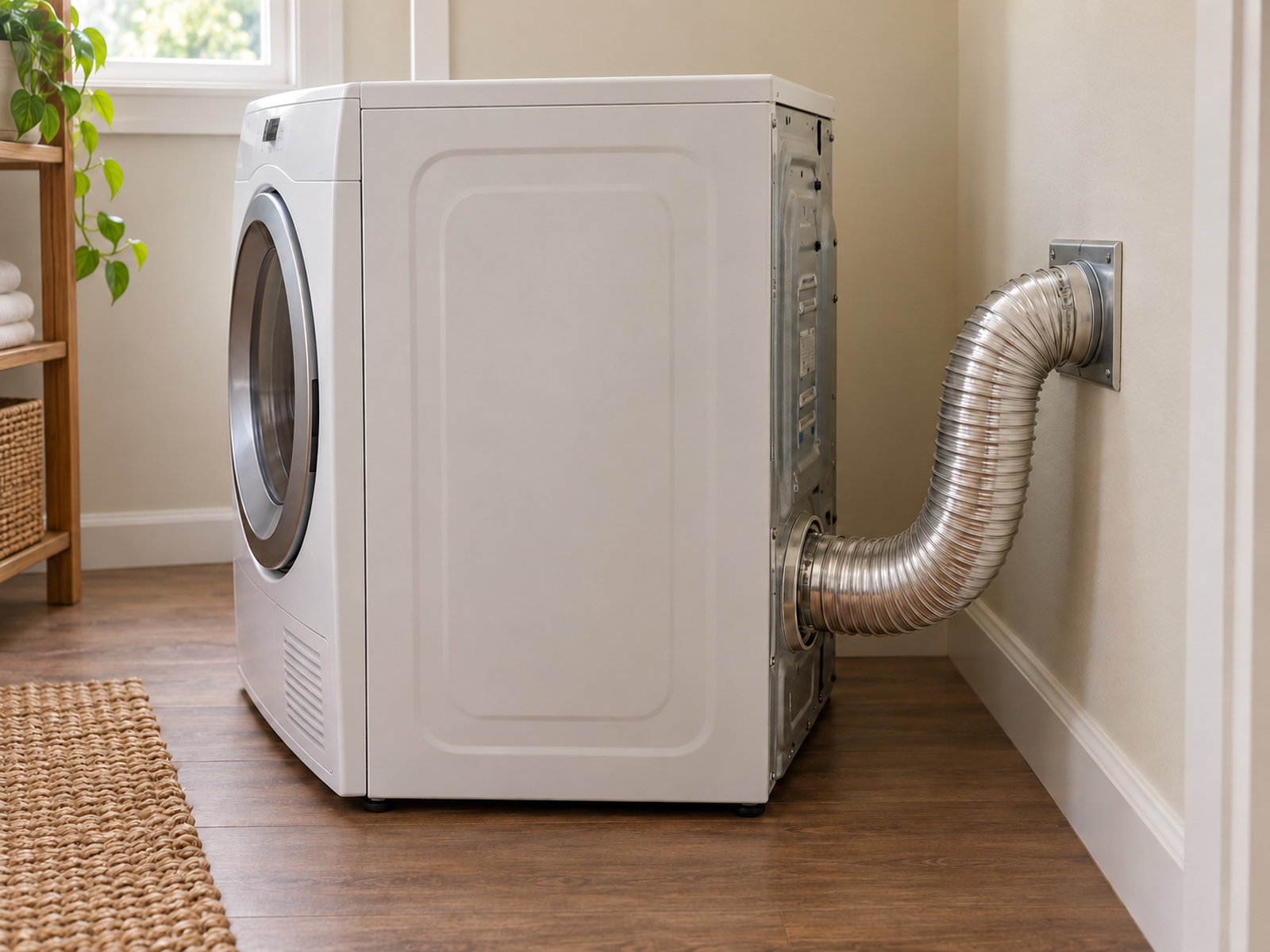
Vented models add another hidden zone behind the machine. The duct needs room to leave the dryer without being crushed or sharply restricted, and the route has to remain reachable for inspection and cleaning.
Maintenance belongs in the same measurement. A dryer that visually disappears into a nook but makes the lint filter, rear exhaust, condensate tank, or heat-pump filter difficult to reach is poorly placed even when the cabinet fits perfectly.
04
Use a Small 120V Vented Dryer Only With a Real Exhaust Route
A 120V vented dryer can be a useful architecture when the apartment has compatible power and a compliant place for the exhaust to go.
Current BLACK+DECKER examples show the scale of this category. The BCED26 is roughly 23.6 inches wide by 17.1 inches deep, weighs about 48 pounds, and is rated for up to 8.8 pounds of laundry. The larger BCED37 keeps the same width but increases depth and load capacity.
The electrical requirement does not erase the vent requirement. BLACK+DECKER’s current instruction manual says these dryers must be vented and describes a four-inch ventilation-duct architecture, along with lint-filter and exhaust-area maintenance.
That means an apartment with a normal 120V outlet but no manufacturer-compliant exhaust path has not passed the feasibility test. Do not let the familiar plug become a shortcut around the moisture and lint route.
Use / Skip
A Small 120V Vented Tumble Dryer
Use
Use it when the apartment has both compatible power and a compliant exhaust route
This dryer class can work when the lease/building permits it, the exact model’s electrical requirements are met, the exhaust can be installed as instructed, lint and duct maintenance remain accessible, and the small drum capacity matches the household’s normal loads.
Skip
Skip it when the plan depends on dumping dryer exhaust into the room
Choose a ventless heat-pump option, shared dryer, rack-drying system, or another architecture when there is no compliant exhaust route, the duct would be crushed or inaccessible, the building prohibits the installation, or the small capacity would require excessive cycles.
05
Treat a Ventless Heat-Pump Dryer as an Installed Compact Appliance
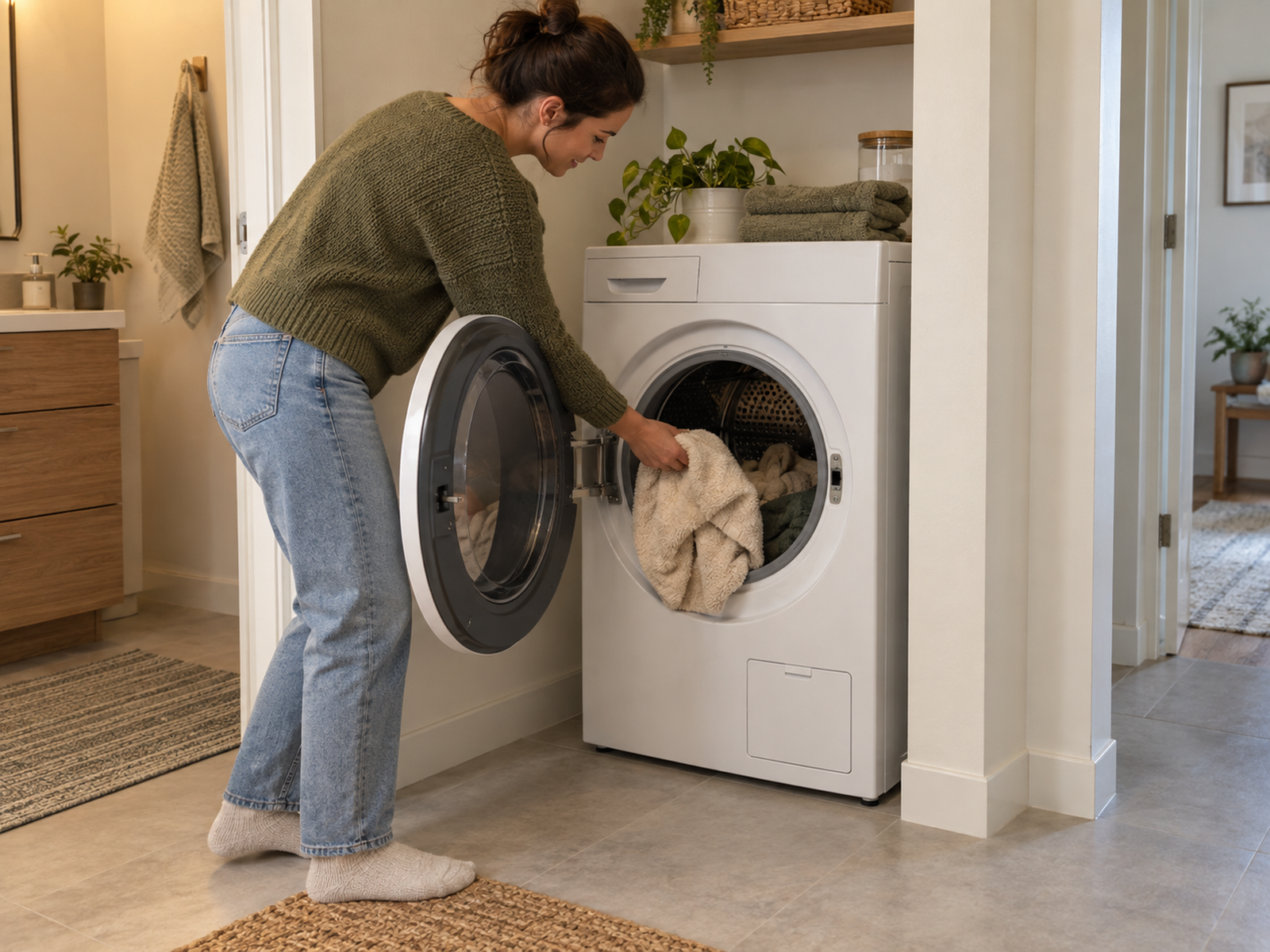
Ventless heat-pump technology solves the exterior-exhaust problem, but it does not make the dryer small in every other sense.
Current compact examples are closer to permanent laundry appliances. LG’s DLHC1455 is about 24 inches wide and roughly 128 pounds, and current Miele T1 dryers likewise occupy the compact-appliance class rather than the lightweight mini-dryer class.
Plan condensate as deliberately as exhaust. Depending on the model, water may collect in a reservoir or leave through a drain hose. That system needs routine access and cannot be treated as invisible because the dryer lacks an exterior vent.
Also expect the drying behavior to differ. Whirlpool’s current heat-pump support notes that lower-temperature heat-pump drying can take longer than conventional vented drying. The trade is infrastructure and energy architecture, not simply “same dryer, no vent.”
06
Match Dryer Capacity to the Washer and the Real Laundry Load
The dryer should be sized against the loads that actually come out of the washer, not against a marketing label such as “portable.”
A small vented dryer rated for roughly 8.8 pounds can be a reasonable partner for a very small portable washer, but it may require split drying loads behind a larger washer. The smaller appliance sets throughput.
Split loads create a staging problem. Wet clothing needs somewhere to wait while the first dryer cycle runs, and repeated low-capacity cycles can keep the dryer zone active for much longer than the washer itself.
Define which loads need tumble drying. Everyday clothes, pet-hair-heavy items, towels, and wrinkle-sensitive garments may justify the appliance, while bedding or large bulky loads may still belong in a shared or commercial dryer.
The best small-apartment dryer is therefore the smallest system that handles the household’s priority loads at an acceptable cycle count—not necessarily the machine with the smallest cabinet.
07
Compare the Dryer Against the Hybrid Alternatives Before You Commit
A portable washer plus shared dryer can be a strong system when the household mainly wants to avoid shared washing but still has access to a high-capacity dryer.
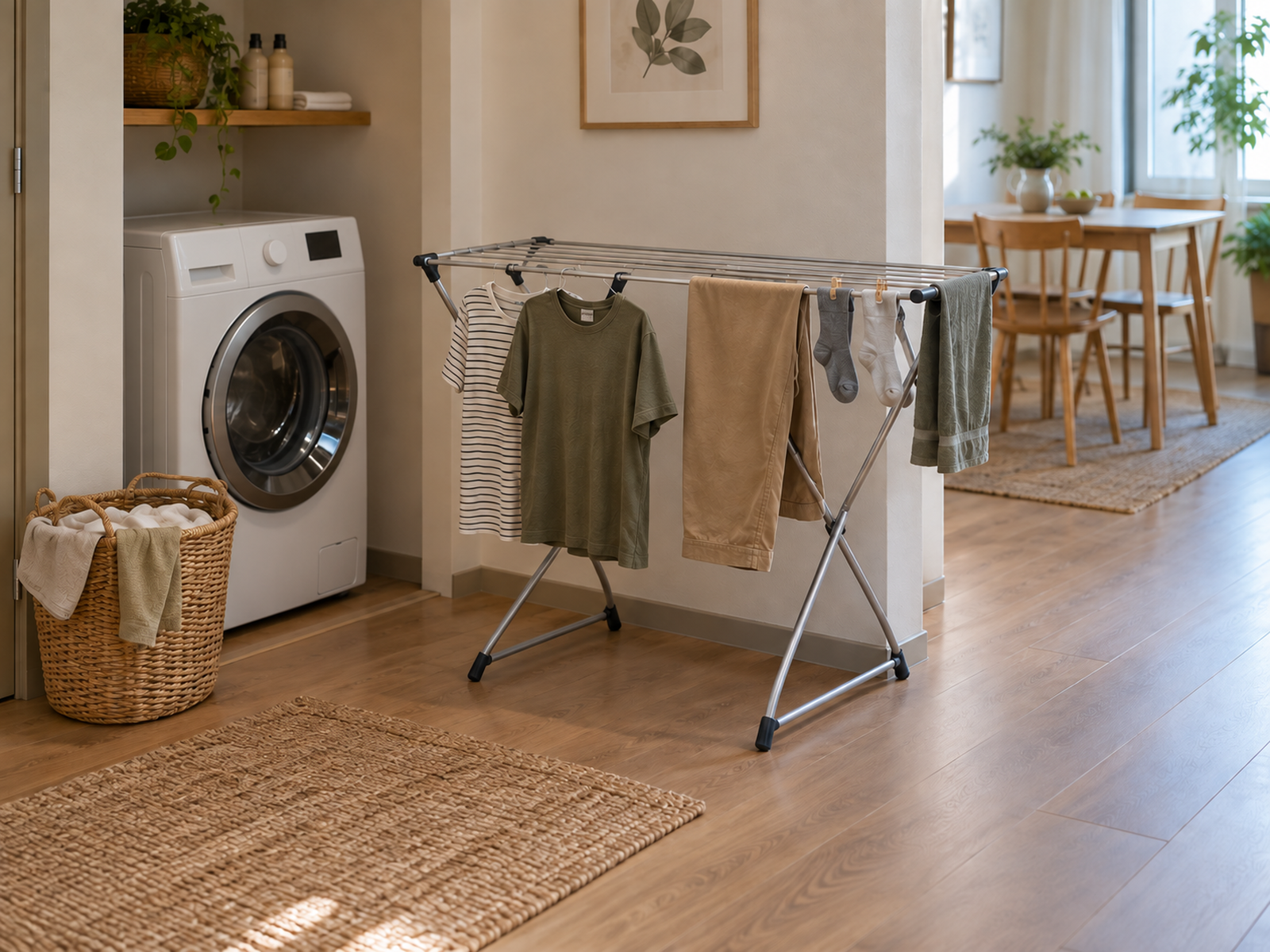
A portable washer plus indoor drying rack can be stronger when venting, power, floor space, or lease rules eliminate an in-unit dryer. The rack uses temporary room area but disappears between loads and carries no exhaust duct or lint-fire system.
A spin dryer can sit between those two approaches by extracting more water before rack drying, but it adds another appliance and transfer step without replacing final drying.
Hybrid systems are not failed laundry rooms. They are often the rational answer when each task is assigned to the infrastructure best suited to it.
08
Keep Lint, Filters, Condensate, and Seasonal Access in the Plan
Dryer maintenance is part of placement because inaccessible maintenance becomes deferred maintenance.
CPSC warns that lint buildup in dryers or exhaust ducts can reduce airflow and contribute to excessive heat and fire. U.S. Fire Administration guidance likewise emphasizes lint-filter and vent maintenance.
For vented dryers, make sure the filter and exhaust route can actually be cleaned. For heat-pump and condenser dryers, keep the model’s filters, condenser-care points, reservoir, or drain system reachable.
Do not surround the dryer with combustible storage simply because the nook has unused volume. The area around the appliance needs to remain serviceable and consistent with the manufacturer’s clearance and fire-safety instructions.
Closing Decision
Choose the Moisture Route Before the Machine
A compact dryer belongs in a small apartment only when its complete system works: permission, dryer class, exhaust or condensate handling, electrical fit, body and door envelope, maintenance access, and capacity that matches the washer and the household’s real loads.
Start with where the moisture goes, not with the smallest product listing. If the apartment cannot support that route cleanly, the more space-efficient answer may be a ventless installed dryer, a shared dryer, a rack, or a hybrid system rather than a “portable” dryer forced into the wrong infrastructure.
RELATED GUIDES
What to Read Next
NEXT GUIDE
How to Use a Portable Washing Machine in a Small Apartment With No Washer Hookup
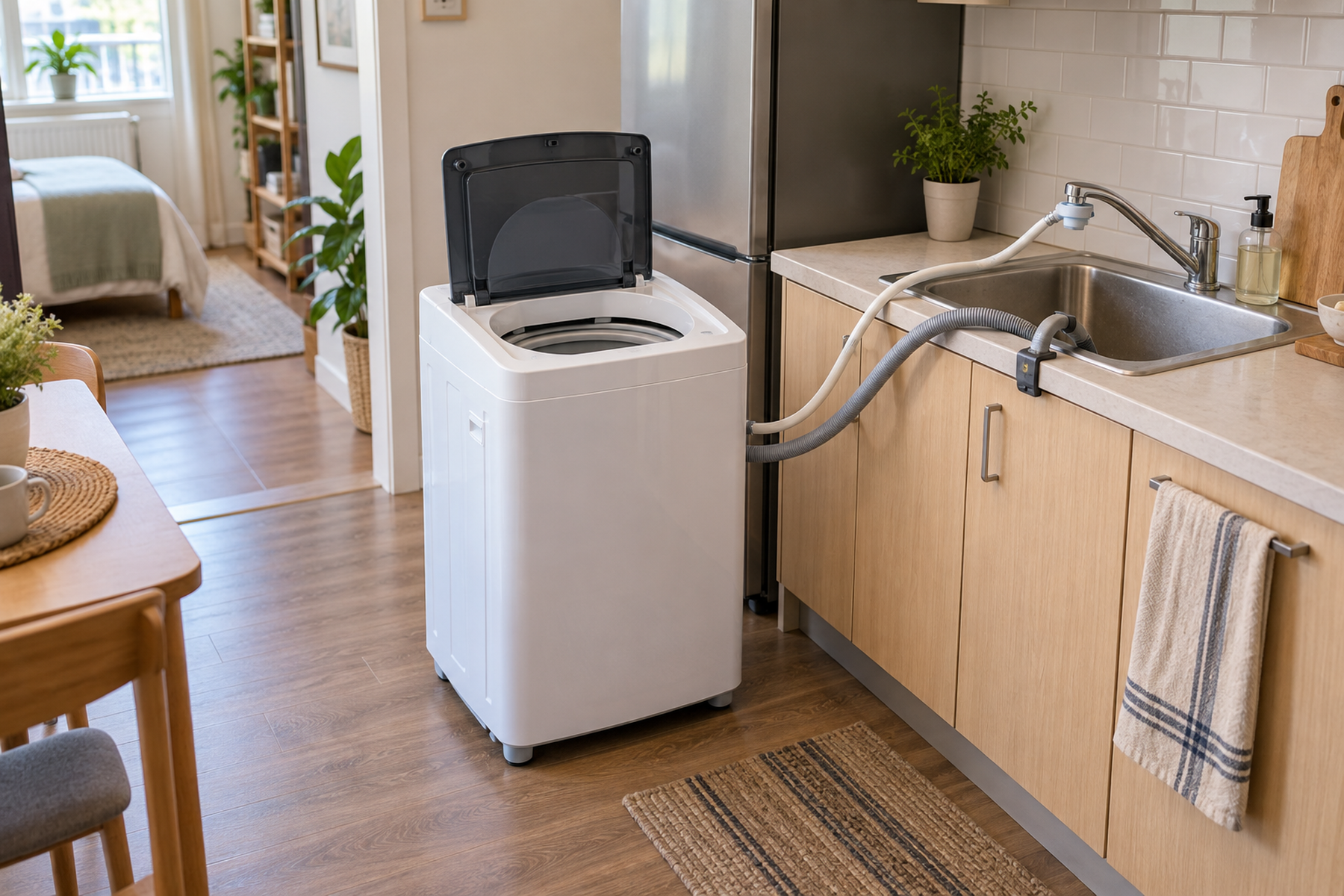
Use this next if the dryer is being planned as part of an in-apartment laundry system; that guide verifies the wash-side permission, faucet, drain, power, leveling, capacity, and parked-versus-operating workflow.
GUIDE
How to Dry Clothes Indoors in a Small Apartment With No Dryer
Use this if the apartment fails the dryer feasibility test or if rack drying remains part of a hybrid laundry routine; that guide handles the temporary drying zone, airflow, moisture, and reset.
GUIDE
How to Store Laundry Supplies in a Small Closet With a Stacked Washer and Dryer
Use this if a compact ventless dryer becomes part of a permanent or stacked laundry zone and the remaining problem is where detergents, stain treatment, and other laundry supplies can live without blocking appliance access.