
Small Apartment Storage Ideas
How to Store Craft Supplies in a Small Apartment Without Taking Over the Dining Table
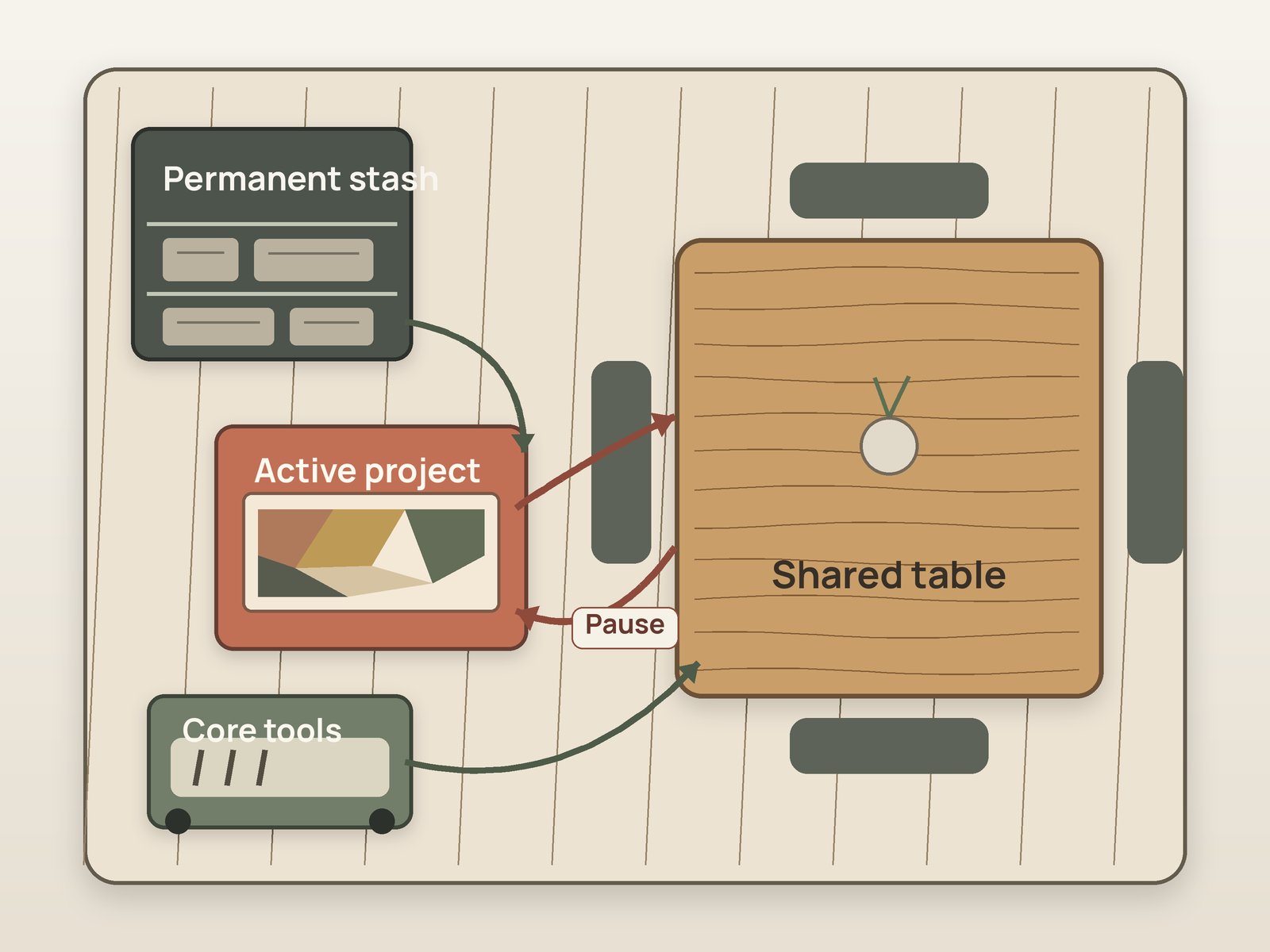
Separate permanent stash from core tools and the project you are actually working on, then give that active project a pause container and a nearby mobile home so the shared table can clear completely without rebuilding the craft setup from scratch.
In This Guide
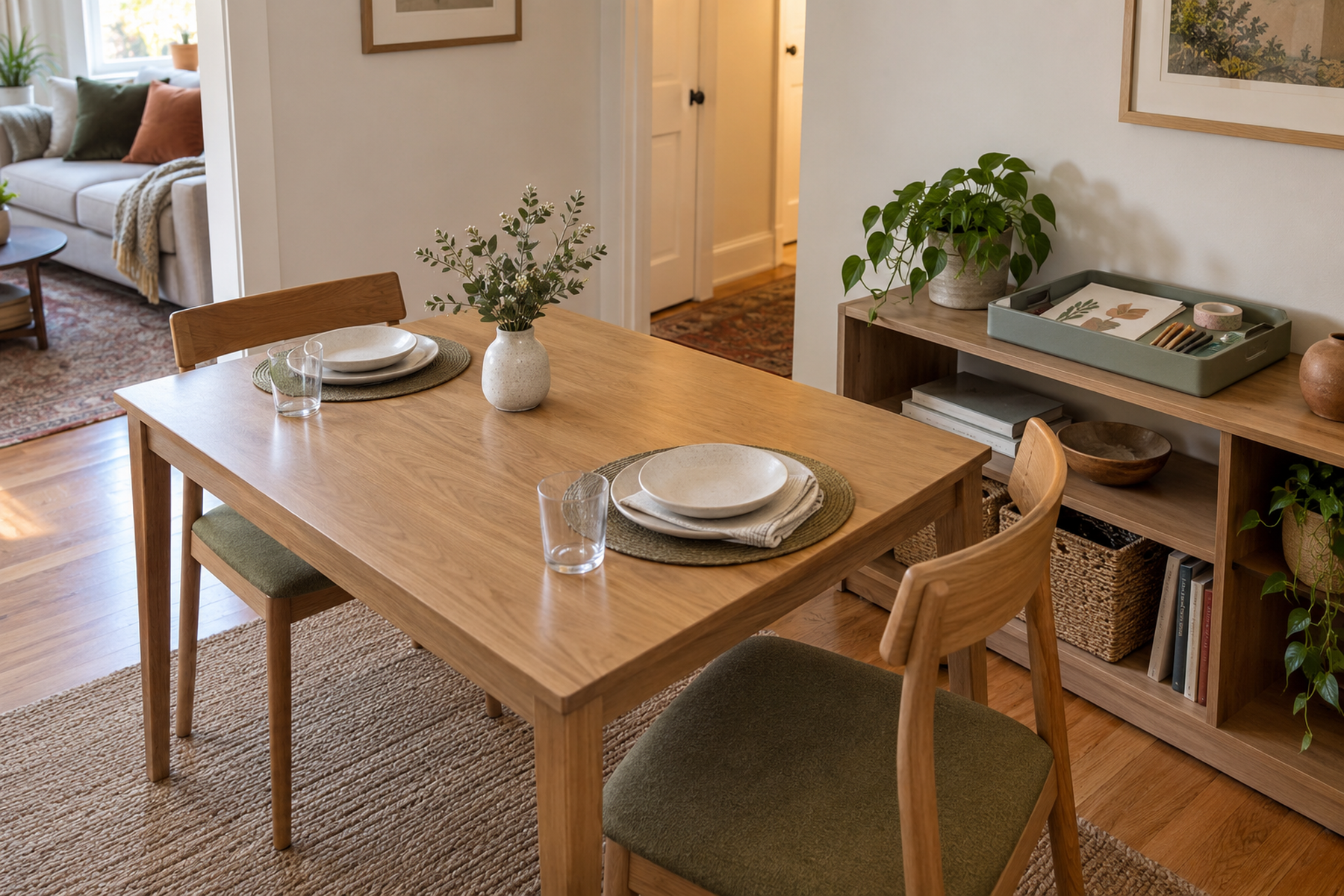
Craft storage in a small apartment has to manage more than supplies. Permanent stash, shared tools, unfinished work, and the dining table itself all move through different states, and the system breaks down when those states collapse into one permanent pile.
Design the storage around the transition between making and normal apartment life. The active project should pause intact, core tools should return in a few motions, low-frequency stash should stay out of the reset path, and the shared table should end each session with no permanent craft inventory left on it.
Quick Answer
Build the Craft System Around a Fast Table Reset
Separate permanent stash from the current work-in-progress, give each active project one defined pause container so the dining table can reset quickly, and keep the number of active projects inside a hard physical limit. Frequently used shared tools can stay in one compact portable zone, but they should support setup and teardown rather than become another permanent stash.
01
Separate the stash from the active project
Keep permanent materials in their long-term zone. Only the supplies, work-in-progress, and project-specific tools needed to restart the current project should move with the active project.
02
Give the active project one pause container
Use one box, bag, portfolio, or measured flat zone that can preserve the unfinished work between sessions without leaving the project spread across the table.
03
Limit how many projects can stay active at once
When the active-project storage is full, finish, pause and archive, or consolidate a project before creating another permanent tote, cart tier, or table pile.
01
Separate Stash, Core Tools, and Active Projects
Start by separating craft inventory by state rather than by container. Permanent stash is material you own independent of the current project. Core tools are the small set used across many projects. The active project is the work-in-progress plus only the materials and project-specific tools needed to restart it.
Those three jobs should not travel to the shared table as one unit. Pulling the full yarn collection, every paint color, or every sewing notion into the work zone creates a larger setup than the project requires and makes the reset harder than the craft session itself.
Multi-hobby households also benefit from broad boundaries. Sewing, paper craft, painting, or yarn work can each have a bounded stash zone, while genuinely shared tools remain in one core-tool kit. Avoid a single giant “craft” bin that forces every hobby to be searched at once.
This state-based split creates the foundation for everything that follows: stash can live farther away, core tools can stay portable, and the current project can pause without being dismantled.
02
Define the Shared-Table Reset
Decide what “reset” means before choosing storage. For a dining table that also serves eating, work, or study, the strongest rule is simple: no permanent craft inventory stays on the table when the session ends.
That does not mean every session should require a full closet reorganization. The reset should be a short sequence: current work goes into its pause container, shared tools return to their portable zone, scraps and obvious waste are resolved, and the table returns to its other function.
If putting the project away means re-sorting the entire stash, rebuilding a sewing kit, or carrying several unrelated bins through the apartment, teardown friction is too high. Storage capacity may be adequate while the transition system is still poor.
The table is therefore a temporary work surface, not a storage surface. Any storage form that depends on leaving materials there between sessions has failed the shared-surface requirement.
03
Give Each Active Project a Pause Container
An unfinished project needs a pause state that preserves enough context to restart without turning the table into permanent project storage.
Choose one parent container that holds the current materials, project-specific tools, notes, patterns, and work-in-progress when the project dimensions allow it. Keep the full hobby stash outside that container so the active project remains understandable at a glance.
A shallow clear box is one verified form. IKEA’s current SAMLA 3-gallon box with lid is 15 1/4 inches wide, 11 inches deep, and 5 1/2 inches high. Those dimensions are product-specific; the useful principle is a container shallow enough to scan and large enough for the project to pause without being rebuilt each time.
Soft project bags can work better for lightweight yarn or hand-sewing projects, while rigid boxes better protect paper, paint supplies, or mixed small parts. The form should follow the project rather than a desire for matching storage.
Measure / Check First
Before committing to a project box, cart, shelf, clamp, or equipment parking spot, check whether the full project can pause and move through the apartment without creating a new obstruction.
Check the Project, Parking Space, and Equipment Together
01
Active-project envelope
Measure the work-in-progress plus the materials and project-specific tools that must stay together. The pause container should close, lift, or park without forcing the project to be rebuilt or compressed in a way the project cannot tolerate.
02
Parking and transition path
Measure where the box, bag, or cart waits when the table is clear, plus the route between storage and the work surface. Keep chairs, table legs, doors, and normal circulation usable in both the parked and moving states.
03
Equipment and attachment requirements
Verify exact equipment weight against the exact cart or shelf rating, and verify clamp thickness, wall attachment, surface, and lease requirements before using furniture-mounted or wall-mounted storage. Freestanding does not make an overloaded or unstable setup acceptable.
If the project cannot pause intact, the cart has no legitimate parking place, or the equipment / mounting requirements do not match the apartment, change the storage form before adding more craft inventory to the shared surface.
04
Keep Core Tools in One Portable Zone
Core tools are the items that repeatedly cross project boundaries, so they need a different home from both stash and active work.
Start with containers you already own: a small caddy, pouch, shallow bin, or tray. The core-tool zone should hold only the tools that genuinely travel between projects, not every accessory in the hobby collection.
During setup, the core-tool zone comes to the table with the active project. During reset, both leave independently. That prevents the project box from becoming a duplicate tool drawer and prevents the stash from being opened simply to find scissors, clips, measuring tools, or other recurring basics.
If a core tool carries its own safety or storage requirements, follow the exact product guidance rather than placing it in generic open-access storage for convenience. This article does not override instructions for sharp tools, hazardous craft materials, or other safety-sensitive supplies.
05
Use a Rolling Cart Only When It Actually Speeds the Transition
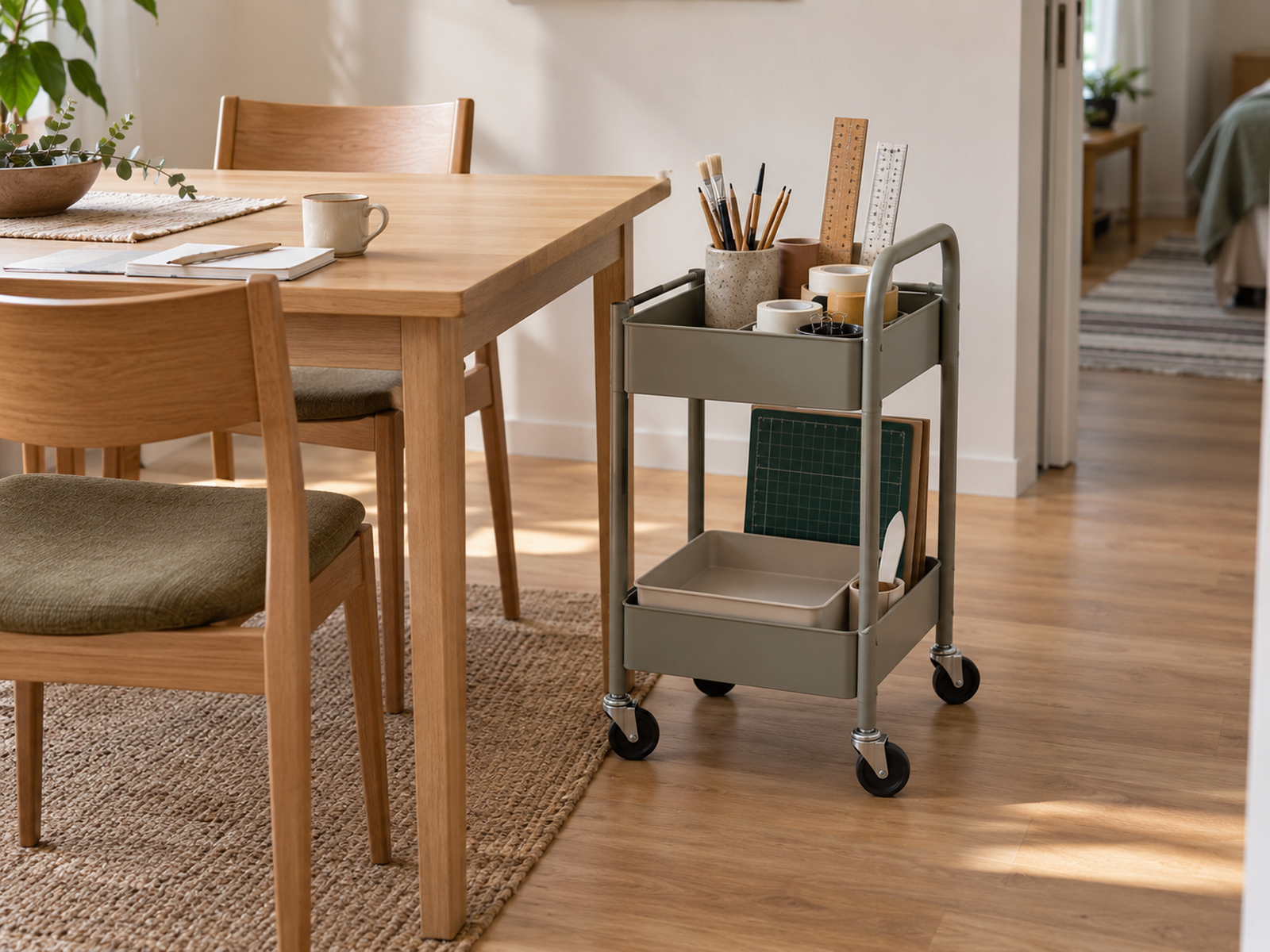
A rolling cart earns permanent floor area only when it regularly moves between a parking position and the shared work surface.
For scale, IKEA’s current small RÅSKOG utility cart measures 11 inches long, 15 inches wide, and 24 inches high. IKEA lists a 9-pound maximum per tier and 26 pounds total and notes that the smaller cart fits under most tables and desks. The useful lesson is the form: a compact mobile station can stay near the table without becoming table clutter.
Do not treat those load ratings as permission to place a sewing machine or other heavy equipment on any generic cart. Verify the exact machine weight, the exact cart or shelf rating, stability, and manufacturer instructions before assigning equipment to mobile storage.
A cart that never moves is simply a small shelving unit with wheels. If it permanently blocks a chair, narrows circulation, or becomes the place where every hobby dumps excess material, it is not earning the footprint through faster transition.
06
Store Low-Frequency Stash Away From the Table
Permanent stash does not need the same access priority as an unfinished project or shared tools.
Keep low-frequency fabric, yarn, paper, paint, secondary tools, and unopened or excess materials in a defined closet shelf, cabinet, under-bed zone, or other storage location that does not participate in every craft session. Deep storage is more acceptable here because retrieval is less frequent.
Within the stash, keep hobby boundaries broad enough to retrieve what you own without multiplying containers. A sewing zone can hold fabric and notions in a small number of sensible subgroups; it does not need a dedicated box for every trim, fastener, or color family unless the real inventory justifies it.
Under-bed and remote closet storage work best for stash, not active work. If the current project has to be excavated from low-frequency storage before every session, the system has mixed the pause state with the archive state.
07
Give Oversized Work a Separate Flat or Vertical Pause Zone
Some active projects cannot fit a standard box without bending, crushing, or dismantling the work-in-progress.
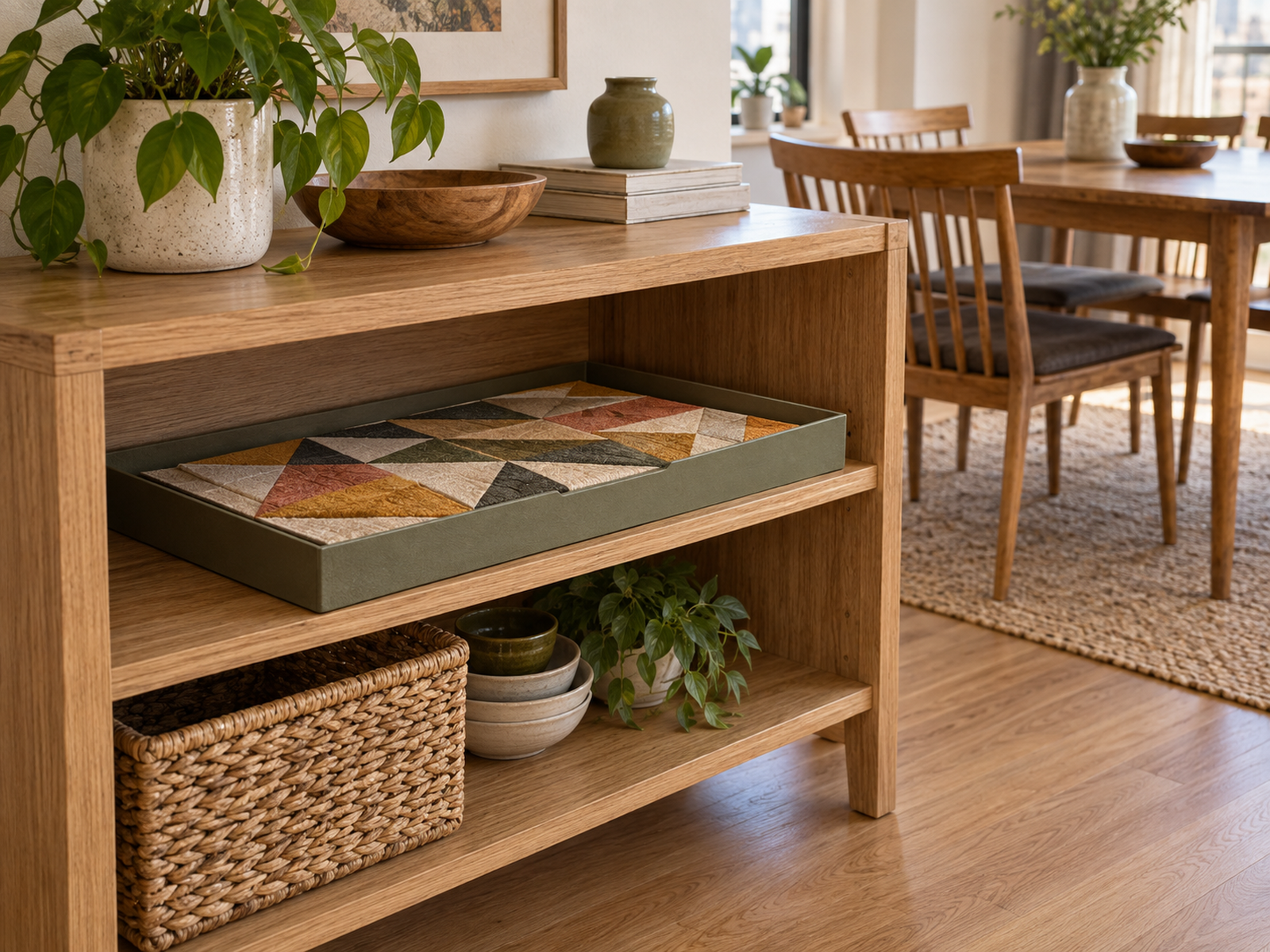
Measure the actual project envelope and assign one deliberate pause location: a low flat box, a measured shelf, a rigid portfolio, or another stable zone that can hold the work without occupying the dining table. The correct orientation depends on the project and material; do not force a universal flat-versus-vertical rule.
Keep this oversized zone narrow in purpose. One large canvas, paper project, or textile work-in-progress can justify a special footprint; using the same area for unrelated stash quickly turns a project parking spot into another catch-all.
If the project is too large to pause anywhere in the apartment without blocking circulation, seating, doors, or everyday furniture use, the project scale itself has exceeded the available active-project capacity.
08
Add Vertical Storage Only When It Earns the Footprint
Vertical storage can move lightweight tools off a horizontal surface, but it still spends wall, shelf, or furniture-edge capacity and belongs to different renter classes depending on how it attaches.
IKEA’s current SKÅDIS connector verifies a desk- or shelf-clamped path that does not require wall drilling and supports furniture thickness up to 1 15/16 inches. The exact desk edge, thickness, clearance, and product instructions still have to match.
A free-standing SKÅDIS pegboard is another no-wall-drill form, but it still occupies shelf or tabletop area. By contrast, the current wall-mounted SKÅDIS pegboard requires secure anchoring with suitable hardware, so it belongs to the installation- and lease-sensitive path.
Use vertical storage only for lightweight, frequently used items when it makes setup or reset materially easier. Do not add a pegboard simply because it creates more visible storage; if it permanently occupies the shared dining table, it conflicts with the article’s main reset requirement.
09
Choose Open Storage for Active Work and Closed Storage for Stash
Visibility and visual calm can coexist because different craft states need different levels of access.
Active projects and core tools benefit from quick visual confirmation: you should be able to see enough of the contents to restart without rummaging. Closed boxes, cabinet doors, or opaque shelf bins can be stronger for low-frequency stash when the household benefits from a calmer shared room.
A mixed system often works better than choosing one rule for everything. Visible active storage supports transition speed; closed stash prevents the dining area from reading as a permanent craft room.
If closed storage causes forgotten duplicate purchases, use broad labels or a shallow visible inventory inside the stash zone. If open storage creates distraction, reduce what remains visible rather than hiding the active project so completely that setup becomes a rebuild.
10
Set a Hard Active-Project Limit
The active-project system needs a physical capacity boundary just as much as the permanent stash does.
Choose how many pause containers or active-project slots the apartment can support without taking over the dining table, aisle, floor, or another room function. When those slots are full, do not create a new permanent tote or leave the next project open on the table.
A project can move through three outcomes: finish it, keep it active in an existing slot, or pause and archive it with the low-frequency stash. This prevents every unfinished idea from receiving prime access indefinitely.
If craft storage keeps expanding despite clear project states, reduce the permanent stash, reduce the number of simultaneous projects, or reconsider the size of the active work. More organizers cannot solve a hobby footprint that has exceeded the apartment’s available capacity.
Closing Decision
Protect the Craft Habit by Protecting the Shared Surface
A strong small-apartment craft system keeps the current project easy to restart without asking the dining table to become permanent storage. Permanent stash stays in its long-term zone, core tools move as one small kit, and the active project pauses intact in a container or measured project slot.
Use carts and vertical storage only when they genuinely shorten the transition, follow exact load and attachment requirements, and keep the number of active projects inside a hard physical boundary. When the table can return to dining, work, or study without a full-room cleanup, the storage system is supporting the hobby instead of competing with the apartment.
RELATED GUIDES
What to Read Next
NEXT GUIDE
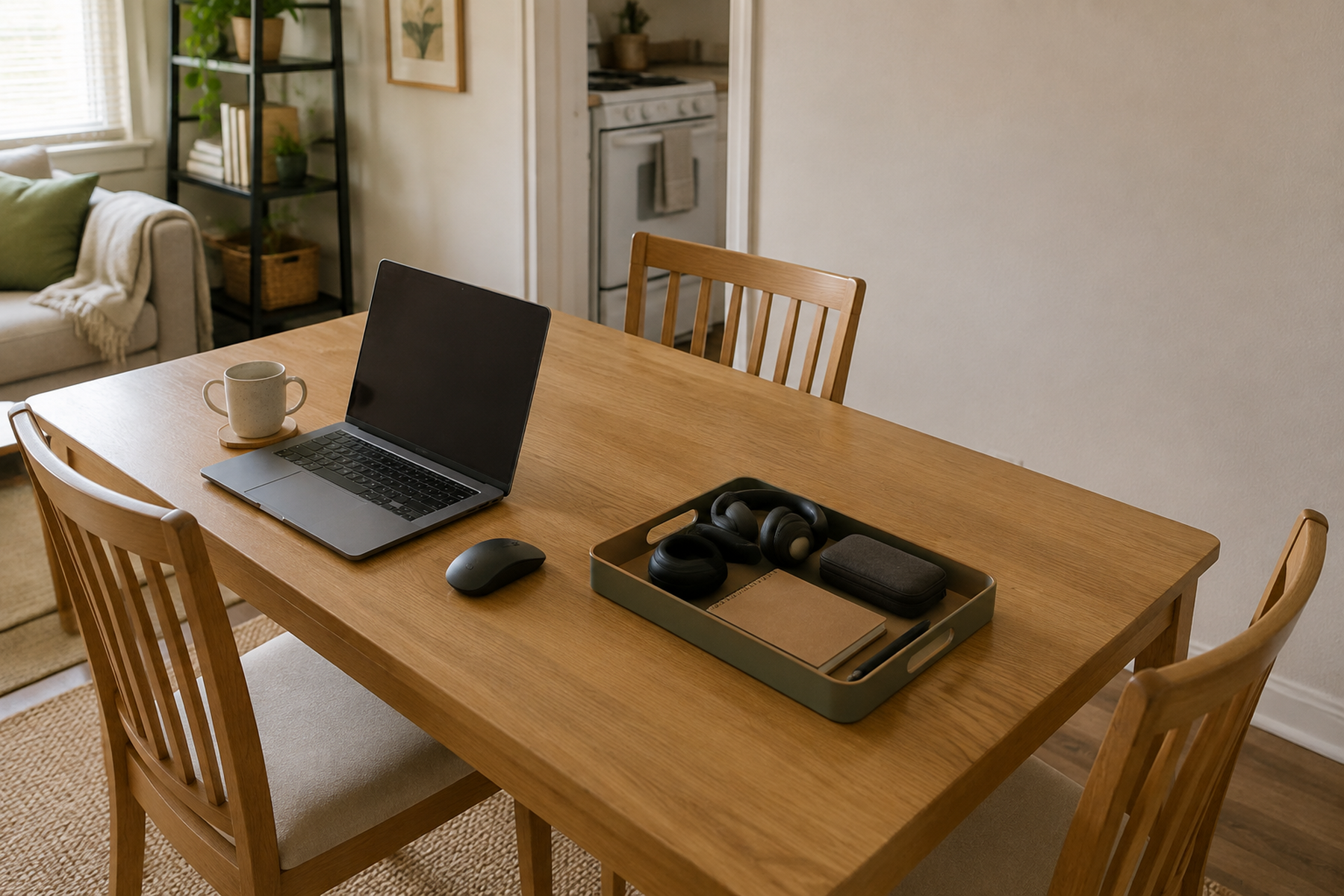
How to Work From a Dining Table Without Letting It Become a Permanent Office
Use this next if the same dining table also has to switch into work-from-home mode and office equipment is creating a second transition problem.
GUIDE
How to Organize Miscellaneous Small Items When You Have No Junk Drawer
Use this if tiny household one-offs and utility items are drifting into the craft system even though they do not belong to an active hobby or project.
GUIDE
How to Organize a Small Desk With No Drawers Without Losing Work Surface
If the craft surface is a compact desk rather than a dining table, this guide handles the separate problem of keeping everyday desk supplies from consuming the same limited work area.