
Small Apartment Storage Ideas
How to Store Dry Pet Food in a Small Apartment With No Pantry
Keep the original bag and storage instructions in the system, then choose a cool, dry, secure zone that fits the real bag footprint, supports daily feeding, and does not take over a higher-value apartment function.
In This Guide
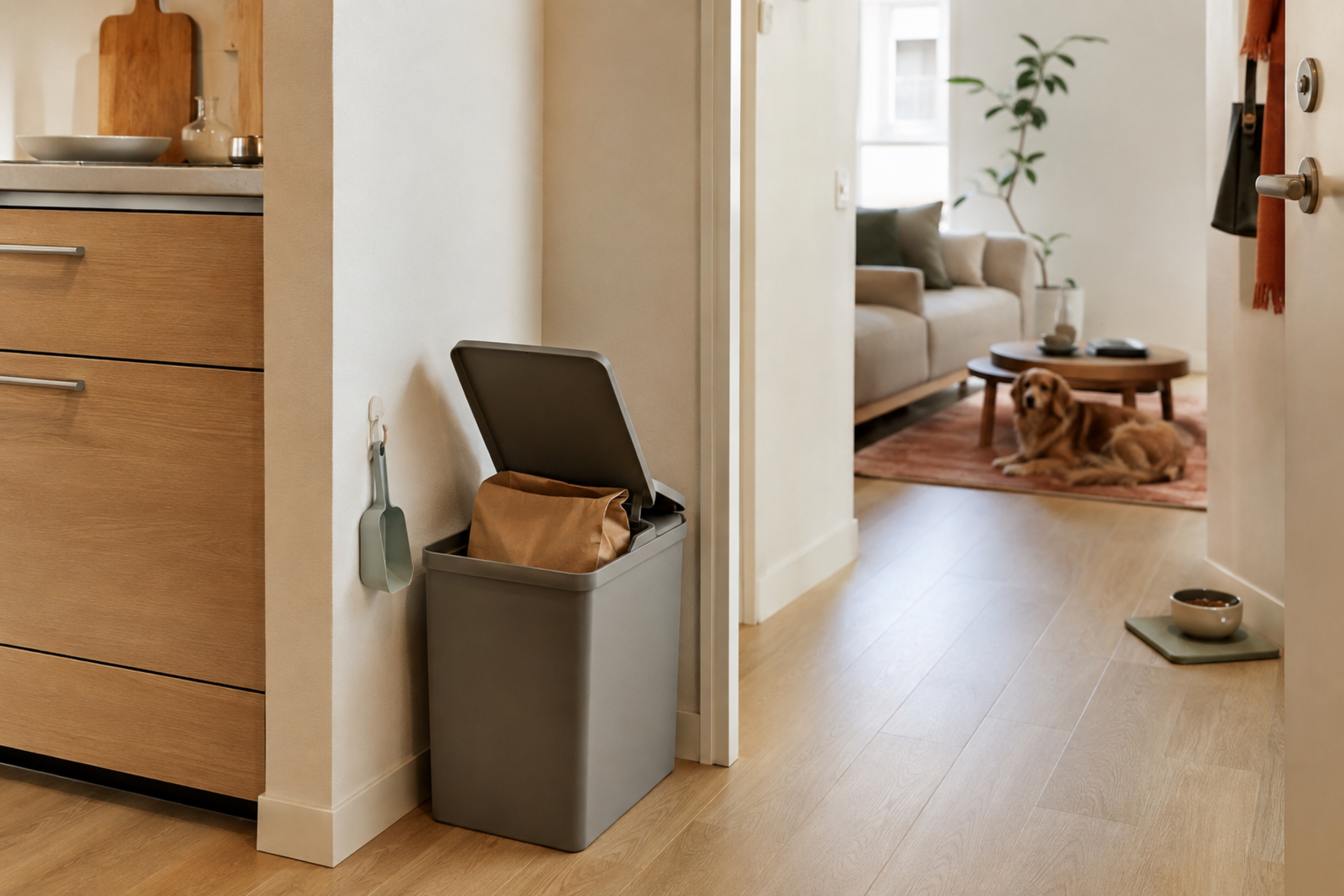
A bulky bag of dry dog or cat food can become part of the floor plan when an apartment has no pantry, garage, utility room, or spare storage closet. The bag may end up beside the kitchen, on an entry cart, under a table, or in a cabinet that has to give up another everyday function.
Pet food is not ordinary backstock, though. The package carries product identity and traceability, the storage environment matters, the pet should not be able to reach the full supply, and a secondary container has to work with the real bag rather than only with a pound-capacity label. Solve those requirements first; then optimize the footprint around them.
Quick Answer
Let the Storage Rules Define the Small-Space Solution
Keep dry pet food in its original bag when the setup allows it, measure the intact bag and the real storage zone before choosing a secondary container, and use a cool, dry, secure location with safe handling access. If the largest bag has no legitimate home under those conditions, reduce the purchase size instead of forcing the apartment to absorb a larger storage system.
01
Keep the original bag whenever the setup allows it
FDA guidance recommends storing pet food in its original bag or container and, when a secondary dry-food container is used, prefers placing the entire original bag inside it. That keeps product identity and lot / best-by information with the food.
02
Measure the bag and the zone before buying a container
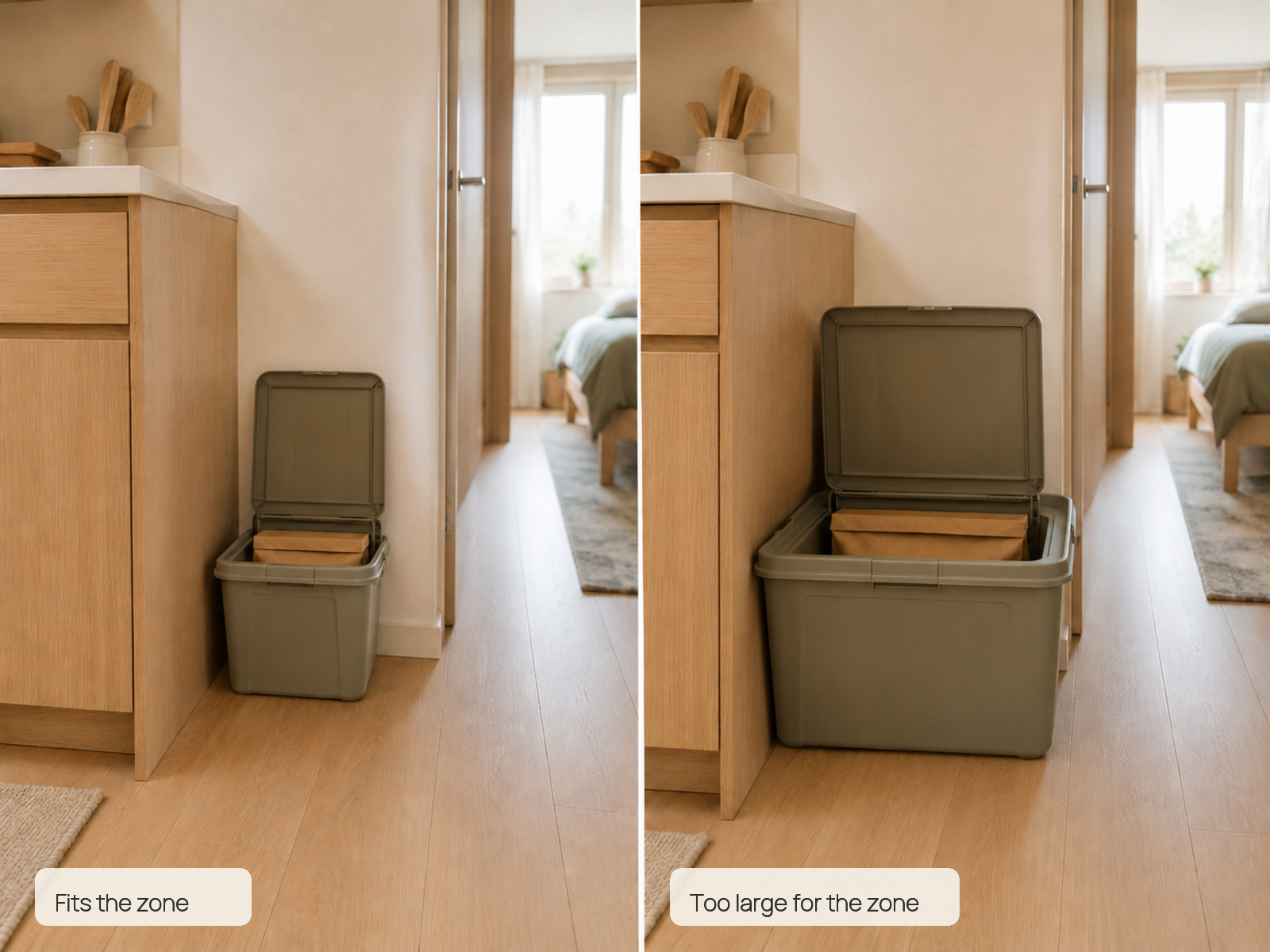
A container labeled for a certain number of pounds does not guarantee that an intact bag of that weight will fit. Measure the actual bag envelope, lid clearance, cabinet or floor zone, and the path used to refill and clean the area.
03
Use a cool, dry, secure location
Dry pet food needs an appropriate storage environment and should not become a floor obstacle or sit where the pet can access the full supply. Keep heavy food low enough to handle safely.
01
Start With the Food-Storage Rules
Pet-food storage begins with the food, not the organizer. The apartment can optimize shape and access only after the storage conditions are valid.
The U.S. Food and Drug Administration advises storing dry pet food in a cool, dry place below 80°F and keeping food in a secure location so the pet cannot consume the entire supply.
That immediately rules out some convenient-looking spots. A sun-heated corner, a damp location, an exposed open bag within reach of the pet, or a walkway where the bag is repeatedly kicked or moved is not a strong small-apartment solution just because it uses otherwise empty floor area.
Keep nutrition, feeding quantities, and brand selection outside this storage decision. The article only needs to preserve the product’s storage instructions and build a practical apartment system around them.
02
Keep the Original Bag in the System
The original pet-food bag is not packaging clutter to discard automatically. It carries information the household may need later.
FDA proper-storage guidance recommends storing pet food and treats in the original container or bag because it preserves the product name, manufacturer, UPC code, lot number, and best-by date.
If a secondary container is useful, FDA’s preferred dry-food approach is to place the entire original bag inside that container. Fold or close the bag according to the product instructions, then use the secondary container for physical protection, pet security, and easier handling.
If food is poured into another container instead, the guidance becomes more demanding: the container should be clean and dry, have a snug-fitting lid, key product / lot / best-by information should be retained, and the container should be washed and dried between bags. Decanting is therefore a conditional workflow, not the default organization move.
03
Choose a Bag Size the Apartment Can Support
Bag size is part of the storage system because every extra pound also arrives inside a larger physical package that must live somewhere until it is used.
A larger bag may reduce purchase trips or lower unit cost, but those benefits do not create pantry space. If the bag requires a permanent cart in the entryway, blocks another category from its only good cabinet, or forces the household to store food in a weak location, the larger package is spending more apartment capacity than the system can support.
There is no universal correct bag size. Pet size, diet, turnover, budget, store access, and package geometry vary. The useful small-space question is whether the bag can stay cool, dry, secure, traceable, and reasonably accessible for the time it will remain open.
A smaller bag is a valid organization solution when it reduces the permanent footprint enough to protect a higher-value apartment function. That is capacity management, not a failure to organize.
04
Measure the Intact Bag, Not Just the Pound Rating
Container capacity labels and bag fit answer different questions.
Measure the actual full bag at its widest, deepest, and tallest practical points, including the way the top folds or seals. Then measure the secondary container’s usable interior and lid path, not only its outside dimensions.
Manufacturer examples show why the distinction matters. IRIS USA states that one current 33-quart model holds approximately 22–26 pounds of most dry kibble depending on kibble size and explicitly notes that not all 30-pound bags will fit. A pound label therefore cannot prove intact-bag compatibility.
Also measure the room geometry around the container. A bin may technically fit under a shelf but fail when the lid opens, a closet door swings, the food bag has to be lifted in, or the container must roll out for cleaning.
Measure / Check First
Before buying a pet-food container or choosing a permanent zone, test the real full bag and the daily handling path.
Check the Bag, Container, and Access Path Together
01
Intact-bag envelope
Measure the full bag at the widest and tallest points in the way it will actually be folded or closed. Do not substitute the printed food weight for real bag dimensions.
02
Container and lid path
Measure usable interior dimensions, opening size, lid movement, and the space needed to lower the intact bag into the container. The lid must close normally without crushing or leaving the bag exposed.
03
Daily and refill access
Confirm that a person can scoop food, remove the bag, clean the zone, and replace a full bag without moving unrelated furniture or blocking normal circulation. Keep the full supply low enough to handle safely.
If the intact bag, lid, or refill motion fails the test, choose another container form, another legitimate zone, or a smaller food bag instead of forcing the fit.
05
Choose a Cool, Dry, Secure Zone
Once the bag and container geometry are known, compare real apartment zones rather than forcing the food into the room that sounds most logical.
A low cabinet, a dry closet edge, a kitchen-entry residual zone, or another floor-level location can work when the temperature and moisture conditions are appropriate, the pet cannot open or tear into the supply, and the container does not interfere with circulation.
Avoid making overhead storage the default for a heavy bag or full container. A storage location is not efficient if refilling it requires lifting a dense food supply above comfortable reach every few weeks.
Keep potential household-chemical leaks out of the equation as well. Pet Food Institute handling guidance recommends a cool, dry indoor location and advises keeping pet food away from toxic household products such as bleach or cleaning supplies.
06
Keep the Main Supply Separate From the Feeding Tools
The entire food bag does not need to sit beside the bowls for feeding to remain convenient.
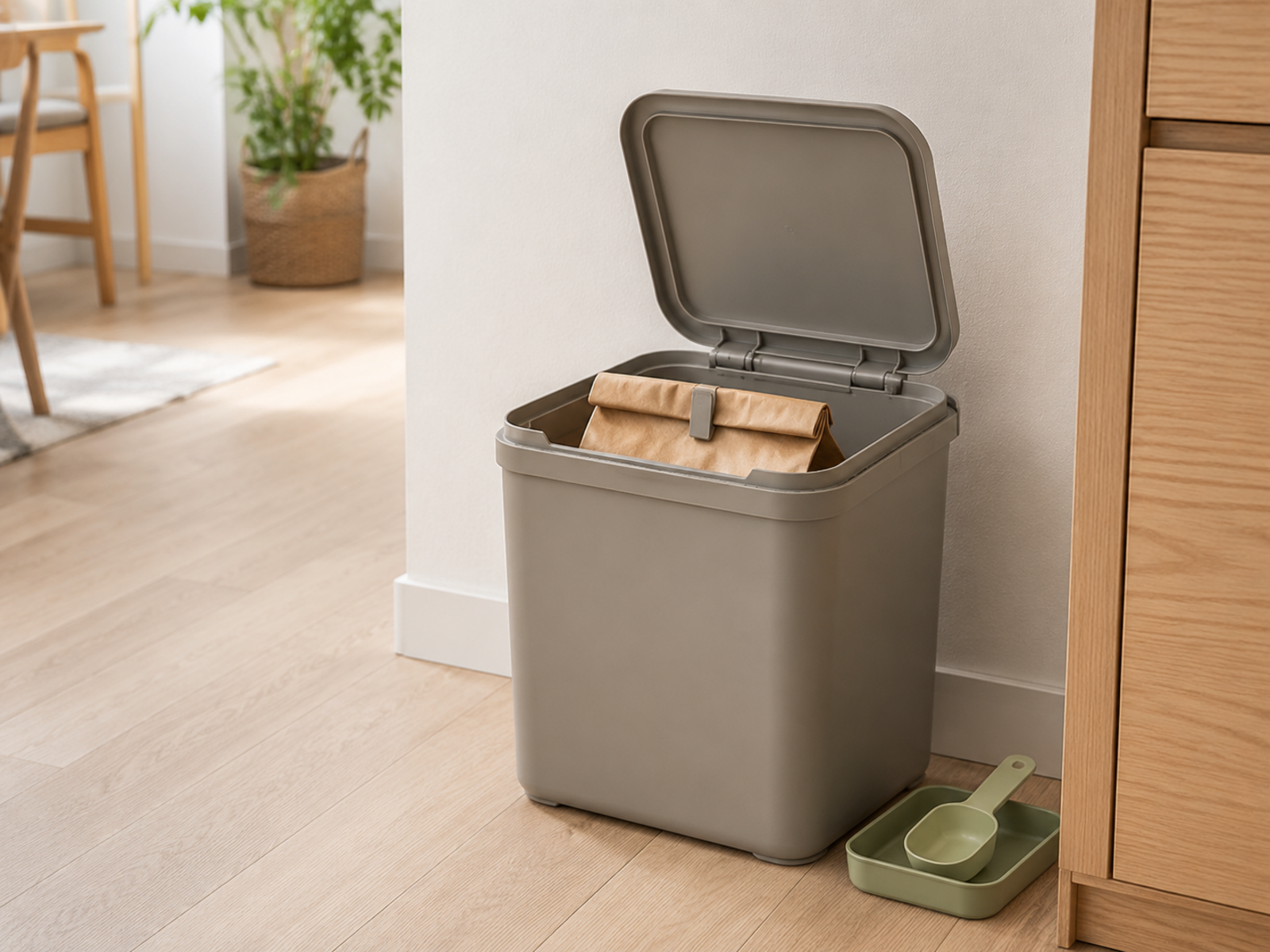
Store the main supply in the best compliant zone, then keep the feeding tools where the daily routine happens. FDA recommends using a clean scoop, spoon, or cup dedicated to pet food; that tool can live near the main container or feeding station without forcing the whole bag into the highest-traffic part of the room.
If a small active quantity is transferred for short-term convenience, follow the food label and storage guidance and preserve the main bag / traceability information. Do not create an unlabeled mystery container merely to save a few steps.
Separating main-supply placement from feeding-tool placement gives the apartment more options. The best food zone can prioritize cool, dry, secure storage while the scoop and bowls prioritize routine access.
07
Use Wheels Only When Movement Solves a Real Problem
A wheeled container earns its footprint when the food is heavy enough that movement improves cleaning, refilling, or access.
This is especially useful in a true residual floor zone where the container can stay parked most of the time and roll forward only when the bag is replaced or the surrounding floor is cleaned.
Do not treat wheels as proof that a large container belongs in the room. A rolling bin that lives permanently in the entry path or must be moved every time a cabinet opens is still occupying the wrong zone.
Use manufacturer dimensions and capacity only for the exact model. Current floor-level pet-food containers exist in narrow and wheeled forms, but their pound ratings do not guarantee intact-bag fit and their footprint must still be measured against the apartment.
08
Keep Multiple Foods Separately Identifiable
Two pets, two life stages, or two different diets can turn one storage problem into an identity problem.
Do not combine different foods in one loose shared bin simply to save container footprint. Preserve each original package or otherwise preserve the food identity and required product information so the household can tell which supply belongs to which pet or diet.
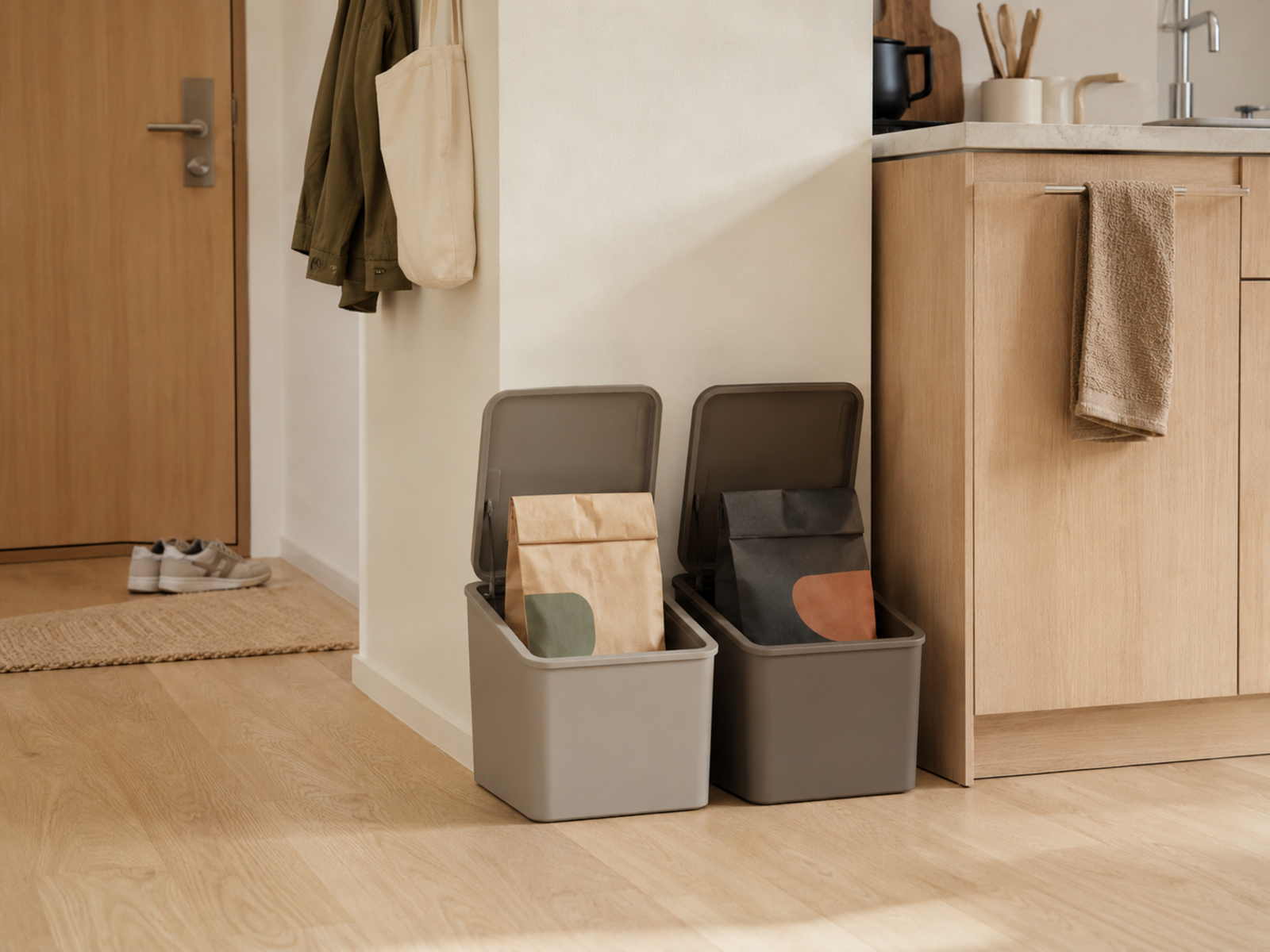
Separate containers can use more floor or shelf area, but that additional footprint may be justified by clarity. Two smaller independently identifiable supplies can be a better system than one oversized bin that forces the user to manage inner bags, dividers, or repeated sorting every day.
If space pressure becomes severe, bag size is again the variable to revisit. Reducing the quantity purchased for one or both foods can protect identity and storage conditions without asking the apartment to support a larger multi-bin station.
09
Treat Under-Sink, Garage, and Outdoor Storage as Conditional
Some common “hidden” storage suggestions fail when the actual environment is considered.
Under-sink space can be too small for an intact bag, can be interrupted by plumbing, and may share a cabinet with cleaning products. Use it only when the food remains dry, secure, physically separated from potential chemical leaks, and the bag / container fits without blocking plumbing or cabinet access.
Garage and outdoor storage are weak default recommendations for the same reason. FDA requires cool, dry storage, and Pet Food Institute discourages leaving bags on garage floors or outside. Apartment storage should therefore prioritize an appropriate indoor zone.
A concealed location is not automatically better than a visible one. A tidy floor-level container in a genuine residual zone can be more functional than a hidden cabinet that is damp, crowded, inaccessible, or shared with unsuitable products.
10
Reset the Container Between Bags
The storage system needs a refill routine, not only a place to park the current bag.
If the original bag sits inside a secondary bin, remove the old bag, inspect and clean the secondary container as needed, let it dry fully, then place the new intact bag inside. Do not pour a new bag over loose remnants from the previous one.
If food is decanted, FDA specifically says the container should be washed and dried between bags. Preserve the new product / lot / best-by information with the new supply rather than relying on a label from the previous food.
Use the refill as the stop rule. If the new purchase only fits by leaving the lid open, discarding the original bag, blocking a walkway, or adding another storage object, the next bag should be smaller or the storage plan should change before the food enters the apartment.
Closing Decision
Let Food Safety Set the Boundary and Apartment Capacity Set the Size
The strongest small-apartment system keeps the pet food traceable, cool, dry, secure, and easy to use before it worries about concealment. Preserve the original bag when possible, fit it inside a secondary container only when the real geometry works, and let the main food supply live in the best compliant zone rather than automatically beside the bowls.
When the largest bag has no valid home, reduce the purchase size instead of turning another walkway, cabinet, or piece of furniture into permanent overflow. The apartment does not need the maximum quantity it can technically contain; it needs the amount it can store correctly without sacrificing everyday function.
RELATED GUIDES
What to Read Next
NEXT GUIDE
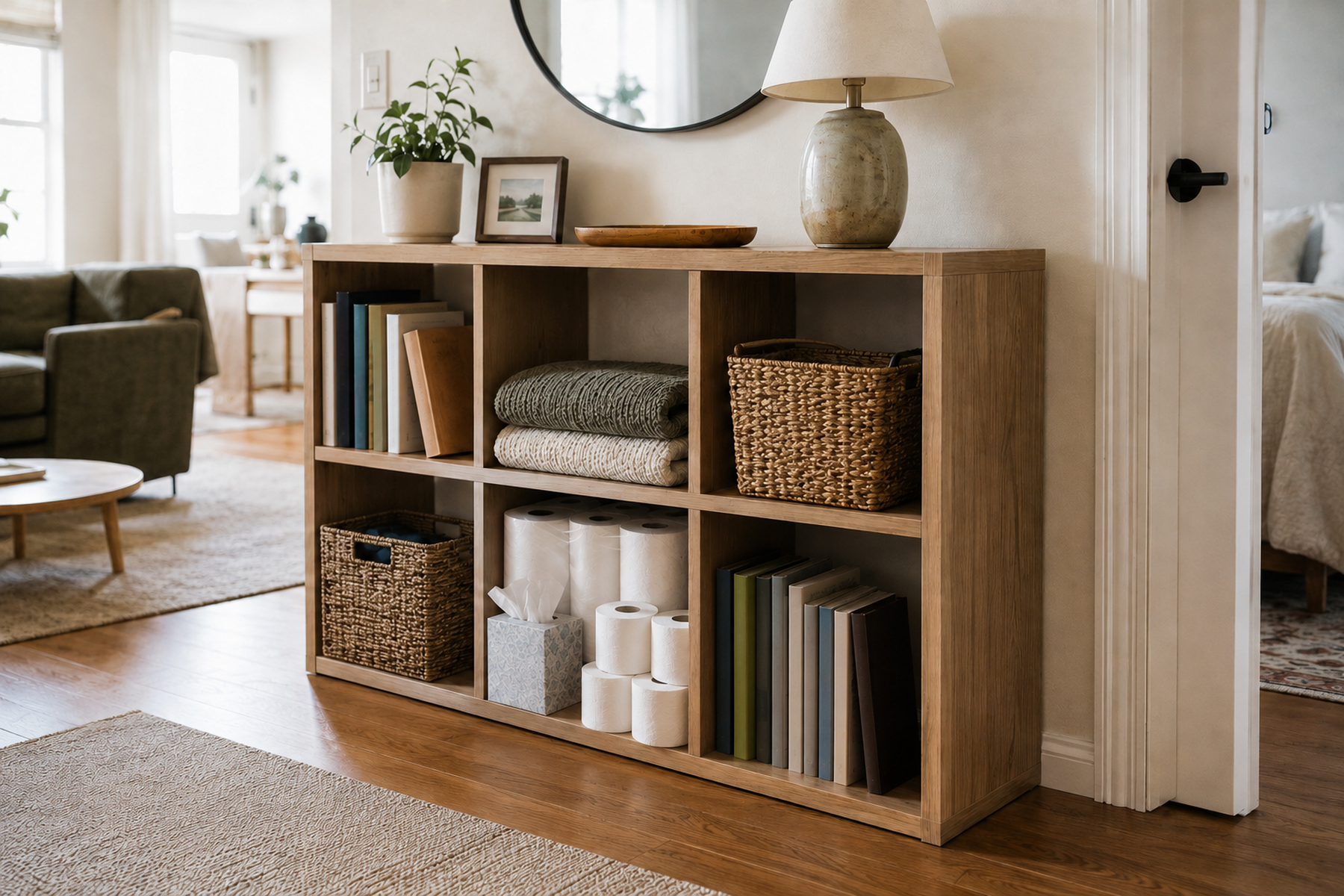
How to Store Household Backstock in a Small Apartment With No Storage Closet
Use this next if pet food now has a compliant home but paper goods, cleaners, toiletries, and other repeat-use reserves are still competing for the same limited apartment storage.
GUIDE
How to Organize Food Storage in a Small Kitchen With No Pantry
Use this if the pet-food footprint is solved but human food is still consuming the kitchen’s limited cabinets and no-pantry storage zones.
GUIDE
Where to Put a Cat Litter Box in a Small Apartment With No Good Spot
If this is a cat household, this guide handles the other major pet-space problem: finding a reliable litter-box zone without sacrificing circulation or daily apartment function.