
Small Kitchen Organization
How to Use Fixed Kitchen Cabinet Shelves Without Wasting Vertical Space
Treat cabinet height as a set of usable storage planes, not empty cubic volume. Measure the shelf gap and the items that need to live there, then add a removable second level only when both the upper and lower zones stay easy to reach, stable, and within the cabinet’s real load and door-clearance limits.
In This Guide
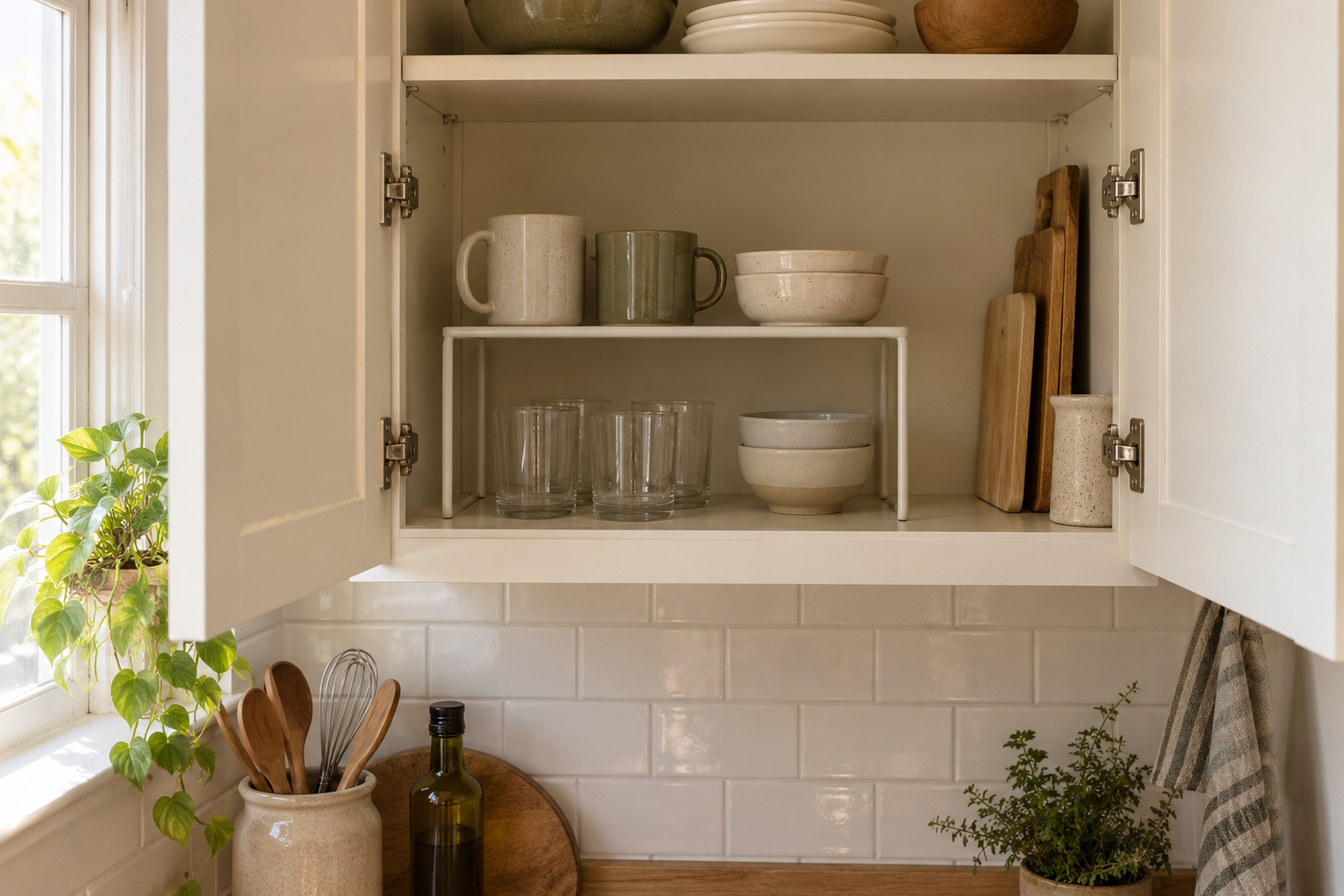
A tall cabinet opening can look like generous storage while giving you only one practical surface. Short mugs, glasses, bowls, cans, or jars may occupy the lower half while the air above them cannot be used without unstable stacking.
The useful goal is not to fill every vertical inch. It is to turn one storage plane into two only when both levels remain independently usable—with enough room to lift items out, clear the door and hinges, preserve stability, and avoid overloading the shelf that was already there.
Quick Answer
Add a Second Level Only When Both Levels Stay Easy to Use
A removable shelf insert can recover wasted height in a rental cabinet, but the added tier should reduce handling rather than create another stack that must be unloaded every day.
01
Match the organizer to the job
Use a full shelf riser when you need a true second horizontal storage plane, a tiered organizer when the rear row only needs better visibility, and an under-shelf basket when a shallow light-duty category can use the gap below an existing shelf.
02
Measure the cabinet opening, not just the interior
A riser can fit inside the cabinet and still fail to pass through the face frame or clear a hinge. Measure the real door opening, usable depth, shelf-to-shelf height, and any side obstruction before buying the insert.
03
Treat the cabinet shelf and organizer as separate load limits
A riser’s published capacity applies to the riser. It does not prove the original rental shelf, shelf pins, or cabinet sides can safely carry the added total weight.
01
Identify Whether the Shelf Is Fixed, Adjustable, or Missing
Before adding organizers, determine what kind of cabinet you actually have.
Look for shelf-pin holes, removable shelf supports, matching cabinets with adjustable shelves, or signs that an original shelf may simply be missing. A cabinet designed for another manufacturer shelf is a different problem from a cabinet with a truly fixed structural shelf.
If the shelf is adjustable, changing its height may solve the spacing problem more cleanly than adding another object inside the cabinet. If an intended shelf is missing, asking property management for the proper replacement can be better than filling the cavity with several small risers.
Treat a shelf that appears fixed as fixed until the cabinet system proves otherwise. Do not cut, pry out, or drill around an integrated shelf just because the spacing is inconvenient.
02
Measure the Shelf Gap and the Items That Need to Fit
Measure the clear shelf-to-shelf height, the usable cabinet depth, the interior width, and the actual door opening after face frames and hinges are accounted for.
Then measure representative items. A row of mugs may need much less height than tall tumblers; bowls may need room to lift upward; handled cups may need side clearance that a simple height measurement misses.
Compare the empty air above the category with the space required to retrieve it. Some of that clearance is doing useful work by letting you lift a bowl, grab a mug handle, or reach behind the front row.
The right question is not “Can another shelf physically fit?” It is “Can the upper and lower levels both be used without moving the other level first?”
Measure / Check First
Before buying a riser, basket, or extra shelf, test the cabinet with the categories that will actually live there.
Check the Opening, Retrieval Clearance, and Load Path First
01
The real usable opening
Measure the clear door opening, interior width, usable depth, shelf-to-shelf height, hinge intrusion, face-frame intrusion, and shelf thickness when a clip-on accessory is being considered.
02
The upper and lower retrieval paths
Mock up the proposed second level and confirm that lower items can be removed without lifting the organizer and upper items can be reached without hitting the shelf above or the cabinet door.
03
The organizer and host-shelf loads
Use the exact organizer’s published capacity when available, then treat the original cabinet shelf as a separate unknown unless its manufacturer and rating are known.
If a second level makes either tier harder to retrieve, blocks the door, or encourages heavy loading on an uncertain shelf, leave more space open or use a different cabinet.
03
Reassign Cabinet Contents by Height Before Adding Another Level
A no-cost first move is to match cabinet openings to the height of the categories they hold.
If one cabinet has a short shelf gap and another has a tall one, move short mugs, glasses, cans, or bowls into the shorter zone and reserve taller clearance for bottles, tumblers, appliances, or handled items that truly need it.
Keep point-of-use workflow in the decision. Moving plates far from the dishwasher just because they fit another cabinet better can solve vertical space while making the kitchen harder to use.
This step also reveals where a second level would provide real value. The best shelf-riser candidate is usually a cabinet with a stable group of short everyday items and enough clearance to create another accessible tier.
04
Use a Shelf Riser Only When It Creates Two Usable Levels
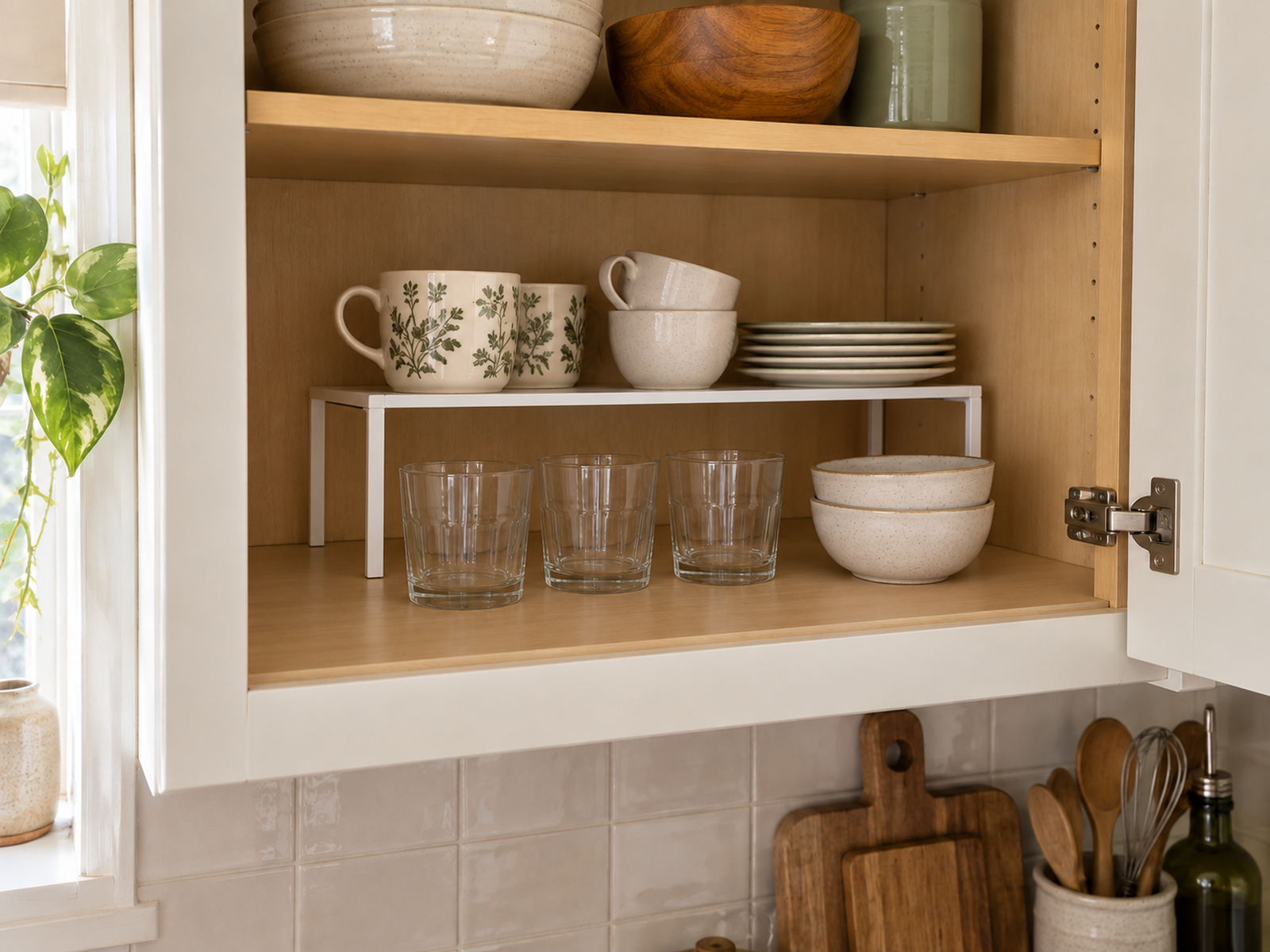
A freestanding shelf riser creates a second horizontal plane without drilling into rental cabinetry.
Current IKEA VARIERA shelf inserts are specifically intended to add storage inside cabinets, including cabinets with stationary shelves, and current YouCopia adjustable shelves show another removable form with product-specific dimensions and load ratings.
Choose a riser that is shallow enough to preserve access below it and low enough that the upper tier still clears the next shelf. A full-depth insert can push lower items into a hidden rear zone even while it adds nominal capacity above.
Use the second level for categories that are stable and manageable at that height: mugs, glasses, bowls, small pantry items, or other relatively light everyday pieces that do not create awkward lifting.
Use / Skip
A Freestanding Shelf Riser
Use
Use it when the cabinet has excess height and both tiers remain independently accessible
A shelf riser can work well when it passes through the real cabinet opening, fits the usable depth, leaves enough lifting space below, keeps upper items within easy reach, and carries a category that stays within the organizer and cabinet system’s safe load.
Skip
Skip it when the second tier creates another retrieval problem
Choose a different organizer—or leave the gap open—when the riser hides lower items, forces the user to remove one level to reach the other, blocks hinges or doors, places heavy items too high, or encourages more load than the existing shelf can be verified to carry.
05
Use Tiered Risers When the Problem Is Visibility, Not Missing Shelf Area
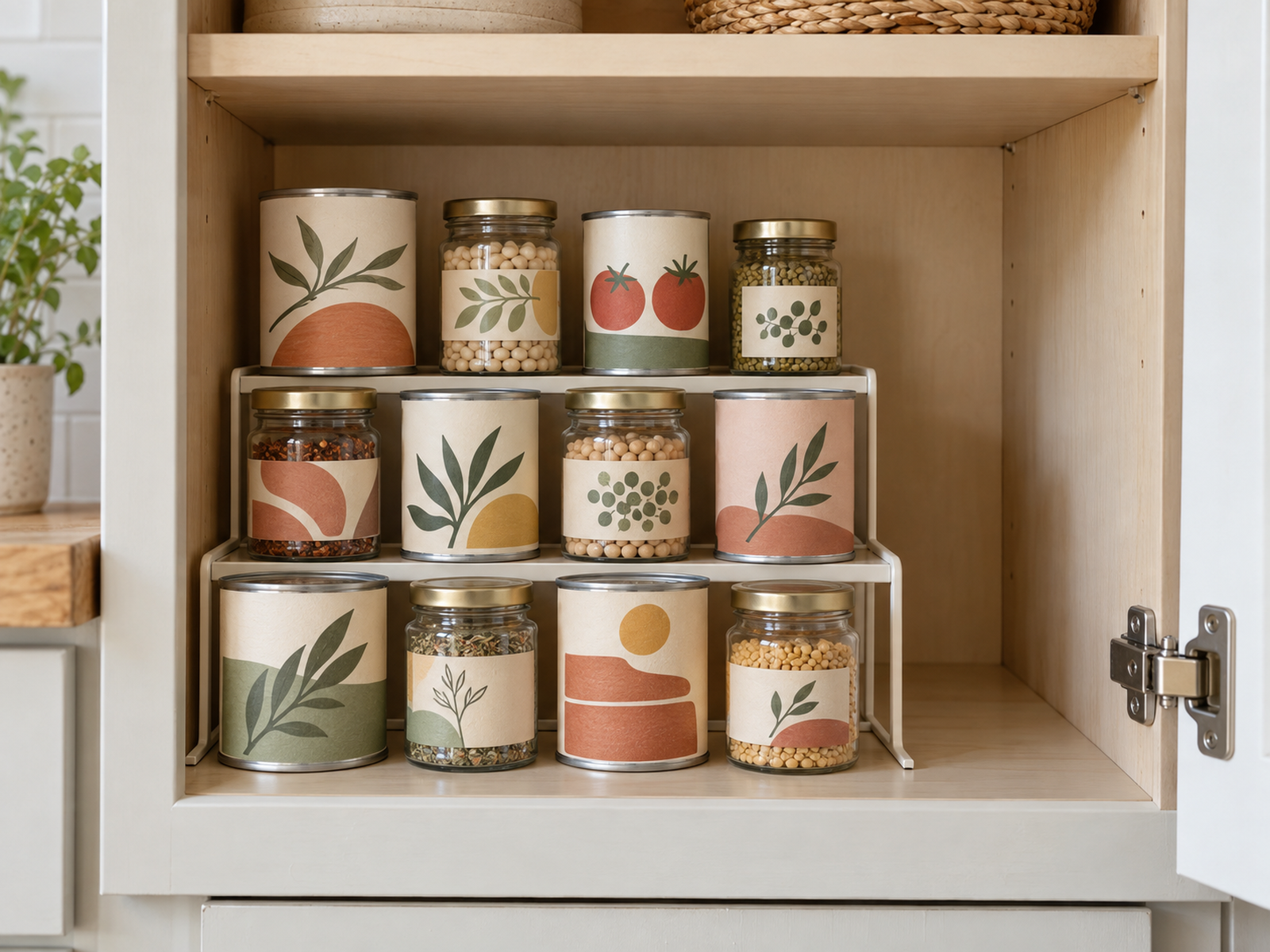
A tiered organizer solves a different problem from a full shelf insert.
Instead of creating a complete second deck, it raises rear cans, jars, spices, or similarly sized packages so their labels remain visible behind the front row.
That can be the better choice when the cabinet already has enough horizontal surface but the back row disappears from view. Current YouCopia ShelfSteps products are one manufacturer example of a removable tiered form with product-specific dimensions and capacity.
Do not use a stepped organizer for plates, large bowls, or mixed tall packages just because it occupies vertical space. Match the organizer to the category behavior.
06
Use Under-Shelf Baskets Only for Light, Shallow Categories
A clip-on under-shelf basket can use the narrow gap directly below an existing shelf without adding another object to the shelf floor.
This is a fit-sensitive solution. Current IKEA PÅLYCKE baskets, for example, publish a compatible host-shelf thickness range and relatively light product-specific loads.
Use the form for small, light categories that benefit from shallow containment and do not need the space below for tall items. The basket itself also becomes additional load on the host shelf.
If the basket blocks mugs, bottles, or containers below it, or the shelf thickness falls outside the product’s range, it is not free bonus storage—it is the wrong fit.
07
Restore an Intended Cabinet Shelf Before Drilling New Holes
If the cabinet already has manufacturer shelf-pin holes or matching shelf hardware, check whether an original shelf is simply missing.
A compatible OEM shelf can create a true full-width storage level using the cabinet system’s intended support points. IKEA UTRUSTA shelves, for example, are designed for specific SEKTION cabinets and publish size-specific load ratings.
That kind of shelf is not interchangeable with a random board cut to size. Shelf dimensions, support pins, cabinet construction, and load all belong to the same system.
In a rental, asking management for a missing intended shelf is a cleaner first branch than drilling new shelf-pin holes or modifying cabinet sides.
08
Leave Some Vertical Space Open When It Protects Access
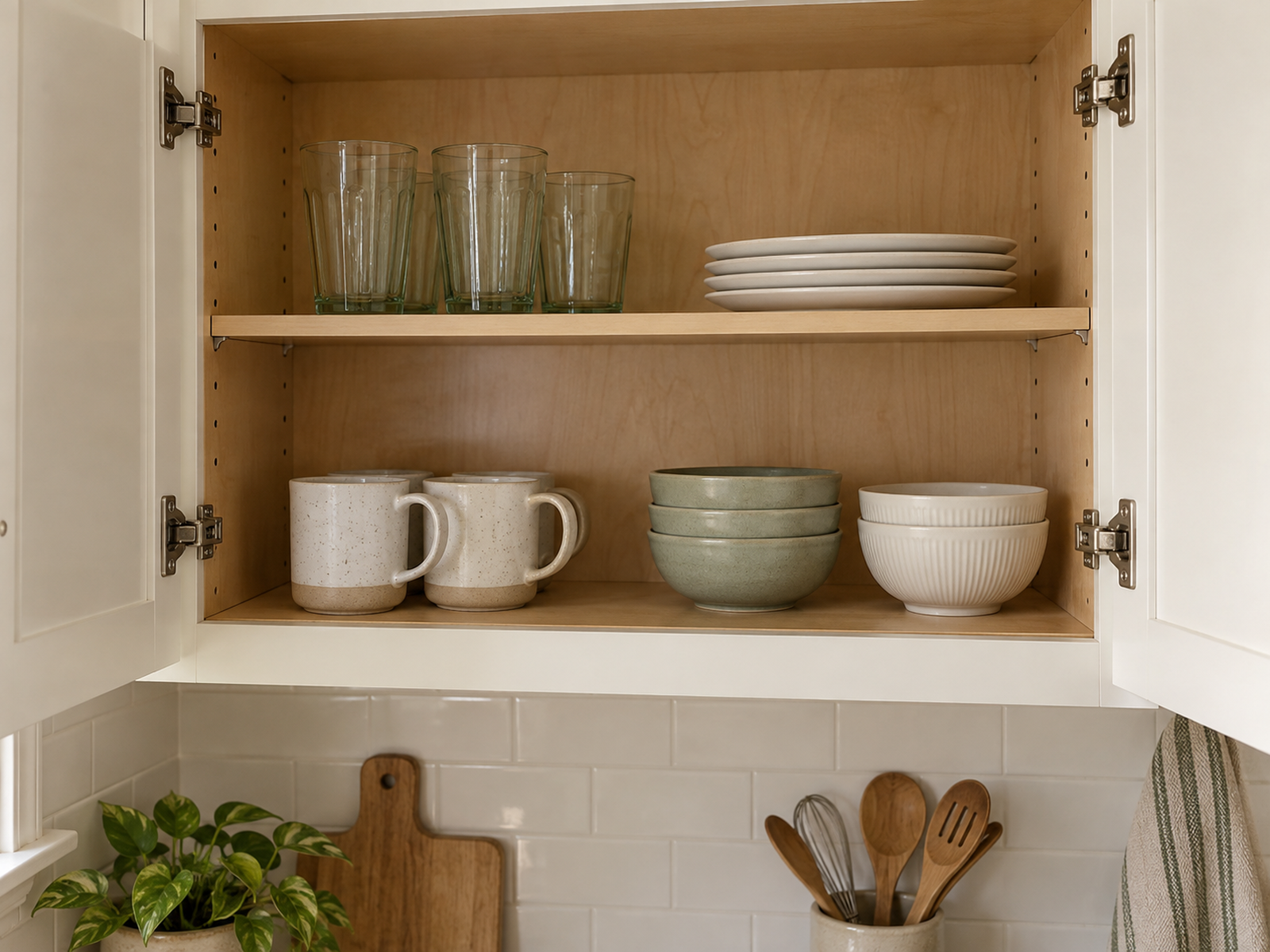
Not every empty vertical gap is wasted.
Tall bottles, handled mugs, nested bowls, food-storage containers, and small appliances may need extra lifting or hand clearance even when a second tier could technically fit above them.
Heavy categories are another reason to resist maximum layering. A high second tier may place dense dishes, canned food, or cookware in an awkward lifting position and add more weight to a shelf whose structural capacity is unknown.
The best cabinet is not the one with the most levels. It is the one where everyday items can be removed and returned without unloading, unstacking, or reconstructing the system.
Closing Decision
Add Storage Planes, Not Extra Retrieval Steps
Fixed cabinet shelves become more useful when short categories get a second accessible level—not simply when every empty inch is filled.
Measure the real opening, preserve the lifting room each category needs, match full risers, tiered organizers, and under-shelf baskets to different jobs, and treat the existing shelf’s capacity separately from the organizer’s rating. If another level makes the cabinet harder to use, leaving the clearance open is the better small-space decision.
RELATED GUIDES
What to Read Next
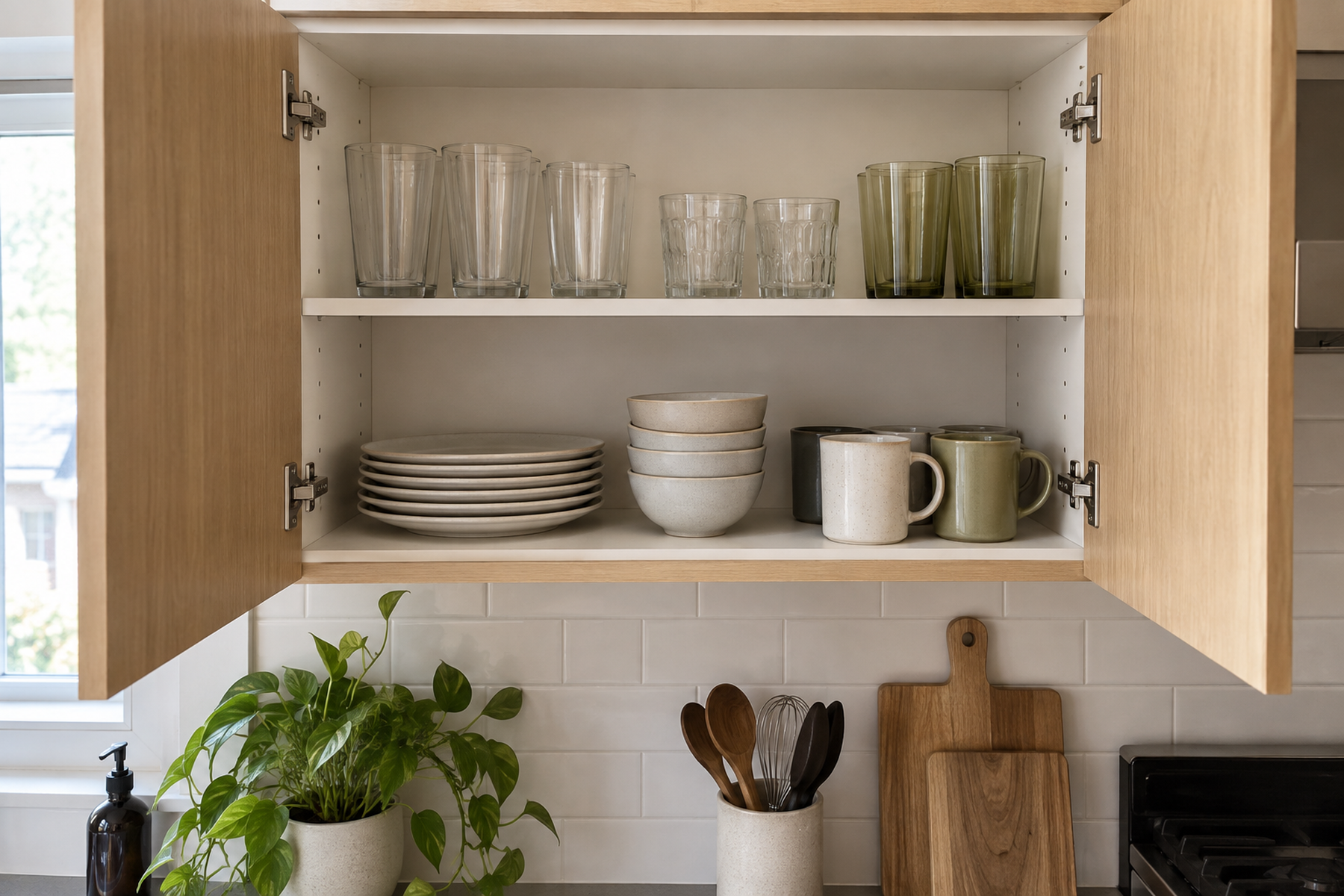
NEXT GUIDE
How to Organize Everyday Dishes in a Small Kitchen With Limited Cabinet Space
Use this next if plates, bowls, glasses, and mugs are the category that needs the new cabinet levels; that guide handles their everyday access and stacking decisions in more depth.
GUIDE
How to Organize High Kitchen Cabinets When Upper Shelves Are Hard to Reach
Use this if the shelf spacing works but the real problem is that the upper cabinet levels are too high for comfortable everyday retrieval.
GUIDE
How to Organize a Deep Pantry Cabinet So Food Does Not Get Lost in the Back
Use this if the cabinet has enough vertical levels but food still disappears because the real problem is front-to-back depth rather than shelf spacing.