
Small Closet Organization
How to Use a High Closet Shelf That Is Hard to Reach
A high closet shelf is not useful capacity just because it has empty volume. The storage has to fit the shelf, move down and through the real closet opening, stay manageable to handle, and be easy enough to return that the system actually gets used.
In This Guide

A tall reach-in closet can contain much more space above the door opening than the user can comfortably access. That upper volume is best treated as high-friction capacity rather than as the equivalent of an ordinary eye-level shelf.
The friction comes from more than height. Shelf depth, a low door header, sliding doors, bin geometry, loaded weight, elbow room, access equipment, and the effort required to put everything back can all turn nominal storage into unusable storage.
Quick Answer
Optimize for repeatable access, not maximum volume
Use the high zone only for storage that can be reached, removed, controlled, and returned through the actual closet opening without creating a routine you will avoid.
01
Test the path
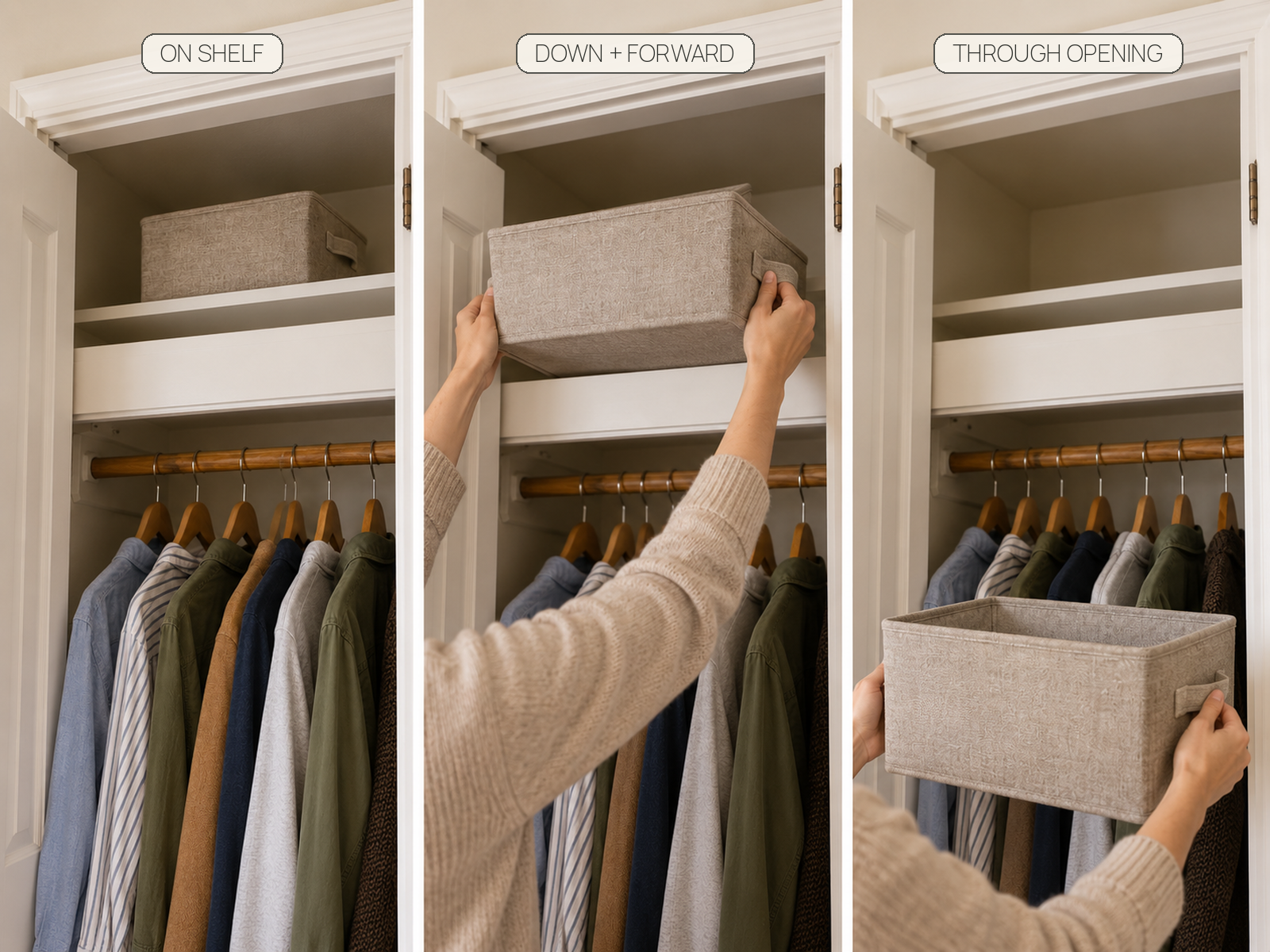
Check how the item or container moves down from the shelf, forward past the shelf edge, and through the door or header opening.
02
Match the frequency
Keep daily and weekly categories in easier reach; reserve high-friction storage for lower-frequency items only when handling remains practical.
03
Lower the job when needed
If the upper shelf is inherently awkward, move the storage function into a reachable existing zone instead of automatically adding more high storage.
01
Test the removal path before buying bins
The closet opening is part of the storage system. In a tall reach-in closet, the interior cavity may continue well above the visible door header, which means a high bin has to travel through a smaller opening on the way out.
Test the whole motion before treating the shelf as usable. Can the bin move forward far enough to clear the shelf? Can it drop below the header? Can it rotate through a sliding or narrow opening? Is there enough body and elbow room to control it?
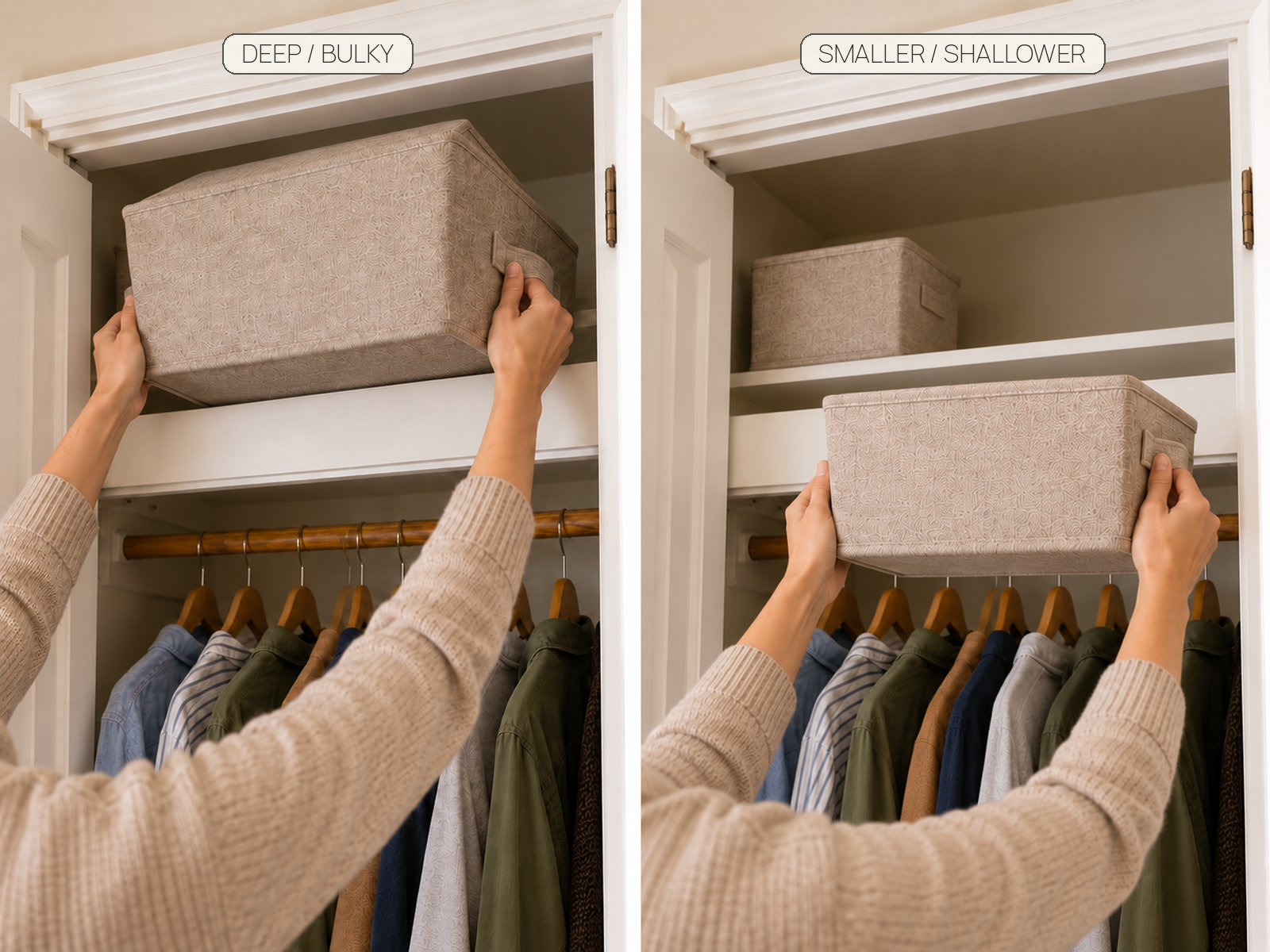
This is why smaller or shallower handled containers can outperform one deep bin when retrieval is the limiting factor. More shelf depth is not automatically more useful if the rear contents cannot be seen, gripped, or removed cleanly.
Measure / Check First
A container can fit perfectly on the shelf and still fail the closet.
Measure the three-dimensional removal path
01
Shelf zone
Measure the usable shelf width, depth, and height around existing rods, brackets, tracks, and other obstructions.
02
Opening zone
Measure the actual exposed door width and the vertical relationship between the high shelf and the closet header.
03
Container path
Confirm that the loaded container can move down, forward, through the opening, and into a position where you can control it.
Do not use one universal top-shelf height, shelf depth, or safe bin weight. The closet geometry, installed system, container, user, and access method all change the answer.
02
Match access friction to item frequency
The harder the zone is to access, the less often its contents should need to move. That is a frequency-zoning principle, not a rule that every seasonal item belongs on the top shelf.
Daily clothes, frequently used accessories, and anything that needs constant return should stay in easier reach whenever possible. A storage location that requires a stool and several handling steps every morning is spending too much effort on a daily category.
Lower-frequency items can tolerate more friction when the retrieval method is still controlled. The useful test is not whether you can get the item up there once; it is whether you can get it down and put it back without dreading the process.
03
Keep high containers smaller and easier to control
Large bins can maximize nominal volume while making high storage harder to handle. A smaller container can reduce the amount you have to control overhead and can make the turn through a door header or partial opening easier.
Handles help only when the container remains manageable and the handle position works with the removal path. There is no universal safe top-shelf bin weight established here.
Before adding load, inspect the existing shelf, brackets, clips, tracks, and rod. Visible sagging, looseness, damage, or uncertain attachment should stop additional loading until the system is properly checked. Do not infer shelf capacity from appearance.
04
Bring the storage job lower when that works better
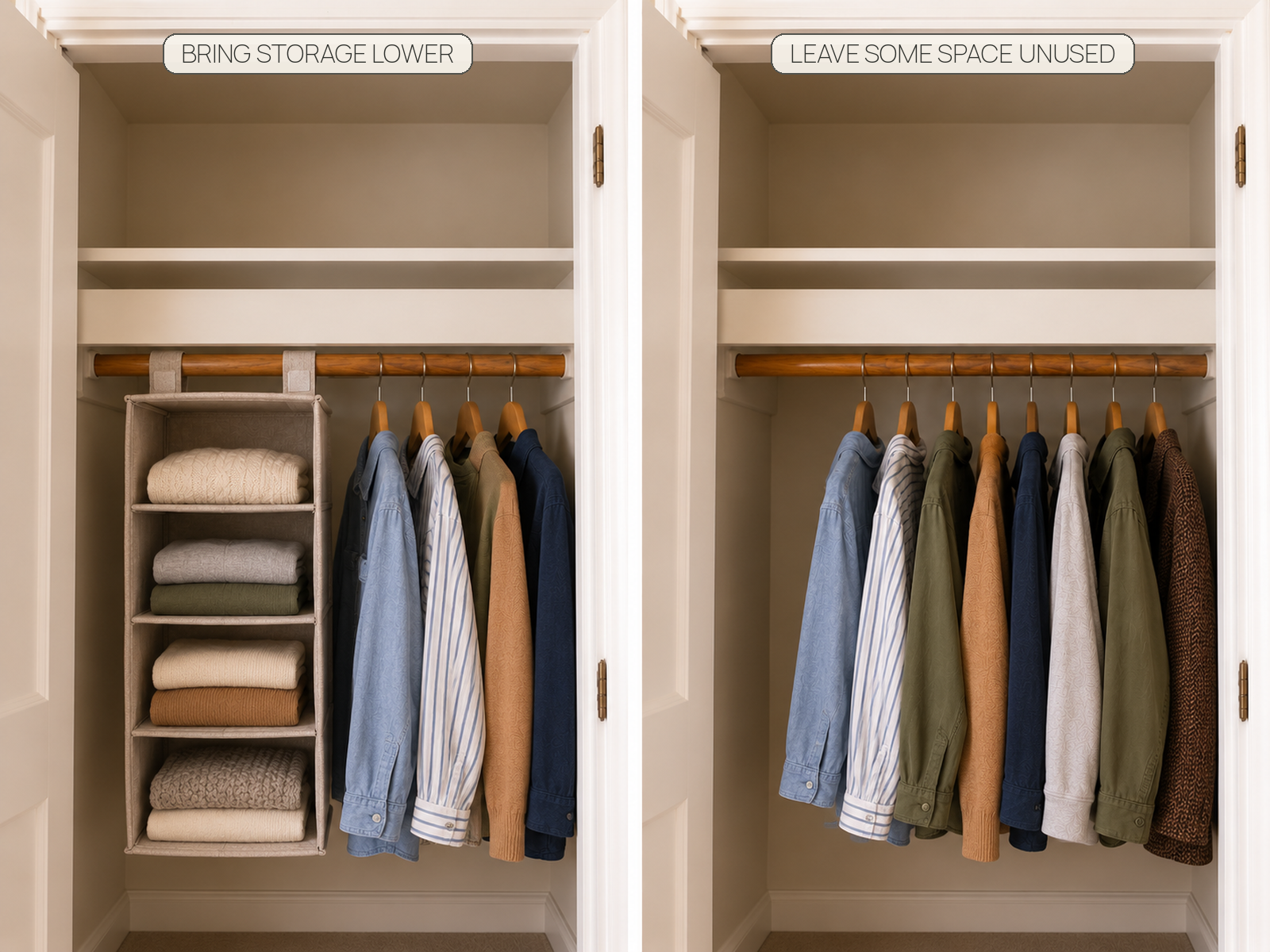
Sometimes the better solution is not to reach higher. It is to move the category into a lower, more usable zone.
A rod-hung fabric organizer can convert some hanging width into reachable shelf-like storage without drilling when the exact product and existing rod are suitable. IKEA’s current SKUBB six-compartment organizer is one verified example that attaches with hook-and-loop fastening and can be moved.
That trade is not free. A hanging organizer consumes rod width and vertical garment drop. Use it when the category gains more from lower access than the closet loses in hanging capacity.
Use / Skip
Decide whether the high zone deserves to be used
Use
Use it when access stays controlled
Use the upper shelf for appropriate lower-frequency storage when the container fits the shelf and removal path, the installed support is suitable, and the access method is practical enough for repeated use.
Skip
Leave it empty when the access cost is too high
Do not force storage into the upper void when retrieval requires unstable handling, the opening defeats the container path, the shelf condition is uncertain, or the household will not consistently return items.
05
Treat stools and pull-down hardware as separate solution branches
A stable access aid can make an otherwise workable shelf reachable, but it does not fix a container that cannot pass through the door header or a shelf that should not carry more load.
Use access equipment according to its exact instructions and on stable, level footing. Do not design routine retrieval around climbing while controlling a bulky or unstable load, and check the exact product for condition and relevant safety recalls.
Pull-down closet rods and wardrobe lifts solve a different problem by bringing high hanging storage downward. Current Häfele and Rev-A-Shelf systems demonstrate that the solution family is real, but many require side-panel or structural screw mounting; motorized versions can add electrical requirements. They are installation projects, not generic no-drill renter fixes.
06
Know when to leave upper space unused
A small closet does not become better simply because every cubic inch is filled. If the only way to use the upper cavity creates unsafe handling, permanent modification, excessive retrieval friction, or a system nobody will maintain, intentionally unused volume can be the more functional choice.
Before giving up the entire category, look for a lower existing zone, a smaller reachable container, a different apartment storage location, or a trade that uses some rod width instead. The goal is usable capacity across the home, not maximum occupancy inside one closet.
High space earns its place only when the return path works as well as the storage path.
What Not to Do
Do not confuse tall space with usable storage
- Do not buy a bin because it fits on the shelf without testing whether it can move through the actual door and header opening.
- Do not rely on one universal top-shelf height, shelf depth, bin weight, or existing-shelf load limit.
- Do not stack daily-use categories in a zone that requires excessive retrieval and return effort.
- Do not add load to shelving, rods, brackets, clips, or tracks that are sagging, loose, damaged, or of uncertain capacity.
- Do not stand on access equipment in a way the exact product is not designed for.
- Do not assume a pull-down rod, added shelf, or closet track is renter-friendly merely because it can later be removed.
- Do not modify landlord-provided closet components or add fixed systems without resolving installation requirements and permission.
The best high-shelf system is not the one that stores the most. It is the one whose contents can be identified, reached, removed, controlled, and returned without making the closet harder to use.
RELATED GUIDES
What to Read Next
NEXT GUIDE
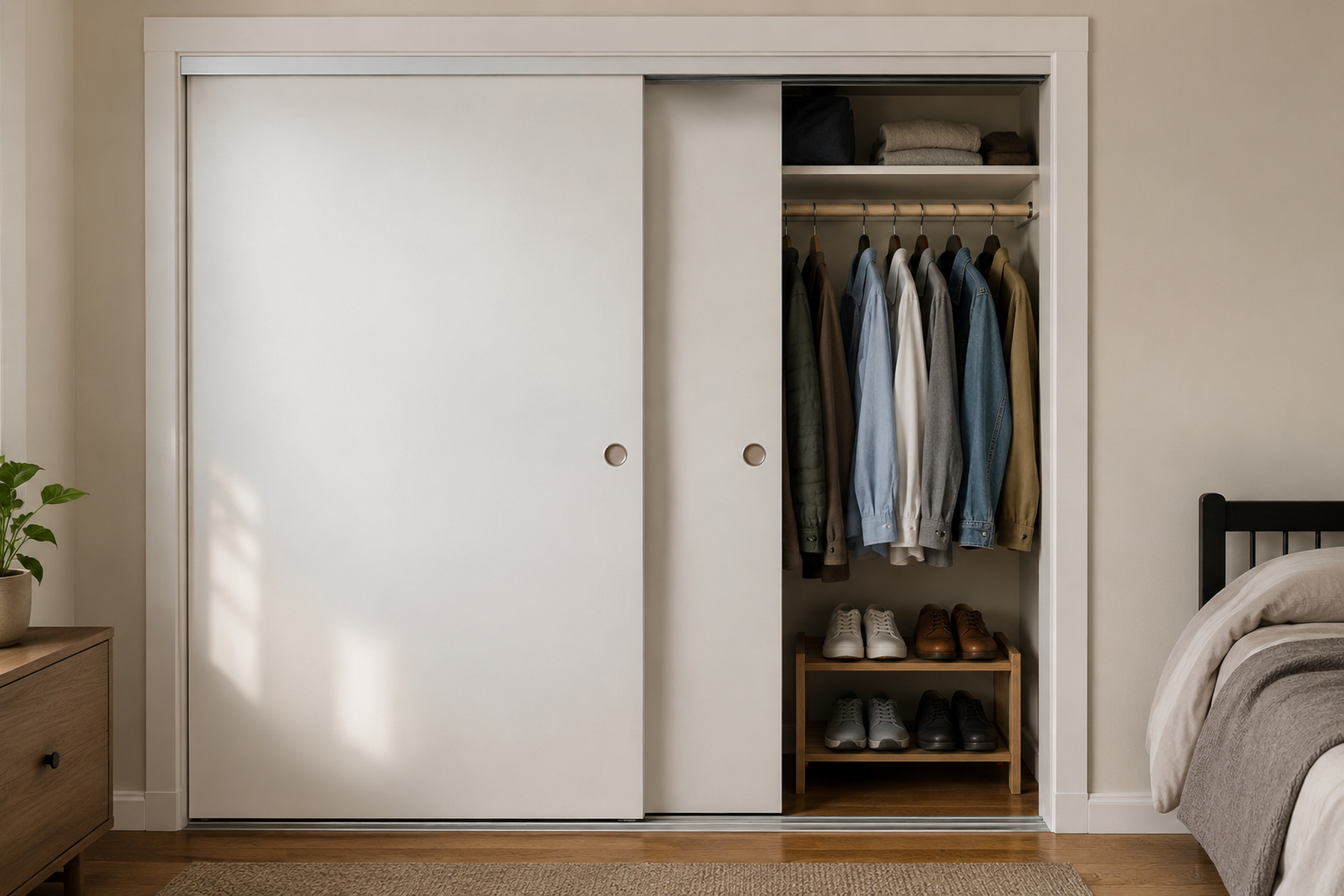
How to Organize a Small Closet With Sliding Doors—Without Losing Access
Use this when the opening constraint is primarily horizontal and bypass doors expose only part of the closet at one time.
GUIDE
How to Store Off-Season Clothes When Your Small Closet Has No Extra Space
Read this when the category you are considering for the high shelf is seasonal clothing and you need to compare that zone with other storage options.
GUIDE
How to Make Wire Closet Shelves Work for Folded Clothes and Small Items
This helps when the existing shelf surface itself—not just its height and removal path—is creating the storage problem.