
Small Closet Organization
How to Make Wire Closet Shelves Work for Folded Clothes and Small Items
Keep the installed wire system when it is structurally sound, then fix only the surface problem. Use a removable liner or rigid overlay where folded clothes and small items need continuous support, add bins only where containment helps, and leave the wire open for categories that already sit securely on it.
In This Guide
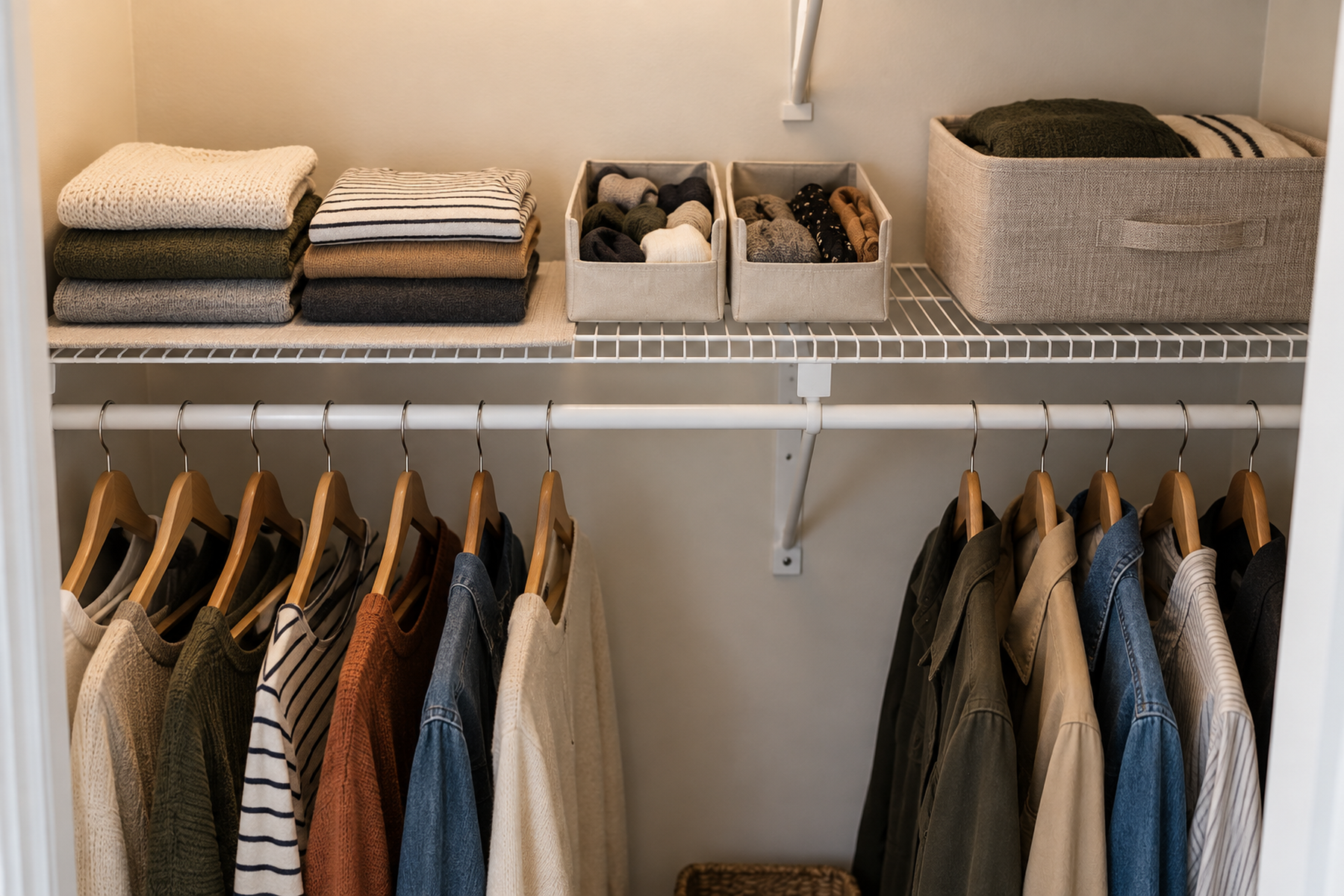
Builder-grade wire shelving is not automatically a bad closet system. It can be securely installed, ventilated, and perfectly usable for hanging clothes or large containers while still being frustrating for folded shirts, sweaters, socks, underwear, small boxes, narrow shoes, and bins that need a continuous base.
The useful first question is therefore not whether the wire shelf should be replaced. It is what the stored category is failing to do: sit flat, stay contained, remain stacked, stay visible, or remain structurally supported. Fix that specific failure mode and leave the rest of the system alone.
Quick Answer
Fix the Surface Problem Before You Replace the Closet System
If the wire shelving is structurally sound, the lowest-commitment solution is usually to adapt the surface only where the stored category needs it.
01
Add a flat surface when items sag, tip, or wobble
A purpose-made liner or rigid removable overlay can create continuous support for folded clothes, small boxes, or containers whose bases do not sit securely across the wire grid.
02
Add a bin when the real problem is containment
Socks, underwear, scarves, belts, and other loose items may need side walls more than they need a fully lined shelf. A stable flat-bottom bin can solve the category without covering the entire wire surface.
03
Leave the wire bare when the category already works
Large flat-bottom bins, bulky bags, structured storage cases, and other items that bridge the wires securely do not need an extra layer simply because the shelf is open-grid.
01
Confirm the Wire Shelf Is Sound Before You Add Anything
Inspect the shelf before treating the problem as organization.
Look for sagging wire, bent sections, loose brackets, missing supports, pulled fasteners, shelf separation, or a rod that is beginning to bow with the shelf. If the system is moving or pulling away from the wall, stop adding organizers and route the problem to repair or property maintenance instead.
A liner changes the way small items sit on the shelf. It does not strengthen the wall attachment, increase the rod capacity, or create a new structural rating for the shelving system.
When the shelf is sound, note its usable depth, front lip, wire spacing, dividers, support brackets underneath, and how far the shelf sits above eye or shoulder level. Those details determine whether a liner, bin, or divider will improve the closet or simply create another access problem, while keeping the scope clear: surface usability belongs here; structural failure does not.
02
Decide Whether You Need Surface Support or Containment
Start with the item, not the organizer.
Folded shirts or sweaters that sag between wires need a continuous surface. Small accessories that fall through the grid need containment. A tall stack that collapses when one item is removed needs stack control. A shelf that is too high or too deep needs a reach or layout solution rather than a liner.
One category can need more than one job. Folded underwear may sit better on a liner but still scatter without a bin; sweaters may need a flat surface plus a low divider so one pile does not push into another.
Do not cover every shelf by default. If the shelf already works for a broad flat-bottom bin or a large structured bag, leaving the wire open preserves the original system without adding cost, material, or extra cleaning.
Measure / Check First
Before ordering a liner, overlay, bin, or divider, measure the actual wire shelf and the way the stored category is retrieved.
Check the Shelf Profile, Container Base, and Retrieval Path First
01
The usable shelf surface
Measure shelf depth and width, note the wire direction and spacing, front lip or integrated hang-rod shape, built-in dividers, wall brackets, and any corner geometry that changes the flat area.
02
The item or container footprint
Check whether folded clothes bridge the wires, whether a bin base has enough continuous contact, and whether narrow shoes or small boxes can sit level without tipping or slipping into the grid.
03
The access path
Make sure the liner or bin can pass through the closet opening, slide past any front lip or divider, and be removed without unloading another category. A surface fix should not make a high or deep shelf harder to reach.
If the proposed organizer solves the wire gaps but creates a new reach, visibility, or load problem, choose a simpler category-specific fix.
03
Use a Shelf Liner Only Where a Flat Surface Solves the Problem
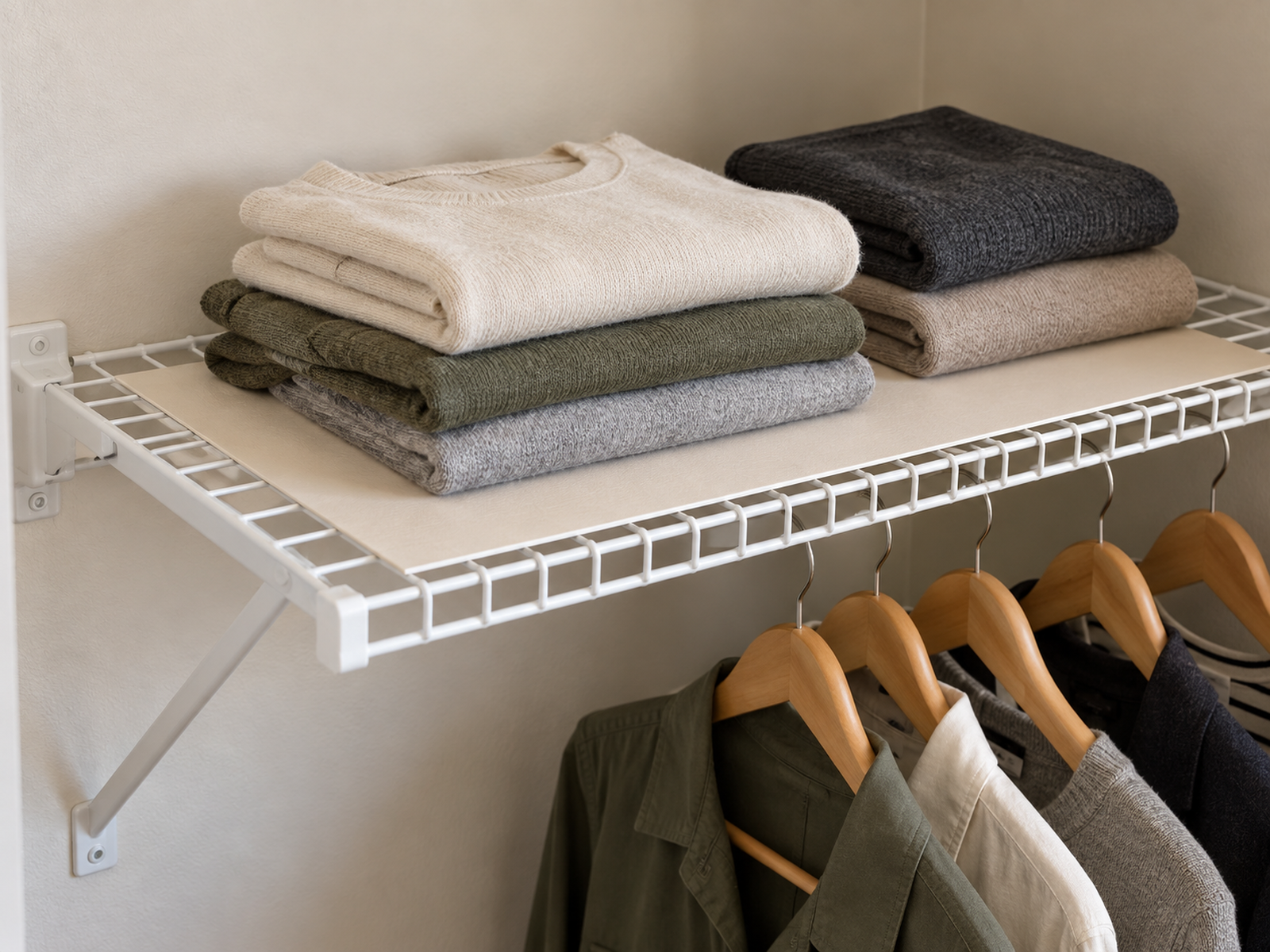
A purpose-made wire-shelf liner is the most direct fix when folded clothes, boxes, or small containers need a smooth deck.
ClosetMaid’s current shelf-liner products are designed specifically for wire shelving, use locking tabs, and are intended to prevent small items from tipping or falling through. Current versions are sold for different shelf depths, which is why the wire shelf itself should be measured before choosing one.
A rigid removable overlay can provide an even firmer base for containers with small feet or narrow contact points. The same boundary still applies: the overlay changes the surface, not the structural capacity of the shelf underneath.
Cover only the shelf sections that benefit. A full run of liner is unnecessary when half the shelf holds large bins that already sit securely and the other half holds folded clothing that needs continuous support.
04
Keep the Liner Removable and Matched to the Wire Profile
A good liner should stay flat, avoid catching on the front edge, and remain easy to remove for cleaning or move-out.
Use a product intended for the shelf profile where possible instead of assuming any plastic sheet will fit securely. Front lips, shelf-and-rod shapes, and built-in dividers can prevent a generic panel from sitting flat.
If a liner needs trimming, follow the product instructions and keep the final edge controlled so folded fabrics and bins do not snag during normal use.
Do not use adhesive as the default way to make a liner permanent on landlord-provided shelving. The goal is to adapt a sound rental fixture, not turn a reversible surface fix into a finish or removal problem.
Use / Skip
A Purpose-Made Removable Shelf Liner
Use
Use it when the wire gaps are the real reason the category will not sit flat
A liner is a strong fit when the shelf is structurally sound, the product matches the shelf depth/profile, folded clothes or containers need continuous support, and the added surface still preserves ventilation, retrieval, and normal shelf access.
Skip
Skip it when the shelf problem is actually reach, containment, or structural failure
Choose bins, a different folding system, another shelf location, or the separate repair pathway when items still need side containment, the shelf is too high or deep, or the wire system is sagging, loose, or pulling away from the wall.
05
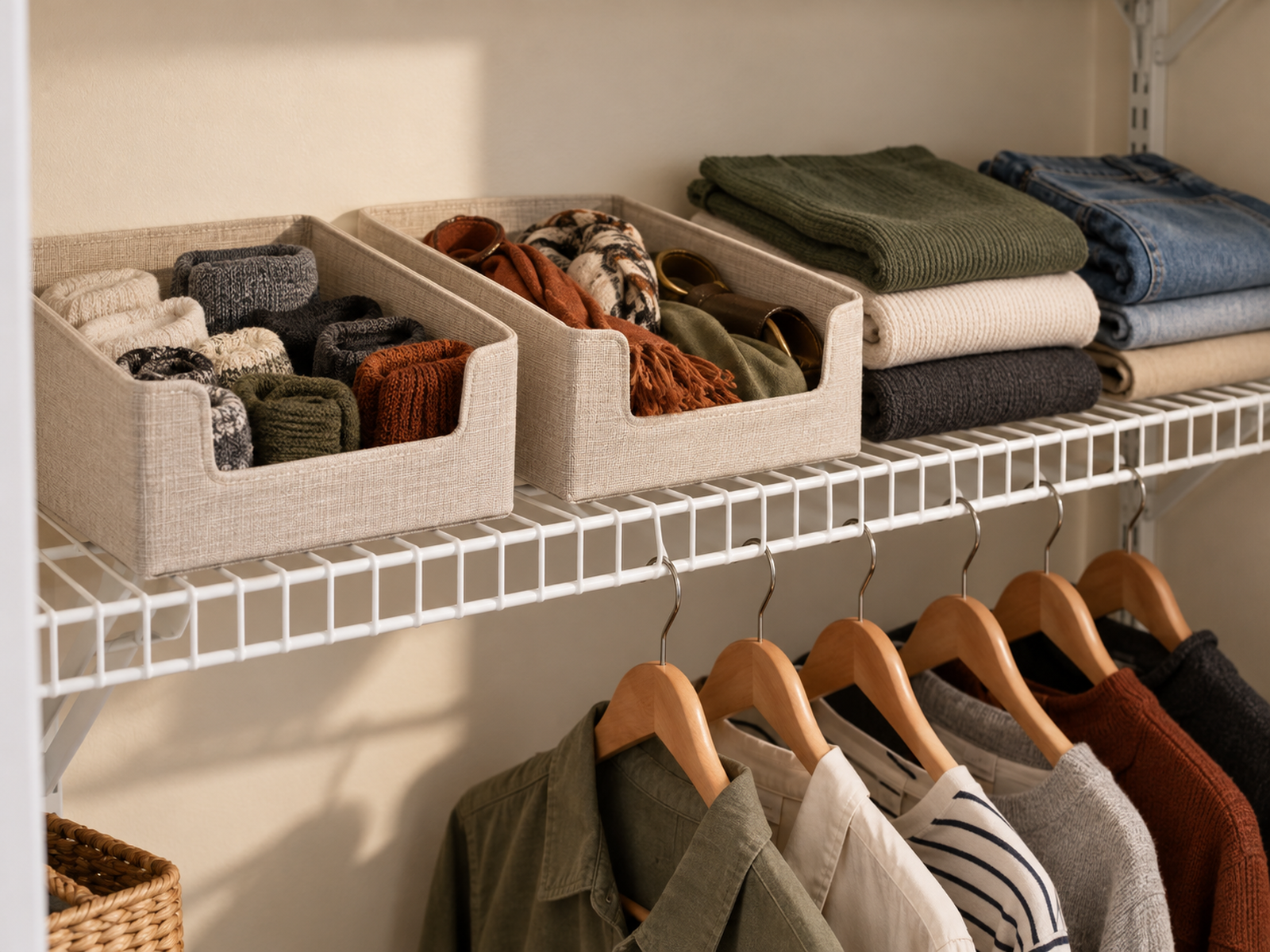
Use Flat-Bottom Bins for Socks, Underwear, and Small Accessories
Loose categories often need a boundary more than they need a completely solid shelf.
Use flat-bottom bins for socks, underwear, scarves, belts, small accessories, or gym wear when the category would otherwise fall through the wires or spread across the shelf.
Choose a bin shallow enough that the contents remain visible and the container can be removed through the closet opening. A deep opaque tote can solve wire gaps while creating a new inventory problem.
Open-front bins can work especially well for frequently handled folded items because the category gains side support without requiring the entire container to be pulled out for every use.
06
Control Folded Stacks Without Turning the Shelf Into a Bin Wall
Even a perfectly solid shelf will not stop a tall stack of shirts or sweaters from collapsing when the middle item is removed.
Keep stacks shorter, split broad categories into smaller groups, or use compatible dividers where the wire profile allows them. Rolling or file-style storage inside a bin can also reduce pile collapse for garments that tolerate that method.
Do not add so many containers that the closet becomes harder to scan. The purpose of the liner and bins is to reduce handling, not hide every garment behind a container wall.
If a shelf is already high or deep, fewer larger categories may be easier to manage than many small bins that each have to be pulled out and inspected.
07
Keep Heavy and Hanging Add-Ons Within the Existing System’s Real Capacity
A liner can make the shelf feel more substantial without making it structurally stronger.
ClosetMaid’s current heavy-duty wire shelves publish high load ratings only for specific products installed according to the manufacturer’s system, hardware, spacing, and evenly distributed load conditions. Those numbers should not be transferred to unidentified apartment shelving.
The same caution applies to hanging cubbies and suspended organizers. Current add-on products have their own published loads, and every item hung from the existing rod or wire system becomes additional demand on the original supports.
Use the separate sagging-closet pathway if the shelf or rod is already distressed. Do not turn a surface problem into a structural problem by adding dense bins, books, heavy shoes, or another suspended storage tier.
08
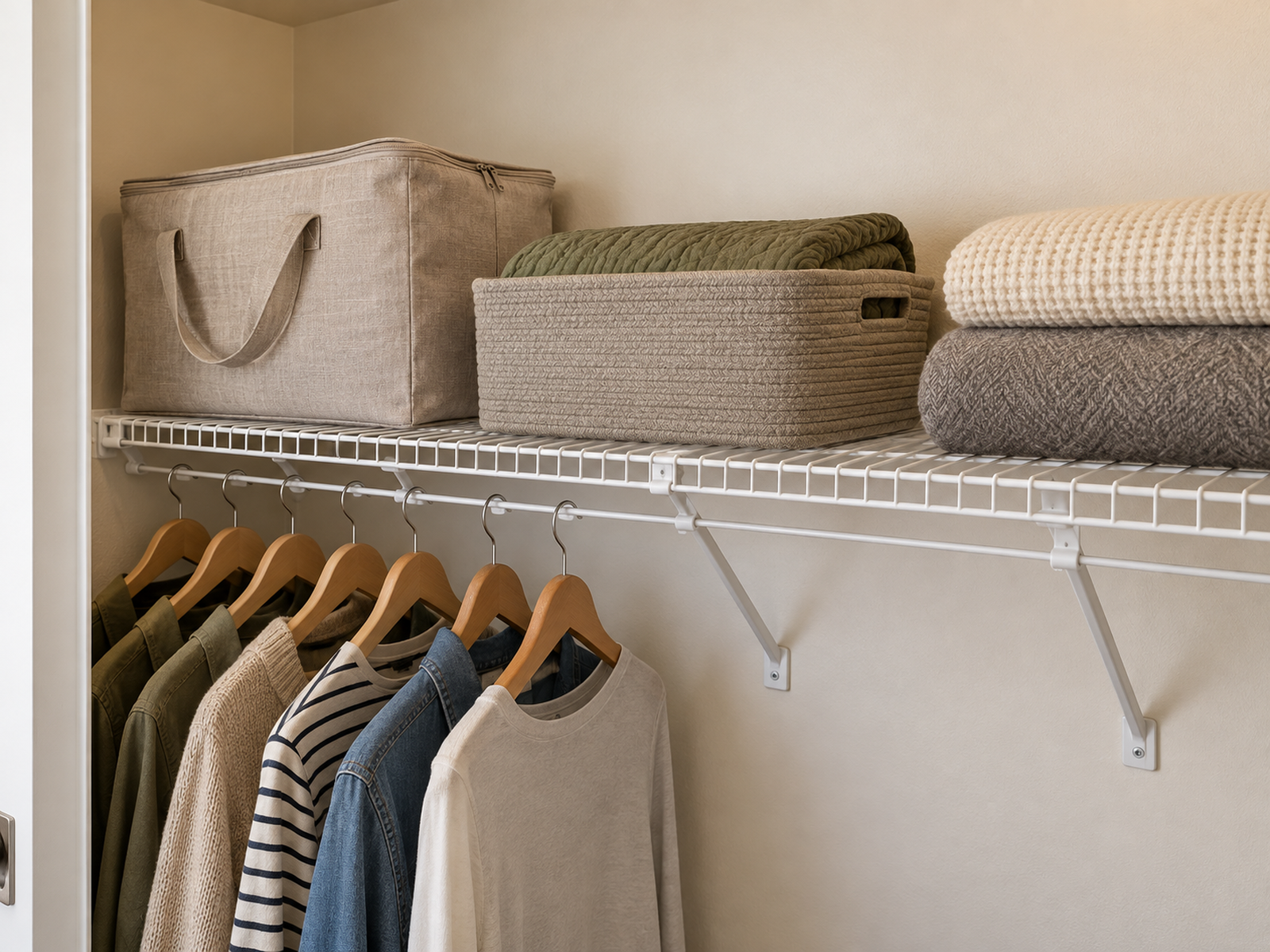
Leave the Wire Shelf Open for Categories That Already Fit
Some of the best wire-shelf organization requires no purchase.
Large flat-bottom bins, bulky handbags, structured storage bags, folded blankets, and other broad-base items may already bridge the wires well enough to remain stable.
Leaving those sections open preserves ventilation, avoids unnecessary material, and makes the organizer system easier to change when the wardrobe changes.
Adapt only the zones where the wire geometry creates real friction. In a rental, that targeted approach usually delivers more value than removing a structurally sound installed system simply because a solid shelf would look cleaner.
Closing Decision
Fix Only the Failure Mode the Wire Shelf Actually Creates
A wire closet shelf can be structurally sound and still need help supporting folded clothes or small items. Separate surface support, containment, stack stability, access, and structural integrity before choosing the fix.
Use a removable liner where a continuous base solves the problem, bins where a category needs boundaries, and no added layer where the shelf already works. If the wire system itself is sagging or loose, stop organizing around it and move to repair instead.
RELATED GUIDES
What to Read Next
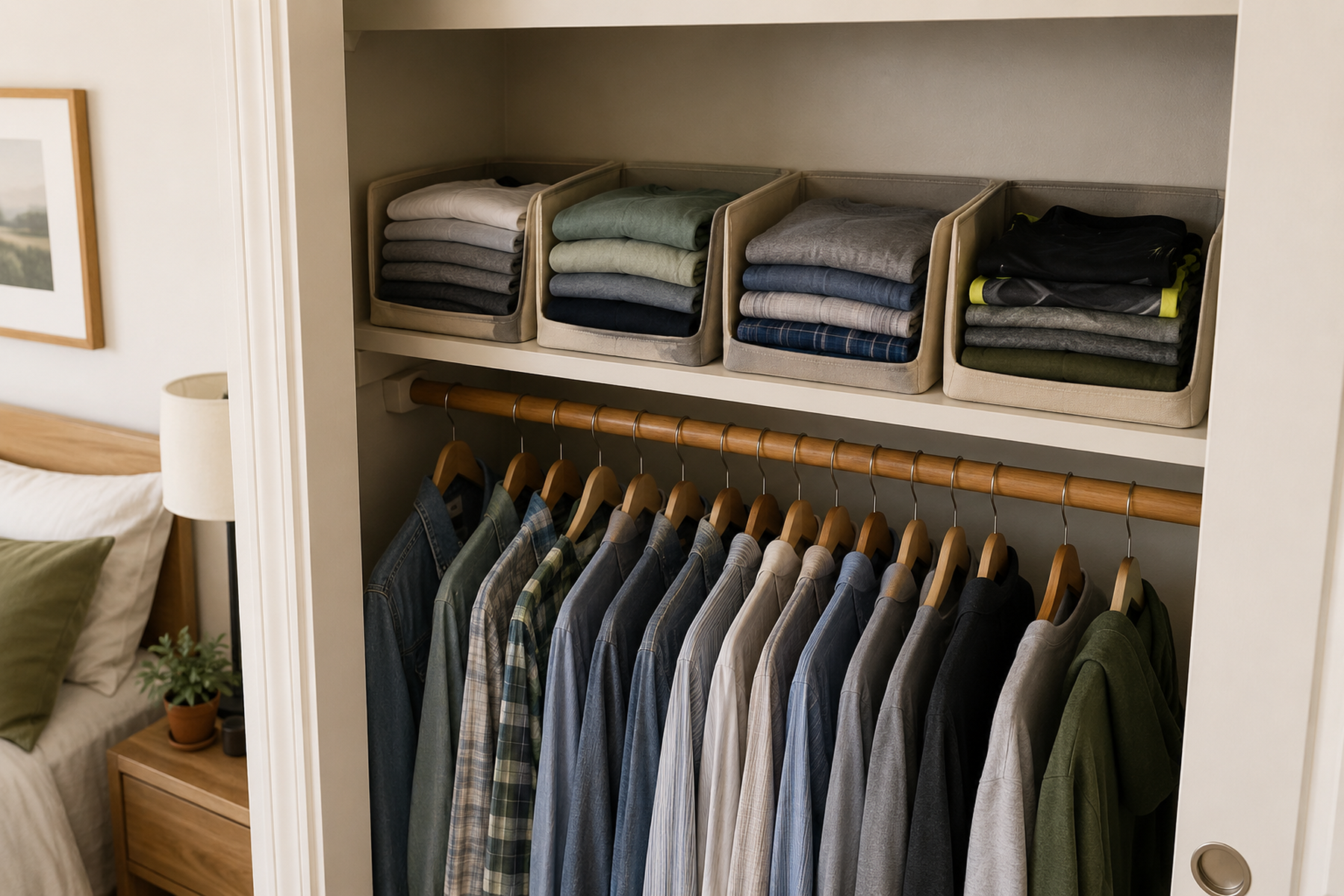
NEXT GUIDE
How to Store Folded Clothes in a Small Closet With No Dresser
Use this next if the wire surface is stabilized but the larger problem is how to divide, stack, or contain the full folded wardrobe without drawer storage.
GUIDE
How to Store Sweaters in a Small Closet With Limited Shelf Space
Use this if sweaters are the category still collapsing, spreading, or consuming too much shelf area after the surface itself is fixed.
GUIDE
What to Do When a Closet Rod Sags or Pulls Away From the Wall
Use this instead if the wire shelf, rod, brackets, or wall attachment are bending, loosening, or pulling away; that is a structural-support problem rather than a surface-organization problem.