
Small Closet Organization
What to Do When a Closet Rod Sags or Pulls Away From the Wall
Unload the closet before you add hardware. Then identify whether the rod itself is bowing, the shelf or brackets are deflecting, or the wall attachment is pulling loose. In a rental, repair the load path before adding more organizers, and use temporary freestanding hanging only when you need to move clothing off the failing system.
In This Guide
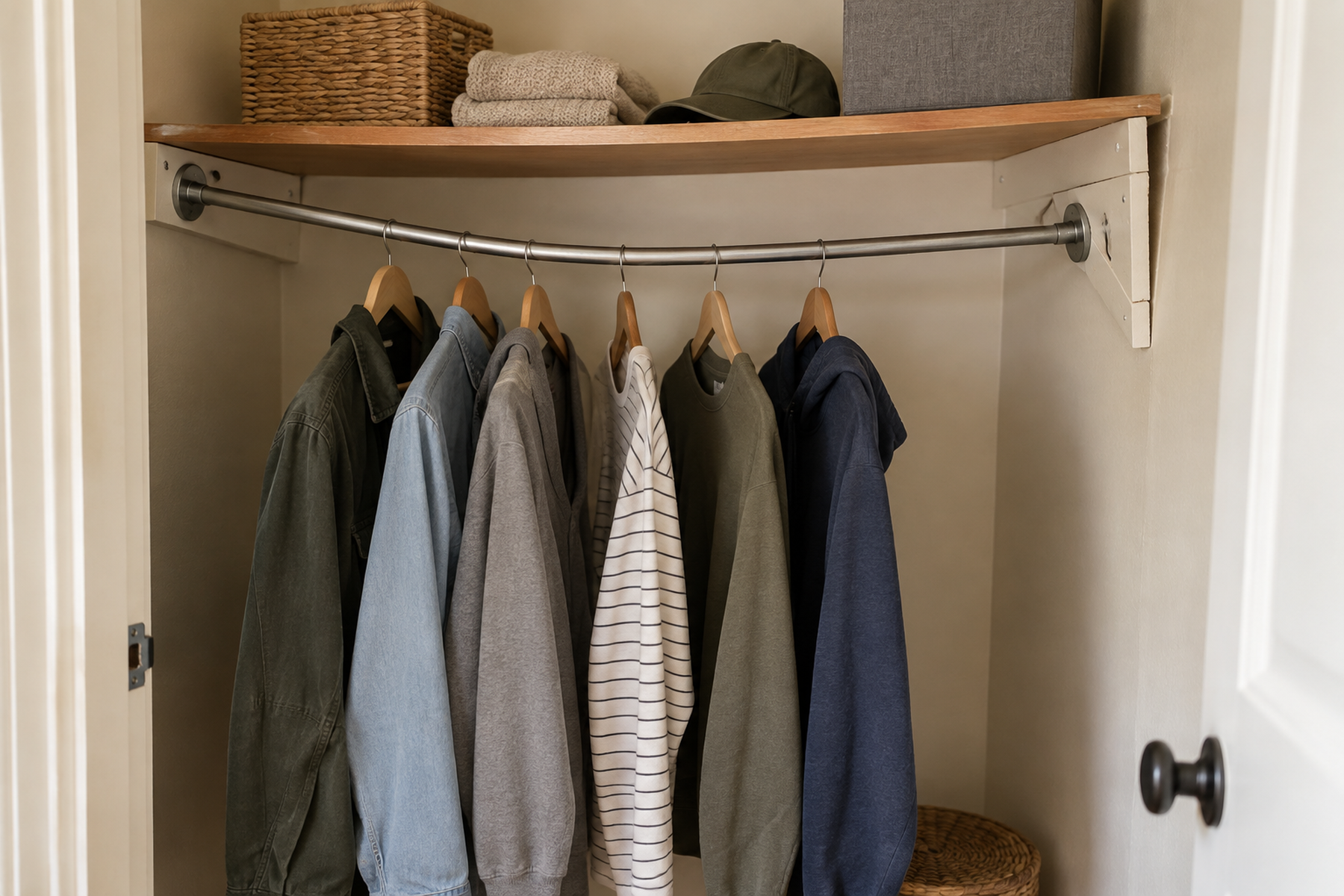
A sagging closet rod is not one diagnosis. The rod may be bending while every bracket stays secure, the shelf-and-rod brackets may be rotating, or screws, backers, and shelves may be pulling away from the wall.
Those failures need different responses. The safest first move is to remove or substantially reduce the load, inspect the closet with the clothes off it, and identify which link in the load path is actually moving before buying a stronger rod or adding another organizer.
Quick Answer
Unload First, Then Diagnose the Load Path
A closet system should be treated as one chain: hanger → rod → support or bracket → shelf/backer/fastener → wall. Strengthening one link does not fix another link that is already failing.
01
Rod bends, mounts stay solid
If the rod bows in the middle while the end sockets, shelf, brackets, and fasteners remain secure, the problem is more likely to involve span, rod stiffness, support spacing, or total hanging load.
02
Shelf, bracket, or fastener moves
If brackets tilt, screws back out, a shelf separates, or a backer tears away, stop treating the problem as “just a sagging rod.” The support path itself needs repair or replacement.
03
Do not hang more organizers from a weak system
A suspended second rod, fabric shelf, or cascading organizer adds load to the same upper rod and supports. Confirm the original system is sound before using it as structure for anything else.
01
Unload the Closet and Find the Moving Part
Remove the clothing from the rod before testing anything else. If screws, nails, brackets, a shelf, or a backer are visibly separating, do not keep loading the closet to find out how much more it can hold.
With the load off, look at the rod first. Does it remain permanently bowed, or does it return close to straight? Then look at the end sockets and any center supports for movement or deformation.
Next inspect the shelf and wall attachment. Check whether brackets remain level, whether screws or nails have shifted, and whether drywall, plaster, backing material, or the shelf itself shows cracking, crushing, or separation.
This unloaded check does not certify the repair. It simply tells you whether the visible problem is centered on the rod span or whether the support assembly is losing integrity.
02
Separate Rod Bowing From Shelf or Wall Failure
A rod that bends while every support stays stable is different from a rod that sags because the shelf-and-bracket assembly is rotating away from the wall.
When only the rod is bowing, the relevant questions are rod material, diameter, unsupported span, compatible center support, and the hanging load. A stronger rod can help only when the support path around it is already sound.
When the shelf, bracket, backer, or fasteners move, increasing rod stiffness can simply transfer more force into the weak attachment. The visible rod may look better while the wall connection becomes the next failure point.
Repeated failure after a repair belongs in the second category until the mounting system is assessed. A closet that collapses, is remounted, and begins sagging again with fasteners backing out is no longer an organization problem.
Measure / Check First
Before replacing a rod or adding support hardware, inspect the closet as a complete system with the hanging load removed.
Check the Rod, Supports, Wall Attachment, and Existing Damage First
01
The rod and unsupported span
Record the rod type, diameter if known, total span, existing end sockets, and whether a center support is already present. Note whether the rod stays bent after unloading.
02
The shelf, brackets, and fasteners
Check whether brackets rotate, shelves bow, backers separate, or screws/nails back out. Existing enlarged holes or damaged wall material change the repair problem.
03
The wall material and product system
Identify the closet system or manufacturer when possible and determine whether the mounting surface is drywall, plaster, masonry, wood framing, or something else. Exact fasteners, support spacing, and load ratings are system-specific.
If the wall or bracket assembly is visibly failing, do not install a center support merely to keep loading the same damaged structure.
03
Add Center Support Only to a Sound Compatible System
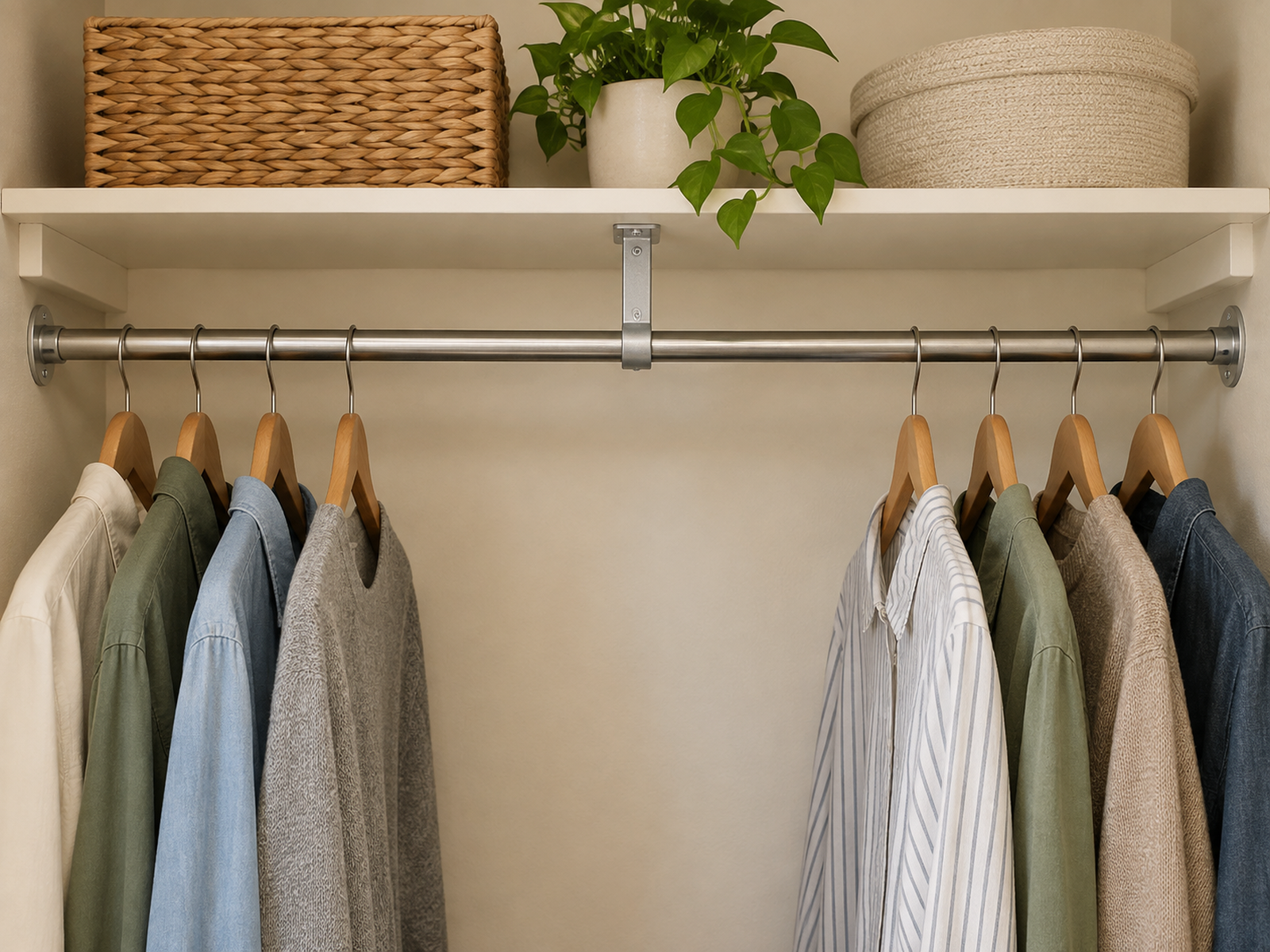
A center support shortens the unsupported rod span and can reduce mid-span bending when the rod and its surrounding system are designed to use one.
Manufacturer documentation shows why the spacing cannot be generalized. Knape & Vogt’s current 29201 center support is designed for a specific KV2 adjustable rod system and uses its own span and spacing rules.
ClosetMaid’s SuperSlide system uses different manufacturer-specified support logic. Those examples demonstrate the principle: use the support pattern for the exact system, not a universal internet rule such as “every rod needs a support every X inches.”
The center support also has to reach the actual rod and mount into a sound support surface. Deep closets, offset shelves, and unusual rod-to-shelf geometry can make a theoretically correct support physically incompatible.
04
Replace a Bowed Rod Only After the Supports Pass
A permanently bowed or undersized rod may deserve replacement once the sockets, brackets, shelf, backer, and wall attachment have been verified as sound.
Match the replacement rod to the supports and system. Diameter, end sockets, center supports, and published load conditions need to work together.
Do not assume that metal automatically fixes the closet. A stiffer rod may reduce visible bending while sending more load into weak brackets or damaged wall attachments.
When the existing fixture is property-provided, replacing the rod or changing supports can also become an ownership and maintenance decision rather than a normal renter organizer swap.
Use / Skip
A Manufacturer-Compatible Center Support
Use
Use it when the rod is the weak span and the surrounding system is sound
A center support can be appropriate when the rod is compatible, the shelf or mounting surface is intact, the support reaches the rod correctly, the exact system permits the installation, and the renter has approval where needed.
Skip
Skip it when the shelf, backer, bracket, fastener, or wall is already failing
Route the problem to repair or system replacement when the existing attachment is pulling loose, damaged holes are visible, the shelf is separating, or the closet has already failed and started sagging again after remounting.
05
Use the Renter Maintenance Path When the Fixture Is Pulling Out
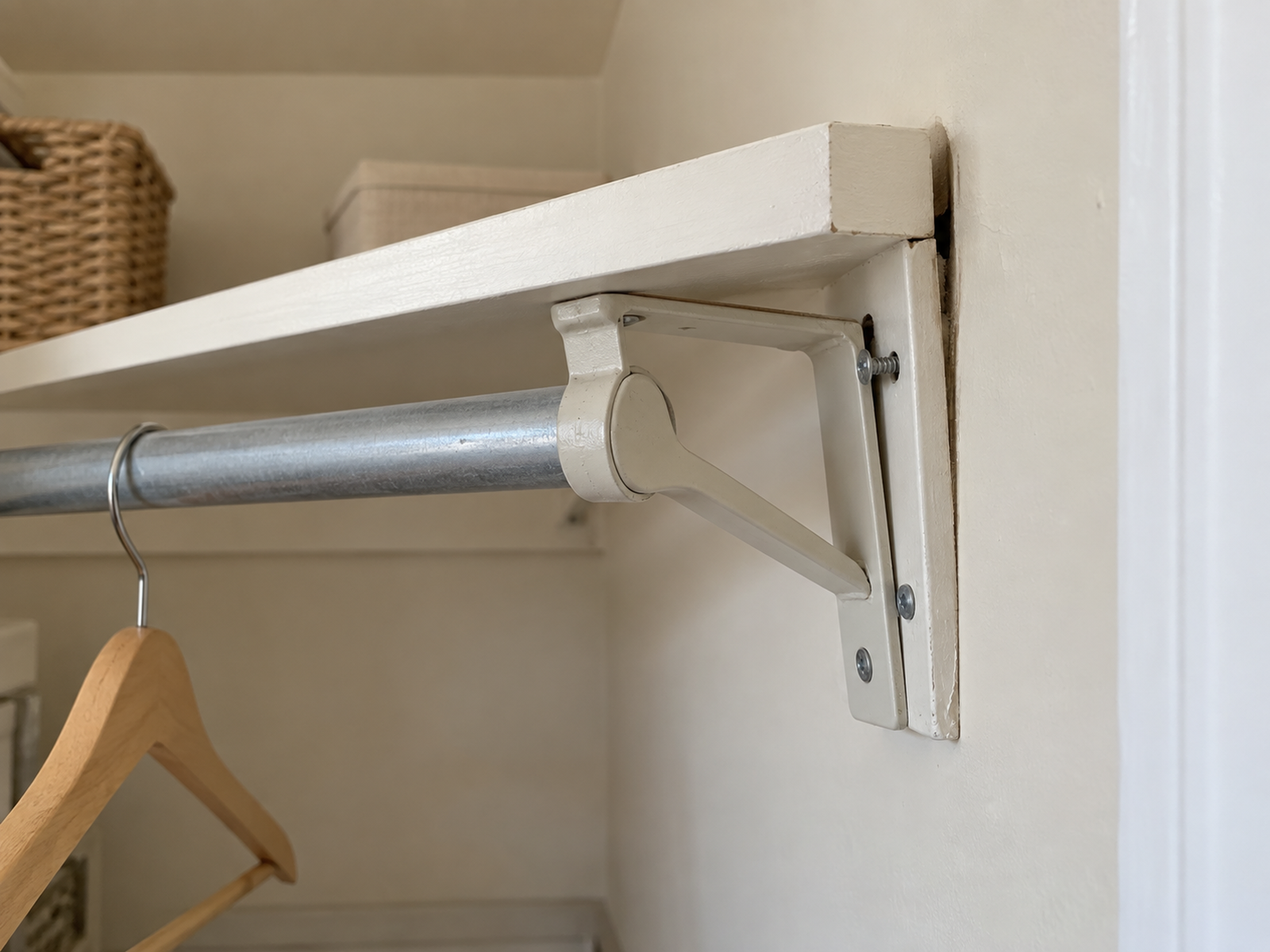
When the rod, shelf, brackets, and fasteners belong to the property, document the condition before adding your own structural repair.
Photograph the sag with the closet loaded only if it can be done without continuing an unsafe condition, then unload it and photograph backed-out screws, separated brackets, torn backers, cracked wall material, or shelf deflection.
Record whether the closet has failed before and whether a previous repair began sagging again. If a manufacturer or system label is visible, include it.
This does not establish who is legally responsible for the repair. It gives property maintenance a clearer description of the failing fixture without asking the renter to diagnose the unseen wall structure.
06
Transfer Hanging Load Temporarily Instead of Adding More to the Rod
If the closet cannot safely carry clothing while repair is pending, move the load off the wall-mounted system.
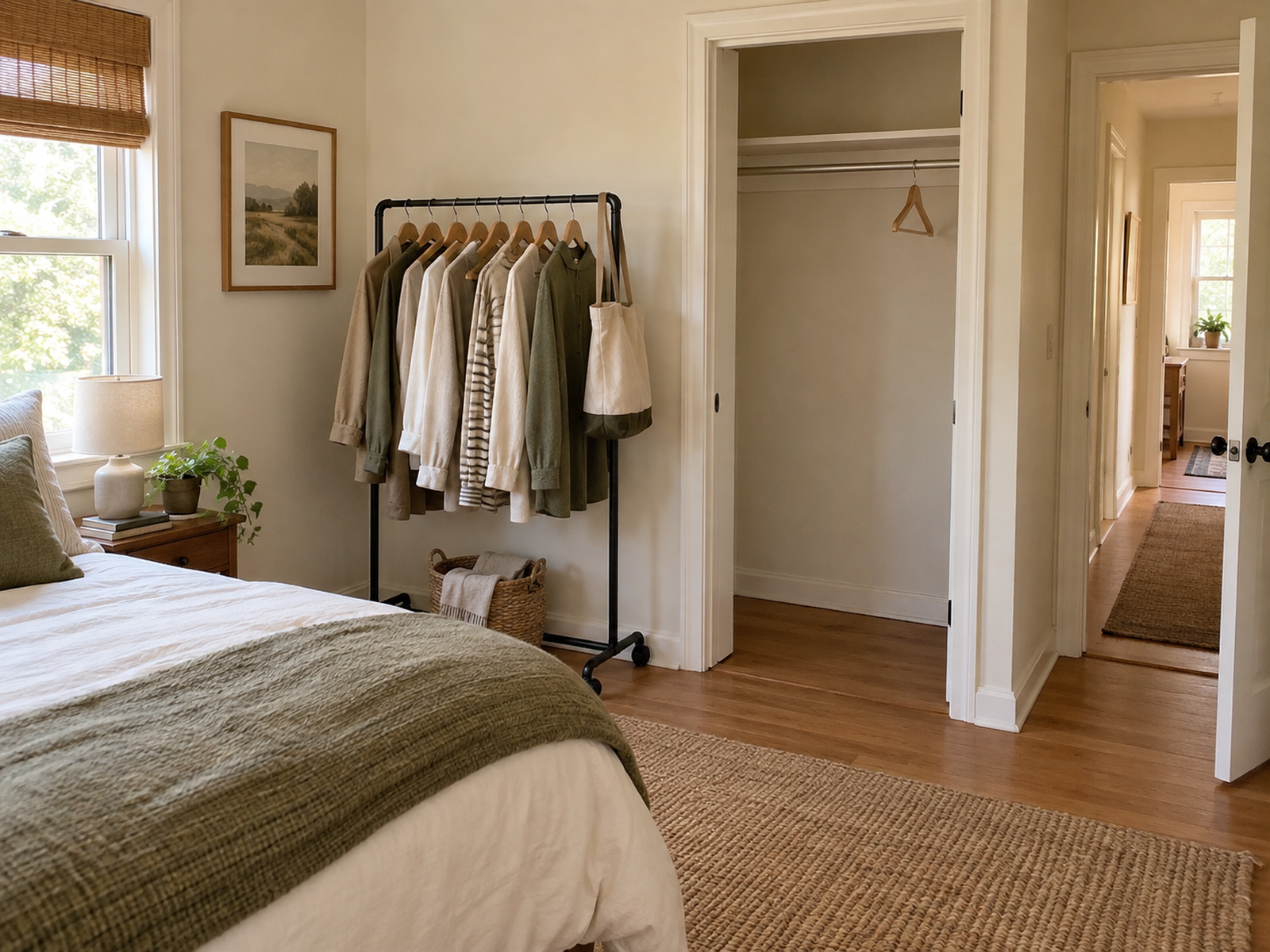
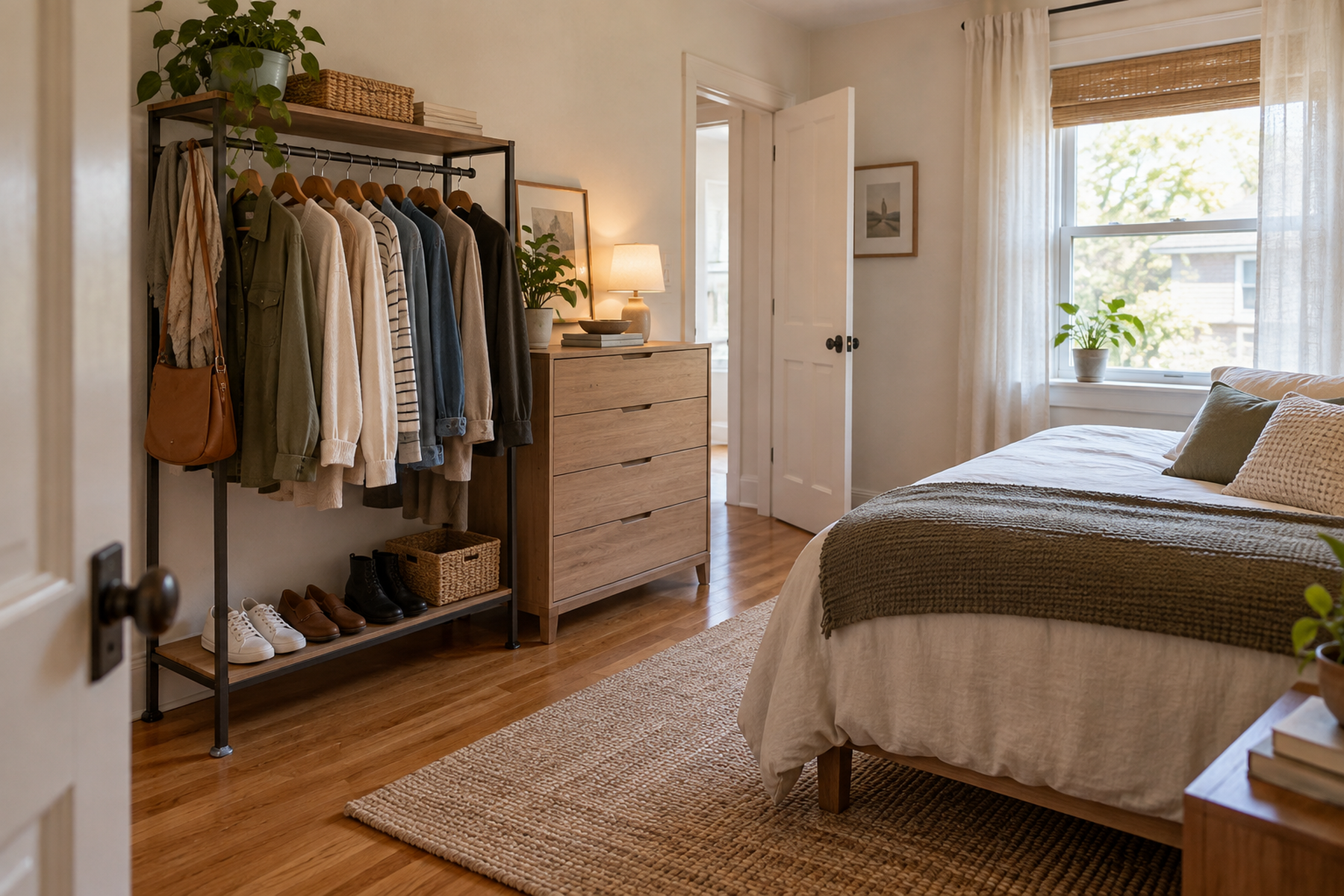
A freestanding garment rack is useful because it sends the hanging load to the floor instead of to the damaged rod, brackets, or wall. Current products also show why the fallback needs its own fit check: IKEA’s MULIG, for example, has a specific footprint and a model-specific maximum load.
In a small bedroom, that temporary rack consumes real floor area. Place it where it does not block the closet door, bedroom door, bed path, or normal circulation.
Move only the hanging categories that need it. Foldable clothing can go temporarily into bins or drawers so the fallback rack does not become overloaded as compensation for the broken closet.
07
Do Not Add a Second Rod or Hanging Shelves Until the Upper System Is Sound
A suspended lower rod can look like an ideal small-closet fix because it creates another hanging tier without drilling.
But the lower rod and every garment on it hang from the original upper rod. The same is true of fabric hanging shelves, heavy cascading systems, and other organizers supported by the existing rod.
That makes them good capacity tools on a healthy system and poor choices on a rod that is sagging, loose, bowed, or separating from the wall.
Repair and verify the original load path first. Capacity expansion comes after support integrity, not before it.
08
Rebuild or Replace the System When the Support Path Is the Problem
A full shelf-and-rod repair may need to address the rod, brackets, backing, fasteners, shelf, and wall material together.
Manufacturer ratings are meaningful only inside the system and installation conditions they describe. Knape & Vogt publishes high ratings for specific shelf-and-rod brackets when properly installed, while IKEA BOAXEL documentation explicitly notes that wall materials support different loads and require different fasteners.
Do not transfer those numbers to an unidentified rental closet. If the wall is damaged, holes are enlarged, the backing has torn loose, or the system has repeatedly failed, competent repair should restore the support path before clothing is rehung.
Once the system is sound, reload gradually and keep dense coats, heavy hanging organizers, and other concentrated loads within the exact system’s documented capability rather than estimating capacity from garment count.
Closing Decision
Repair the Load Path Before You Optimize the Closet
A sagging rod is only the visible symptom. The useful diagnosis is whether the rod, support spacing, bracket, shelf, backer, fastener, or wall is moving under load.
Unload the system first, use a manufacturer-compatible support only when the surrounding structure is sound, and use property maintenance or approved repair when the fixture itself is pulling away. Temporary storage should transfer load off the failing closet—not hang more weight from it.
RELATED GUIDES
What to Read Next
NEXT GUIDE
How to Store Clothes in a Small Bedroom With No Built-In Closet
Use this next if the built-in closet must stay unloaded for a while and the room needs a temporary clothing-storage system that does not depend on the failing rod.
GUIDE
How to Organize a Small Closet With No Built-In Shelves
Use this after the rod and supports are verified sound if the remaining problem is how to add folded storage and make better use of a healthy rod-only closet.
GUIDE
How to Make Room for Long Dresses and Coats in a Small Double-Hang Closet
Use this after structural integrity is restored if heavy or long garments are creating a separate hanging-height and load-allocation problem.