
Small Closet Organization
How to Organize a Small Closet With No Built-In Shelves
A rod-only closet usually has more than one kind of unused space—and every organizer spends some of it. Protect the clothes that need full hanging height first, then add folded, floor, door, or wall storage only where the trade improves everyday access.
In This Guide
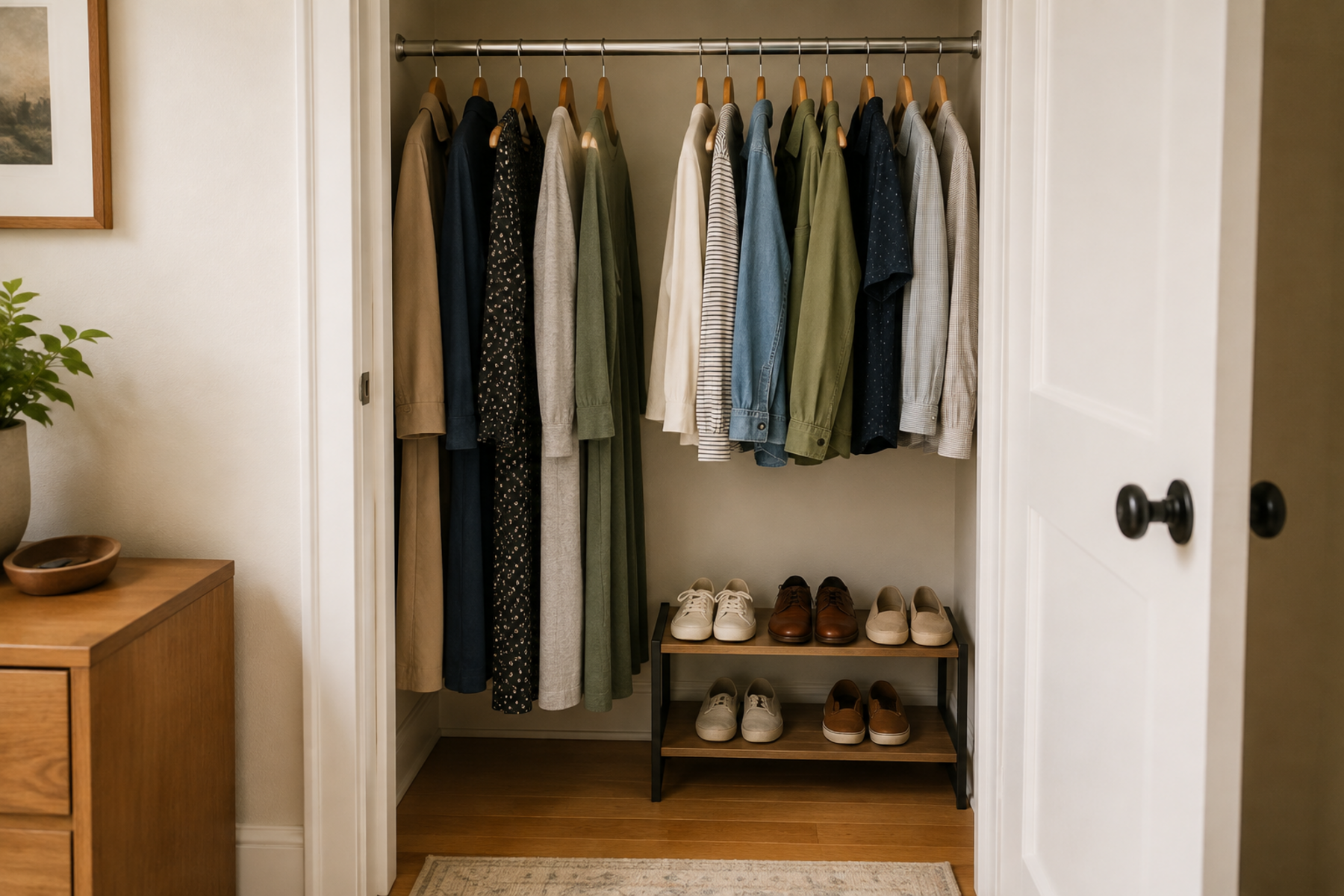
A bare hanging rod can make a small closet look underbuilt, but the empty areas around it are not all interchangeable. Long garments need uninterrupted drop, short garments can share vertical space, floor storage needs depth, door storage needs movement clearance, and the upper zone only helps when it can be reached without turning everyday items into a stack.
The practical job is to divide the closet into storage modes before buying organizers. Once the wardrobe is separated into long-hang, short-hang, folded, shoe, accessory, and low-frequency categories, each added shelf, second rod, floor unit, door organizer, or hook can be judged by the capacity it creates and the access it takes away.
Quick Answer
Budget the Closet by Storage Mode
Divide the wardrobe by storage mode first, protect the full-height hanging space that long garments genuinely need, and add shelves, double-hang, or floor storage only when the capacity gained is worth the rod width, height, or floor depth being spent. Then test the finished layout for real retrieval, door movement, reach, and installation requirements.
01
Sort the wardrobe before the closet
Separate long-hang, short-hang, folded clothes, shoes, accessories, and low-frequency items before deciding which organizer deserves space.
02
Protect full-height hanging first
Reserve enough uninterrupted drop for the longest garments before adding a second rod, hanging cubby, or floor unit beneath the existing rod.
03
Make every conversion explicit
A hanging shelf spends rod width, a second rod spends long-hang height, and a floor unit spends floor depth. Add one only when the new storage is worth the capacity or access it replaces.
01
Divide the Wardrobe by Storage Mode Before You Add Anything
A rod-only closet is easiest to improve when the inventory is divided by how it actually needs to live. Organized Living’s Clothing Storage Guide uses long-hang, short-hang, and shelf/drawer categories as a planning starting point; that same logic is useful here even when the final solution stays temporary and renter-friendly.
Make six practical groups: long-hang, short-hang, folded, shoes, accessories, and low-frequency or seasonal items. The categories do not need equal space. Their purpose is to reveal which parts of the closet need hanging height, which can use floor or shelf-like storage, and which may be better moved outside the prime everyday zone.
This step also prevents a common mismatch: buying a large shelf organizer because the closet has no shelves, then discovering that the real shortage was shoe storage, long-garment clearance, or easy access to a small number of folded items.
02
Protect the Long-Hang Zone Before You Add a Second Level
Coats, dresses, long skirts, robes, and other full-length garments need a continuous vertical path. Measure the longest items that genuinely belong in this closet and reserve that zone before using the space beneath the rod for another hanging level or a floor unit.
Short garments create the most flexible vertical area. Shirts, blouses, jackets, and folded-over pants may leave usable space below them, but the exact amount comes from the real garments and rod position rather than a generic closet diagram.
A mixed closet usually works better than a uniform one. Preserve a full-height section for long pieces, then let the short-hang section carry the storage conversions that fit underneath or beside it.
Measure / Check First
Generic closet dimensions can be useful design references, but they do not tell you how this closet behaves with this wardrobe. Use the actual opening, rod, garments, floor, and door as the working measurements.
Measure the Closet and the Clothes Together
01
Measure the usable rod and opening
Record the rod width you can actually access through the door opening, including any sections that become awkward behind a jamb or bypass panel.
02
Measure garment drop by category
Check representative long-hang and short-hang pieces so you know where a second rod, hanging cubby, or floor unit can fit without touching the clothes.
03
Measure floor, door, and upper access
Check usable floor depth, door swing or slide, organizer projection, and whether upper storage can be reached without moving everyday items first.
Let those measurements define the storage zones. A product that technically fits the closet cavity still fails if it blocks garment drop, door movement, or the retrieval path.
03
Use a Hanging Shelf Only Where Folded Storage Is Worth the Rod Width
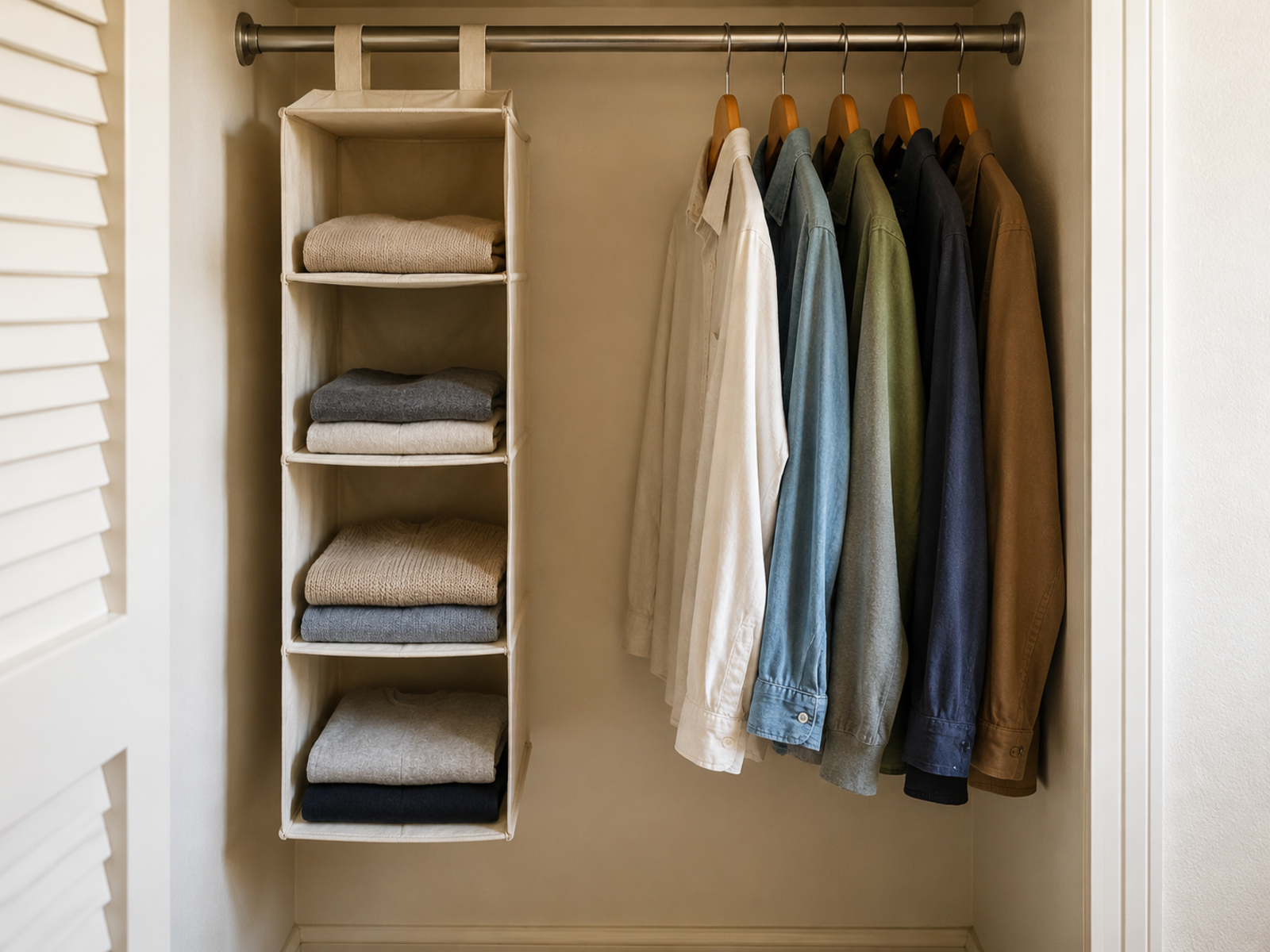
A rod-hanging cubby creates shelf-like storage without drilling, but it does not create that storage for free. It takes a measurable section of the existing rod and can reduce the room available to slide hangers or reach garments beside it.
IKEA’s current SKUBB six-compartment organizer is one product-specific example: it hangs from a wardrobe rod and is 13 3/4 inches wide. That measurement is not a category standard; it simply makes the trade visible. Whatever product you use, measure the actual rod width it will occupy.
Give a hanging shelf a deliberate conversion zone rather than squeezing it into the middle of the busiest hanging run. It earns the space when folded storage becomes easier to retrieve and the remaining garments can still move and come off the rod without fighting the organizer.
04
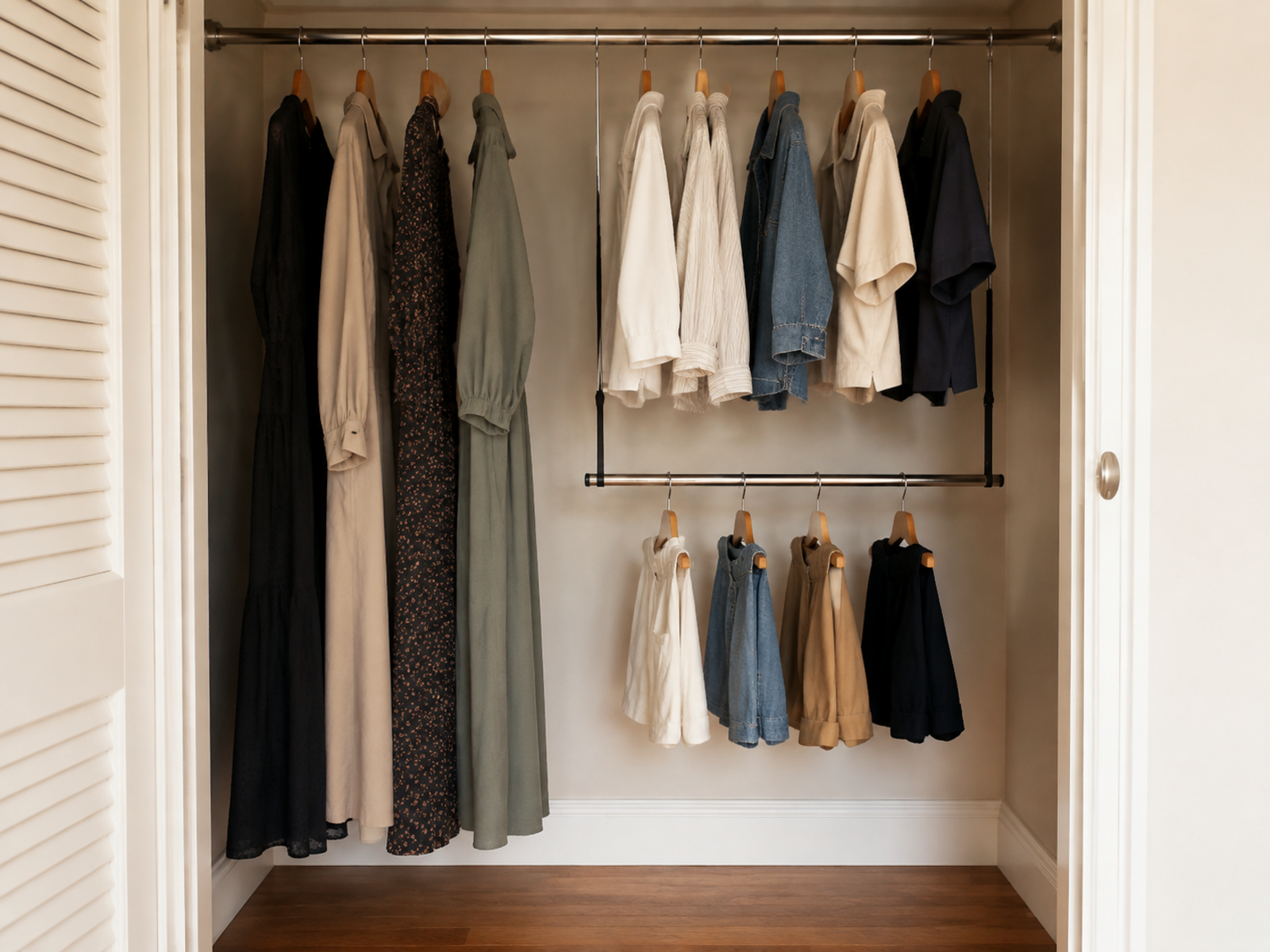
Add Double Hang Only Under Short Garments
A second hanging level can use the vertical gap beneath short clothes, but it should not erase the full-height section protected earlier. Organized Living’s Closet Design Guide treats long hang and double hang as different zones rather than one universal arrangement.
Before adding a removable second-rod accessory, hang the longest short garments you expect to keep in that section and check the space that remains below them. Then verify the exact accessory’s mounting method and load instructions; no generic second-rod capacity is assumed here.
Double hang solves a hanging-capacity problem. It does not solve folded clothes, shoes, or small accessories on its own, so do not use the extra rail simply because the vertical gap exists.
05
Use Low Floor Storage Where It Clears the Garment Drop
The closet floor is useful when it supports a real category without becoming the new pile zone. A low shoe rack, shallow shelf, or contained drawer unit can work under short-hang garments or beside a long-hang section when it stays clear of hems and the closet opening.
Depth matters as much as height. A floor unit that projects too far forward can make the remaining hanging clothes harder to reach, narrow the usable opening, or turn the front of the closet into a stacking ledge.
Keep tall furniture out of the automatic no-drill category. IKEA’s current JONAXEL shelf unit is one example of a freestanding-looking unit whose manufacturer recommends wall anchoring to reduce tip-over risk. If the chosen unit’s instructions require or recommend anchoring, follow those instructions rather than skipping them to preserve a renter-friendly label.
06
Use the Door Only When the Door Type and Clearance Work
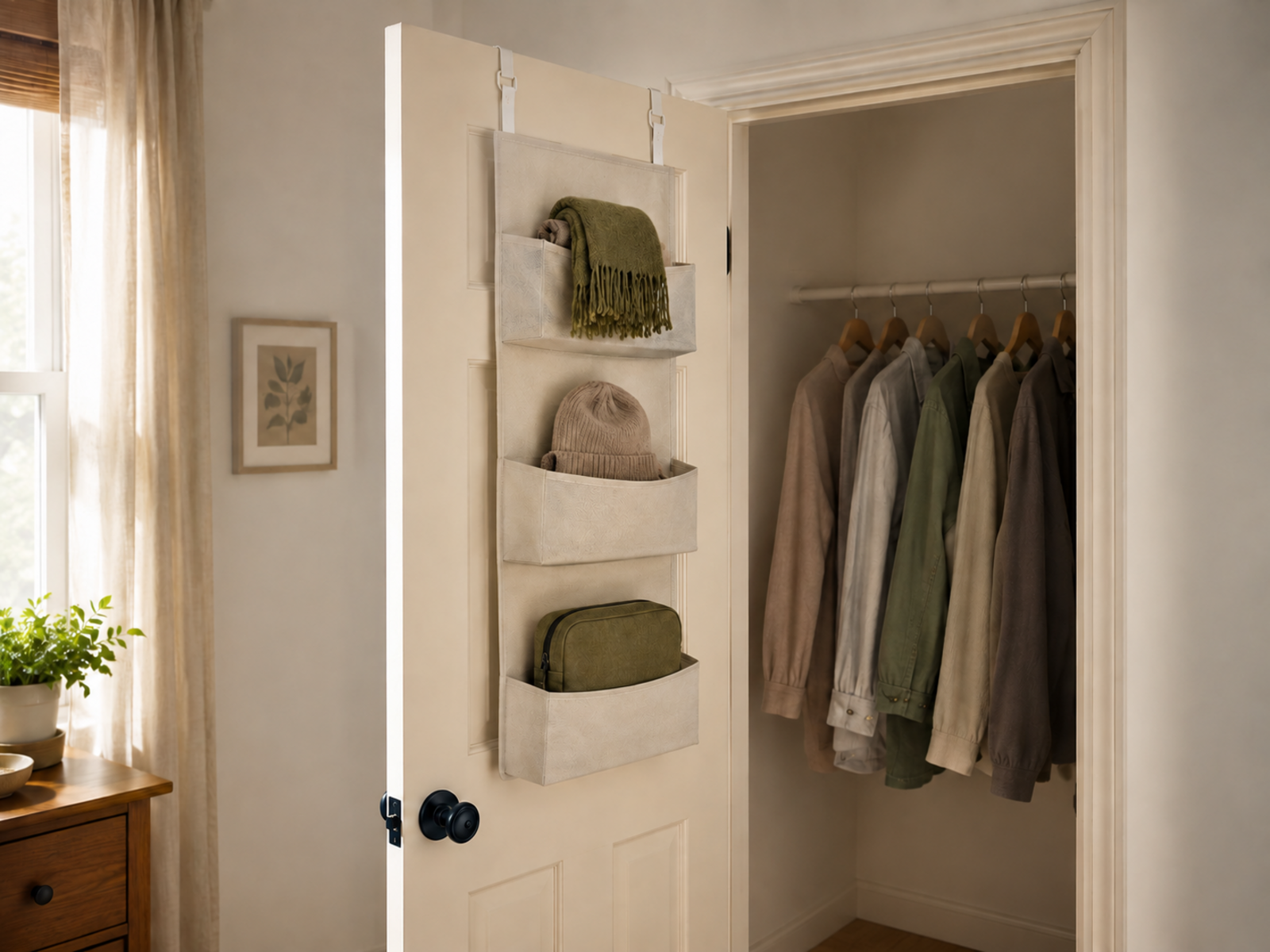
The back of a hinged closet door can carry lightweight accessories or shoe storage without using rod width, but the door itself is an operating surface. Check hook thickness, organizer depth, closure, swing, adjacent wall clearance, and whether the loaded organizer collides with clothing or floor storage inside the closet.
Sliding or bypass doors are a different condition. They do not provide the same usable back-of-door plane, and the access geometry is already covered in Aptly Small’s guide to organizing a small closet with sliding doors.
When the closet has no compatible hinged door, do not force an over-door solution into the plan. Use another storage budget rather than treating door storage as a universal small-closet fix.
What Not to Do
Don’t Fill Every Empty Vertical Inch
Empty space above or below a rod can look inefficient, but access is part of capacity. A second rail, hanging cubby, tall drawer tower, door organizer, and stacked bins can each be individually reasonable and collectively make a small closet almost impossible to use.
Add one conversion only when it solves a defined category and leaves the surrounding system easier to operate. If hangers cannot slide, long clothes sit on a floor unit, the door cannot close, or folded items require moving another organizer first, the extra storage has cost too much.
07
Keep Adhesive Hooks in the Light-Accessory Role
Removable adhesive hooks can create small landing points for hats, scarves, light bags, or a limited number of hangers, especially on unused side-wall space. They are best treated as accessory storage rather than a substitute for structural shelving.
Capacity and surface compatibility are product-specific. 3M’s current Command Clothes Hanger 17019 is rated by the manufacturer for up to 7.5 lb and a specified hanger count; another Command product can have a different rating or surface requirement.
Follow the exact preparation, surface, load, and removal instructions for the product you choose. Do not generalize one adhesive product’s performance to every closet wall, paint condition, or lease.
08
Treat Tall or Wall-Mounted Storage as an Installation Decision
A wall-mounted rail system can turn a bare closet shell into highly efficient mixed storage, but it belongs in a different renter category from hanging cubbies, low floor storage, or removable hooks. IKEA’s BOAXEL wall upright documentation, for example, requires suitable fasteners for the wall material and says the furniture must be secured to the wall.
Tall freestanding furniture can create a similar installation question because stability may depend on anchoring. The U.S. Consumer Product Safety Commission’s Anchor It! guidance advises following manufacturer instructions for securing furniture and highlights top-heavy furniture as a tip-over concern.
If drilling or anchoring is not allowed, that constraint may rule out an otherwise attractive tall or wall-mounted option. Choose a lower removable system that can be used as designed rather than buying an installation-dependent product and omitting the safety step.
Decision Sequence
Build the Mixed Storage System in This Order
01
Sort by storage mode
Separate long-hang, short-hang, folded, shoes, accessories, and low-frequency items so the closet is planned around the wardrobe rather than an organizer.
02
Reserve long-hang and clear access
Protect the full-height garment zone and the door/opening path before spending rod width, floor depth, or wall space elsewhere.
03
Choose the smallest useful conversions
Add hanging shelves, double hang, low floor storage, door storage, or light hooks only where each new zone solves a stronger need than the capacity it replaces.
04
Run the full-use and installation check
Move hangers, retrieve folded items, operate the door, reach the upper zone, and verify exact mounting or anchoring instructions before settling on the final layout.
Closing Decision
Make the Closet More Balanced, Not Simply Fuller
A rod-only closet becomes more useful when its limited resources are assigned deliberately. Long-hang height, short-hang volume, rod width, floor depth, door clearance, wall freedom, and easy-reach space all have different jobs.
Protect the storage mode that cannot be compressed first, then convert the remaining zones where the trade improves daily retrieval. The strongest layout is the one that gives folded items, shoes, and accessories a home without making the hanging clothes or the closet itself harder to use.
RELATED GUIDES
Related Guides
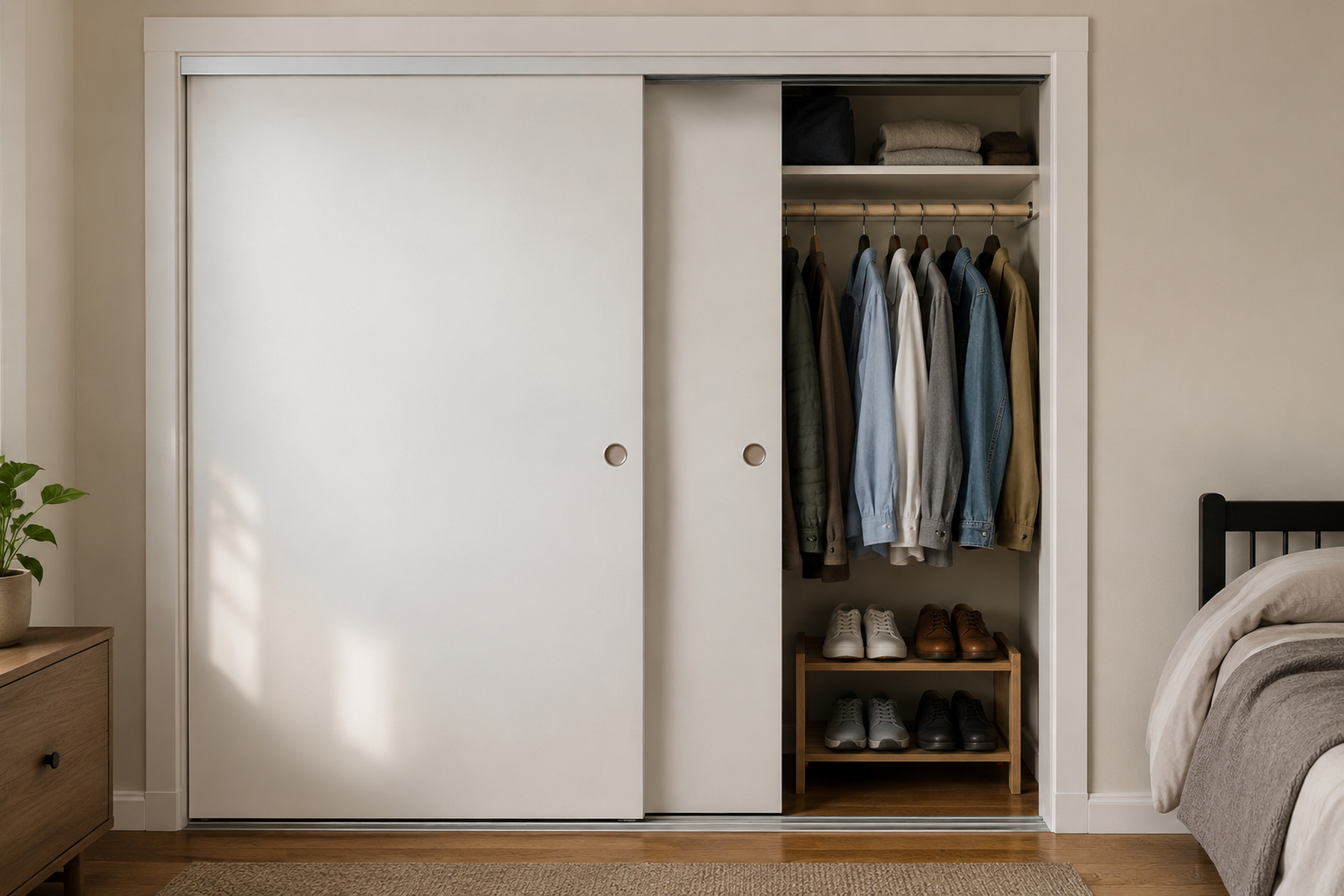
NEXT GUIDE
How to Organize a Small Closet With Sliding Doors—Without Losing Access
Use this when the closet’s door geometry limits access to the rod, sides, or back-of-door storage.
GUIDE
How to Store Folded Clothes in a Small Closet With No Dresser
Use this when folded-clothing volume remains the main problem after the rod-only closet has been re-zoned.
GUIDE
How to Organize a Small Closet Shared by Two People
Use this if the rod-only closet also has to serve two people and the next problem is dividing limited hanging and shelf space clearly.