
Small Closet Organization
How to Make Room for Long Dresses and Coats in a Small Double-Hang Closet
Measure the garments before changing the closet, reserve one honest full-height hanging bay for the pieces that need it, then use double hang only where short clothes and the lower storage zone actually fit.
In This Guide
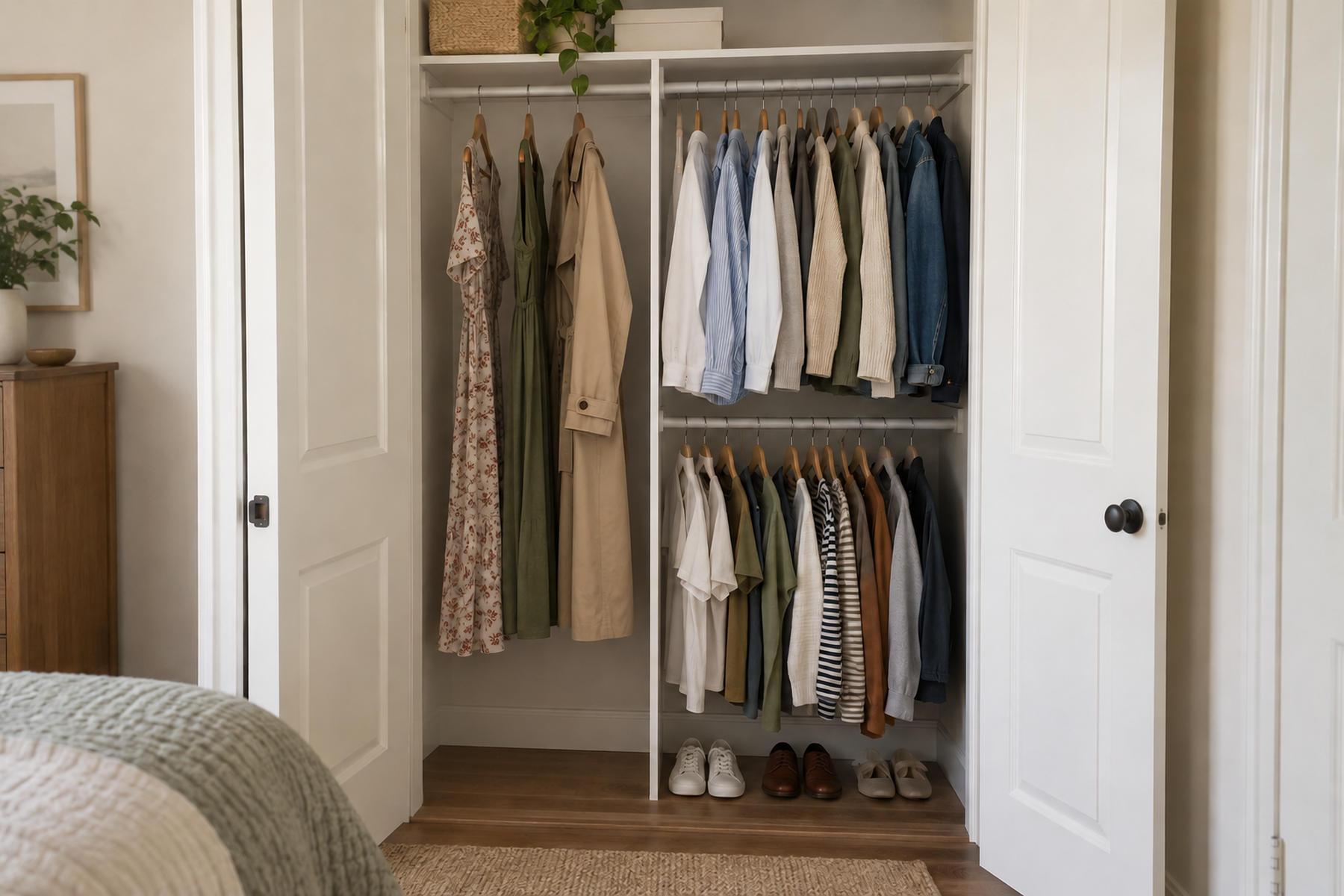
Double hanging can create useful capacity for shirts, blouses, short jackets, and other short garments, but it solves the wrong problem for maxi dresses, long coats, robes, and similar pieces that need uninterrupted vertical drop. When the entire closet is converted to two rod levels, the wardrobe may gain more hanger positions while losing the one function those long garments actually need.
The stronger small-closet layout is usually selective rather than uniform. Count the garments that genuinely need full height, measure how much rod width and hanging drop they require, protect that bay from lower rods and floor storage, and use double hang only in the remaining section where the short clothes fit comfortably.
Quick Answer
Use Double Hang Where It Helps—and Preserve Full Height Where It Does Not
01
Count the long garments before changing the closet
Group the dresses, long coats, robes, or jumpsuits that truly need uninterrupted drop, then judge the long-hang bay from the actual wardrobe rather than from a generic closet percentage.
02
Measure the clothes on their real hangers
Measure from the rod contact point to the hem of representative long garments and compare that drop with the real closet height, lower rods, shelves, shoes, hampers, and drawers.
03
Reserve only the long-hang width you actually need
A mixed wardrobe often works best with one narrow full-height bay and double hang in the rest instead of converting the entire closet to either single hang or double hang.
04
Treat renter-friendly hardware as load-limited hardware
A suspended add-on rod can be highly reversible, but it transfers load to the existing closet rod and should be used only within the exact product and host-rod limits.
01
Count the Long Garments First
Start with the wardrobe, not with a second rod. Pull out the garments that actually need full vertical drop and group them together: long dresses, long coats, robes, or other pieces that cannot use the planned lower rod without bunching, folding, or covering another storage zone.
Then separate the rest of the hanging wardrobe into short garments that can genuinely use double hang. Shirts, blouses, short jackets, and similar pieces may benefit from two levels, but the exact mix is household-specific.
This inventory prevents the most common planning error: maximizing rod count first and forcing the clothing to adapt afterward. The goal is not the most total rod footage. It is enough truthful long-hang width plus the maximum useful double-hang width that remains.
02
Measure the Actual Hanging Drop
Do not use one internet-average dress length as the design number. Put representative long garments on the hangers you actually use and measure from the point where the hanger sits on the rod down to the hem.
Compare that measurement with the real closet: the underside of the top shelf, the existing lower rod, the top of a shoe rack or drawer tower, the hamper, and the closet floor. Long garments need enough clear vertical space to hang without relying on another category to move first.
The same measurement exposes access shadows. A coat can technically hang while still covering drawers, blocking shoes, or hiding a shelf behind it. That lower and rear volume is part of the long-hang decision, not free storage that can be planned separately.
Measure / Check First
Before adding, removing, or relocating a lower rod, verify the wardrobe and the host closet as one system.
Check the Garment Drop, Rod Load, and Lower Storage Together
01
Longest active garment drop
Measure representative long garments on their real hangers from rod contact point to hem, then compare that with the uninterrupted closet height available in the proposed long-hang bay.
02
Existing rod and add-on hardware
Inspect the current rod and supports, then verify the exact load rating and installation method of any suspended or mounted lower rod. Do not add a second loaded rod to a visibly sagging or damaged system.
03
Floor and access conflicts
Check shoes, hampers, bins, drawers, door movement, and shelf access in both the long-hang and double-hang bays so one storage category does not become usable only after moving another.
If the long garments fit only by blocking daily lower storage, or the double-hang solution depends on unverified rod capacity, change the zone allocation before adding hardware.
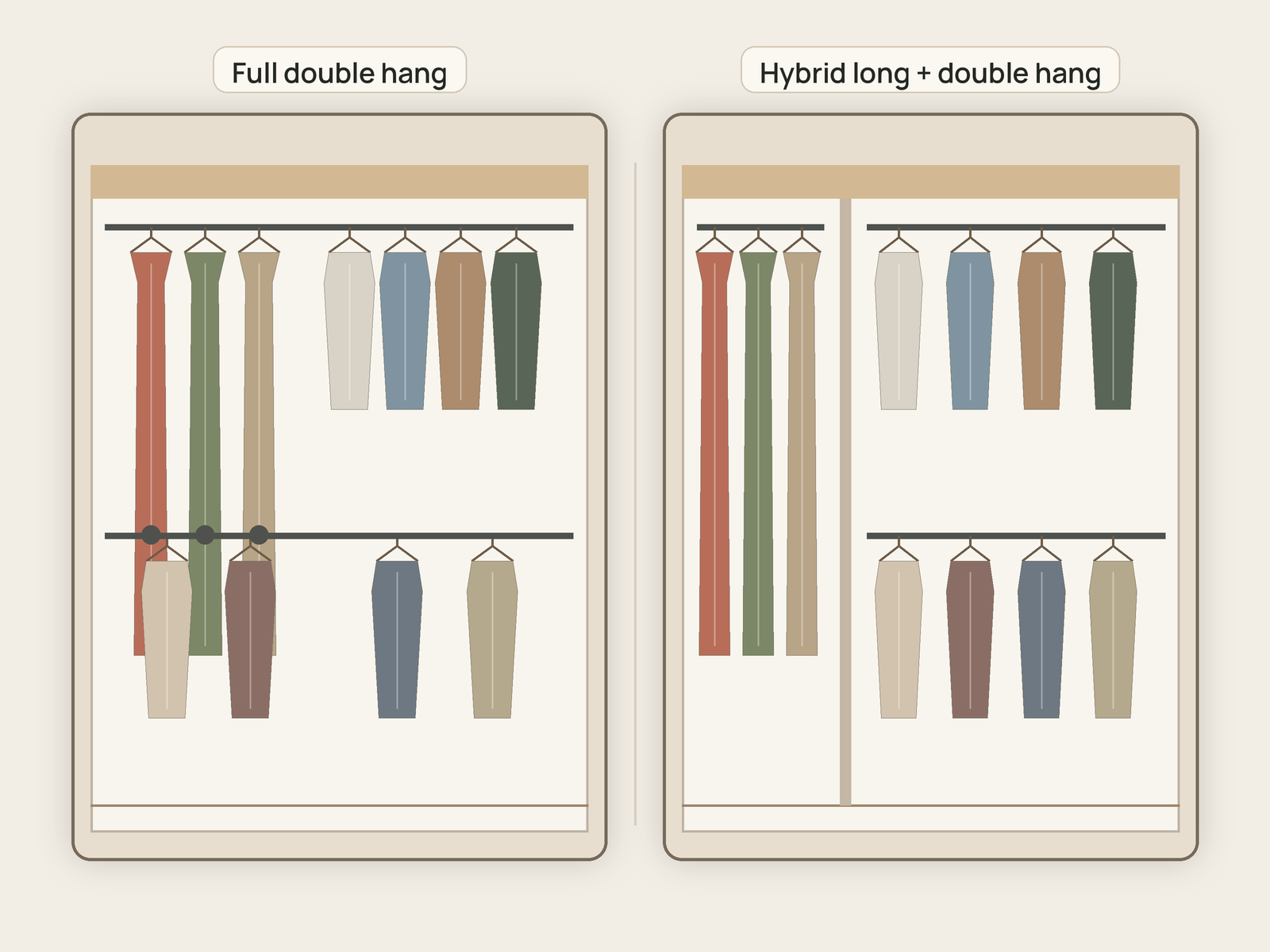
03
Build a Hybrid Long-Hang and Double-Hang Layout
For a mixed wardrobe, the strongest layout is often one full-height bay beside one double-hang bay. The long bay protects uninterrupted drop; the short-garment bay spends vertical space twice to create more hanging capacity.
Keep the long bay only as wide as the real garment group requires. That does not mean squeezing dresses or coats tightly together. It means resisting the opposite mistake: sacrificing half the closet to long hang when only a small set of garments needs it.
Current closet-planning guidance supports this distinction. IKEA explicitly recognizes full-height hanging for long dresses, and current professional-organizer guidance also separates long coats from shorter jackets when allocating hanging zones. The useful principle is the category-by-length decision, not one universal bay width.
If the closet is too narrow to create two functional zones, preserve the clothing that truly requires full drop first and solve the short-garment capacity with folding, seasonal rotation, or a different reversible system rather than forcing a lower rod through the long garments.
04
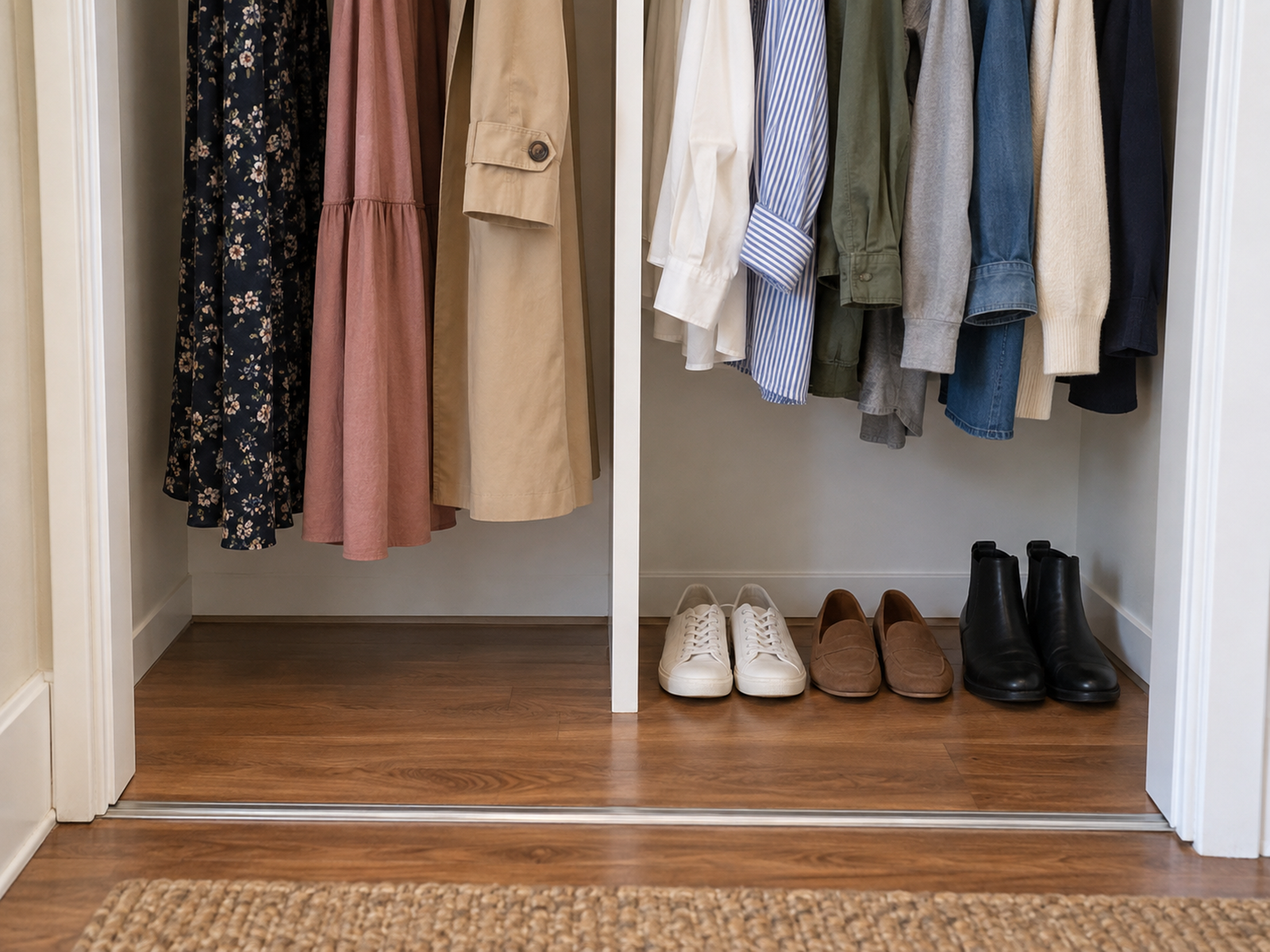
Protect the Floor Zone Under Long Garments
A full-height hanging bay uses more than rod height. Long hems can also occupy the floor volume that would otherwise hold shoes, a hamper, bins, or a low drawer unit.
Plan those lower categories at the same time as the long-hang bay. Shoes may need to move under the double-hang section, a hamper may need another closet or bedroom position, and low bins may need to shift to an upper or secondary zone.
This is why a hybrid layout is a three-dimensional capacity decision. A lower rod consumes the lower half of the short-garment bay, while long garments consume the lower half of the full-height bay. Neither zone is truly available to another category simply because the floor looks empty when the clothes are removed.
If one long coat hides a shelf, drawer, or bin that is supposed to be used every day, change the storage assignment rather than accepting a layout that requires moving the coat before another category can be reached.
05
Use Add-On Rods Only in the Short-Garment Bay
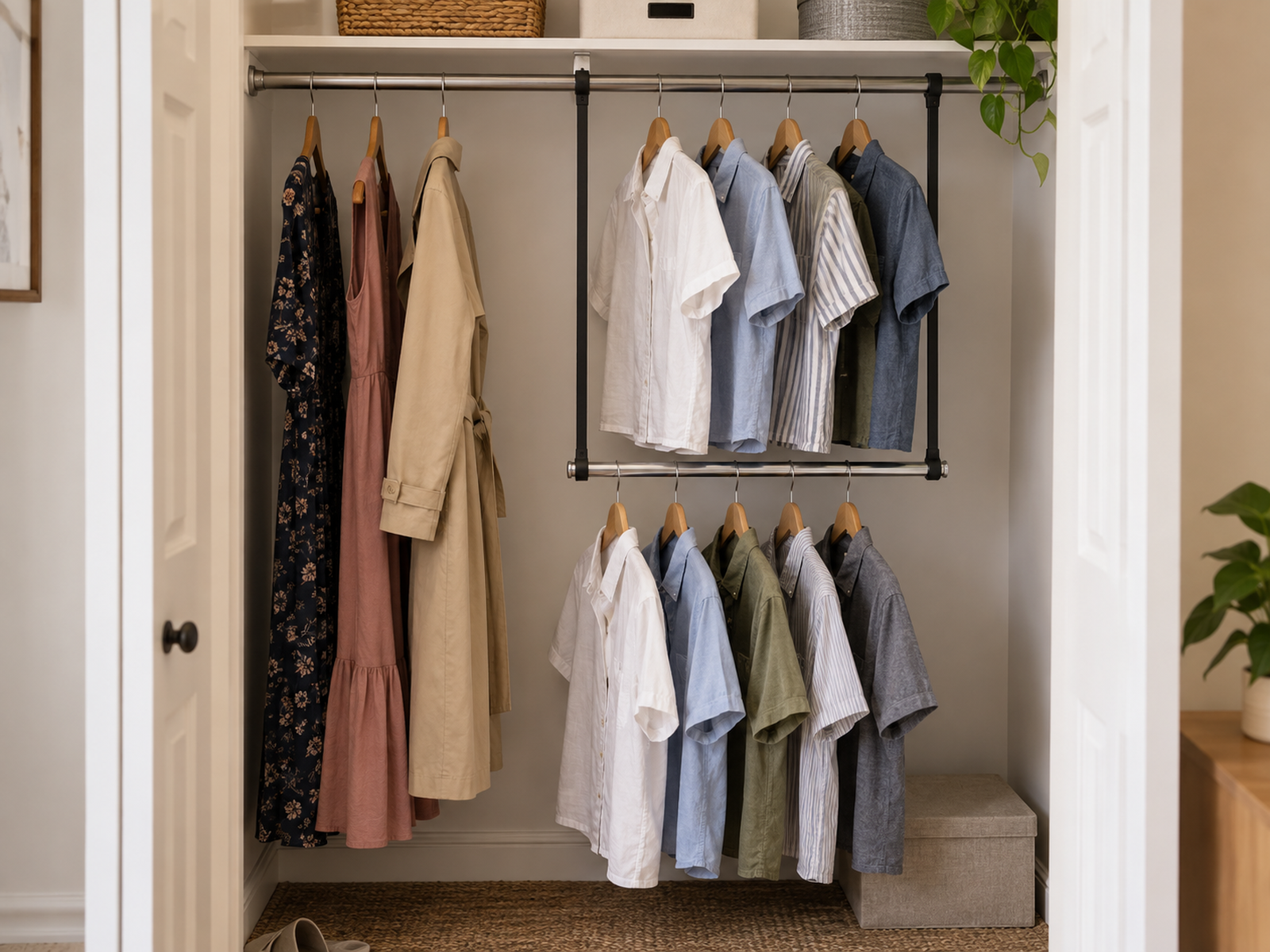
A suspended lower rod can create reversible double hang without drilling, which makes it appealing in a rental. Its best use is the short-garment section only, where shirts and similar pieces can use the second level without crossing into the long-hang bay.
The hardware is not automatically heavy-duty. Oceanstar’s current two-tier portable adjustable closet rod hangs from an existing rod, installs without tools, adjusts in width and height, and carries a manufacturer-stated maximum load of about 10 pounds.
That makes the form useful for lightweight short garments within the exact rating, but it is not evidence that a no-tool rod is suitable for heavy coats. The lower rod’s load is also transferred into the existing upper rod and its wall or shelf supports.
Keep the add-on rod physically clear of the long garments and the floor categories assigned to the full-height bay. A removable organizer is only useful if it improves capacity without recreating the original collision.
06
Check the Existing Rod Before Adding Load
The rental closet itself is part of the storage system. Before hanging another rod from the existing one, inspect the upper rod, shelf, brackets, and visible fasteners for sagging, looseness, or damage.
Do not assume a landlord-installed rod has unlimited spare capacity. Current renter discussions include small closets where the existing rod already bends under the wardrobe, which is exactly the situation where a suspended second rod can compound the problem.
If the existing system is visibly weak or damaged, the answer is not to distribute more weight across it. Use the closet as-is until the rod is repaired or the landlord-approved solution is clear.
Mounted replacement or additional rods belong to a different installation class. ClosetMaid’s current adjustable mounted rod, for example, uses wall or cabinet hardware and publishes a 30-pound capacity. That is not the same renter decision as a removable suspended rod.
07
Use a Freestanding Rack Only When the Bedroom Has Real Floor Space
A freestanding garment rack can move long dresses or coats out of an inflexible rental closet without modifying the walls. It is highly reversible, but it is not free small-space capacity.
IKEA’s current RIGGA rack, for example, is about 43 3/4 inches wide and 20 1/8 inches deep, with an adjustable height up to 68 7/8 inches and a stated 77-pound maximum load. That footprint can be larger than the residual space available in a small bedroom.
Measure the room before treating a rack as the renter-safe fallback. Bed clearance, dresser drawers, vanity access, door swing, and walking paths still need to work. Also compare the rack’s maximum height with the actual garment drop; the published rack height does not guarantee that every floor-length garment will clear the lower structure or floor.
If the bedroom cannot absorb the footprint, solving the closet by exporting a second wardrobe into the room is not a functional improvement.
08
Move Rarely Used Long Garments Before Expanding the Storage System
A few formal dresses or seasonal long coats can create a large permanent long-hang requirement even when they are rarely used. Before adding a rack or sacrificing more daily double-hang capacity, separate active long garments from occasional ones.
If another appropriate storage zone exists, move the rarely used group there and keep only the active long-hang width in the prime closet. This preserves everyday access without pretending those garments no longer exist.
The alternate zone still needs to suit the exact garment. Material-specific care varies, so do not force delicate or structured pieces into folding or compression merely to reclaim closet space.
If seasonal clothing is the main pressure, the existing Aptly Small off-season clothing guide can carry the broader rotation system while this closet remains focused on the vertical hanging decision.
09
Keep Folding or Doubling as a Garment-Specific Fallback
Some long garments can tolerate being folded over a hanger or supported in a shorter drop, but that is a garment-care decision, not a universal closet hack.
Construction, fabric, embellishment, weight, and shape all matter. A method that works for a robust robe may create creasing or distortion in a formal dress or structured coat.
Use this only when the exact garment can handle it and the storage remains easy to retrieve and return. It should not be the default fix for a closet layout that has eliminated every full-height bay.
When the wardrobe genuinely contains long garments that need full drop, the more durable solution is to give them truthful vertical space and optimize the rest of the closet around that fact.
Closing Decision
Let the Wardrobe Decide Where Double Hang Ends
A small closet does not become more efficient simply because it has more rods. Long dresses and coats spend vertical space in a way that short garments do not, so the useful layout begins with the actual wardrobe and protects only the full-height width that wardrobe really needs.
Use double hang aggressively in the remaining short-garment zone, but keep the load and floor trade-offs visible. A removable lower rod can be excellent when the host rod is sound and the rating fits; a freestanding rack can work when the bedroom truly has the footprint. The successful closet is the one where each garment can be retrieved and returned without another category having to move first.
RELATED GUIDES
What to Read Next
NEXT GUIDE
How to Store Shoes in a Small Closet Without Losing Floor Space
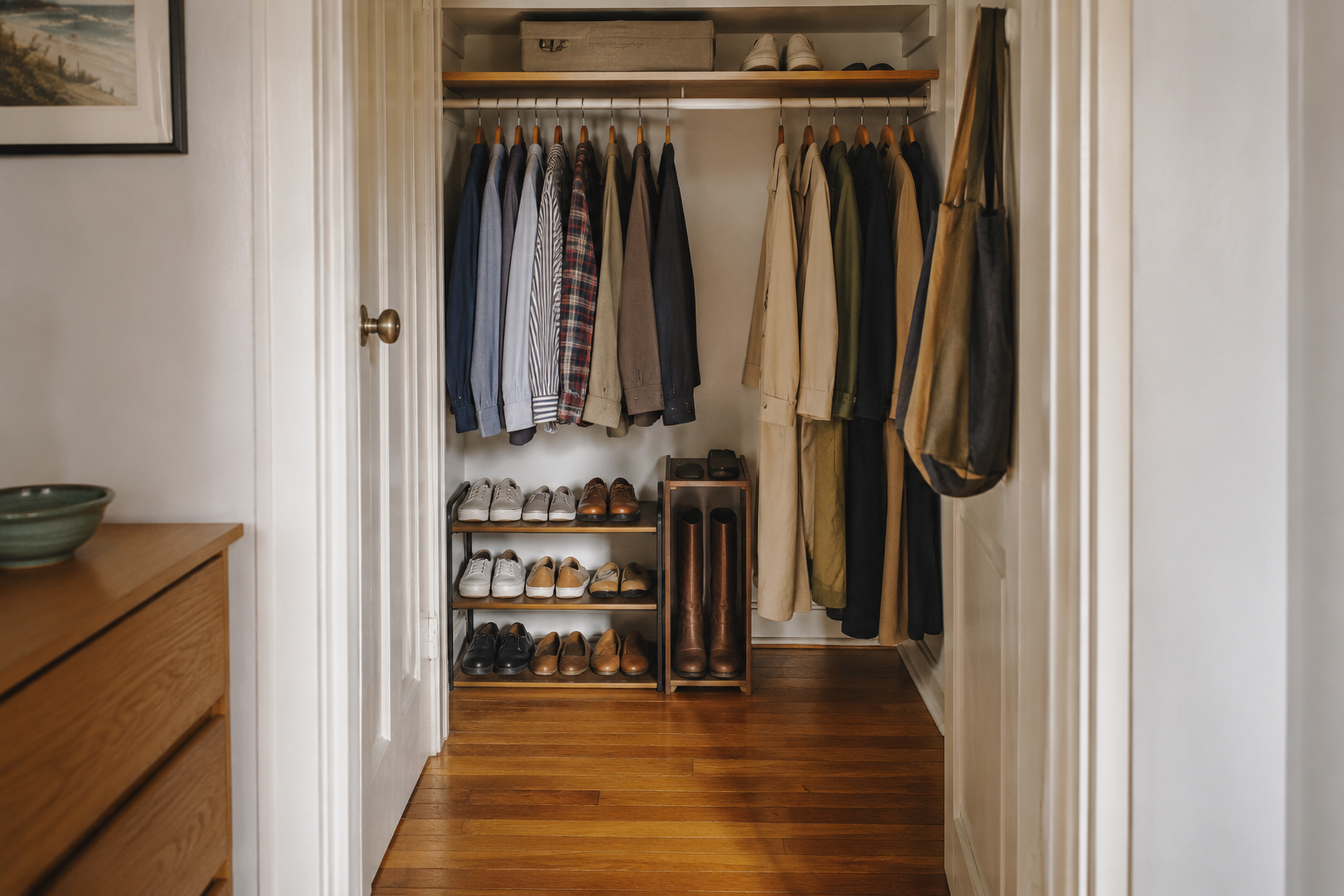
Use this next if the new long-hang bay displaces shoes from the closet floor and you need to rebuild that lower storage zone without blocking the garments.
GUIDE
How to Store Off-Season Clothes When Your Small Closet Has No Extra Space
Use this if seasonal long coats or formal long garments are creating a permanent hanging requirement that could be reduced through a separate rotation system.