
Small Apartment Storage Ideas
How to Store Holiday Decorations in a Small Apartment With No Storage Closet
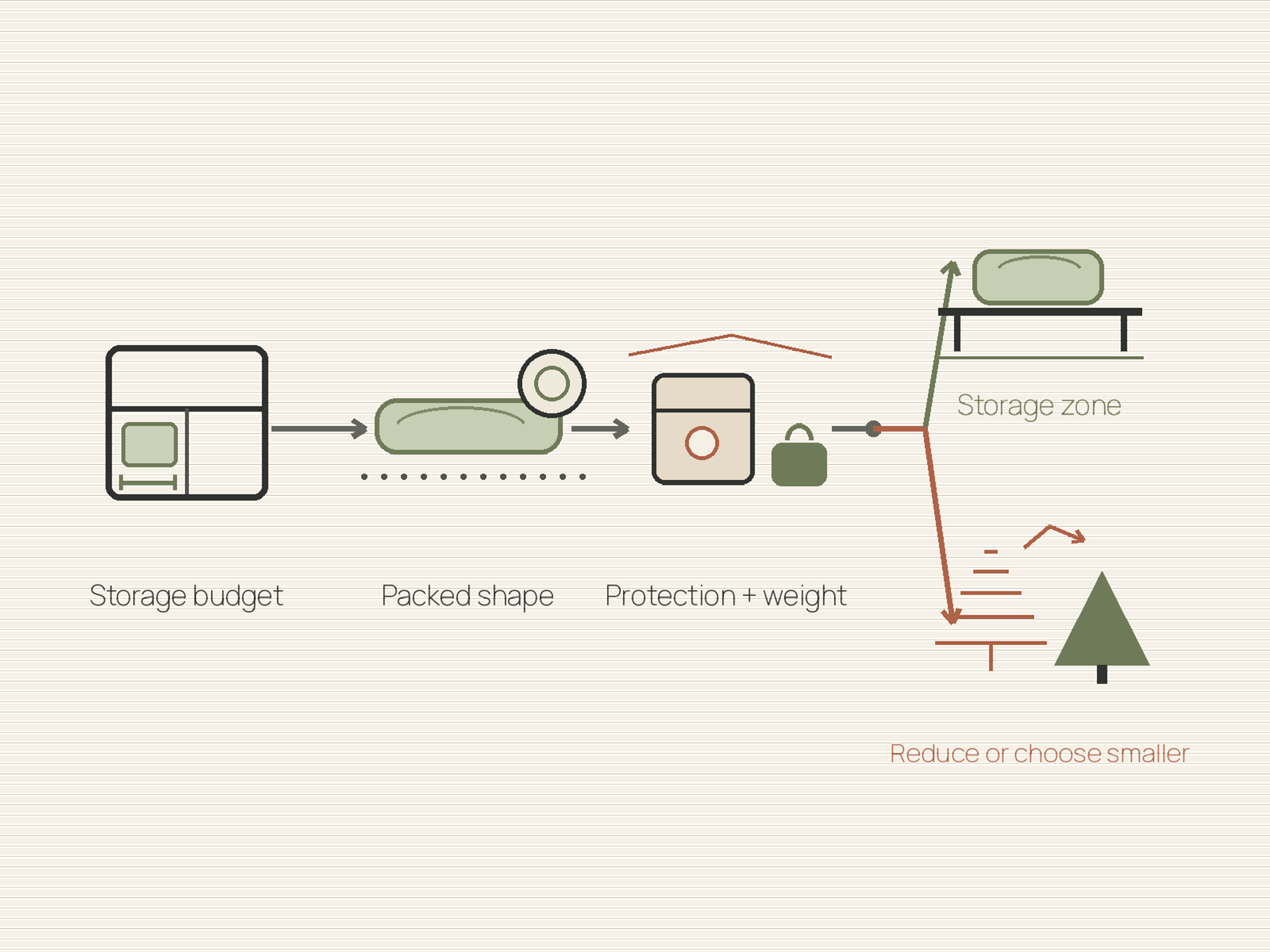
Set a fixed off-season storage budget before you buy bins, then match each decoration’s packed shape, fragility, weight, and access frequency to the secondary space your apartment can actually spare.
In This Guide
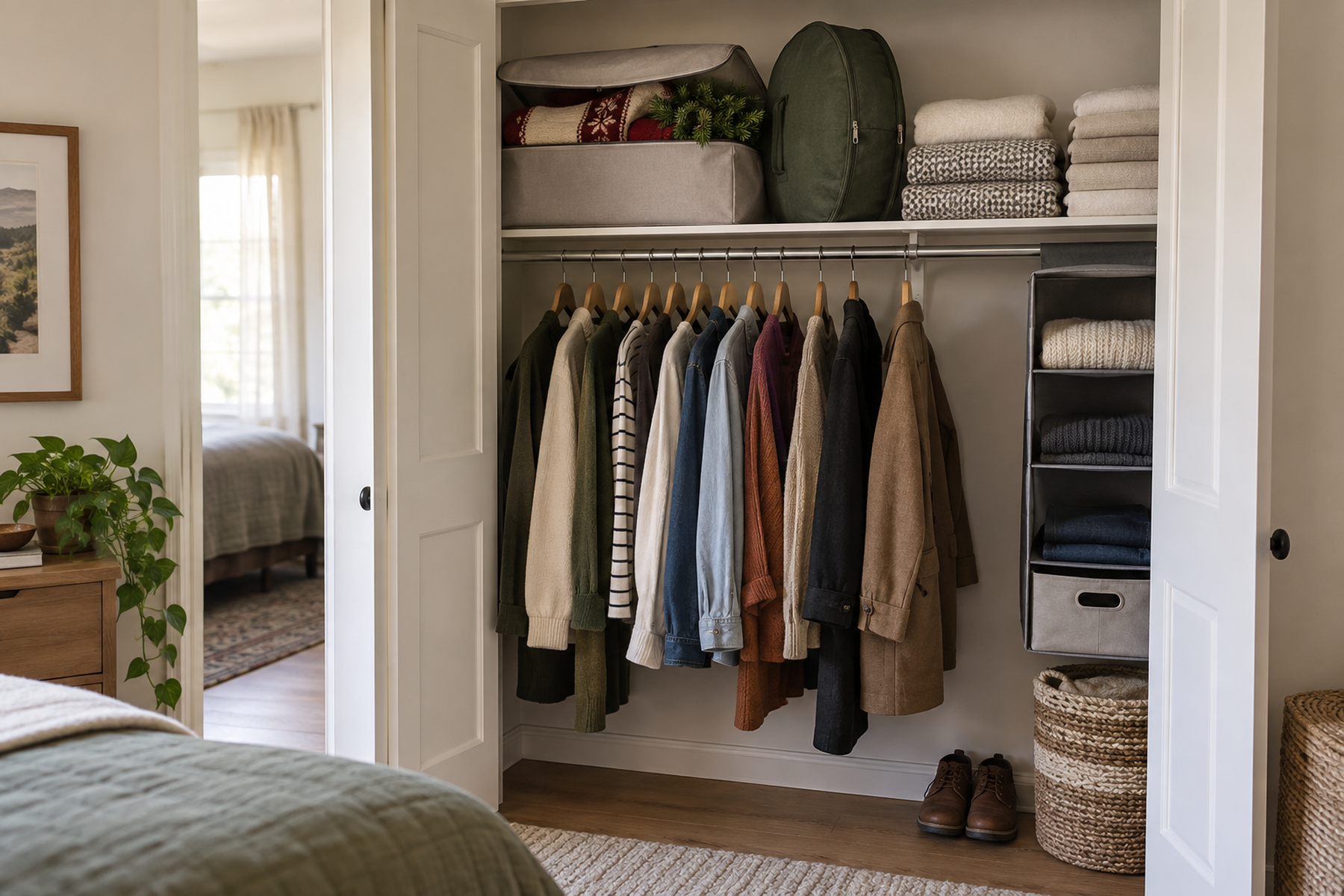
Holiday decorations create an unusual apartment-storage problem because they can make a large visual impact for a few weeks while occupying real space for the rest of the year. In a home without a garage, attic, basement, or dedicated storage closet, that off-season footprint competes directly with clothing, linens, luggage, backstock, and other everyday categories.
The useful sequence starts before container shopping. Decide how much secondary storage the apartment can dedicate to seasonal décor, then judge each item by its packed shape, protection needs, weight, and retrieval path. If a decoration has no believable off-season home, its storage cost belongs in the keep-or-buy decision.
Quick Answer
Set the Off-Season Limit Before You Try to Fit the Collection
01
Define a bounded storage budget
Choose the actual secondary space the apartment can spare—such as one upper shelf, one under-bed zone, or a limited group of containers—and treat that capacity as the ceiling rather than letting holiday décor expand into everyday storage.
02
Measure the decoration in its stored state
A slim tree, wide wreath, fragile ornament set, and foldable textile all use space differently. Display size does not tell you whether the item will fit the apartment once it is packed away.
03
Give low-frequency décor secondary access, not careless access
Upper shelves and under-bed space can be appropriate because the category is seasonal, but weight, packed length, fragility, and retrieval still determine which low-access zone is practical.
04
Reduce storage demand before adding furniture or external storage
Smaller trees, foldable textiles, fewer rigid pieces, and a tighter collection can solve a capacity problem that another bin or cabinet cannot.
01
Set the Storage Budget Before You Buy Containers
Start by identifying the off-season volume that can belong to holiday décor without displacing something the apartment uses all year. The budget can be spatial rather than numerical: one defined under-bed area, one upper closet shelf, one tree bag plus one ornament container, or another clearly bounded zone.
This reverses the usual shopping sequence. Instead of buying decorations and then searching for containers large enough to hold them, measure the available secondary space first and let that capacity control how much seasonal inventory the apartment can support.
A one-bin limit can be useful when it fits the collection, but it is not a universal rule. A tree, wreath, or fragile ornament set may legitimately need separate protection while the overall collection still stays within a fixed apartment storage budget.
The purpose of the limit is not to impose minimalism. It is to stop an item used for a few weeks from gradually taking over the closet, under-bed space, or furniture storage needed by higher-frequency categories.
02
Separate Display Footprint From Packed Footprint
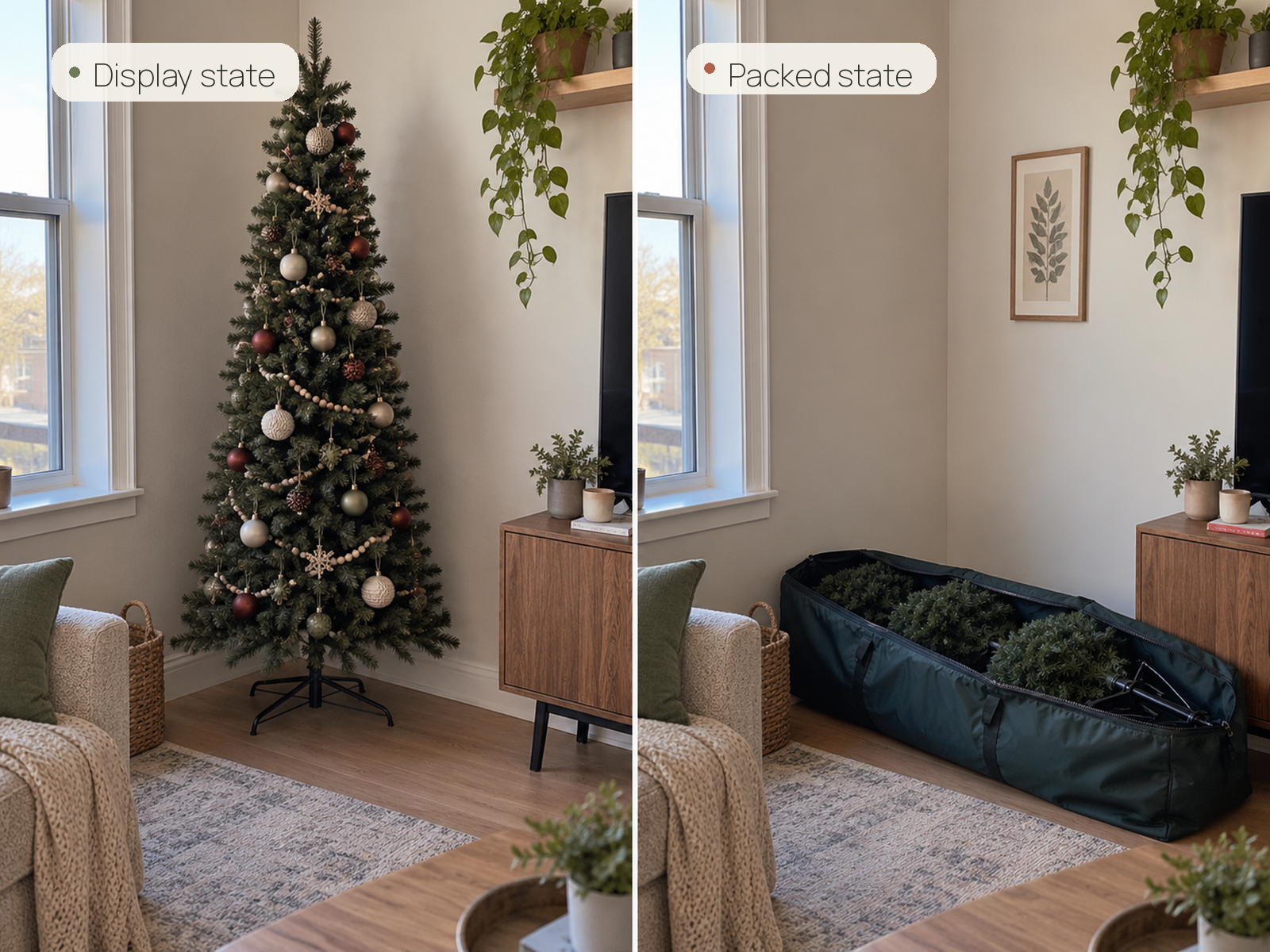
Judge seasonal décor in two states: how much room it uses while displayed and how much space it needs for the rest of the year. Those footprints can be completely different.
An artificial tree can look narrow in the living room and still break down into long, bulky sections. A wreath may use only a slice of wall area while displayed but remain wide and crush-sensitive in storage. Stockings, table runners, pillow covers, and some tree skirts can create a large seasonal change while storing much flatter.
That makes packed geometry a buying criterion. For a future tree or rigid decoration, look for actual manufacturer information about sections, storage instructions, carton or bag dimensions, and whether the item can be compressed. Do not infer stored size from the display photo.
If the packed state does not fit any realistic off-season zone, the decoration is not yet a strong small-apartment purchase even if its display footprint is modest.
Measure / Check First
Before buying holiday bins or assigning an upper shelf, measure the off-season zone and the packed items together.
Check Capacity, Packed Geometry, and Retrieval Before You Commit
01
The apartment’s storage budget
Measure the actual under-bed, upper-shelf, wardrobe, or furniture-storage zone you are willing to dedicate to seasonal décor. Keep everyday categories outside that budget instead of assuming they can be displaced later.
02
Packed shape, weight, and protection
Record the longest tree section or bag, wreath diameter and depth, fragile-item protection needs, and which textiles can store flat. Do not size the system from display dimensions or item count alone.
03
The full retrieval path
Check closet openings, bed-frame clearance, door swing, lifting height, container handles, and whether the décor can be removed without unloading unrelated storage. A zone that fits the container but not the retrieval motion is not usable capacity.
If the collection fits only by crushing shape-sensitive pieces, lifting an awkward container too high, blocking daily storage, or relying on a retrieval path that does not work, reduce the storage demand or choose another zone before buying more containers.
03
Use Secondary-Access Space for Seasonal Décor
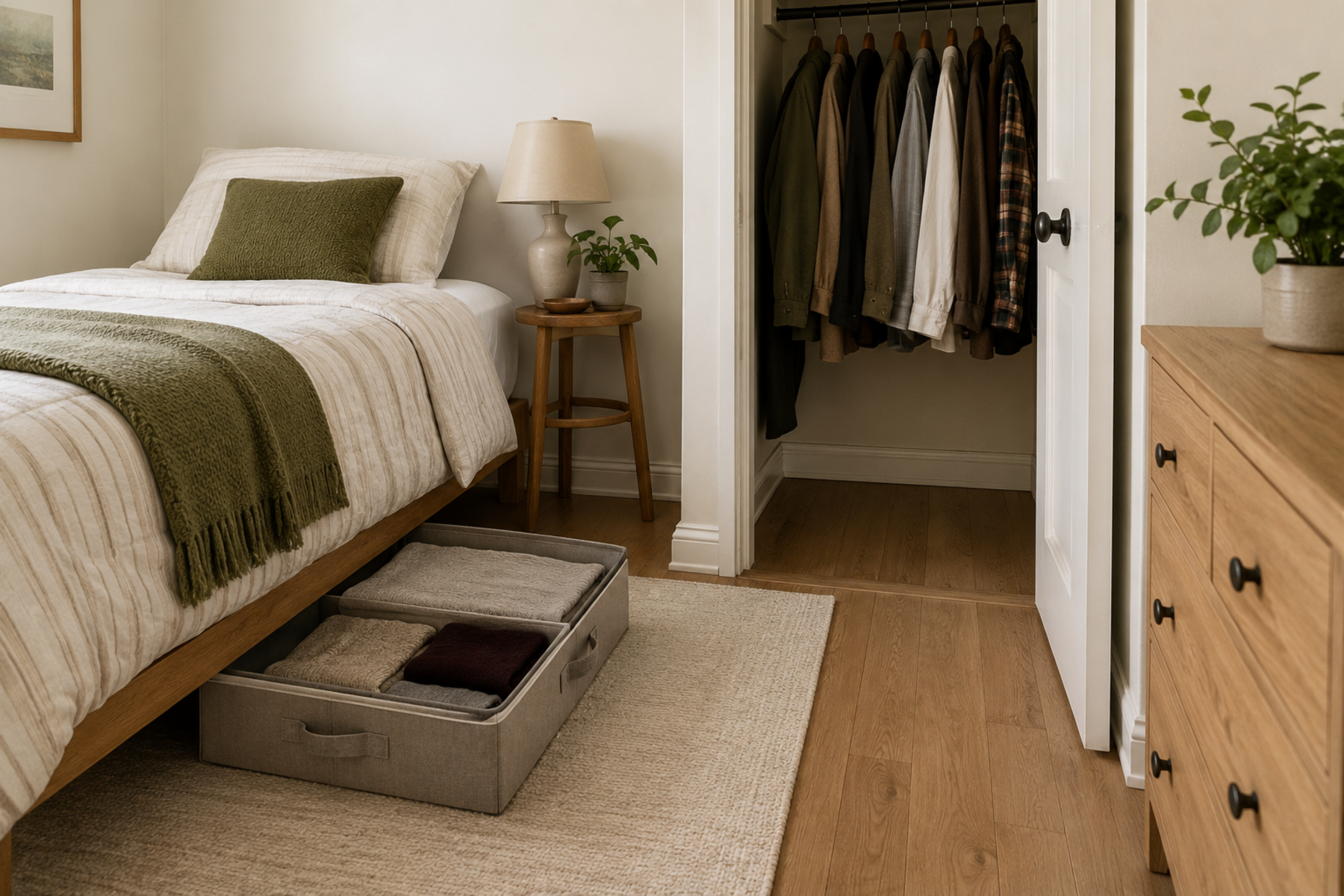
Because holiday décor is usually accessed only a few times a year, it is a better candidate than everyday items for under-bed space, upper closet shelves, the top of a wardrobe, or another secondary-access zone.
Frequency is only the first filter. A heavy or awkward container can be a poor match for a high shelf, a long tree bag may not turn through a narrow closet opening, and an under-bed case is useless if the bed frame or nearby furniture blocks it from sliding out.
Keep the retrieval path independent from unrelated categories. Seasonal décor should not require unloading daily clothing, moving a hamper, or emptying a closet floor every time the collection comes out.
If the apartment has no single large destination, split the collection by geometry instead of forcing it into one location. Flat textiles can use one shallow zone while fragile or rigid pieces use a different protected container.
04
Match Storage to Shape and Fragility
Holiday décor is not one container category. Fragile ornaments need separation from impact, wreaths and structured greenery need shape protection, artificial-tree sections need the storage method allowed by the manufacturer, and flexible textiles can use flatter storage when their materials tolerate it.
Use original protective packaging when it is genuinely space-efficient and easy to reuse, or choose compartments and separation for fragile pieces rather than placing them loose with heavy rigid objects.
Avoid treating maximum compression as the goal. The smallest possible package can be the wrong storage method when it crushes structured greenery, stresses pre-lit branches, bends fragile components, or ignores material-specific care.
Specialized holiday containers can be useful, but they also consume volume. Buy one only when it solves a real geometry or protection problem that a simpler existing container cannot.
05
Treat Artificial-Tree Storage as a Product Fit Check
Artificial trees deserve their own fit check because the storage problem can be larger than the display problem. The important measurements are the packed sections, bag or carton, and path to the chosen storage zone—not only the tree’s height or width when assembled.
Current Balsam Hill guidance for its own trees tells owners to remove decorations, unplug lights, disassemble and compress sections according to the product instructions, use protective storage bags, and keep the tree in a cool, dry location. That is manufacturer-specific guidance rather than a universal method for every artificial tree.
Before buying a tree for a small apartment, verify the exact model’s section count, longest packed component, storage instructions, and whether the planned closet or under-bed zone can physically accept it. A tree that fits the living room but not the off-season path is still a poor spatial fit.
Do not assume an unknown glass, metal, pre-lit, or unusually constructed decoration can be compressed, folded, or repacked beyond the manufacturer’s guidance simply to make the storage budget work.
06
Use Dual-Purpose Household Volume Carefully
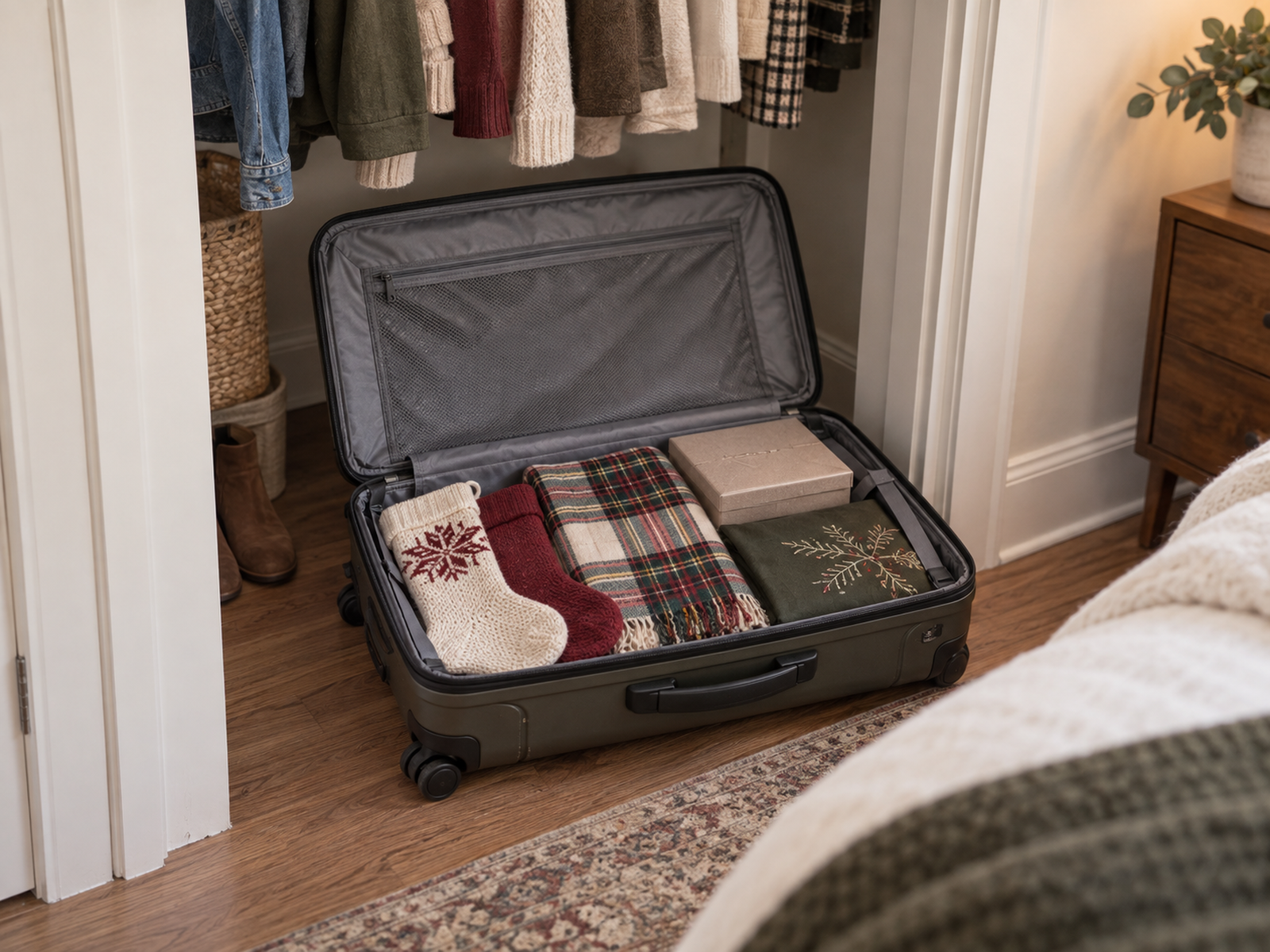
An empty suitcase, storage bench, ottoman, decorative lidded box, or unused portion of an existing wardrobe can hold seasonal décor without adding another standalone storage object to the apartment.
The best candidates are host objects that already deserve their footprint and are rarely needed while the decorations are stored. Soft items such as stockings, runners, pillow covers, or lightweight garlands can often use awkward interior volume more efficiently than large rigid decorations.
Access dependencies still count. If holiday décor fills the suitcase used for a trip in November, the seasonal system has created a second unpacking job. The same problem appears when a storage bench must be emptied every time the apartment needs its hidden everyday contents.
Keep a simple storage map if the collection is split across several host objects. Hidden volume saves space only when the household can still remember where each category lives.
07
Reduce Storage Demand Before Adding More Storage
When the collection exceeds the storage budget, another organizer cannot remove the physical volume. At that point, the higher-leverage decision is to change what the apartment stores.
That can mean choosing a smaller or verified-pack-size tree, using more foldable textile accents, keeping reusable neutral base objects that receive seasonal layers, or letting go of decorations that no longer justify their year-round storage cost.
This is not a rule that every small apartment should decorate minimally. It is a capacity decision. A sentimental or tradition-heavy collection may deserve more of the apartment’s secondary storage than another household would choose to allocate.
Use the budget to make trade-offs visible. If a new rigid decoration requires displacing linens or luggage that the household uses regularly, the purchase is spending more than its price.
08
Store Electrical and Battery Décor Ready for the Next Season
Electrical decorations need a reset before they disappear into off-season storage. For items with replaceable batteries, Energizer advises removing batteries from devices that will be stored for extended periods, unless the device’s own instructions say otherwise.
Seasonal light strings also need inspection before reuse. U.S. Consumer Product Safety Commission holiday-safety guidance advises checking sets for broken or cracked sockets, frayed or bare wires, and loose connections, and says damaged sets should not be used.
Keep visibly damaged electrical décor separated or clearly marked rather than returning it to the same ready-to-use container. The point is practical risk control: next season should not begin with a damaged set mixed into working decorations.
This guidance does not establish one universal way to wrap light strings or store rechargeable and integrated-battery products. Follow the exact device instructions for those details.
09
Use External or Building Storage Only as a Bounded Exception
A building locker or external storage unit can make sense when the household already has a broader storage need and the space is permitted, secure enough, and suitable for the materials being stored.
It is a weak default for a modest holiday collection because it adds another access point, recurring cost or inconvenience, and environmental variables that do not exist inside the apartment.
Treat garages, balconies, sheds, and other uncontrolled spaces as material-dependent rather than automatically acceptable because the container has a lid. Heat, humidity, freezing, pests, water intrusion, batteries, electronics, wax, antiques, and other sensitive materials can change the answer.
If external storage is the only way the apartment can keep the collection, compare that ongoing commitment with the simpler alternative of reducing or changing the décor itself.
Closing Decision
Buy and Keep Holiday Décor for the Space You Have All Year
The most useful holiday-storage decision happens before the bins. Give seasonal décor a bounded share of the apartment’s secondary storage, then use packed geometry, fragility, weight, and retrieval frequency to decide what belongs under the bed, on an upper shelf, inside existing furniture, or somewhere outside the apartment.
Protect the pieces that need protection and compress only the items that can tolerate it. Check the stored state of trees and rigid décor before buying, keep electrical items ready for the next season, and reduce the collection when its year-round footprint exceeds the space you are willing to spend. The goal is not the smallest possible pile; it is a festive collection the apartment can support without sacrificing everyday function.
RELATED GUIDES
What to Read Next
NEXT GUIDE
How to Store Off-Season Clothes When Your Small Closet Has No Extra Space
Use this next if holiday décor is competing with another low-frequency seasonal category; that guide helps allocate secondary storage to clothing without repeating décor-specific geometry and protection decisions.
GUIDE
How to Store Suitcases in a Small Apartment With No Storage Closet
Use this if luggage is taking the same under-bed or closet volume, or if you want to judge whether an empty suitcase can serve as dual-purpose seasonal containment without creating a travel-access conflict.