
Small Apartment Storage Ideas
How to Arrange Furniture Around an HVAC Return Vent in a Small Apartment
A return grille can make one of the few usable walls in a small apartment look off-limits. Identify what the opening does, keep its airflow and service access clear, and move furniture or storage density elsewhere instead of relying on a universal clearance number.
In This Guide
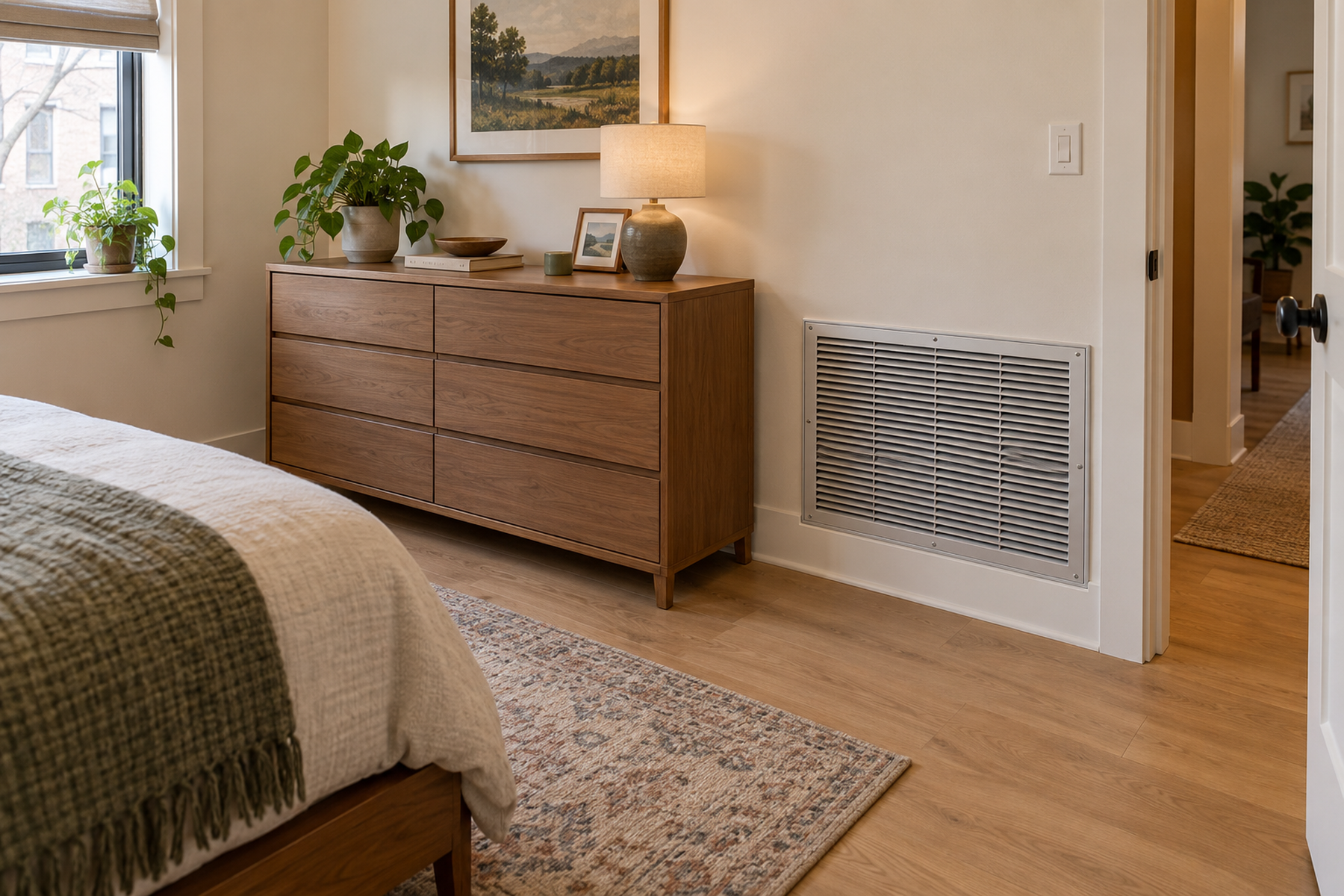
In a small room, nominal wall length is not the same as usable wall length. Doors, windows, heaters, electrical panels, and HVAC openings can all claim space that looks available on a floor plan.
An HVAC grille is part of the air-distribution system. The useful question is whether the opening, airflow path, and any filter access remain unobstructed.
Quick Answer
Keep the airflow path clear
01
Identify the opening
Check whether it is a return pulling air inward or a supply register blowing conditioned air into the room.
02
Protect the functional zone
Keep furniture, rugs, curtains, bins, and storage from covering or restricting the grille, and preserve filter access if the filter is there.
03
Reassign the storage
Put large solid furniture on another wall and move displaced storage to under-bed, closet, over-door, or other usable zones.
01
Identify the vent before moving furniture
A supply register sends conditioned air into the room and may have adjustable louvers. A return grille draws room air back toward the HVAC equipment; some returns also provide filter access.
While the system runs, air should blow out of a supply and move inward at a return. If you still cannot identify the opening, ask maintenance rather than guessing. A supply-register accessory is not automatically appropriate for a return. Trane’s maintenance guidance advises keeping both supply registers and return-air vents clear.
02
Treat the grille as part of the room plan
A low wall return can erase the zone where a dresser, sofa, headboard, bookcase, or cabinet seems to belong. A floor return can conflict with a rug, bed, chair, bin, or cabinet. That does not make the opening wasted space.
Do not plan around a made-up six-inch or twelve-inch rule. Strong manufacturer guidance says to keep returns unobstructed rather than offering one universal furniture setback that makes partial coverage acceptable. Open-leg furniture is not an automatic loophole if it still restricts the grille or air path.
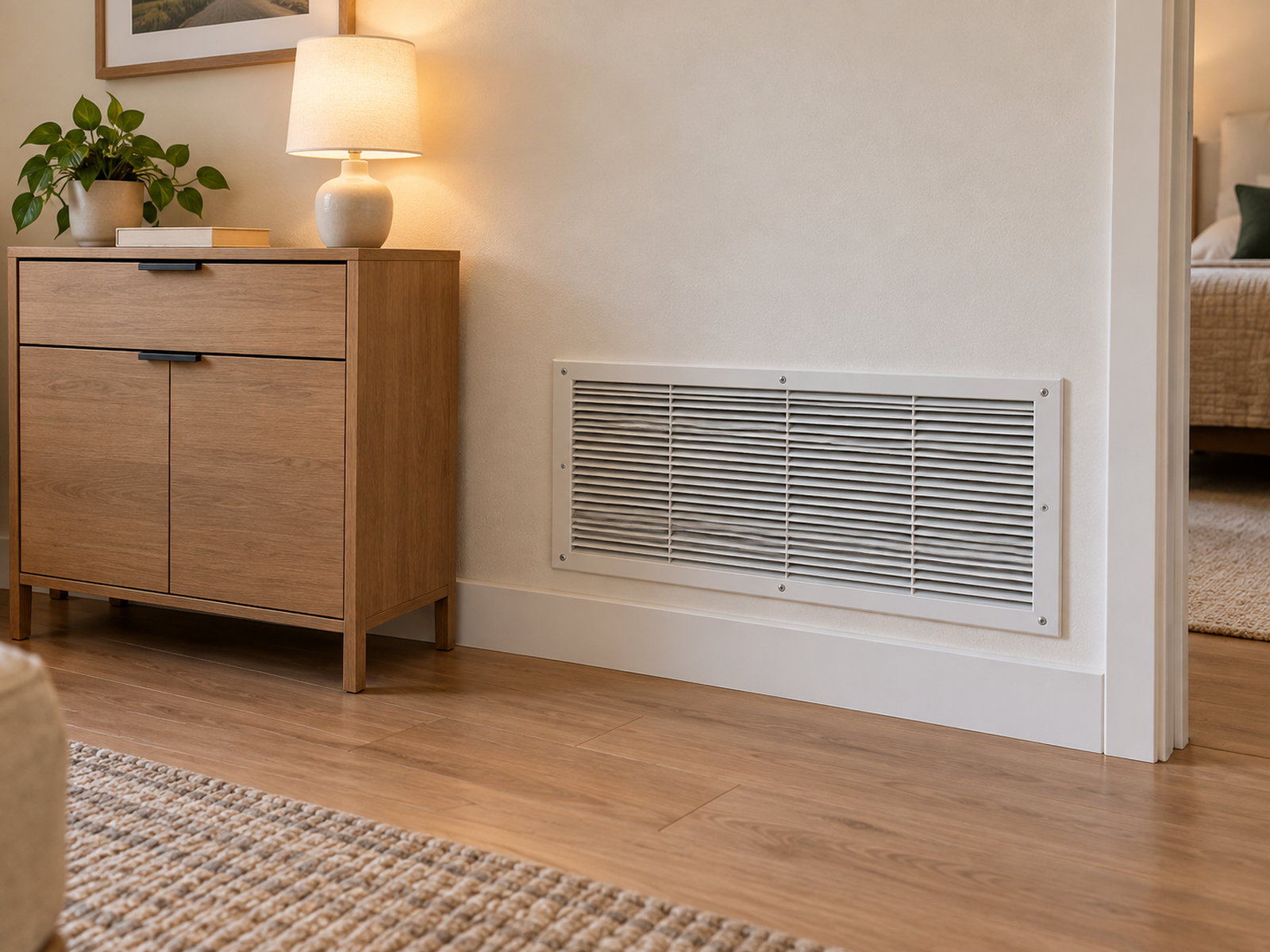
Map the full grille face, airflow path, and filter/service access before committing to the layout. Add the room’s other fixed constraints too. The result may be an intentionally empty section of wall; in a compact apartment, that empty zone is doing a job.
03
Put the largest solid furniture on another wall
Place the hardest-to-move pieces—wardrobes, tall bookcases, large dressers, solid cabinets, sofas, and upholstered headboards—on walls without the return whenever the room allows it.
Smaller or shallower pieces can use the remaining zones. Furniture may sit beside a grille when the grille, airflow path, and service access remain fully clear. A slightly less symmetrical room is a better trade than turning furniture into a partial HVAC cover.
04
Move storage density somewhere else
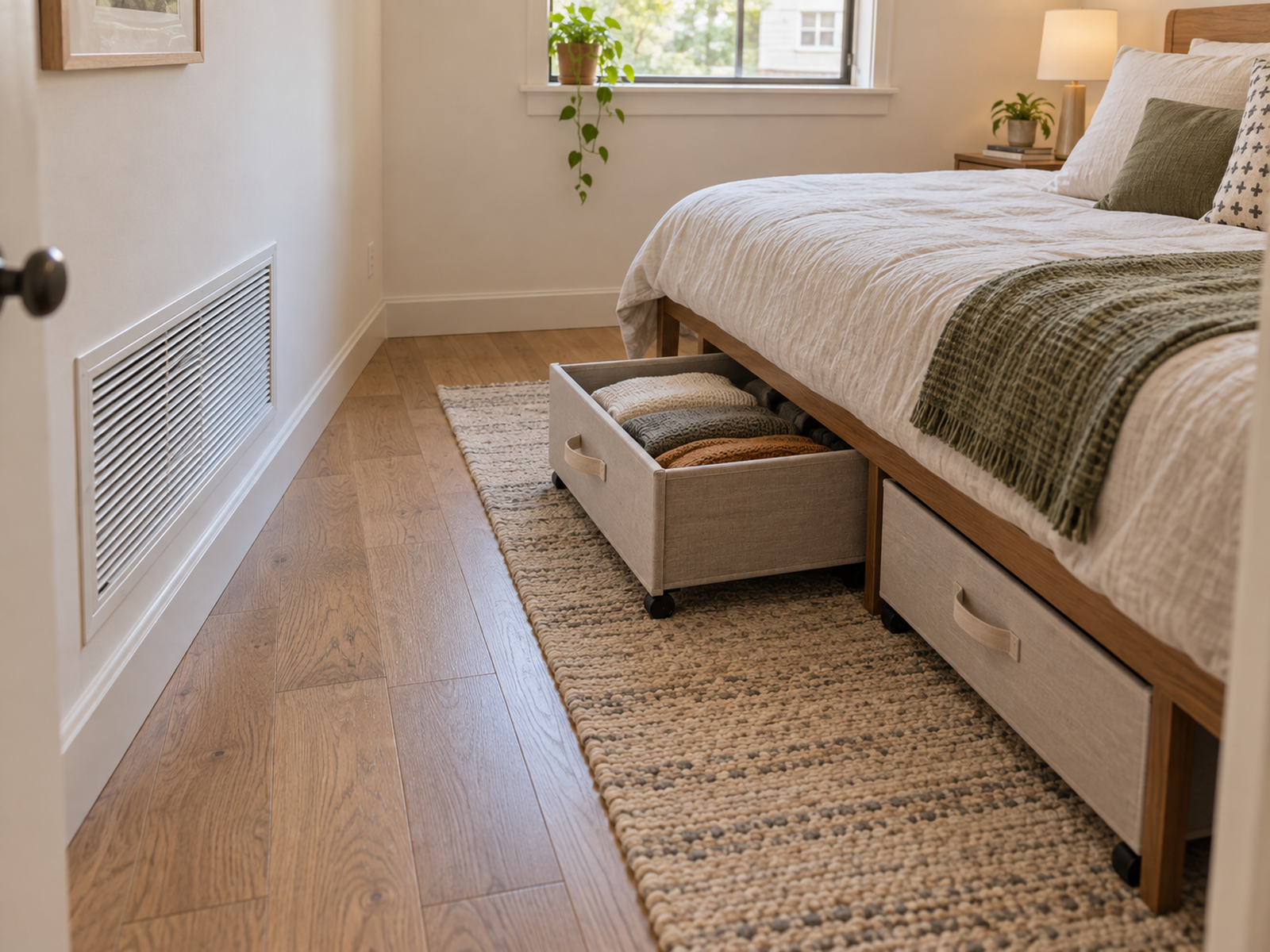
When the return wall cannot carry a dresser or cabinet, redistribute the missing capacity. Depending on the room, that can mean under-bed storage, closet shelves or hanging organizers, over-door storage, appropriate shelving on another wall, a storage ottoman away from the grille, shallow furniture beside the opening, or storage in an adjacent room.
Match the substitute zone to retrieval frequency. Keep everyday items easy to reach and move seasonal or low-frequency items farther away. Before buying another large piece, subtract HVAC and service zones from the room’s nominal dimensions.
05
Preserve filter access and the room’s return path
If the filter sits behind the return grille, routine replacement should not require dismantling storage or moving heavy furniture.
Return airflow can involve more than the visible grille. U.S. Department of Energy Building Science guidance explains that supplied air needs a path back to central HVAC equipment and that return pathways matter for pressure balance and performance. See HVAC Ducted Returns.
For renters, that is a reason to involve maintenance—not to cut doors, add transfer grilles, or modify ductwork—when airflow remains poor or the return path is unclear.
What Not to Do
Do not turn the airflow problem into a DIY duct project
- Do not cover a return with a rug, curtain, solid magnetic cover, furniture, or stacked storage.
- Do not assume furniture with legs makes placement directly in front of a return acceptable.
- Do not use a supply-register deflector as a generic return-grille fix.
- Do not cut walls or doors, extend ductwork, relocate a grille, or add a transfer path as a renter organization project.
- Do not assume a blocked return is the sole cause of an uncomfortable room.
Clearing ordinary movable obstructions is a reasonable first step. Persistent comfort, airflow, noise, or cycling problems need maintenance or qualified HVAC assessment.
06
Know when the layout problem needs maintenance
Sometimes the room cannot hold the desired furniture arrangement and preserve the HVAC opening at the same time. If every workable dresser, bed, sofa, or storage position obstructs the grille, document the conflict and ask the property manager or maintenance team about the system. Relocating or adding a return, changing a transfer path, or correcting duct design is building work.
Escalate as well when you cannot identify the opening, a filter cannot be reasonably accessed, the room stays persistently uncomfortable after obvious obstructions are cleared, or airflow seems abnormal. A visible obstruction is something you can correct; it is not a complete HVAC diagnosis.
Closing Decision
Protect the airflow even when it costs you wall space
A return grille can reduce furniture-ready wall space, but covering it does not recover that space usefully. Keep the opening and service path clear, place the largest solid furniture elsewhere, and redistribute storage according to how often you need it.
If no workable arrangement preserves the HVAC infrastructure, stop treating the conflict as an organization puzzle. Involve maintenance or a qualified HVAC professional rather than forcing furniture into the only remaining wall.
RELATED GUIDES
What to Read Next
NEXT GUIDE
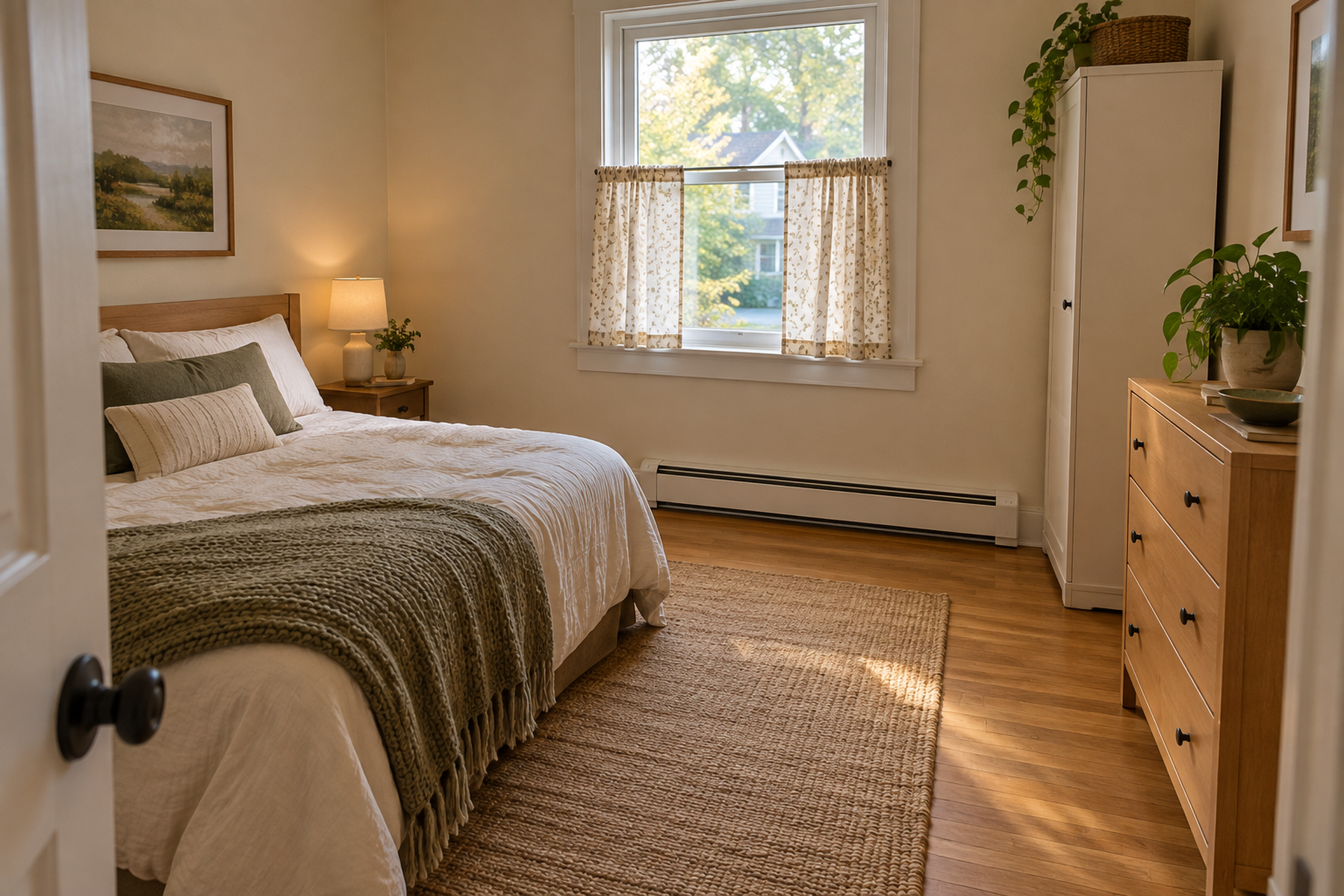
How to Arrange Furniture Around Baseboard Heaters in a Small Apartment
Use the same operating-zone mindset for another fixed building constraint that removes apparently usable wall and floor space.
GUIDE
How to Organize Around an Electrical Panel Without Blocking Access
Apply the same “functional infrastructure is not spare storage space” principle to required service access.
GUIDE
Where to Put an Air Purifier in a Small Apartment With Limited Floor Space
Use this when the airflow-related object is movable equipment and the problem is finding a functional operating zone without sacrificing circulation.