
Small Kitchen Organization
How to Organize a Small Kitchen With No Drawers—Without Losing Counter Space
When every utensil, measuring tool, and roll of wrap loses its usual shallow home, the counter becomes the easiest fallback—and the wrong place to store everything. Rebuild fast access inside cabinets and other low-intervention zones first, then spend counter space only on the few items that truly earn it.
In This Guide
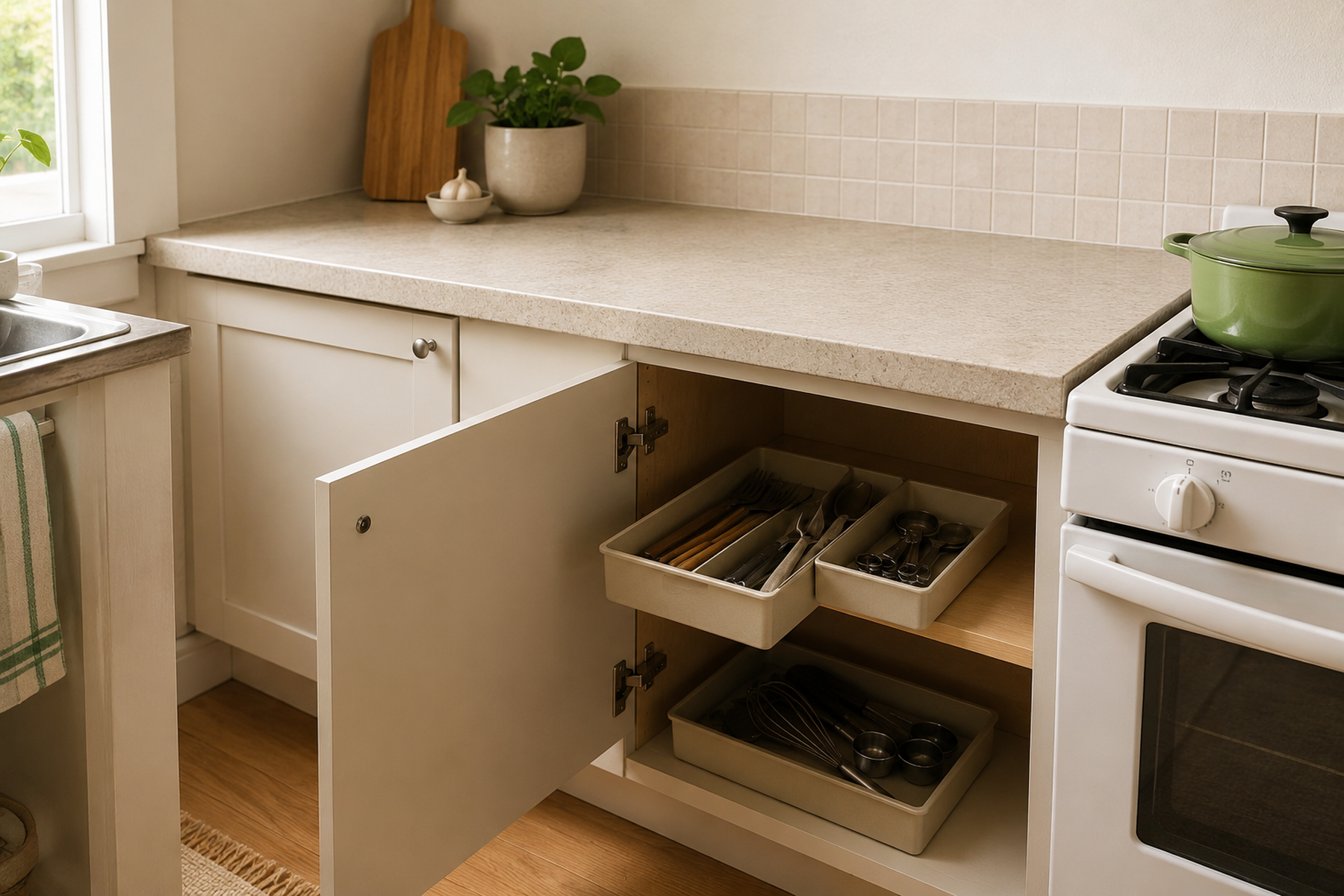
A kitchen with zero drawers is different from a kitchen with one inconvenient drawer. There is no shallow, high-access layer left to reserve for flatware, cooking tools, wraps, towels, or other small essentials, so every one of those jobs has to move somewhere else.
The goal is not to recreate a drawer in every possible location. Sort the missing drawer jobs by how often and where you use them, restore easy retrieval inside existing storage first, and protect the counter as working space rather than letting it become the default home for everything.
Quick Answer
Replace the Drawer Functions, Not the Drawer Shape
A no-drawer kitchen works better when each displaced category is assigned by access need, not by whichever organizer happens to fit. Protect the work surface first, then spend cabinet, wall, floor, or installation capacity only where it solves a real retrieval problem.
01
Sort by frequency and task
Keep the items you use during everyday prep close to the work zone. Lower-frequency tools, serving pieces, extra towels, and backup supplies can tolerate a less convenient location.
02
Restore shallow retrieval inside cabinets first
Small removable trays, boxes, or pull-forward caddies can separate flatware and small tools inside existing shelves without turning the counter into permanent storage.
03
Treat counter and installation as scarce resources
Use countertop holders, cabinet-door storage, adhesive systems, carts, or installed pull-outs only when the access benefit is worth the surface, clearance, floor space, or installation conditions they consume.
01
Decide Which Drawer Jobs Need Fast Access
Start with the categories that lost their normal shallow home: flatware, cooking tools, measuring tools, wraps, towels, small serving pieces, and the miscellaneous items that would normally disappear into a utility drawer.
Then separate them by how they are used. A spatula used at most meals needs a different home from a cake server used a few times a year. Measuring spoons may belong near the main prep zone; backup towels may not. The point is to reserve your easiest storage for the categories that would create the most friction if they were buried.
This keeps the project from turning into a search for one oversized organizer. A zero-drawer kitchen has several missing functions, and the most space-efficient answer may be a small combination of cabinet storage, selective counter access, and lower-frequency storage elsewhere.
Measure / Check First
Before buying an organizer, test the kitchen as it is used. A storage zone is only useful when the category can be retrieved without unloading another area, sacrificing essential prep space, or interfering with a door, appliance, heat source, or walking route.
Map the Access You Can Actually Use
01
Test cabinet retrieval
Open the cabinet fully and check whether a shallow tray, box, or caddy can be seen, gripped, pulled forward, and returned without moving larger items first. Deep volume is not useful daily storage when the small category disappears behind something else.
02
Protect a real work surface
Look at where you actually chop, mix, plate, land groceries, or unload dishes. Do not use a percentage rule for how much counter must stay empty; preserve enough uninterrupted surface for the kitchen’s real tasks.
03
Check moving parts, heat, and installation
Confirm that cabinet and appliance doors still operate, freestanding storage stays out of circulation, and any wall or door storage stays away from conflicts. If a product mounts, adheres, or installs inside a cabinet, verify the exact surface, opening, obstructions, and permission requirements.
If you are considering an installed cabinet pull-out, measure the actual cabinet opening rather than relying on the cabinet exterior or a generic standard size. Current Rev-A-Shelf fit guidance calls for checking opening width, depth, and height and accounting for obstructions such as hinges and plumbing.
02
Recreate Shallow Access Inside Existing Cabinets
For many small categories, the lowest-intervention replacement for a drawer is not another piece of furniture. It is a shallow removable container that turns part of an existing cabinet shelf into a defined, pull-forward category.
The idea has direct manufacturer support: IKEA’s current U.S. kitchen organization guidance explicitly recommends smaller boxes when there are no drawers and grouping items by function. That can work for flatware, measuring tools, wraps, or another small category when the box remains easy to reach and remove.
Keep the container shallow enough that you can scan the contents instead of digging through a new junk bin. Avoid stacking several access steps on top of one another. If you have to remove a front bin to reach the tray, then move the tray to another shelf or move the lower-frequency category farther from the work zone.
03
Treat Countertop Storage as an Access Premium
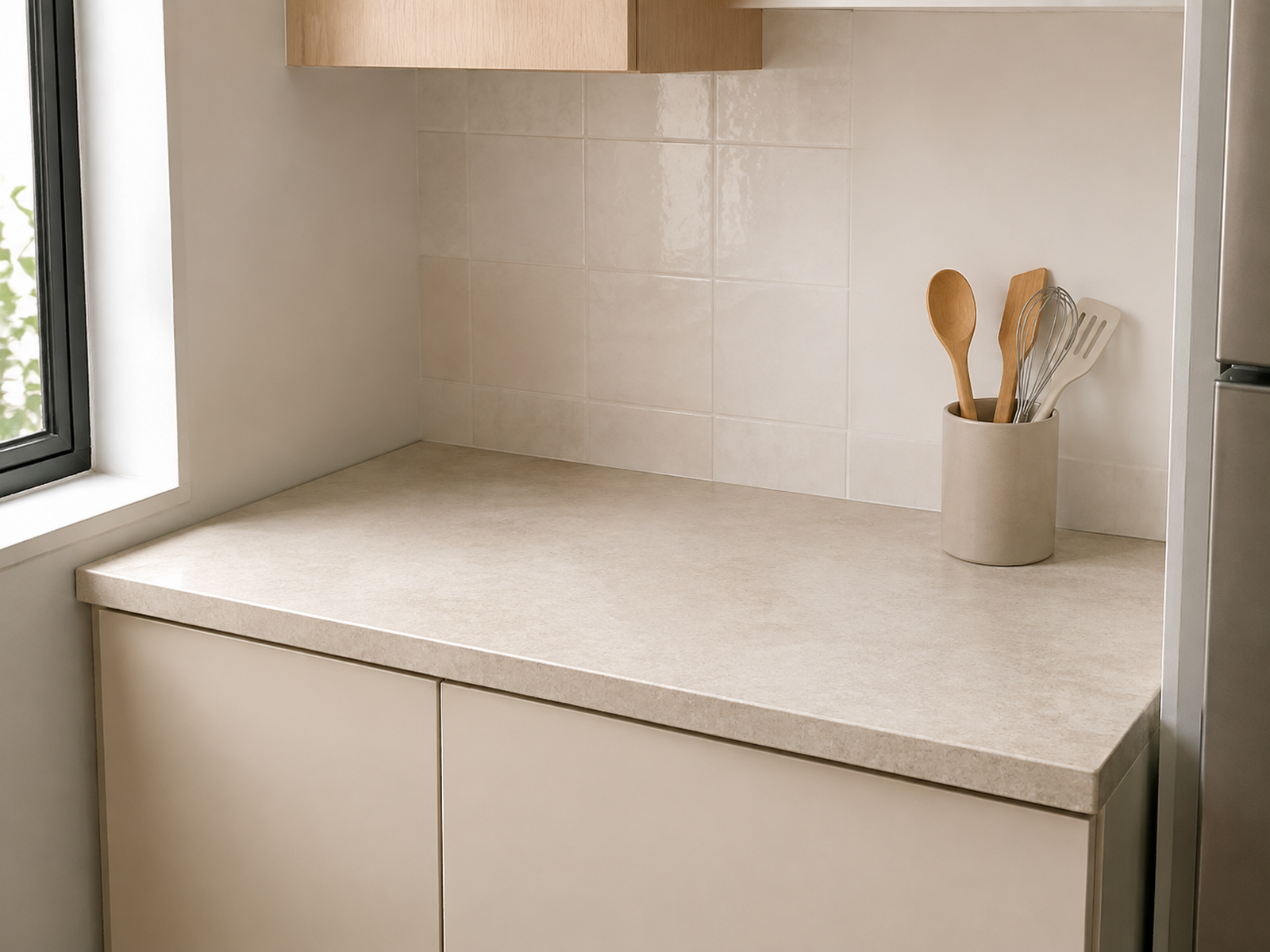
A countertop holder offers the fastest possible retrieval, which is exactly why it is tempting in a no-drawer kitchen. But every holder also spends prep or landing space, so it should be reserved for a very small set of items that genuinely benefit from instant access.
One compact utensil holder near the relevant work zone may be useful. A row of crocks, baskets, paper organizers, towel bins, and miscellaneous containers can solve storage while making the kitchen harder to cook in. The decision is not whether countertop storage looks tidy; it is whether the access gained is worth the work surface lost.
If a category can live in a shallow cabinet tray with only one easy extra movement, that trade can be better than giving it permanent counter space. Keep reviewing the surface as a work zone, not as the place where every displaced drawer category is allowed to accumulate.
Use / Skip
When a Countertop Holder Earns Its Footprint
Use
Use — Use it for the smallest true daily-use set
Use one restrained holder when the tools are reached for constantly, the holder sits outside the main prep area, and enough uninterrupted work surface remains for the tasks you actually perform.
Skip
Skip — Skip it when the counter becomes the replacement drawer
Pass when several categories need separate containers, when the holder crowds your only prep or landing zone, or when the same items can be retrieved easily from a shallow cabinet tray or nearby storage instead.
04
Use Cabinet Doors and Walls Only After a Compatibility Check
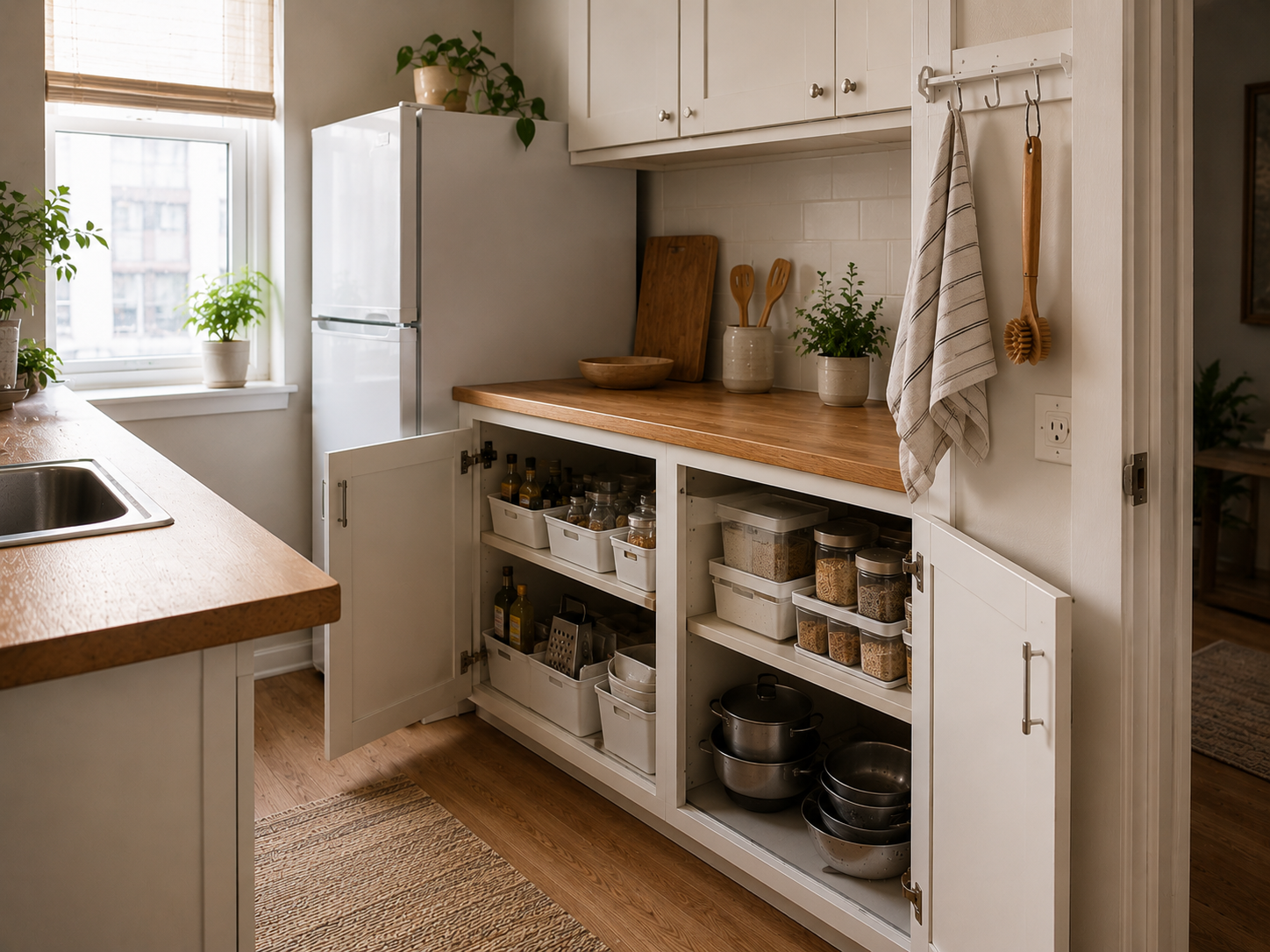
Vertical surfaces can protect the counter, but they are not automatically free storage. An over-cabinet-door organizer has to let the door close normally and clear the shelves inside. A wall hook or caddy has to suit the exact mounting surface and stay out of the way of doors, appliances, and normal work.
For adhesive storage, keep the claim narrow. 3M Command’s current instructions show that capacities, surfaces, application conditions, and removal procedures vary by product. That makes adhesive storage potentially renter-friendly in the right situation, not universally damage-free.
Location matters too. NFPA cooking-safety guidance says items that can catch fire, including towels and food packaging, should be kept away from the stovetop. Do not move those categories into a heat-risk zone simply because a wall or cabinet side looks empty.
What Not to Do
Don’t Treat Vertical Space as Free Space
A cabinet door that cannot close, a hook that projects into an appliance path, a wall rail that requires unapproved drilling, or towels stored beside the stovetop all create a new problem. Make vertical storage pass four checks before using it: operation, mounting, load, and location.
05
Move Lower-Frequency Drawer Jobs Outside the Prime Kitchen Zone
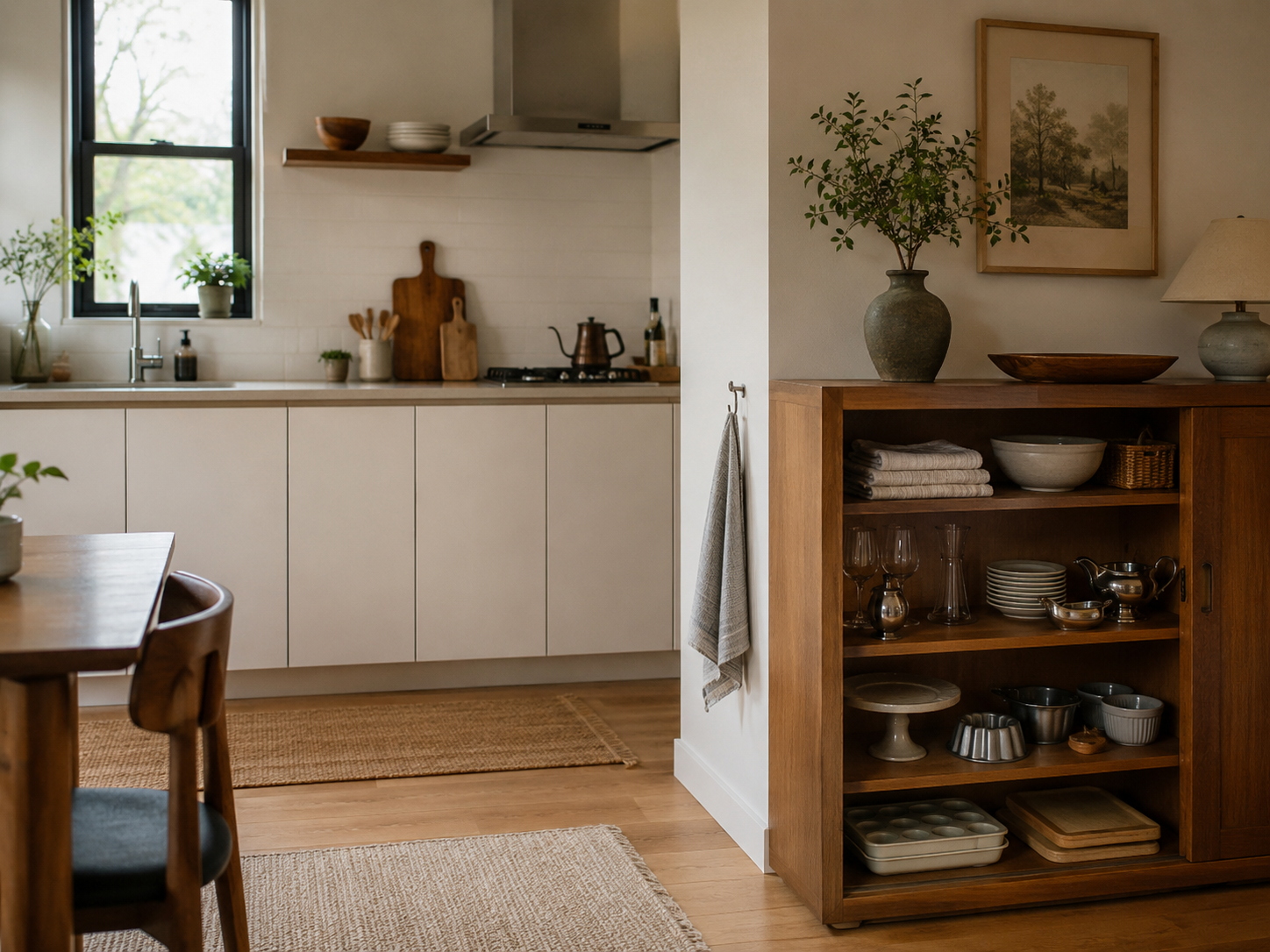
Some categories do not need to stay in the kitchen’s highest-value storage at all. Occasional serving tools, specialty baking pieces, extra linens, or backup supplies may work better in a nearby sideboard, dining-area cabinet, or other existing storage.
A slim rolling cart can also add reversible capacity when there is a genuine unused floor zone, but it should not become a storage lane through the kitchen. Check refrigerator, oven, dishwasher, and cabinet-door operation as well as the normal walking route before claiming the floor space.
Distributed storage is not a failure to organize the kitchen. In a compact home, moving lower-frequency items a few steps away can protect the cabinets and counter space that everyday cooking needs most.
06
Save Installed Pull-Outs for a Verified Retrofit
An installed pull-out can recreate true moving access inside a base cabinet, but it belongs later in the decision process because it is more intervention-heavy and exact fit matters.
Measure the real opening and account for hinges, plumbing, shelf geometry, and any other obstruction. A product that appears to fit the cabinet volume can still fail at the opening or require mounting that is inappropriate for the rental.
If the lease or owner context allows the installation and the exact organizer fits, a pull-out may be a strong upgrade for a high-frequency category. If permission, mounting, or fit is uncertain, stay with removable cabinet trays, selective countertop access, or freestanding storage rather than treating a hidden retrofit as automatically renter-friendly.
Closing Decision
Rebuild Fast Access Without Giving Up the Work Surface
A small kitchen with no drawers does not need every missing drawer replaced in the same way. Give daily categories the easiest retrieval, rebuild shallow access inside existing cabinets, make countertop storage earn every inch it occupies, and move lower-frequency items out of the prime kitchen zone. Only add door, wall, floor, or installed storage when it improves access without creating a worse conflict. The best system restores the function the drawers used to provide while keeping the counter available for cooking.
RELATED GUIDES
What to Read Next
NEXT GUIDE
How to Store Kitchen Knives in a Small Kitchen With No Drawer Space
A direct next step for storing a high-use kitchen tool when drawer space is unavailable and counter space matters.
GUIDE
How to Organize Spices in a Small Kitchen With Limited Cabinet and Drawer Space
Useful for another small-item category that must stay accessible without relying on generous drawer space.
GUIDE
How to Organize Food Storage Containers and Lids in a Small Kitchen
Continues the cabinet-allocation problem with bulky, mismatched pieces that can easily consume usable storage.