
Small Closet Organization
How to Use an Over-the-Door Organizer Without Stopping the Door From Closing
Treat the back of a hinged closet door as a moving storage surface, not a static wall. Measure the actual door thickness and top gap, test the organizer brackets unloaded, then check loaded depth, full swing, rubbing, rattling, and latching before deciding whether the door is really a valid storage zone.
In This Guide
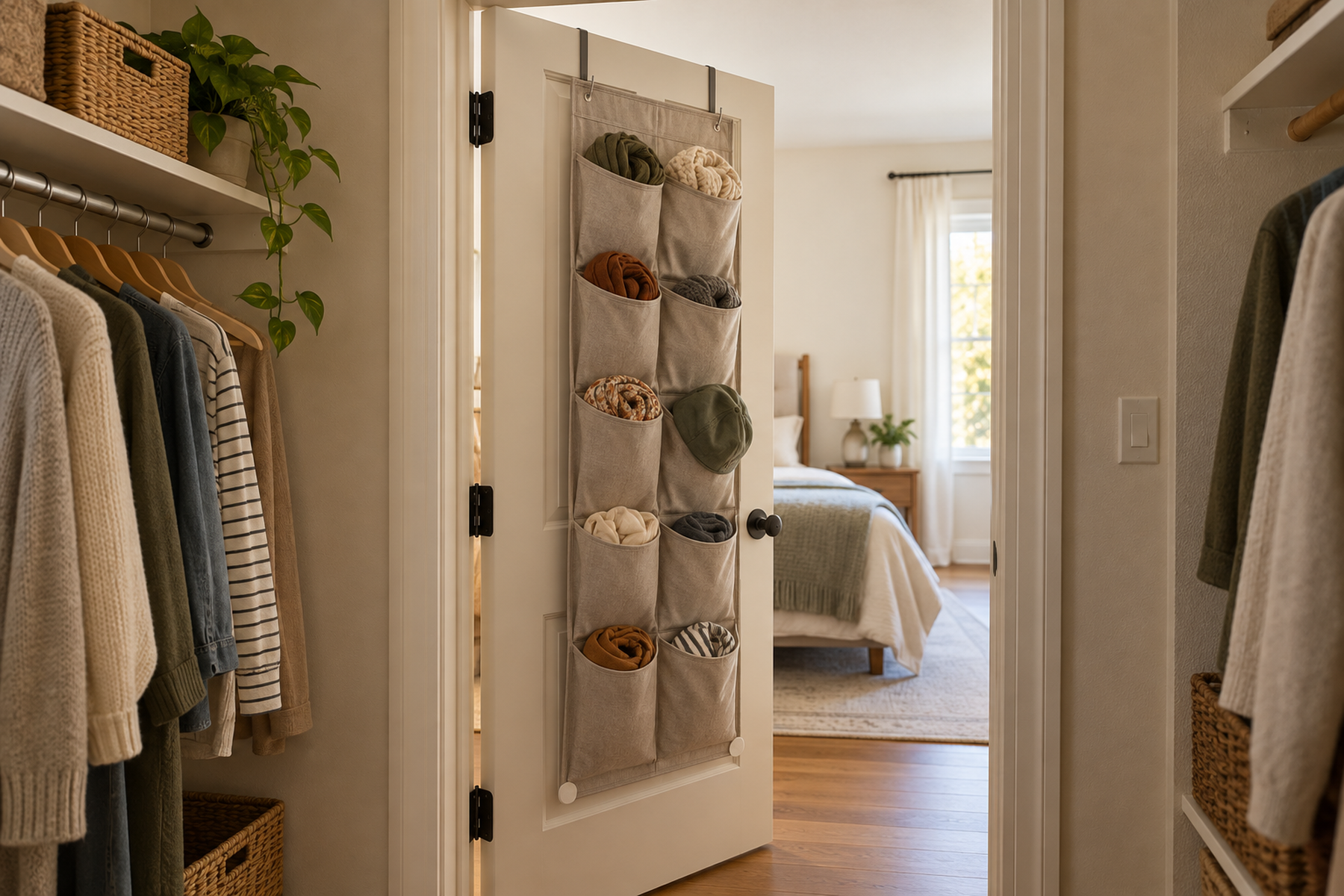
The back of a closet door can look like free vertical storage, especially in a rental where drilling is limited. But a door is not a wall: it has to fit inside a frame, close and latch, swing through the room, and carry the organizer and its contents while moving.
The useful fit test therefore has two systems at once: the door inside its frame and the loaded organizer through the door’s full motion. If either system fails, the organizer has not created usable storage—it has created a daily door problem.
Quick Answer
The Door Still Has to Behave Like a Door
An over-the-door organizer is a good renter solution only when the brackets fit the actual door, the top gap remains clear, the loaded organizer clears the swing arc, and normal opening, closing, latching, and surface condition are preserved.
01
Measure door thickness and top gap as separate dimensions
A hook can fit over the door edge and still be too thick for the gap between the door and frame. Check both measurements against the exact organizer specification.
02
Test the organizer unloaded before you fill it
Install only the bracket or empty organizer first. Close, latch, open, and swing the door normally before adding shoes, accessories, toiletries, or other stored items.
03
Judge the loaded organizer, not the empty product
Pockets and baskets project farther after they are filled. The final test is whether the loaded organizer clears walls, shelves, furniture, closet contents, and the frame through the door’s complete movement.
01
Confirm the Door Type Before You Add Storage
Start by confirming that the organizer is intended for the door you actually have.
An ordinary hinged interior closet or bedroom door is the strongest candidate because the organizer can hang over a single moving panel. Sliding and pocket doors use a different path, and many bifold doors have folds, hinges, or top hardware that make over-door brackets incompatible.
Do not extend this article’s advice to building entrance, fire-rated, or other special-purpose doors. Those can have different hardware, closing, code, and safety requirements that go beyond ordinary closet organization.
If the door type is not compatible with the exact product, stop there. The back of the door is not usable storage merely because the surface area exists.
02
Measure Door Thickness and the Top Gap Separately
Measure the actual door thickness where the organizer bracket will sit.
Manufacturer limits vary. Current Yamazaki, Umbra, Spectrum, and IKEA examples publish different maximum door-thickness ranges, which is enough to rule out the idea that every organizer fits a “standard” interior door.
Then measure the gap between the top of the closed door and the frame or stop. Current Yamazaki products provide a useful example because they specify both compatible door thickness and a separate minimum top-gap requirement.
These measurements solve different problems: door thickness determines whether the hook can sit correctly on the edge, while top clearance determines whether that hook can move through the frame without rubbing or jamming.
Measure / Check First
Before assembling or loading an over-door organizer, test the door and the bracket as a moving system.
Check the Door Edge, Frame Gap, and Swing Path First
01
The actual door and bracket fit
Measure door thickness, top gap, bracket thickness, and any frame stop, weatherstrip, decorative trim, or unusual hardware that the bracket must pass.
02
The unloaded door behavior
Install only the bracket or empty organizer, then close and latch the door without pushing, lifting, slamming, or forcing it. Open it again and listen or feel for rubbing.
03
The full loaded path
Measure organizer depth with representative contents, then check the swing against walls, closet shelves, beds, vanities, fixtures, furniture, and the closet interior itself.
If the door cannot close and latch normally before the organizer is even loaded, reject the fit rather than trying to solve it with more padding or force.
03
Test the Brackets Before You Load the Organizer
Bracket fit is the first physical pass/fail test.
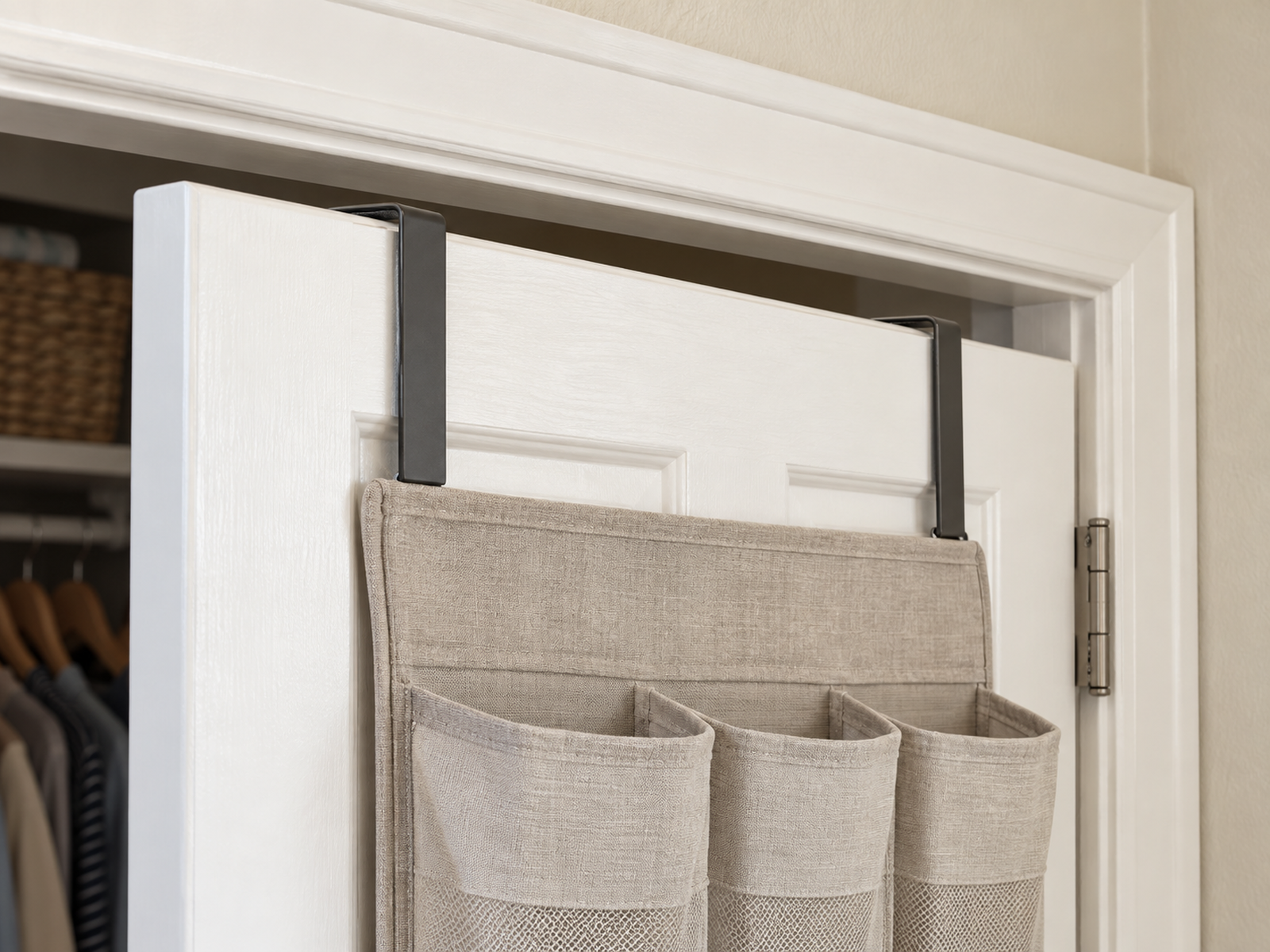
Place the hooks where the organizer is designed to sit and move the door slowly through closing and opening. The door should not need extra pressure, upward lifting, or a harder push to move through the frame.
Look for hard contact at the top jamb, scratches at the painted edge, pressure marks, or a bracket that tilts instead of sitting flat. “It technically closes” is not enough if the hardware is already rubbing every time the door moves.
Protective cushions supplied by the manufacturer can reduce hard contact on some products, but padding also occupies space. Use it as part of the exact product system, not as permission to force an oversized bracket into a tight frame gap.
04
Map the Loaded Swing Before You Decide the Door Works
An empty organizer is not the final geometry.
Load a few representative items that match the intended category and move the door through closed, partly open, and fully open positions. Shoes, rigid baskets, toiletries, and bulky accessories can project well beyond the empty organizer.
Check both sides of the motion. The loaded organizer can hit a wall or furniture when the door opens, then collide with closet shelves, hanging clothes, or stored items when the door closes.
Also watch how the load moves. A long rack that swings, bounces, or rattles every time the door changes direction may pass the clearance test and still be a poor everyday storage surface.
Use / Skip
Over-the-Door Storage on This Door
Use
Use it when the loaded door still opens, closes, latches, and swings normally
Over-door storage can be a strong renter solution when the exact organizer matches the door thickness and top gap, the brackets do not rub the frame, the loaded depth clears the full swing arc, and the stored category remains quiet and manageable during everyday door movement.
Skip
Skip it when the organizer turns normal door use into a workaround
Choose another closet zone when the door must be pushed or slammed, the frame or paint rubs, the loaded organizer hits adjacent surfaces, the rack swings excessively, or stabilizing pads and spacers consume the little clearance that made the setup possible.
05
Match Soft Pockets, Hooks, and Rigid Racks to Different Loads
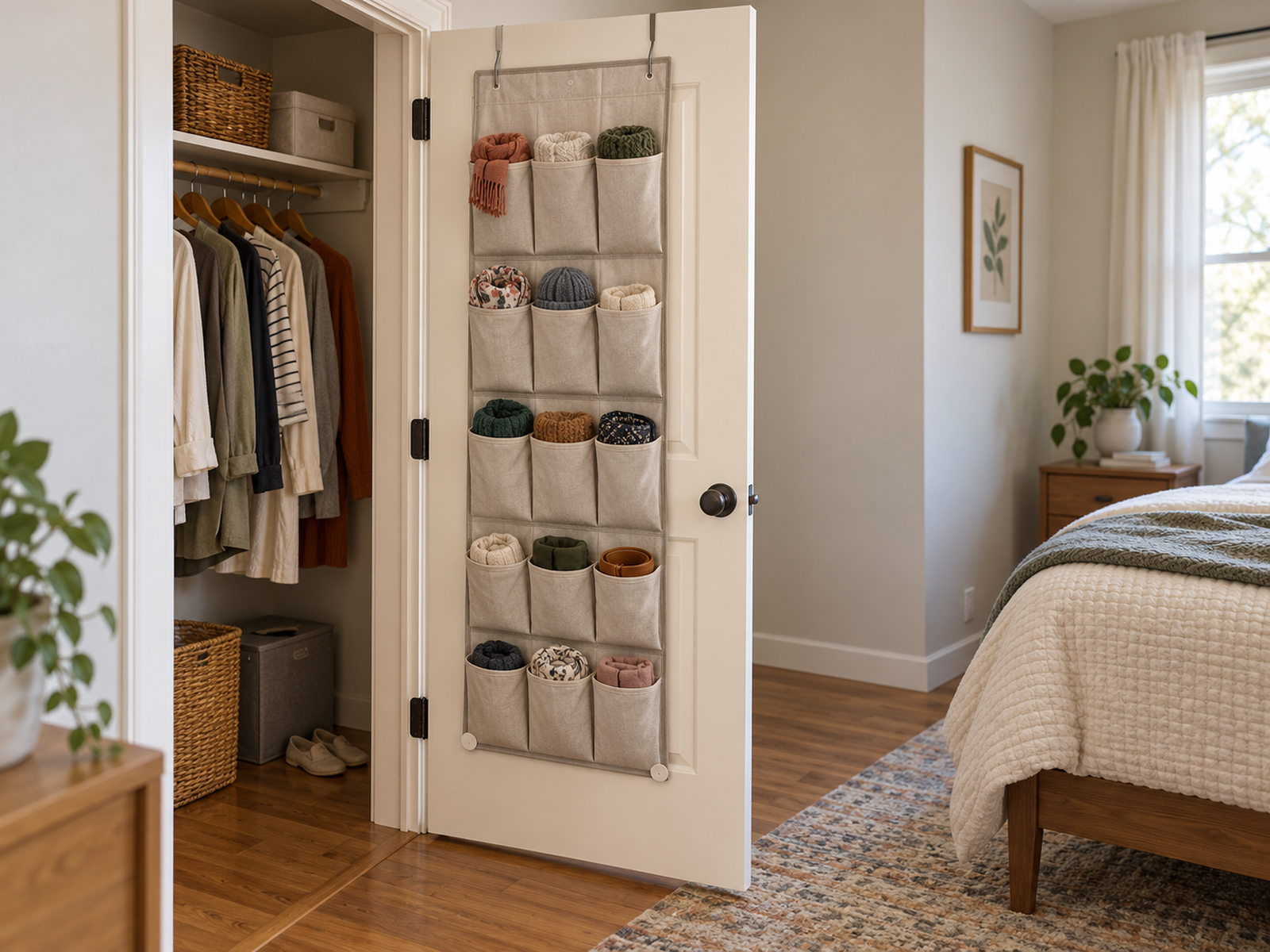
Soft-pocket organizers usually create less rigid projection and can suit lightweight shoes, scarves, socks, underwear, small accessories, or similarly light categories.
Simple hooks work best when the stored items remain shallow enough that they do not create a new swing collision. Current manufacturer examples also show that hook load ratings and door-thickness limits are product-specific.
Rigid basket racks provide stronger containment for bottles, shoes, accessories, or pantry-style categories, but the frame itself adds depth and can create more rattling or hard contact as the door moves.
Choose the lightest and shallowest format that solves the category. The goal is not to use the product’s maximum capacity; it is to add storage without changing how the door behaves.
06
Reduce Rattle and Surface Contact Without Stealing the Fit
Some organizers include protective pads, cushions, lower straps, or other stabilizing details intended to reduce movement.
Use those components when the manufacturer provides or approves them, but re-test the door afterward. A pad that protects paint can also make a tight bracket thicker, while an adhesive stabilizer can create a new finish-removal concern in a rental.
Lower stabilization can help keep a long organizer from swinging away from the door, but it should not depend on a generic adhesive strip or improvised attachment that the product and surface were never designed to use.
If the organizer needs several added fixes just to stop rattling, rubbing, and shifting, the door may simply be the wrong storage surface for that load.
07
Keep the Daily Load Below the Point Where Door Behavior Gets Worse
A published product load rating is a limit for that product under its stated conditions, not a target for daily storage.
As weight increases, the door can feel heavier, the rack can swing with more momentum, contents can bounce, and pressure at contact points can become more noticeable even before any product limit is reached.
Load the organizer with the categories that earn the moving-door location most: frequently used, relatively light items that benefit from visibility and do not project far into the swing path.
If heavier shoes, bottles, or rigid bins make the door noisier or harder to move, reduce the load or move those items to a fixed shelf, floor unit, or another closet zone instead.
08
Skip Over-the-Door Storage When the Door Fails the Fit Check
A failed door fit does not mean the closet is out of storage options.
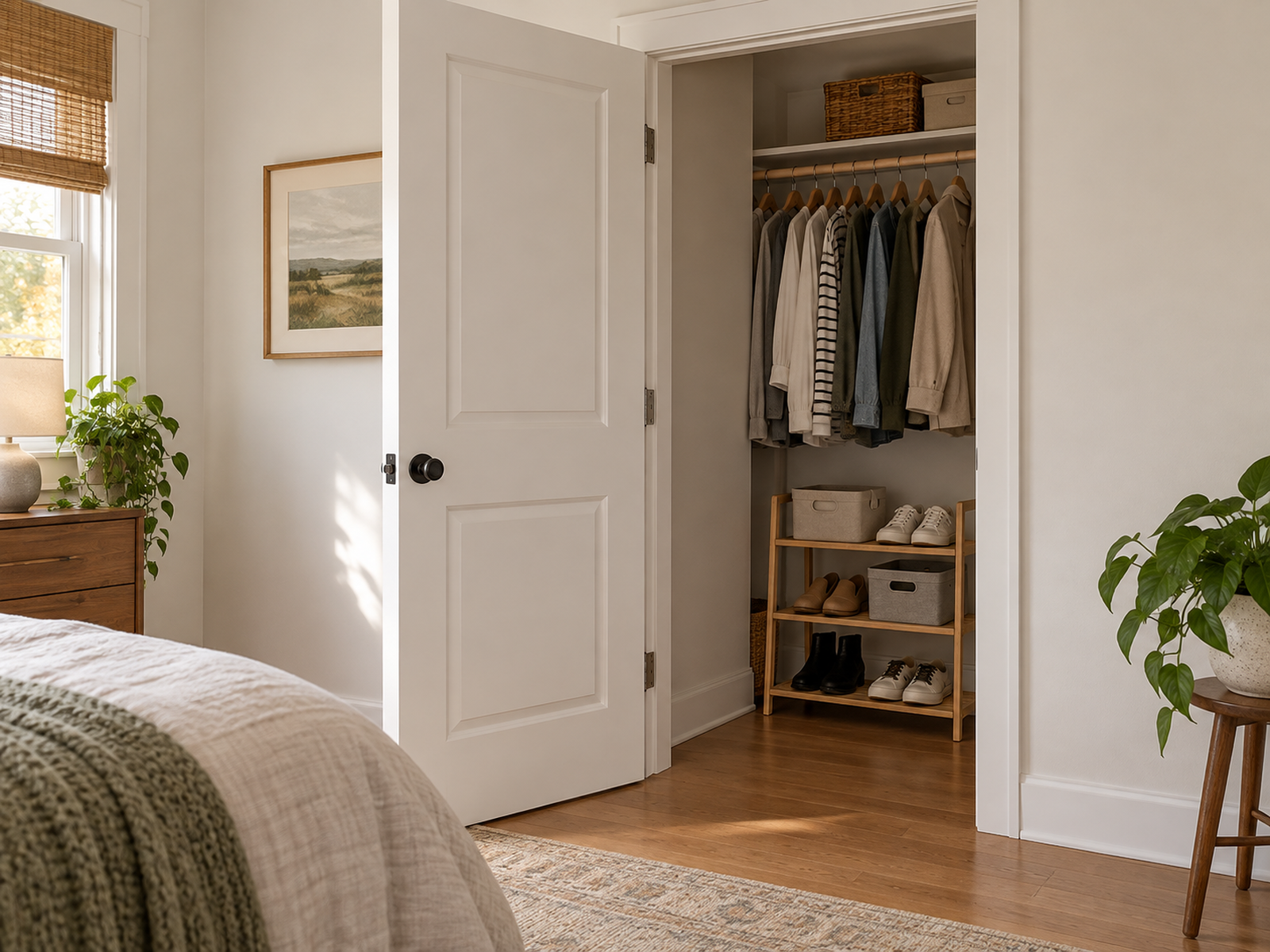
Shoes can move to a floor or shelf system, accessories can use hooks or bins inside the closet, folded and small items can use the existing shelf system, and low-frequency categories can move under the bed or to a separate drawer unit.
A narrow freestanding shelf or tension-based system can also avoid loading the door, though those alternatives spend floor area or introduce their own product-specific fit requirements.
The important small-space decision is to reject the format before the renter starts accepting chipped paint, a door that never latches cleanly, or a rack that bangs into the room every day.
Closing Decision
Use the Door Only When It Still Works Like a Door
Over-door storage should pass the real door test: compatible door type, correct bracket thickness, enough top gap, normal closure and latching, clear loaded swing, limited contact, and manageable movement.
If the door needs force, rubs the frame, rattles excessively, or collides once the organizer is loaded, move the storage elsewhere. No-drill storage is only useful when it remains low-damage and low-friction in everyday use.
RELATED GUIDES
What to Read Next
NEXT GUIDE
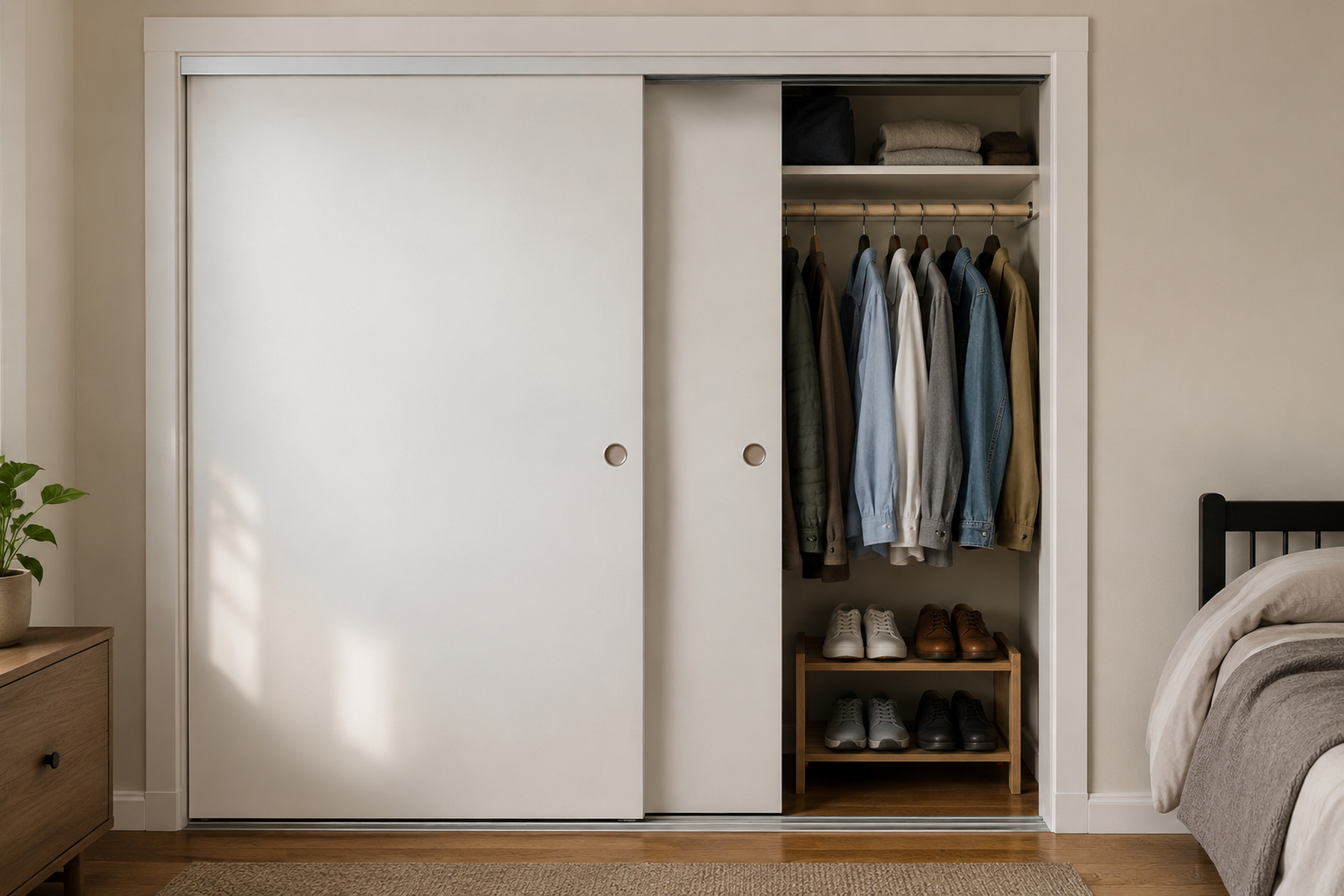
How to Organize a Small Closet With Sliding Doors—Without Losing Access
Use this next if the closet does not have a compatible hinged door; that guide handles storage and access when sliding or bypass door geometry controls the layout.
GUIDE
How to Store Shoes in a Small Closet Without Losing Floor Space
Use this if shoes were the intended over-door category and the door fails the thickness, top-gap, swing, or damage test.
GUIDE
How to Make Wire Closet Shelves Work for Folded Clothes and Small Items
Use this if small items or accessories need to move back inside the closet after over-door storage proves incompatible.