
Small Bathroom Storage
How to Add Over-the-Toilet Storage Without Blocking Access or Making the Bathroom Feel Smaller
Treat the space above the toilet as conditional storage, not free vertical space. Measure the toilet and full service path first, verify whether the exact storage unit must be anchored, then test plumbing, tank-lid access, room depth, loading, and visual bulk before deciding whether over-the-toilet storage is actually the right format.
In This Guide
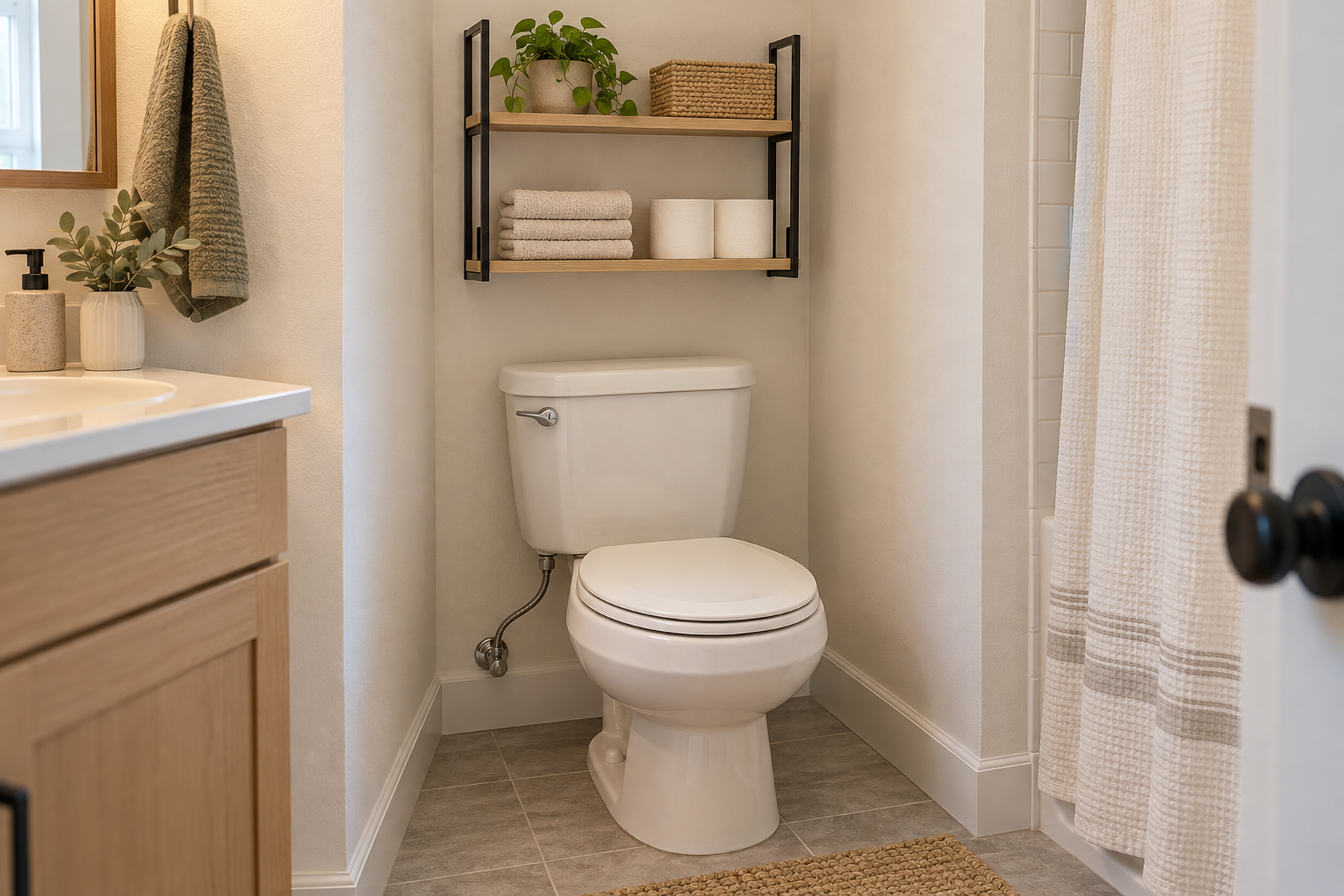
The wall above a toilet can look like obvious unused storage, but the real fit problem is larger than the empty rectangle over the tank. A successful solution has to clear the fixture, install safely on the actual wall and floor, preserve tank or service access, avoid supply-line conflicts, and still feel proportionate inside a small bathroom.
That creates four gates: physical fit, safe installation, toilet service access, and room-scale value. If any one of those fails, the space may be better used by a shallower wall solution, a toilet-side unit, another bathroom zone, or no over-the-toilet storage at all.
Quick Answer
Make the Toilet Serviceable Before You Add Storage Above It
Over-the-toilet storage is useful only when the exact product can be installed safely and the toilet remains easy to flush, shut off, open, clean, and service.
01
Measure the full service path, not just the tank height
Check toilet width, tank height, lid-removal path, flush control, supply and shutoff location, and any concealed-cistern service plate before choosing shelf height or crossbar position.
02
Treat anchoring as part of the product, not an optional renter step
A floor-standing unit can still require wall anchoring. If the exact manufacturer instructions require it and the rental wall cannot accept the required fasteners, that unit is not a safe no-drill solution for the space.
03
Judge visual depth as carefully as storage capacity
A deeper cabinet can hold more and still make a tiny bathroom worse. Favor the shallowest format that solves the real storage need without looming over the fixture or narrowing the room.
01
Measure the Toilet and Service Envelope Before the Storage
Start with the toilet, not the furniture.
Measure the toilet or tank width, floor-to-tank-top height, wall-to-front tank depth, flush-control location, supply line, shutoff, baseboard, and any nearby counter, towel bar, window trim, door swing, or wall projection.
Then test the full tank-lid removal path. American Standard and Kohler service guidance both show that common tank repairs begin by removing the tank lid and working inside the tank, so “the bottom shelf clears the tank” is not enough.
For a concealed-cistern toilet, identify the flush/service plate and keep that access point available. Geberit’s current in-wall systems use the flush plate as tool-free access to internal working parts, so the wall above the bowl may still contain a service zone.
02
Verify the Exact Anchoring Requirement Before You Buy
Do not assume that “freestanding” means “no drill.”
IKEA’s current FRÖSJÖN over-the-toilet shelf is a floor-standing unit with adjustable feet, but IKEA still says it must be secured to the wall for safe installation and warns about tipping. Other tall narrow bathroom units can carry similar anchoring requirements.
That matters in rentals with tile, faux stone, delicate finishes, or walls the tenant is not permitted to drill. A product that is safe only when anchored is not made renter-compatible by simply skipping the anchor step.
Wall-mounted cabinets and open shelves require their own compatible fasteners and wall conditions. Tension-style or adhesive alternatives should also be treated as exact-product decisions rather than universal “damage-free” substitutes for structural anchoring.
Measure / Check First
Before ordering any over-the-toilet rack, cabinet, shelf, or tension unit, test the toilet, wall, floor, and service paths together.
Check the Fixture, Installation Method, and Room Depth First
01
The toilet and plumbing geometry
Measure tank width and height, vertical lid-removal path, flush control, supply and shutoff position, toilet centering, floor trim, and any lower plumbing that could conflict with legs or crossbars.
02
The safe installed condition
Read the exact product instructions for wall anchoring, fastener type, wall material, floor leveling, shelf load, and any anti-tip requirement. If the safe installation cannot be completed in the rental, reject the product.
03
The room-scale footprint
Measure unit depth, cabinet-door swing, shoulder/head clearance, door and vanity conflicts, and cleaning access around the toilet. A unit can fit the wall and still make the room feel physically crowded.
If the storage only works by skipping required anchoring, blocking service access, or making the toilet zone harder to use, choose another format.
03
Preserve Tank-Lid, Flush, and Plumbing Access
The storage should not turn routine toilet maintenance into furniture disassembly.
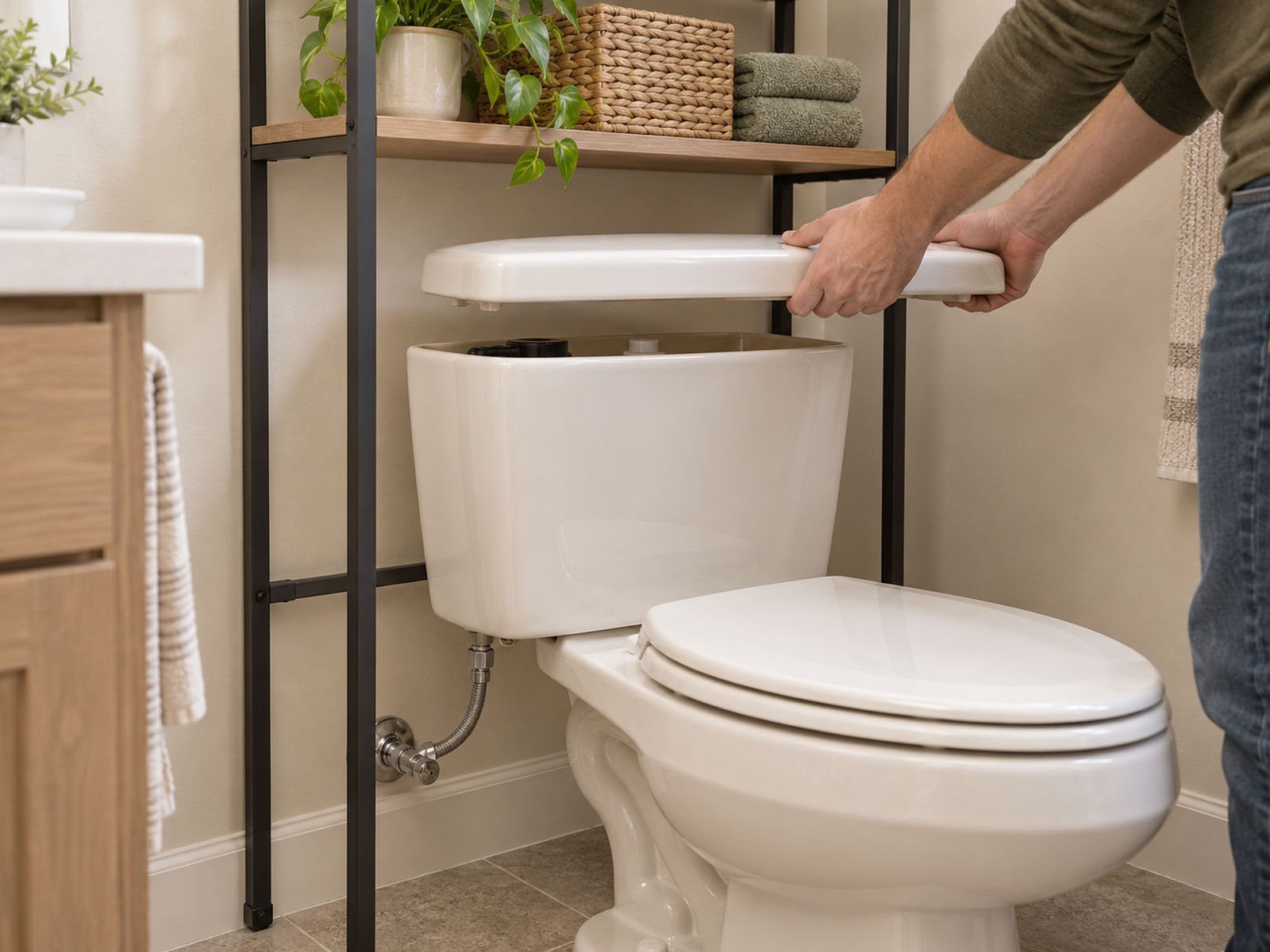
Leave enough vertical room to lift and remove the tank lid completely, not merely crack it open. Also keep the flush control, supply line, and shutoff reachable without moving the entire unit or unloading several shelves.
Watch lower braces and legs. A crossbar that clears the ceramic tank may still hit the water supply, shutoff valve, baseboard, or an off-center toilet installation at floor level.
Do not use the tank lid as permanent storage. Keeping the lid clear preserves immediate access and avoids adding another step every time the toilet needs inspection or adjustment.
04
Choose the Storage Format That Fits the Room, Not Just the Wall
A tall freestanding cabinet can add substantial storage while also adding the most visual mass.
In a very small bathroom, a shallow wall cabinet or open shelf may project less into the room, but that lower bulk is purchased with drilling, anchors, and smaller storage capacity. Current IKEA ENHET wall cabinets are only 6 inches deep, while current APOTEKARE wall shelving is also relatively shallow and still requires secure anchoring.
A narrow toilet-side unit can avoid overhead bulk entirely, though it spends floor space and still has to preserve shutoff, cleaning, door swing, and circulation.
The right format is therefore not the one with the highest shelf count. It is the one that passes safe installation and service access while adding enough storage value to justify its physical and visual footprint.
Use / Skip
A Freestanding Over-the-Toilet Unit
Use
Use it when the exact unit can be safely anchored and the toilet stays fully serviceable
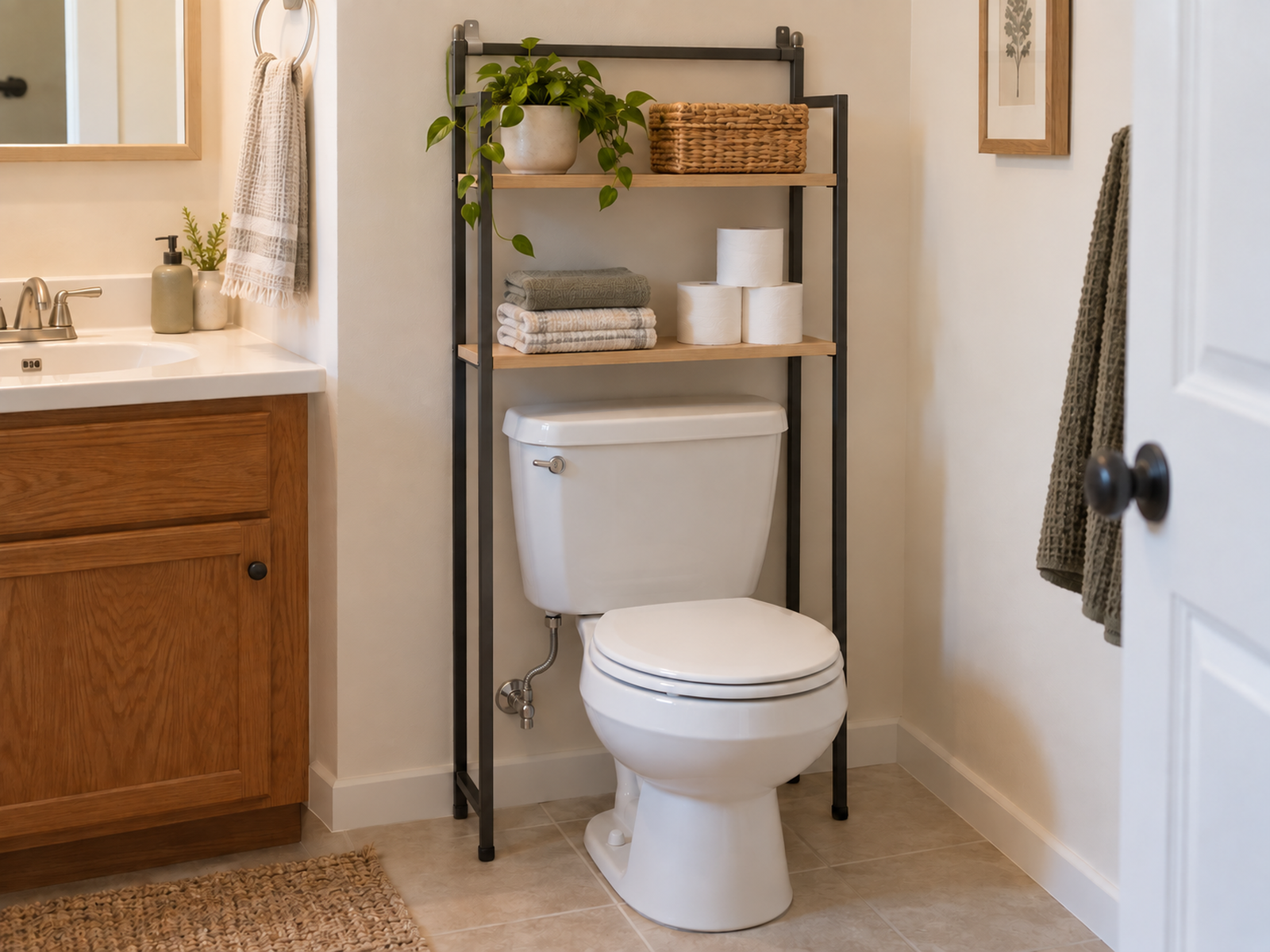
A freestanding unit can work when the wall accepts the required anchoring, the floor is stable enough for the product, legs and braces clear plumbing, the tank lid or service plate remains accessible, and the unit’s depth still feels proportionate to the bathroom.
Skip
Skip it when “freestanding” only works by ignoring the installation instructions
Choose a shallow wall solution, toilet-side storage, another bathroom zone, or no over-toilet unit when anchoring is prohibited, the unit wobbles, the tank lid cannot be removed, lower plumbing conflicts, or the cabinet feels looming in the room.
05
Keep Overhead Loads Light, Stable, and Easy to Contain
What you store above the toilet matters after the unit passes the fit and installation gates.
Spare toilet paper, light towels, and lightweight toiletries or baskets are usually easier overhead categories than dense detergent bottles, glass containers, or other heavy and breakable items.
Use doors, rails, baskets, or stable containers where the storage format supports them so everyday handling does not create a falling-object problem over the fixture.
Do not treat placing heavy items low on the unit as a substitute for required wall anchoring. Loading strategy can reduce consequences and improve organization, but it cannot override the manufacturer’s safe-installation requirements.
06
Treat No-Drill and Tension Options as Product-Specific
A tension-style unit can be useful when drilling is not allowed, but “tension” does not automatically mean stable, suitable for every ceiling, or approved for every load.
Check the exact height range, contact surfaces, installation method, load limits, humidity suitability, and any instructions about wall or ceiling materials.
The same caution applies to adhesive storage. Adhesive shelves and hooks can solve light-duty jobs on compatible bathroom surfaces, but they are not a structural substitute for the anti-tip anchoring required by tall furniture.
If the renter’s surface constraints eliminate the product’s safe installation method, the correct decision is to change storage format rather than downgrade the installation.
07
Use Side-Wall or Toilet-Side Storage When Overhead Bulk Is the Wrong Trade
Over-the-toilet storage is not the only way to use the toilet zone.
A shallow wall cabinet or shelf on a nearby side wall can preserve the full tank-service path and reduce the feeling of something looming directly above the toilet, provided the wall-mounting method is permitted.
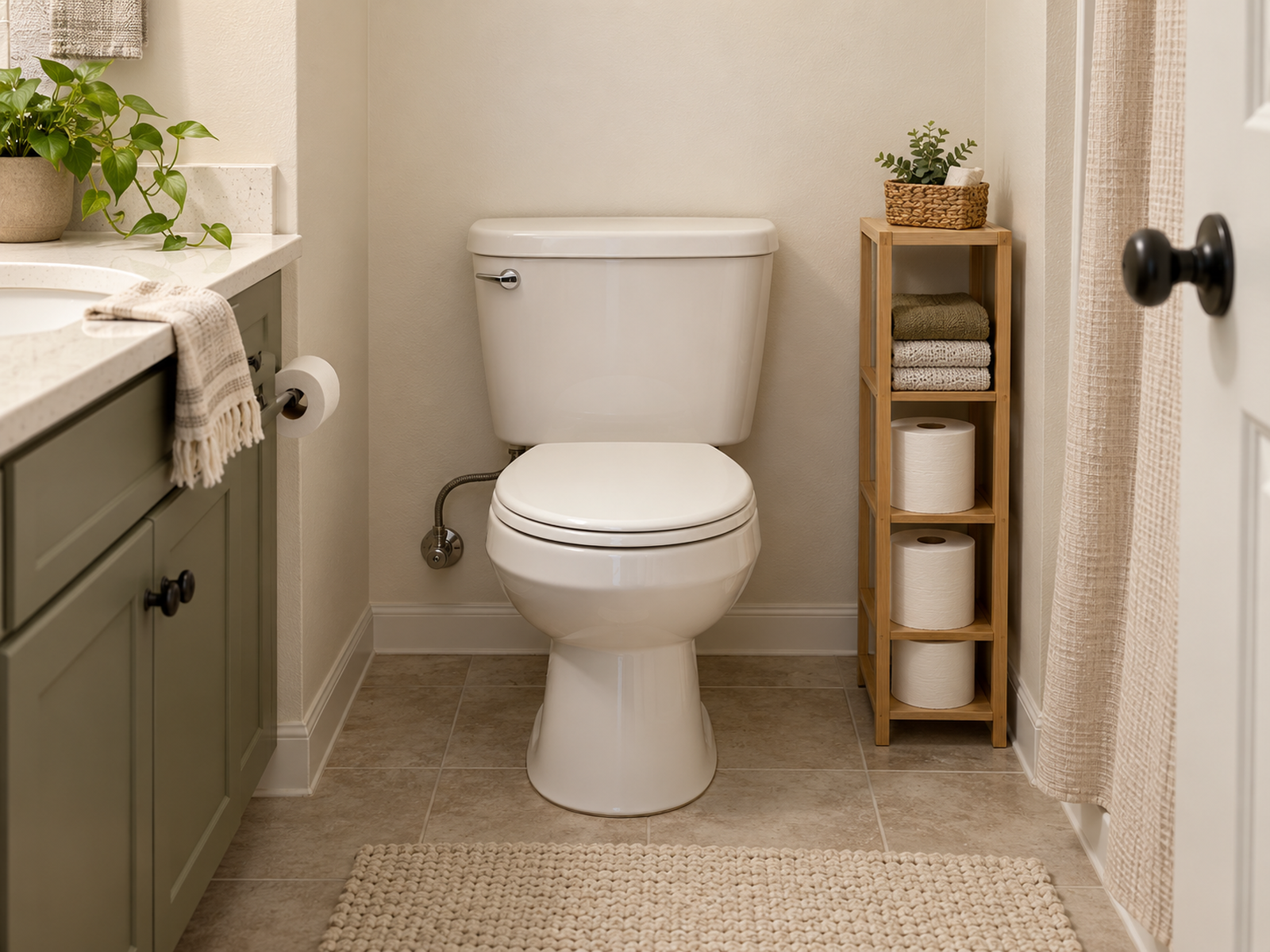
A narrow toilet-side unit can also keep storage lower and easier to reach, though it consumes floor area and must stay clear of the shutoff, cleaning path, vanity, door, and walking space.
Whole-room storage triage can be stronger still: daily-use items may belong near the sink or medicine-cabinet zone, while toilet paper or backstock can move to another bathroom or apartment storage area instead of forcing one tall unit into a cramped fixture zone.
08
Skip Over-the-Toilet Storage When the Four Gates Do Not Pass
A valid small-space solution can be to leave the wall above the toilet mostly empty.
Skip the format when the exact unit cannot be safely installed within rental rules, the toilet cannot be serviced normally, plumbing blocks the frame, or the added depth makes a tiny room feel more crowded than the storage value justifies.
This is especially important when the bathroom already has visual congestion from a shower enclosure, vanity, laundry equipment, medicine cabinet, or inward-swinging door.
Storage should make the bathroom easier to use and maintain. If the unit adds capacity while creating wobble, service friction, cleaning difficulty, or visual pressure, the format has failed even if it technically fits.
Closing Decision
Treat the Space Above the Toilet as Conditional, Not Free
Over-the-toilet storage should pass four separate tests: physical fit, safe installation, toilet service access, and room-scale value. A product that fails any one of them is not the right storage capacity for that bathroom.
Measure the full fixture and plumbing envelope, follow the exact anchoring instructions, preserve tank or service access, and choose the shallowest format that earns its footprint. When those conditions cannot be met, use another bathroom zone instead.
RELATED GUIDES
What to Read Next
NEXT GUIDE
How to Add Storage to a Tiny Rental Bathroom With Almost No Built-In Storage
Use this next if the over-the-toilet format fails and the whole bathroom needs a new storage allocation across sink, door, shower, floor, and outside-the-room zones.
GUIDE
How to Store Toilet Paper in a Small Bathroom With No Linen Closet
Use this if toilet paper is the main category driving the over-the-toilet decision and you need lower-bulk alternatives around the toilet zone.
GUIDE
How to Organize a Small Bathroom With No Medicine Cabinet
Use this if daily-use toiletries are pushing you toward overhead toilet storage because the bathroom lacks shallow storage near the sink.