
Small Apartment Storage Ideas
How to Host Overnight Guests in a Small Apartment With No Guest Room
Choose the guest pattern before the guest bed: protect the apartment’s everyday function, measure the fully deployed sleep zone, and give bedding, luggage, privacy, bathroom access, and morning reset a believable place before permanent sleeper furniture earns any floor space.
In This Guide
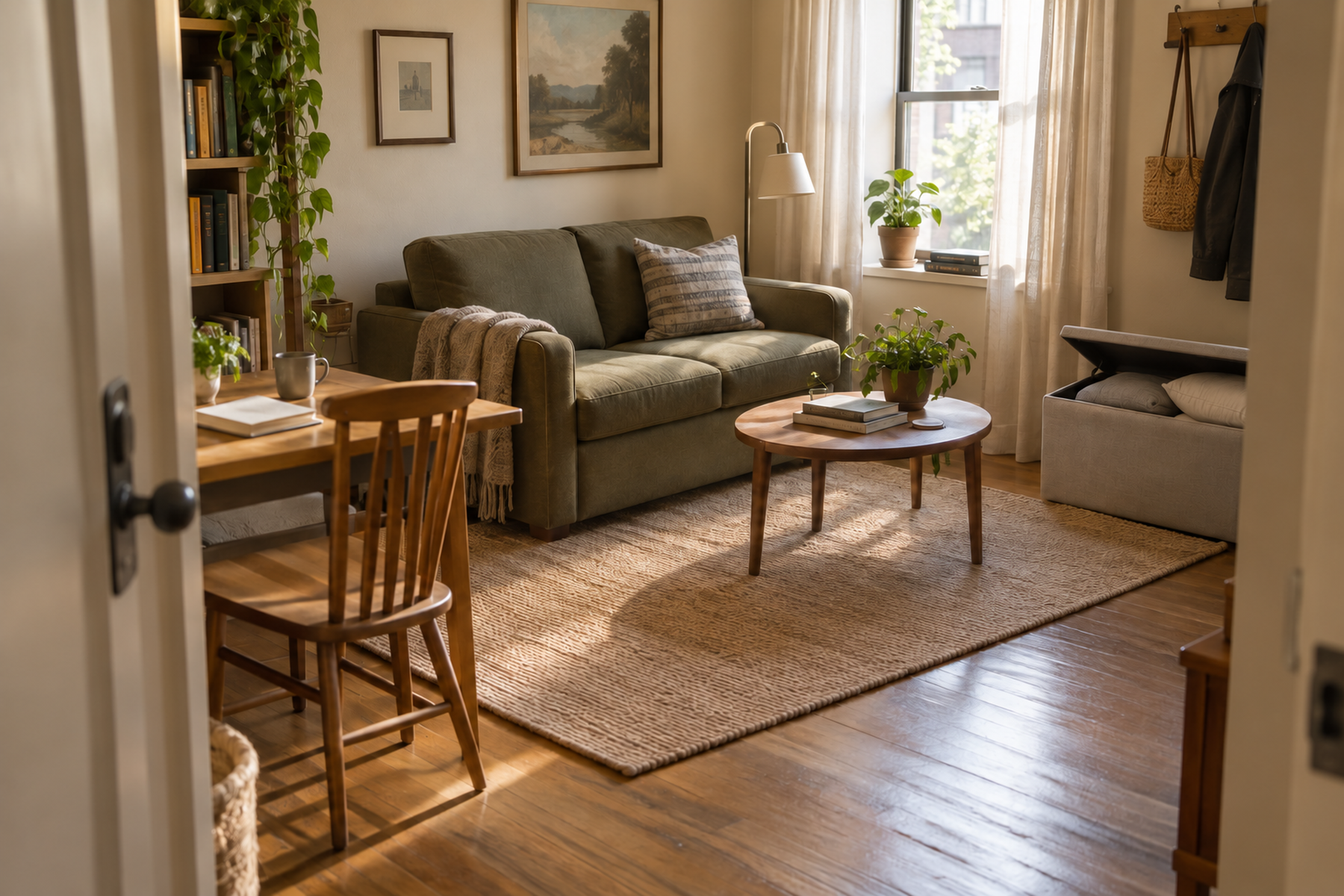
A small apartment can work perfectly for its resident and become unusable the moment a guest bed opens. The sleeping surface is only part of the transformation: the room also has to absorb bedding, luggage, a path to the bathroom and exit, some degree of privacy, and the host’s normal morning movement.
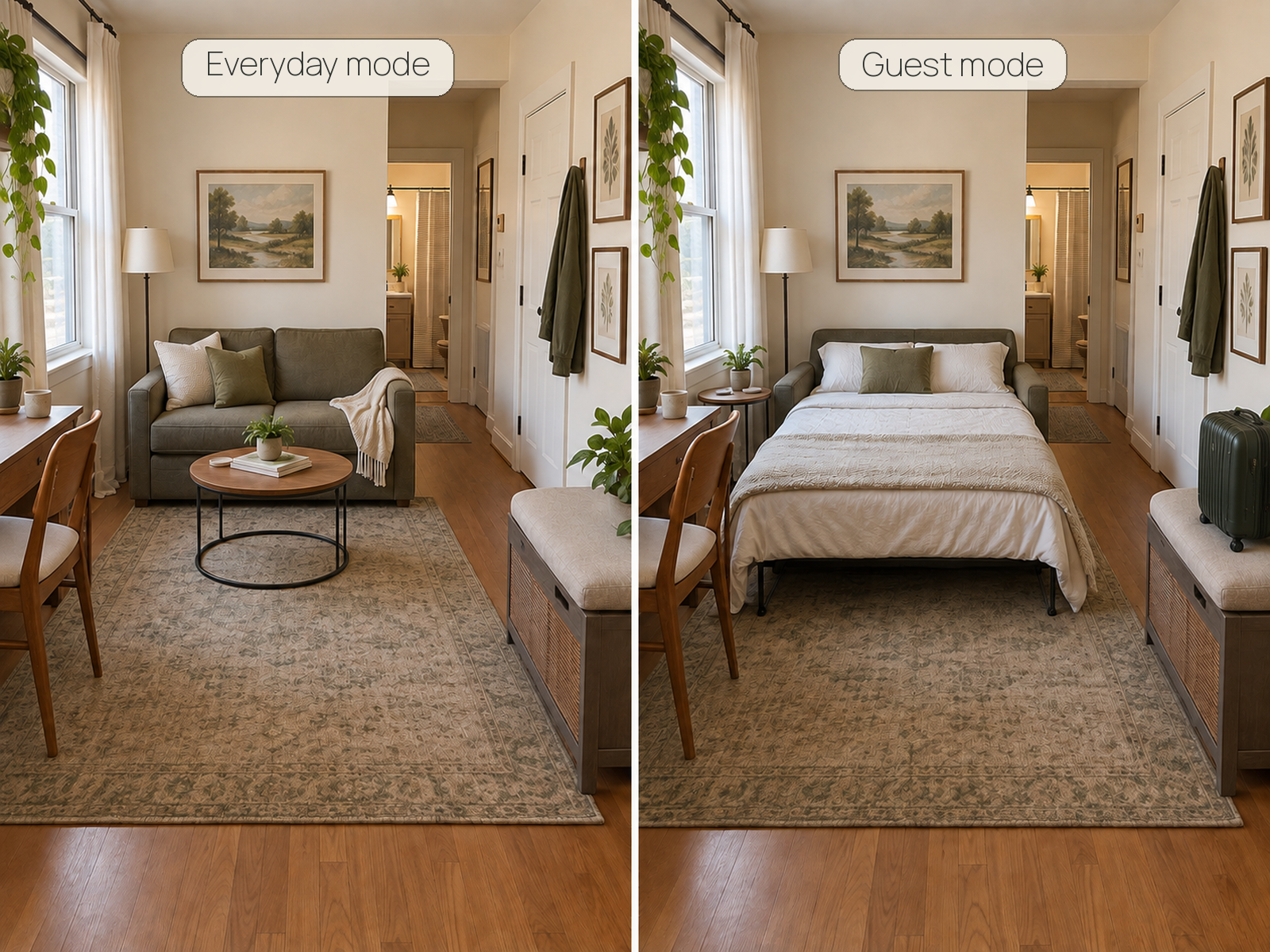
That makes overnight hosting a two-state space problem. The right setup has to earn its footprint when nobody is visiting and still leave the apartment functional when the bed, guest belongings, and temporary routines are fully deployed.
Quick Answer
Make the Guest Setup Pay for Both States
Decide how often people actually stay, who usually stays, and what the apartment must still do during the visit. Then compare the daily cost of permanent sleeper furniture with the storage and setup cost of a guest-only sleep surface.
01
Start with frequency, guest count, and real guest needs
One occasional guest, a couple staying several nights, and a frequent older relative create different space problems. Do not buy for the largest theoretical scenario if the apartment rarely needs it.
02
Measure the room twice
Record the everyday footprint and the fully deployed guest footprint, including circulation, door swing, bathroom access, host access, luggage, and the space needed to get into and out of the bed.
03
Let rare-use capacity stay temporary
Permanent sleeper furniture should earn its floor area in daily life. If visits are rare, a folding mattress, air bed, rollaway, or external accommodation can protect more of the apartment’s 365-day function.
01
Start With the Guest Pattern, Not the Bed Type
Begin with the visits the apartment actually hosts. A friend staying one night once or twice a year creates a different space budget from a parent visiting for a week, a partner staying monthly, or two adults who regularly need the same sleeping surface.
Guest count matters because one-person capacity can be much cheaper in permanent floor area. A sleeper chair, existing sofa, twin-size temporary surface, or narrow folding bed may solve the real pattern without committing the room to a double or queen deployment.
Guest-specific needs matter too. Current 2026 small-home discussions show hosts rejecting otherwise compact options because a particular guest needed more privacy, a raised sleep surface, or less room-conversion friction. That is a prompt to ask about the actual visitor, not a universal rule based on age or health category.
Do not invent a frequency threshold for when permanent sleeper furniture becomes worthwhile. Use frequency as a weighting factor: the less often guest mode occurs, the more carefully permanent floor area should be justified by another daily role.
02
Measure the Apartment in Everyday Mode and Guest Mode
Measure the space twice. Everyday mode is the room as the resident actually uses it for living, working, dining, circulation, and storage. Guest mode is the room with the sleep surface fully open, bedding on it, access to the bed, and the guest’s belongings in the apartment.
Current product forms show why both states matter. IKEA’s current HEMNES daybed example is about 41 3/8 inches wide in its everyday form and about 76 3/4 inches wide when pulled out as a larger bed. Resource Furniture’s current Altea Twin wall-bed example is 13.75 inches deep when closed and 84.25 inches deep when open.
Those are product-specific dimensions, not buying recommendations. They verify the broader rule: a closed-state measurement cannot prove that a transforming bed fits the room when fully deployed.
After drawing the bed rectangle, add the parts that product dimensions do not solve: door swing, entry, bathroom route, kitchen path, closet access, host bedroom access, the guest’s way in and out of bed, and a place for luggage.
Measure / Check First
Before choosing a sleeper form, map the apartment in both states and include the temporary objects that arrive with the guest.
Check Everyday Cost, Guest-Mode Circulation, and Stored Volume Together
01
Everyday footprint and daily value
Measure what the sleeper system costs when no guest is present. If it is permanent furniture, confirm that the sofa, chair, daybed, or installed bed genuinely serves the resident’s normal life.
02
Fully deployed guest mode
Open or lay out the complete sleep surface, then protect entry, bathroom access, host access, door swings, the guest’s way into bed, and enough room for luggage without assuming furniture disappears overnight.
03
Stored shape, bedding, and reset path
For guest-only surfaces, measure the folded or deflated object, bedding, pump or frame, extraction route, and the place everything goes during the day on a multi-night visit.
If the setup only works by blocking a required route, dismantling the apartment every morning, or storing a bulky guest object with no real off-season home, change the sleep system before buying it.
03
Choose the Guest Zone Before You Choose the Sleep Surface
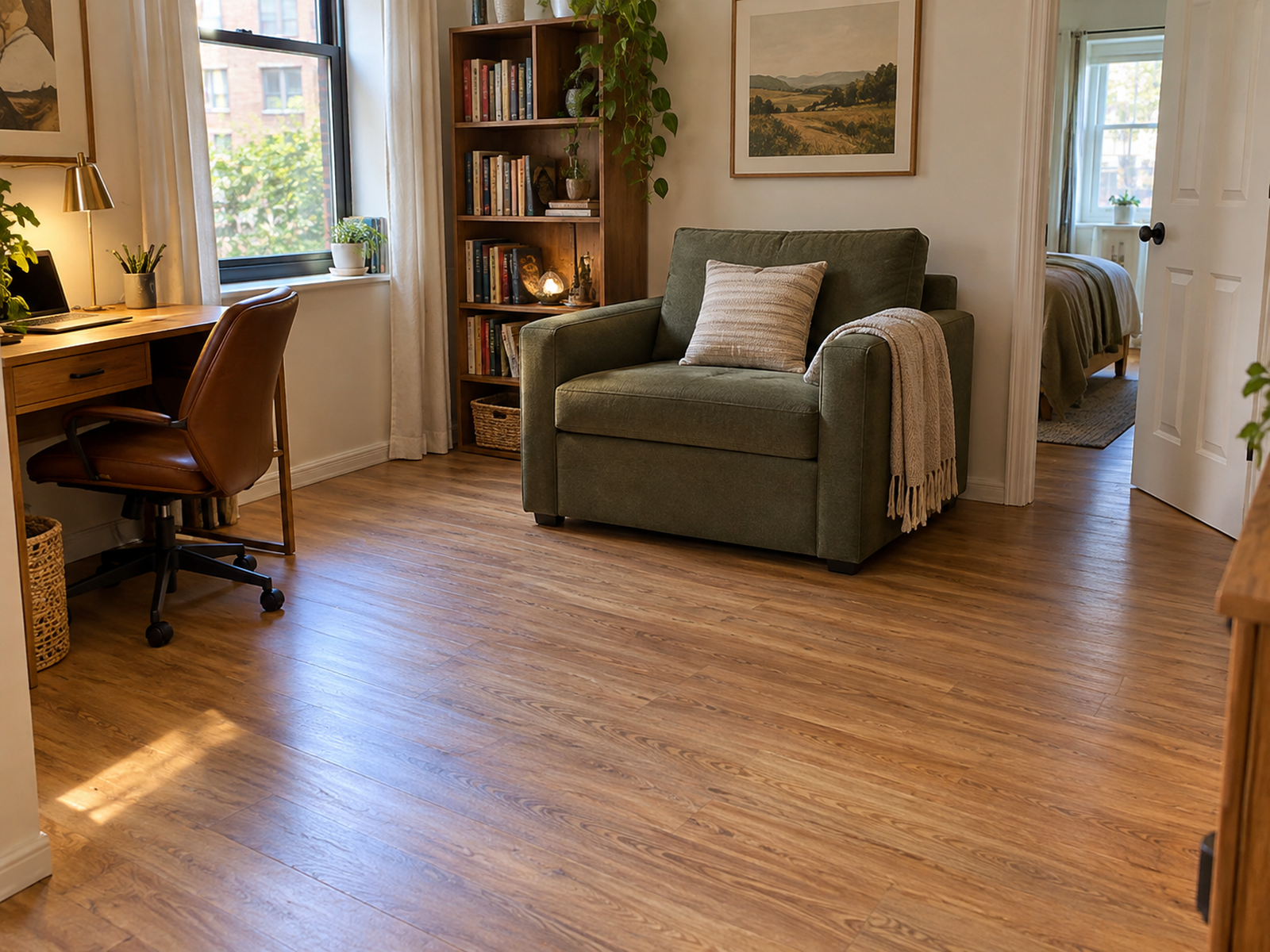
The largest possible mattress is not automatically the best guest setup. Current 2026 apartment discussions repeatedly show people preferring a smaller private office or den over a larger living-room sleeper because a door allows the guest and host to keep more independent schedules.
A living-room setup can be strong when the apartment is open and the sleep surface can deploy without blocking the entry, kitchen, bathroom route, or the host’s bedroom. Its cost is that the household’s main common room becomes the guest room for the duration of the stay.
A dual-purpose office can provide better privacy, but only if guest mode does not require dismantling the entire workstation. The desk chair, monitors, task lighting, cables, and work equipment need a temporary plan that does not simply move clutter into the hall.
Choose the zone by what the apartment can surrender during a visit. Privacy, morning routine, bathroom access, and circulation can be more valuable than gaining a few more inches of mattress width.
04
Make Permanent Sleeper Furniture Earn Its Daily Floor Area
A sleeper sofa, sleeper chair, or daybed can be efficient because the furniture is useful when nobody is visiting. The space decision is strongest when the resident already needs that seat, sofa, lounge, or storage rather than buying a large object mainly for occasional guests.
Current IKEA product forms verify several versions of this idea. FRIHETEN models combine sofa, bed, and storage; KIVIK has a current one-seat sleeper form for one-person guest capacity; HEMNES combines sofa-like use, single or expanded sleeping, and drawers.
That does not make any one form universally space-saving. A sofa bed can be heavy and dominate the living room, a daybed can claim a full bed-length wall all year, and a sleeper chair still needs enough open floor to extend into guest mode.
Test delivery and move-out geometry before committing to large transforming furniture. The piece has to pass the apartment door, hallway, stairs or elevator, and final room access as well as the open-bed footprint.
Use / Skip
Permanent Sleeper Furniture
Use
Use it when the daily furniture already earns the space
Choose a sleeper sofa, sleeper chair, or daybed when the resident genuinely needs that seating, lounging, sleeping, or storage function every day and the fully deployed bed still preserves circulation, privacy, and a workable guest routine.
Skip
Skip it when rare visitors are dictating the room all year
Use a guest-only temporary surface or external accommodation when permanent sleeper furniture would displace a better daily sofa, desk, dining zone, storage system, or open floor area for the large majority of the year.
05
Use Guest-Only Sleep Surfaces When Visits Are Rare
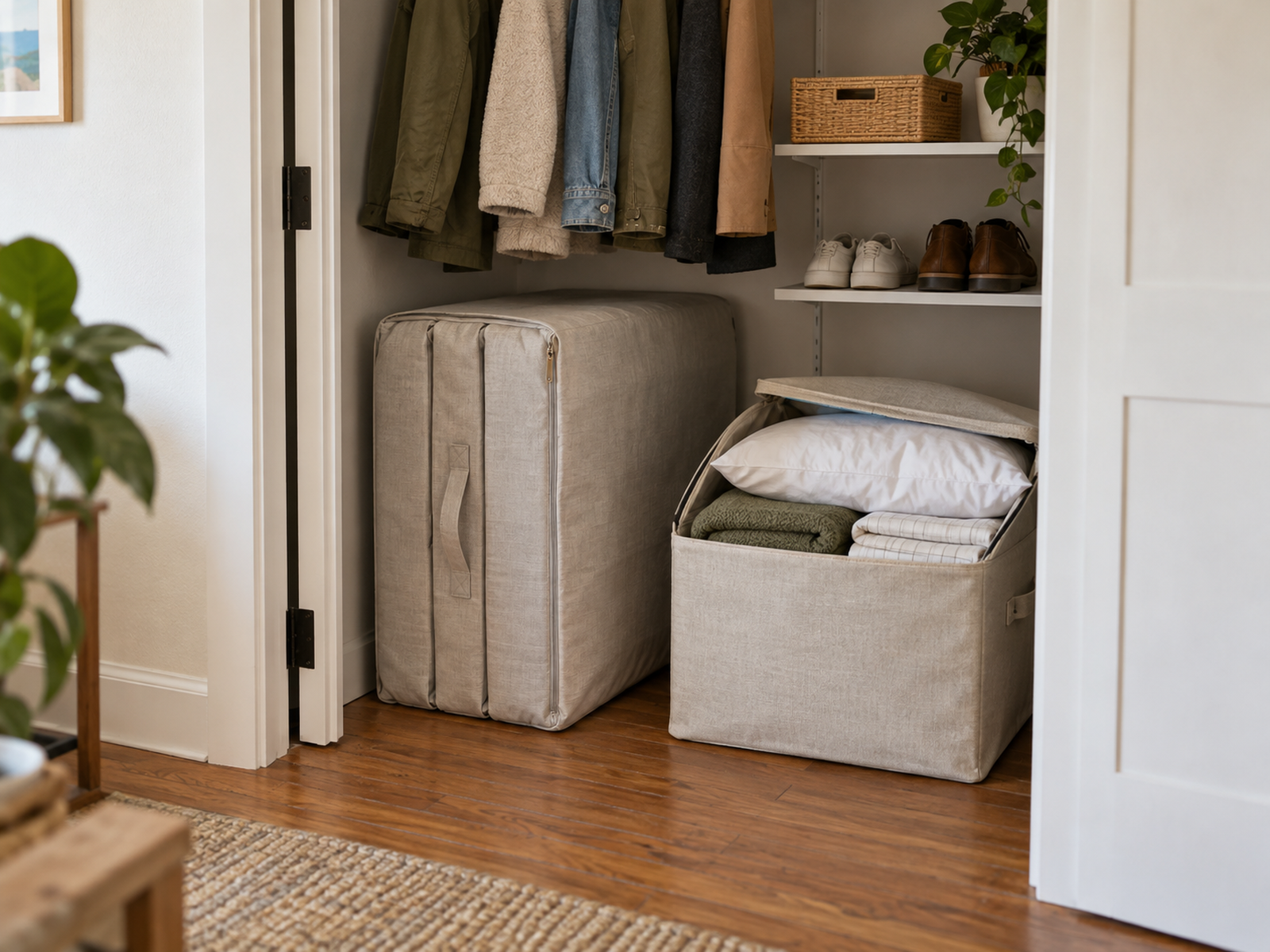
A folding foam mattress, air mattress, or rollaway bed spends less permanent living-room floor area because it disappears between visits. The trade is that the apartment must store the object somewhere for most of the year.
Treat folded dimensions with the same seriousness as deployed dimensions. A tri-fold mattress becomes a thick rectangular block, a rollaway can become a tall rigid object, and an air bed still comes with a pump, bedding, and a storage bag.
Under-bed storage can be excellent when the exact folded item fits the real vertical clearance and can be pulled out without dismantling the bedroom. A closet works only when the folded object can enter through the opening and still leave everyday clothing or household storage usable.
Do not make blanket comfort claims. Air beds, folding mattresses, sofa surfaces, and rollaways vary by product and by guest. The small-space decision is whether a specific guest will accept the sleep surface and whether the apartment can store and deploy it without permanent disruption.
06
Give Bedding and Guest Belongings a Real Home
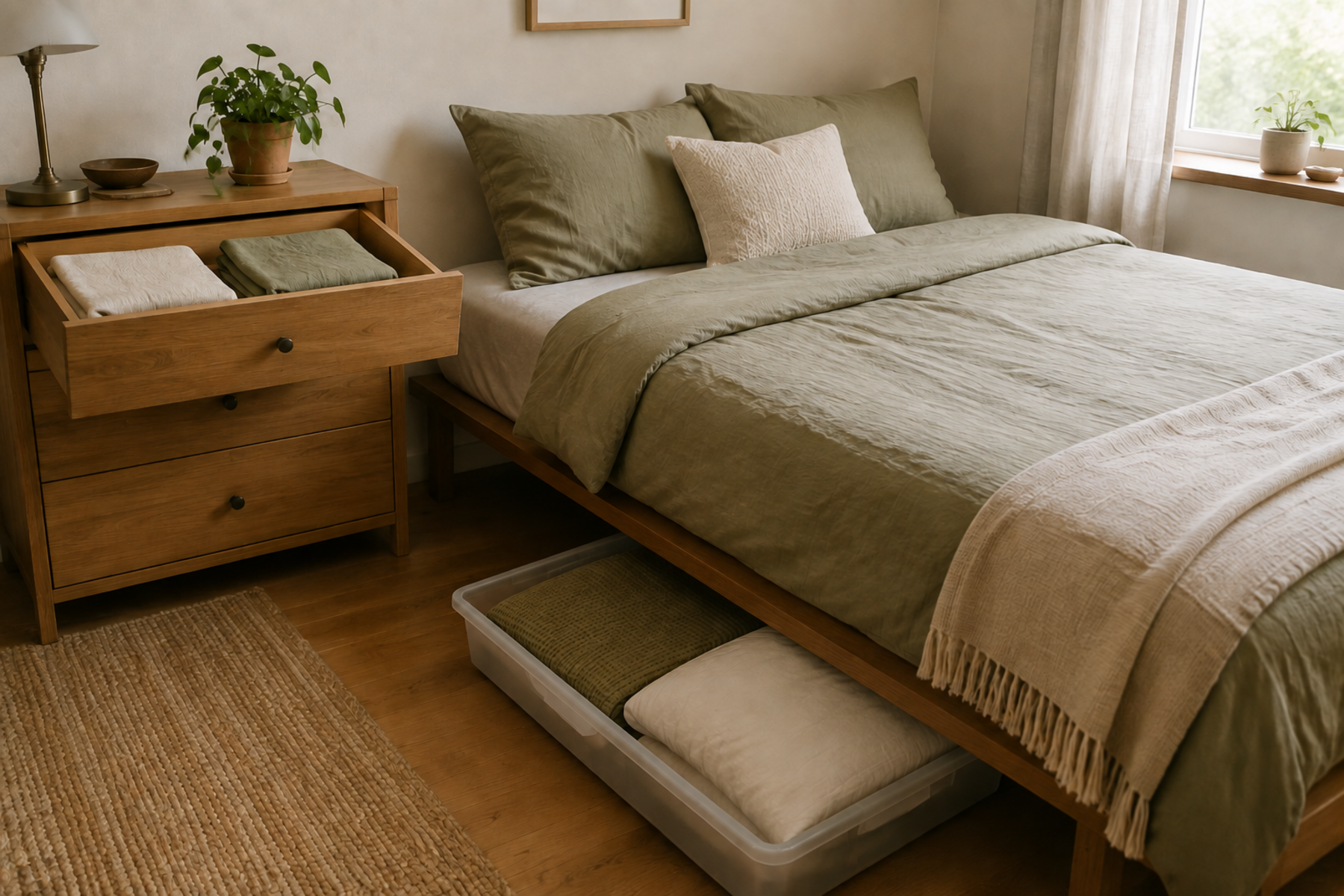
The guest bed is only half the system. Sheets, a pillow, blanket or duvet, spare towel, and any mattress-specific layer still need a clean, dry storage location between visits.
Integrated storage can reduce that friction. IKEA’s current HEMNES example uses drawers for items including duvets, pillows, and linens, while current FRIHETEN product forms include built-in storage that can hold bedding.
Guest belongings also need temporary space. A suitcase, shoes, coat, toiletries, chargers, and clothing can occupy the last open path after the bed is deployed if the plan only accounts for the mattress rectangle.
Create one modest guest zone rather than trying to simulate a full bedroom. A small luggage parking spot, a charging surface or outlet, a few hangers or temporary drawer space, and a clear bathroom route can matter more than adding another piece of guest-only furniture.
07
Plan for Multi-Night Stays and Morning Reset
A one-night setup can tolerate more transformation than a week-long visit. Folding, deflating, stripping, or moving the bed every morning may be acceptable occasionally and exhausting when the guest stays several nights.
If the bed will remain open, judge the room as if that temporary footprint were permanent for the duration of the visit. The host still needs a way to make coffee, work, reach the bathroom, leave the apartment, and move through the room without stepping over luggage or bedding.
If the bed will reset each morning, define the reset route in advance. The mattress, pillows, bedding, pump, or folding frame need a temporary daytime home that does not simply transfer the problem to the hallway, dining table, or host bed.
This is where office-to-guest-room systems often succeed or fail. A useful dual-purpose room has an explicit office mode and guest mode, plus a low-friction transition between them, instead of relying on repeated furniture Tetris.
08
Use No In-Home Guest Bed as a Real Capacity Decision
A wall bed can recover remarkable floor area in the closed state, but it belongs in a different intervention class. The current Resource Furniture Altea example requires professional installation, and the manufacturer’s terms emphasize secure wall installation because improper installation can be dangerous.
That makes wall beds, built-ins, recessed systems, and permanent guest cabinetry lease- and building-sensitive choices rather than default renter hacks. The daily room benefit can be substantial, but the apartment, wall, budget, guest frequency, and landlord approval all have to justify the intervention.
If no sleeper sofa, chair, daybed, folding mattress, air bed, rollaway, or installed system passes both everyday mode and guest mode, the apartment may simply not have spare overnight capacity. Current small-home discussions include residents who report better daily life after they stop keeping furniture primarily for rare visitors.
External accommodation is therefore a legitimate branch, not a hospitality failure. The resident’s everyday apartment remains the primary use case, and a few guest nights do not automatically outrank circulation, work, storage, privacy, or comfort for the rest of the year.
Closing Decision
Protect the Apartment’s 365-Day Function Before Theoretical Guest Capacity
The best guest setup is not the one that creates the largest possible bed. It is the one that matches the real guest pattern while charging the smallest reasonable cost to the apartment in everyday floor area, stored volume, privacy, circulation, and reset effort.
When permanent furniture earns its daily role, let it transform for guests. When visits are rare, let the guest bed stay temporary. And when neither state fits without compromising the resident’s normal life, let the apartment say no to in-home overnight capacity.
RELATED GUIDES
What to Read Next
NEXT GUIDE
How to Store Towels and Bedding in a Small Apartment With No Linen Closet
Use this next if the sleep surface is solved but spare sheets, pillows, blankets, and towels still have no believable home; that guide focuses on compact linen storage without a dedicated linen closet.
GUIDE
How to Store Suitcases in a Small Apartment With No Storage Closet
Use this if guest luggage or the household’s own suitcases compete with the deployed sleep zone; that guide helps assign bulky luggage by access frequency, nested volume, and available storage geometry.
GUIDE
How to Work From a Dining Table Without Letting It Become a Permanent Office
Use this if the apartment already changes modes for work and hosting; that guide focuses on keeping a temporary function from permanently taking over a shared everyday surface.