
Small Kitchen Organization
Where to Put Paper Towels in a Small Kitchen With No Counter Space
Choose the location before the holder: keep the roll easy to reach but away from cooking heat, test the full roll through pulling and refill motions, and use the least permanent mounting method that works with the actual surface.
In This Guide
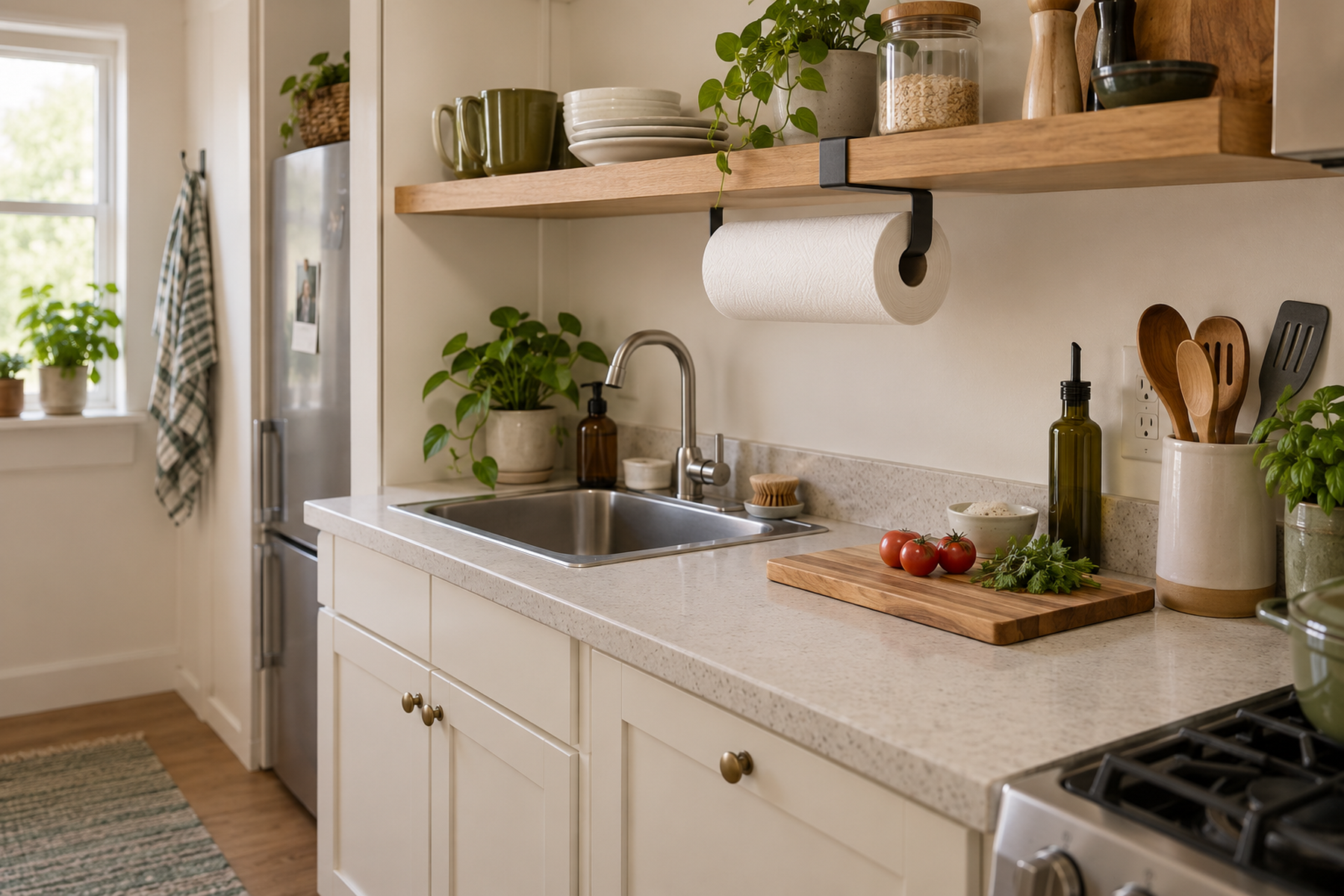
A paper-towel roll is not passive storage. It has to stay reachable, resist enough to tear a sheet cleanly, clear nearby doors and outlets, and leave enough room for a fresh full roll to be installed without dismantling the kitchen.
That makes placement more important than holder style. Start with a safe reach zone away from the stovetop, then test the loaded roll, pulling direction, door movement, refill path, and mounting surface before deciding whether the best fit is magnetic, clamp-on, adhesive, screw-mounted, concealed, or still freestanding.
Quick Answer
Move the Roll Off the Counter Only After the New Location Passes the Full Fit Test
01
Choose a safe reach zone first
Look for a wall, cabinet edge, refrigerator side, or inside-cabinet plane that is easy to reach during cleanup without placing combustible paper beside the stovetop or directly in a heavy splash path.
02
Test the full roll, not the empty holder
Check roll diameter and width, bracket projection, hand clearance, tear direction, and the space needed to remove or install the next roll.
03
Prefer reversible mounting when it genuinely fits
A verified magnetic or clamp-on holder avoids holes. Adhesive can also be reversible, but only when the exact surface, preparation, load, wait time, and removal method are supported.
04
Keep the counter stand only if the surface cost is actually acceptable
A freestanding holder is installation-free and easy to refill, but it is still a permanent counter occupant. Use it only in a true low-value corner rather than the main prep or landing zone.
01
Choose the Location Before the Holder
Start by identifying the places where the roll could live without taking over the prep surface. Useful planes can include the side of a compatible refrigerator, the underside of a cabinet, a cabinet or shelf edge, a nearby wall, or the inside of a cabinet door.
Then eliminate bad locations before shopping. The roll should be reachable during cooking and cleanup, but it should not block an outlet, backsplash work zone, cabinet handle, appliance door, narrow walkway, or the main area where groceries and cutting boards land.
Reach matters because paper towels are used during fast cleanup. A holder hidden deep inside a cabinet may look tidy and still fail if every spill requires opening a door with wet or messy hands.
The best location is the lowest-cost plane that stays safe, easy to reach, easy to refill, and compatible with the rental. Only after that location passes should the holder form be selected.
02
Test the Holder in Four Real-Use States
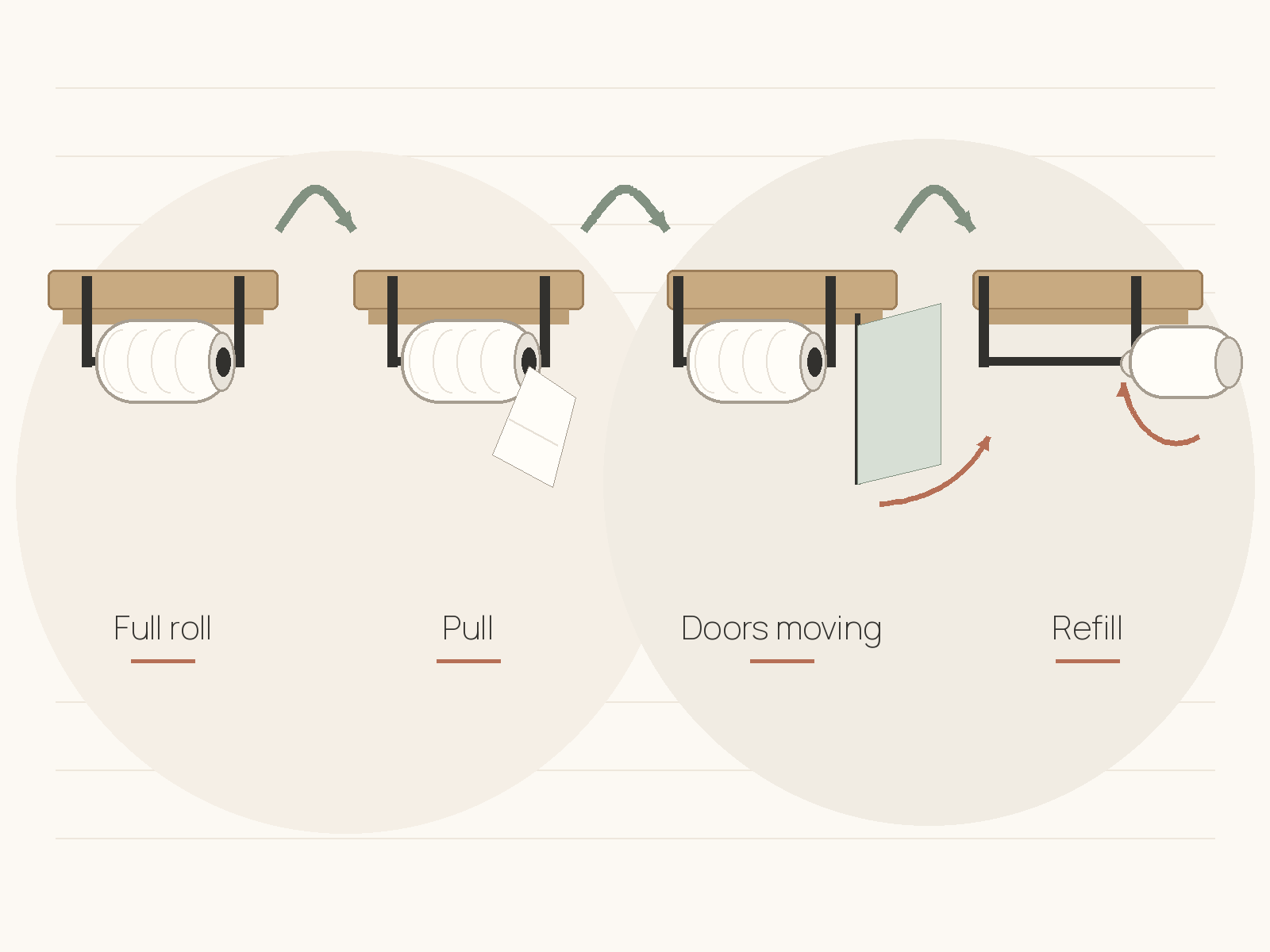
A mounting base can fit perfectly while the actual paper-towel system fails. Test the location in four states: with a new full roll installed, while a sheet is being pulled, while nearby doors or appliances are moving, and while the roll is being replaced.
The full roll is the real footprint. Include its diameter and width plus the bracket, tension arm, spindle, hand space, and any projection into the backsplash or walkway.
Pulling changes the load on the mount. Some mounted holders intentionally add resistance so a sheet can be torn with one hand; Simplehuman’s current wall-mount holder, for example, uses a tension spring for controlled tearing. That makes dispensing behavior part of fit, not a cosmetic feature.
Refill direction is easy to miss. A side-loading spindle can be blocked by a wall, cabinet panel, or refrigerator return even when the installed roll itself clears the space.
Measure / Check First
Before buying or mounting a paper-towel holder, test the real roll and the real kitchen location together.
Check Full-Roll Clearance, Movement, and Removal Before You Commit
01
Full-roll and hand clearance
Measure the new roll’s diameter and width, then add the holder projection, tension mechanism, hand space, and any clearance needed to reach the first sheet.
02
Pull, door, and refill movement
Simulate tearing a sheet, open nearby cabinet and appliance doors, and trace the exact motion required to remove the empty core and install a fresh roll.
03
Mounting surface and exit plan
Verify magnetic compatibility, clamp geometry, adhesive-approved surface and removal direction, or mechanical fastener requirements before installation. Renter permission and cabinet material are part of the fit.
If the base fits but the full roll blocks an outlet, the pull destabilizes the mount, a door hits the roll, the refill path is trapped, or removal could damage an unsupported surface, choose another location before installing the holder.
03
Keep the Roll Out of the Stovetop Zone
Paper towels are combustible, so an apparently unused vertical space beside or above the range is not automatically storage space. U.S. Fire Administration guidance says to keep paper towels and other things that can catch fire away from the stovetop.
There is no verified universal paper-towel distance that can replace judgment and the appliance instructions. Use the fire-safety boundary to eliminate placements that would put the roll in the cooking heat or flame zone rather than inventing an exact number.
Under-cabinet mounting deserves the same check. A cabinet over a prep or sink zone can be useful; the same holder near a cooktop can be a poor location even if the cabinet geometry is perfect.
Also consider routine splashes. A roll placed immediately beside the sink may be easy to reach but waste sheets if the exposed edge is repeatedly soaked.
04
Use a Magnetic Refrigerator-Side Holder When the Surface Works
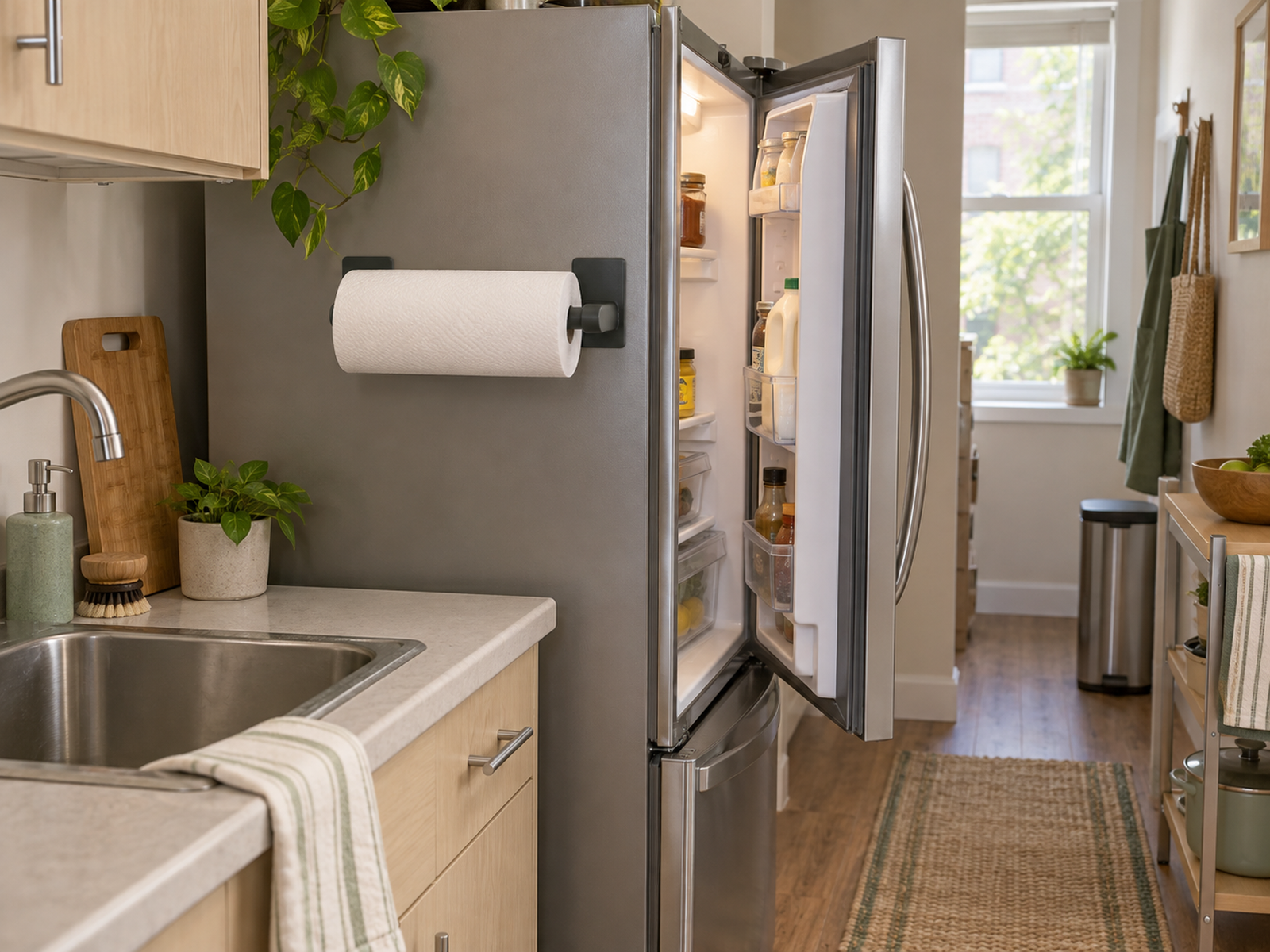
A refrigerator side can create a valuable no-drill paper-towel plane when the surface is actually magnetic and the appliance sits within easy reach of the cleanup zone.
Test the exact panel instead of assuming stainless steel will hold a magnet. Refrigerator construction varies, and a front panel, side panel, or decorative skin may behave differently.
The loaded holder also needs to stay stable while sheets are pulled. Use a purpose-built magnetic holder with a stated load and mounting method rather than assembling unverified magnets and brackets from unrelated products.
Finally, open the refrigerator completely. The roll should not hit the wall, nearby cabinet, counter edge, or a person moving through a narrow galley aisle. A tool-free mount is only useful when its projection does not create a circulation problem.
05
Use a Clamp-On or Over-Cabinet Holder When the Geometry Works
A clamp-on, over-shelf, or over-cabinet holder can be one of the cleanest renter solutions because it converts an existing edge into roll storage without drilling or adhesive.
Measure the shelf or door thickness, edge profile, handle clearance, and the full loaded roll. A holder that fits the edge can still stop the cabinet door from closing or place the roll where a drawer or appliance door hits it.
Finish contact matters too. Use only hardware designed for the exact surface and attachment method, with the protective pads or contact points required by the product instructions. Do not assume every painted or veneered cabinet tolerates every clamp.
Refill the holder once before you commit. If the spindle has to slide out toward a wall or adjacent cabinet, the mounting point may need more side clearance than the roll itself.
06
Use Adhesive Mounting Only With an Exit Plan
Adhesive mounting can clear the counter without holes, but “no drill” and “low risk to the rental” are not the same claim. The adhesive, surface, load, preparation, wait time, aging, and removal method all matter.
3M’s current Command guidance is explicitly surface- and instruction-dependent. It works best on supported smooth, clean surfaces and includes restrictions for rough, textured, wallpapered, brick, and other conditions. Paint condition and removal technique can also affect whether damage occurs.
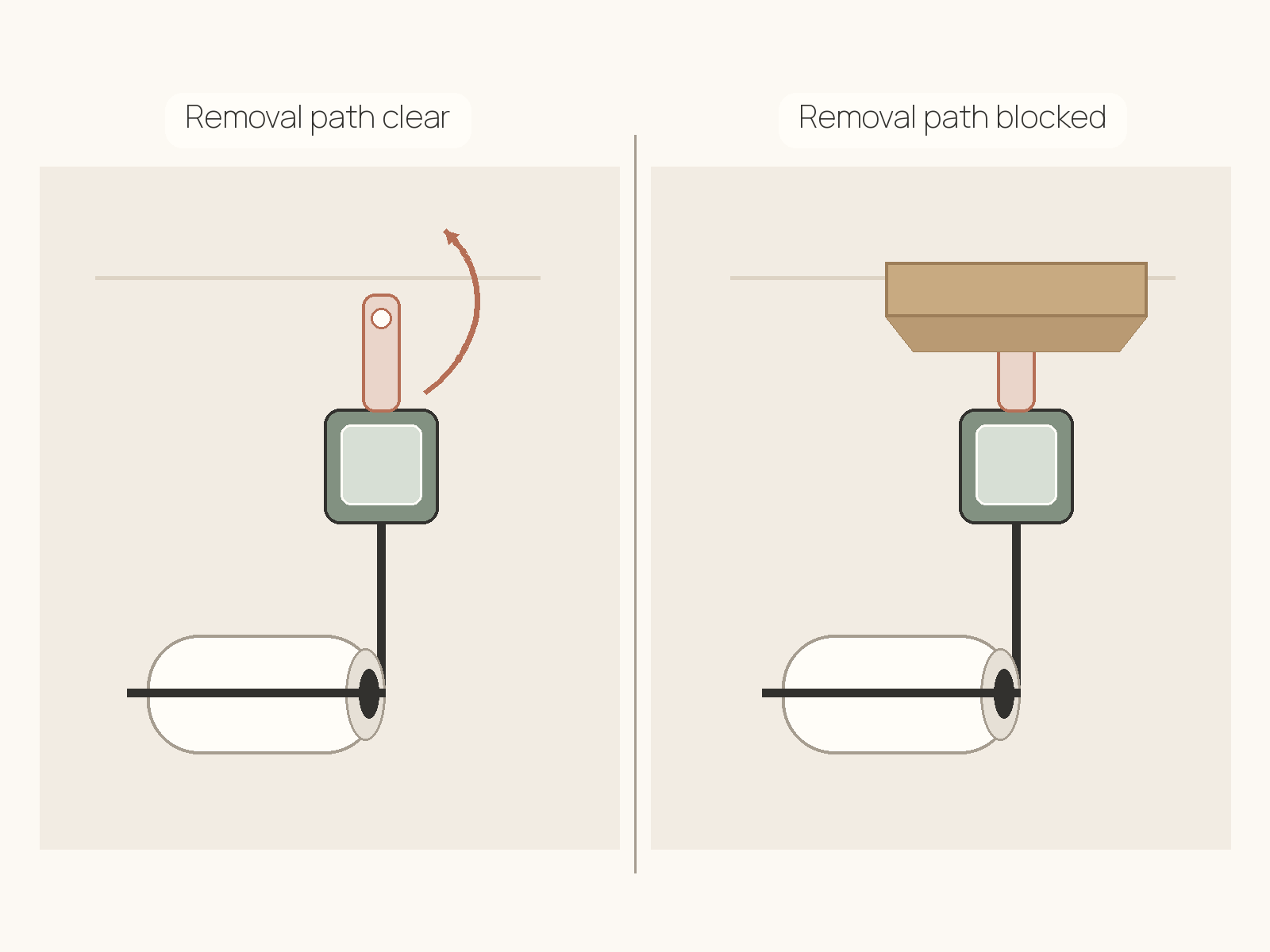
Plan removal before installation. If the product uses a stretch-release system, there must be enough access to remove it in the approved direction later. Do not mount a base where a backsplash lip, cabinet face, or appliance will block the removal path.
Use the adhesive system specified or approved for the holder. Do not substitute an unrelated strip simply because its package appears to list enough static weight; repeated tearing adds movement that generic load numbers do not fully describe.
07
Use Screw-Mounted Under-Cabinet or Wall Storage Only When the Surface Allows It
Mechanical mounting can create a stable, low-profile paper-towel zone when the household owns the surface or the lease permits modification. It belongs after the reversible branches because the commitment is higher.
Simplehuman’s current wall-mount holder is designed to mount to a wall or cabinet with screws, and its support documentation notes that different mounting surfaces can require different screws or anchors. That is the correct evidence boundary: the holder does not make every cabinet panel drillable.
Cabinet substrate and thickness matter. Thin panels, glass, unknown composite material, or hidden hardware can change what is appropriate. Follow the holder and cabinet instructions rather than using generic fastener advice.
Re-run the full-roll and refill test after the mounting point is chosen. A permanently installed holder in the wrong location is harder to correct than a freestanding or magnetic one.
08
Use Inside-Cabinet Placement When Concealment Is Worth the Extra Step
An inside-cabinet or inside-door holder can remove visual clutter completely and preserve the counter, but it changes the paper-towel workflow. Every use now begins with opening a door.
Test door closure with a full roll, not an empty spindle. The roll and the user’s hand need clearance from shelves, food containers, hinges, and the cabinet frame.
Keep the roll in a cabinet used for appropriate kitchen categories rather than forcing it into a chemical or utility zone. If the door-mounted roll blocks shelf access or has to be removed to reach everyday food or dishes, the concealed location is spending too much cabinet capacity.
Choose this branch when appearance matters and the extra movement does not interfere with real cleanup. Concealment is a preference, not a hygiene advantage.
09
Keep a Counter Holder Only in a True Residual Corner
A freestanding holder is still the lowest-installation-risk option. It is easy to move, easy to refill, and independent of wall, cabinet, refrigerator, and adhesive compatibility.
The trade is permanent horizontal footprint. In a small kitchen, a paper-towel stand can cost the same patch of counter needed for chopping, unloading groceries, coffee preparation, or dish landing.
If every vertical or removable location fails, place the stand only in a true residual corner that does not need to be cleared before normal cooking. Check that the roll remains away from the stovetop and does not sit in a routine splash path.
The final test is simple: install a full roll, pull a sheet with one hand, open every nearby door, replace the roll, and cook one ordinary meal. If the holder survives all five without occupying prime prep space or creating a safety or removal problem, the location is doing its job.
Closing Decision
Use the Safest Reachable Plane That Clears the Counter Without Creating a New Problem
The strongest paper-towel location is not automatically under the cabinet. A compatible refrigerator side, removable cabinet edge, verified adhesive surface, screw-mounted wall or cabinet, concealed interior, or small residual counter corner can all work when the loaded roll remains reachable and clear of heat, doors, outlets, splashes, and refill conflicts.
Start with reversible mounting and increase commitment only when the kitchen requires it. Whatever holder class wins, judge it in the real workflow: full roll installed, sheet being pulled, nearby doors moving, roll being replaced, and eventual removal considered before day one. That is how the roll leaves the prep surface without simply moving the clutter—or the risk—to another plane.
RELATED GUIDES
What to Read Next
NEXT GUIDE
How to Hang and Dry Dish Towels in a Small Kitchen With No Towel Bar
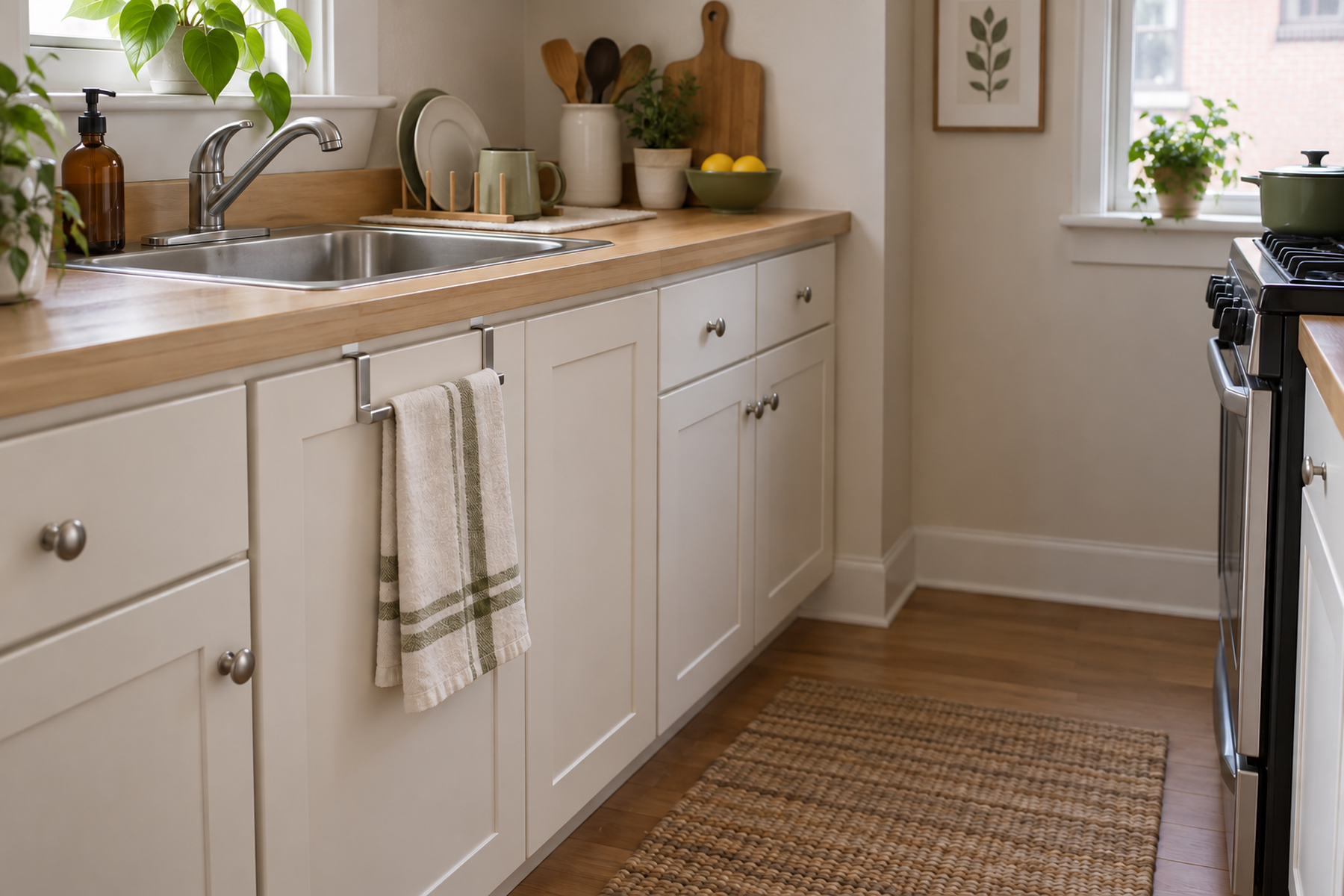
Use this next if reusable towels are competing for the same sink-side wall, cabinet, or appliance surfaces; that guide handles wet-state drying and reset rather than roll dispensing and refill geometry.
GUIDE
How to Organize a Small Kitchen With No Drawers—Without Losing Counter Space
Use this if clearing the paper-towel roll exposes a broader counter-pressure problem and utensils or everyday tools still need renter-friendly homes without consuming the work surface.