
Small Kitchen Organization
How to Store Potatoes, Onions, and Garlic in a Small Kitchen With No Pantry
Choose the best existing microclimate before you choose a basket: keep potatoes dark, give onions and garlic airflow, separate potatoes from onions, and limit the quantity to what your kitchen can store without taking over the prep surface.
In This Guide
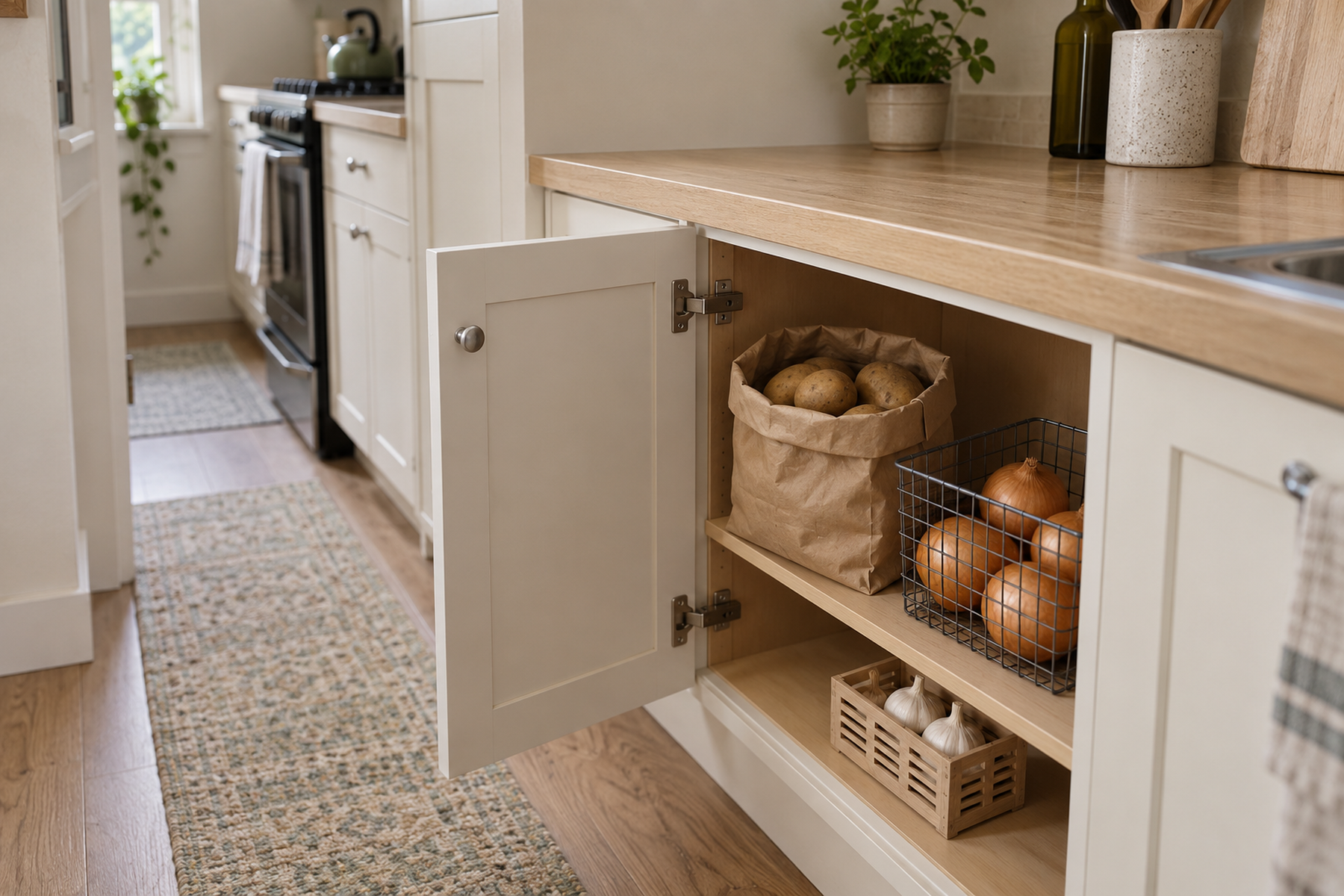
Potatoes, dry onions, and whole garlic look like one easy storage category, but a small kitchen can make their needs conflict. Potatoes benefit from protection from light, all three need airflow, onions should not share one storage bin with potatoes, and the most visible location—the counter—is often the kitchen’s most valuable working surface.
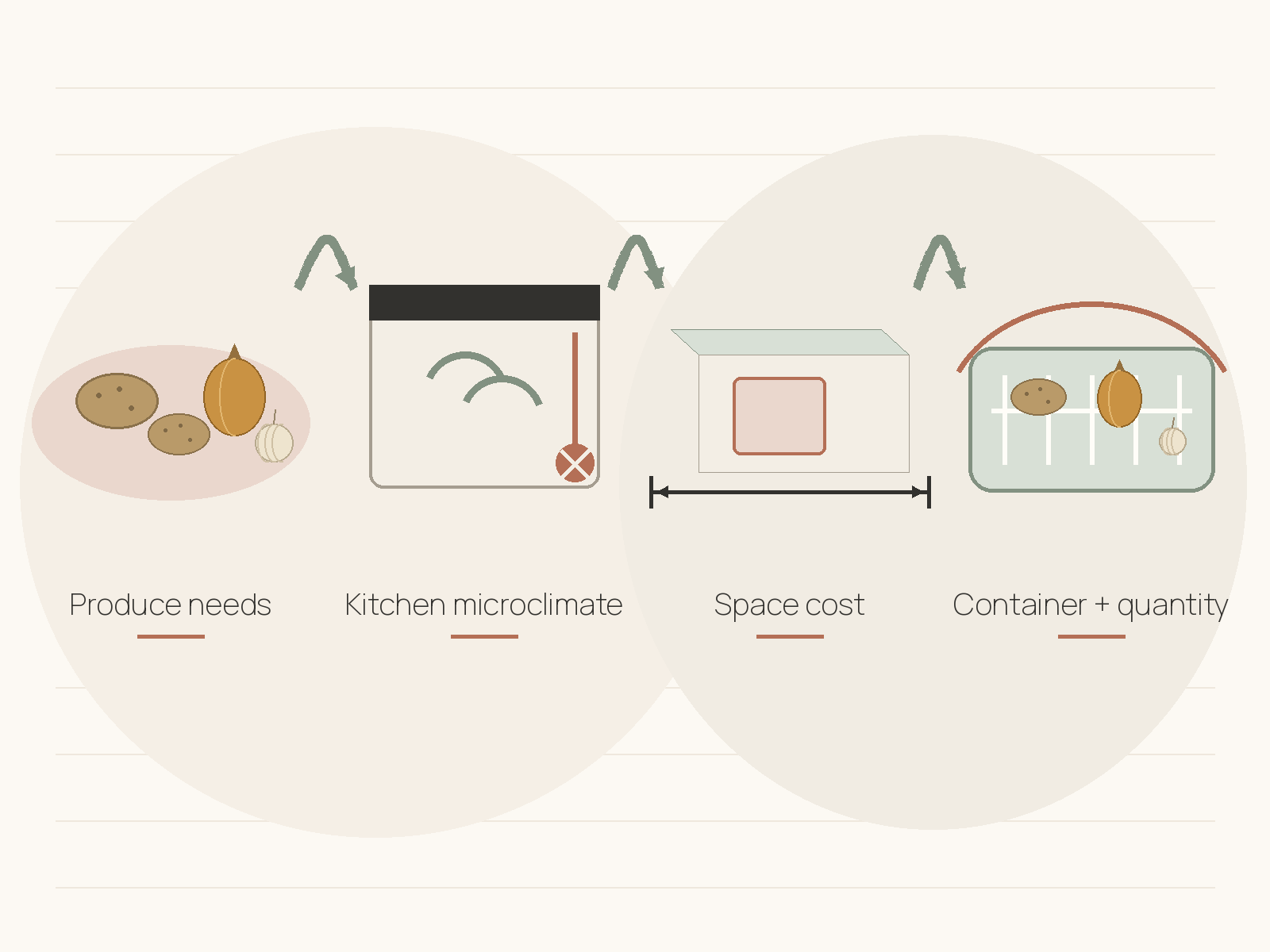
The useful order is environmental rather than decorative: identify what the produce needs, audit the kitchen for the best available microclimate, decide what space that location can spare, and only then choose a container. If the kitchen cannot support a large room-temperature inventory well, buying a smaller quantity is a storage solution too.
Quick Answer
Protect the Produce Without Turning the Counter Into the Pantry
01
Choose the location before the organizer
Check light, heat, dryness, airflow, and access in the actual kitchen before buying a basket or bin. A beautiful container cannot fix a warm, bright, or poorly ventilated location.
02
Keep potatoes and onions in separate zones
University extension guidance supports storing them separately; use distinct baskets, bags, or shelf areas without inventing a universal number of inches between them.
03
Use cabinet or shelf capacity before adding floor storage
A suitable lower cabinet or shaded open shelf can recover counter space without adding furniture, provided the produce stays ventilated, visible enough to check, and away from cleaning chemicals or excess heat.
04
Let the storage zone set the shopping quantity
If the assigned produce zone is full or the kitchen runs warm, use what you have and buy smaller amounts more often instead of adding another basket that steals prep or walking space.
01
Store by Conditions, Not by the “Produce” Label
Do not start with one large fruit-and-vegetable basket. Potatoes, dry onions, and whole garlic share some room-temperature storage needs, but they are not one interchangeable category.
Colorado State and Penn State extension guidance supports cool, dry, well-ventilated, dark storage for potatoes, and Penn State notes that prolonged light exposure can cause potatoes to turn green. University of Minnesota guidance for whole onions also emphasizes a cool, dark, well-ventilated location. Cornell’s garlic guidance similarly favors fairly cool, relatively dry, ventilated storage.
Those principles do not create one universal household temperature or shelf-life promise. A warm apartment kitchen may not reproduce the long-term conditions described in agricultural or institutional storage guidance, so the goal is the best realistic short-term zone available in the home.
Use the environmental requirements to narrow the choices before you think about aesthetics. The same wire basket can be useful on a shaded shelf and poor beside a sunny window or warm appliance.
02
Choose the Best Kitchen Microclimate Before the Container
Walk the kitchen and compare the existing zones. Look at lower cabinets, open shelves, shaded corners, and any nearby food-safe cabinet outside the main prep area before assuming the counter needs to hold the produce.
Reject locations beside strong heat or direct sun. Cabinets next to an oven, dishwasher, radiator, heating pipe, or refrigerator exhaust can run warmer than another cabinet only a few feet away.
Also reject dark zones that fail for other reasons. Under-sink space or a cabinet shared with household chemicals is not a food-storage upgrade simply because it clears the counter. Penn State advises keeping room-temperature produce in a clean, dry place and away from raw-meat preparation areas.
The best zone is the coolest practical food-safe location that preserves airflow and does not consume a more valuable kitchen function. In a small kitchen, that may be one modest lower cabinet rather than a new produce tower.
Measure / Check First
Before buying baskets, a cart, or a wall system, check the microclimate and usable space that would have to support the produce.
Check Heat, Light, Airflow, and Access First
01
Heat and light exposure
Check direct sun and proximity to the oven, dishwasher, refrigerator exhaust, radiator, or other heat source. Potatoes need protection from prolonged light, and none of the three categories benefits from a hot storage zone.
02
Airflow and food-safe separation
Verify that the container and location are not sealed or damp, that potatoes and onions have distinct zones, and that the produce is kept away from cleaning chemicals and raw-meat preparation areas.
03
Visibility and capacity
Make sure the household can inspect the contents without unloading the cabinet, and set the container size from the quantity the kitchen can realistically use rather than the largest package available at the store.
If a location is dark but warm, ventilated but too bright for potatoes, hidden enough to be forgotten, or large enough only by displacing prime prep or walking space, choose another zone or reduce the quantity before buying an organizer.
03
Keep Potatoes Dark Without Making Them Invisible
Potatoes are the strongest reason not to default to open countertop produce storage. Prolonged light exposure can cause greening, so a shaded or dark storage form is useful when the counter or open shelving receives regular light.
A breathable paper bag, open-sided basket inside a dark cabinet, or another ventilated opaque or semi-opaque form can protect from light without sealing the potatoes into an airtight decorative canister.
Dark storage can create a behavior problem: forgotten produce. Keep the potato zone shallow enough to inspect quickly, avoid burying it behind cookware or backstock, and build a simple check into grocery planning or meal prep.
Do not overfill the container to gain capacity. Airflow becomes harder, older potatoes disappear under newer ones, and the kitchen begins carrying more inventory than the zone can support.
04
Keep Onions Separate From Potatoes
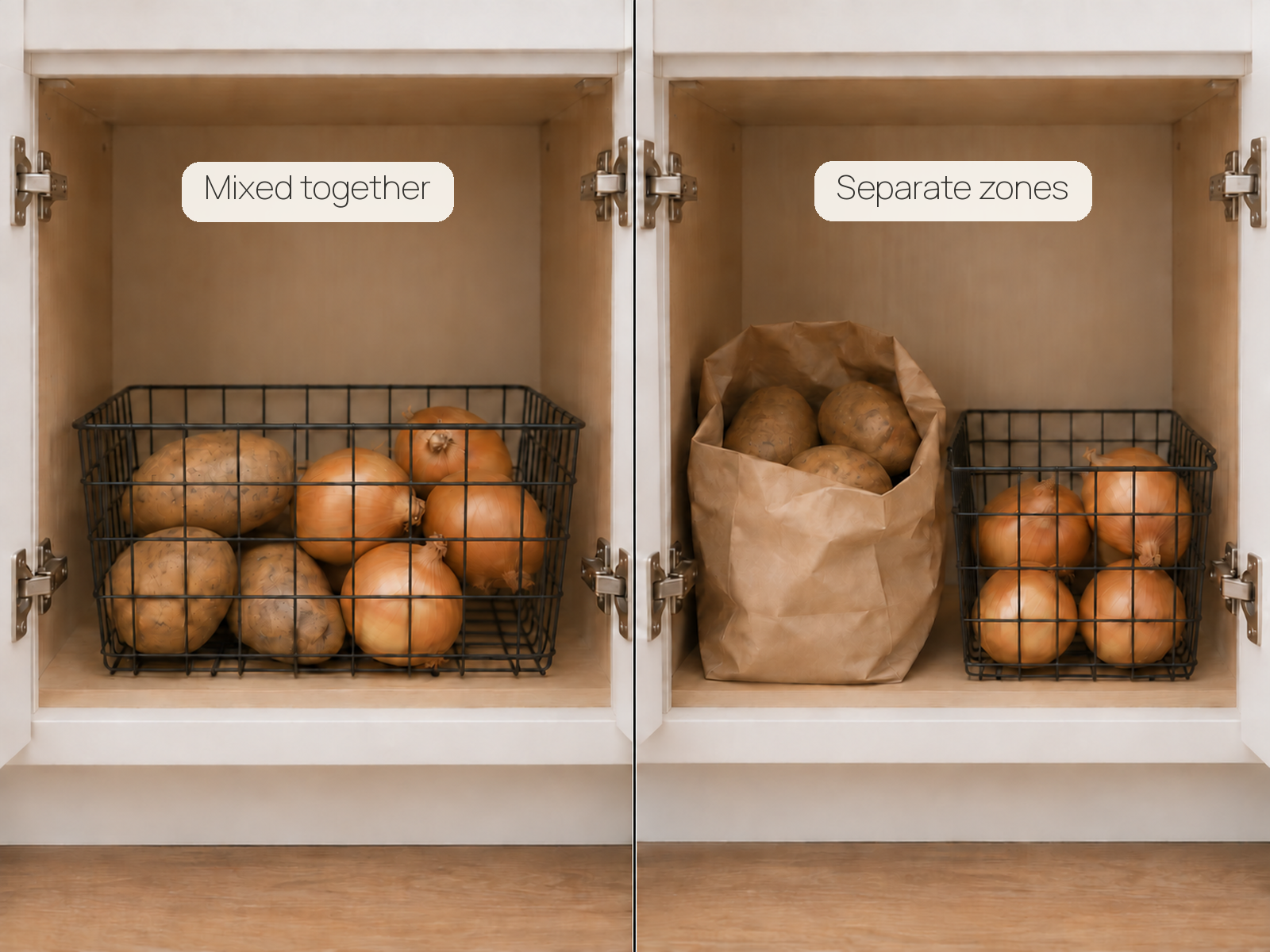
Do not treat potatoes and dry onions as one shared root-vegetable bin. University of Missouri Extension and University of Arkansas Cooperative Extension both advise storing them separately because keeping them together can speed deterioration.
Separate does not require inventing a precise distance. No authoritative universal number of inches or feet was identified. The practical small-kitchen solution is distinct containers or clearly separated zones rather than a single mixed pile.
The two categories can still share the same broader cabinet when the cabinet itself is a suitable environment and each has its own ventilated space. One lower cabinet with a potato bag on one side and an onion basket on another can be more space-efficient than dedicating two separate cabinets.
Keep onions visible enough to inspect. A dark cabinet is not automatically good storage if the onions are packed into a deep, sealed bin and forgotten until odor or spoilage becomes the reminder.
05
Give Whole Garlic a Ventilated, Dry Zone
Whole cured garlic also benefits from airflow and relatively dry conditions. It can often use a smaller zone than potatoes or onions, which makes it useful for filling the edge of a suitable shelf or cabinet without creating another large organizer.
A small open basket, breathable pouch, or ventilated compartment can work when the location stays reasonably dry and away from strong heat. Avoid sealing whole garlic into a non-ventilated decorative jar simply to make the category look tidy.
Keep garlic separate enough that it remains visible and easy to rotate through. If it disappears underneath onions or behind a large potato bag, the system has preserved space but lost inventory awareness.
Do not turn this into a universal refrigeration rule. Current extension guidance supports cool, dry, ventilated storage for whole cured garlic; exact storage choices can still vary by product condition, intended duration, and the household’s kitchen climate.
06
Use a Cabinet or Low Shelf Before You Add Furniture
Existing cabinet or shelf capacity is usually the lowest-commitment way to recover the counter. It uses space the kitchen already owns instead of adding a cart, tower, or wall system.
Use shallow ventilated baskets, paper bags, or open-sided bins that are easy to pull forward and inspect. The container should define the quantity, catch skins or soil when useful, and preserve airflow rather than simply hide the category.
If the only available cabinet is deep, keep the produce near the front or use a removable basket that makes the whole category visible in one motion. A large dark cabinet is not useful when the household forgets the produce behind cookware.
Do not place produce beside cleaning chemicals just because the cabinet is low and dark. Reassign a food-safe cabinet or reduce the inventory instead of forcing the category into an unsuitable zone.
07
Use the Counter Only With a Strict Footprint Limit
Counter storage can be the right answer when visibility prevents waste and the kitchen can genuinely spare the footprint. The mistake is letting several produce bowls become permanent storage across the main chopping or landing zone.
Keep the quantity small and the container ventilated, and place it away from direct sun and strong heat. Potatoes still need light protection, so an open bright countertop basket is usually a weaker long-term position for them than for some other room-temperature produce.
One small visible onion or garlic basket may be more useful than three separate containers if potatoes have a darker cabinet home. Use the counter for the category that benefits most from visibility and costs the least working surface.
Treat the counter as working capacity. If the produce container has to be moved every time you cook, the storage location is already too expensive.
08
Add a Cart or Mounted Basket Only After Existing Zones Fail
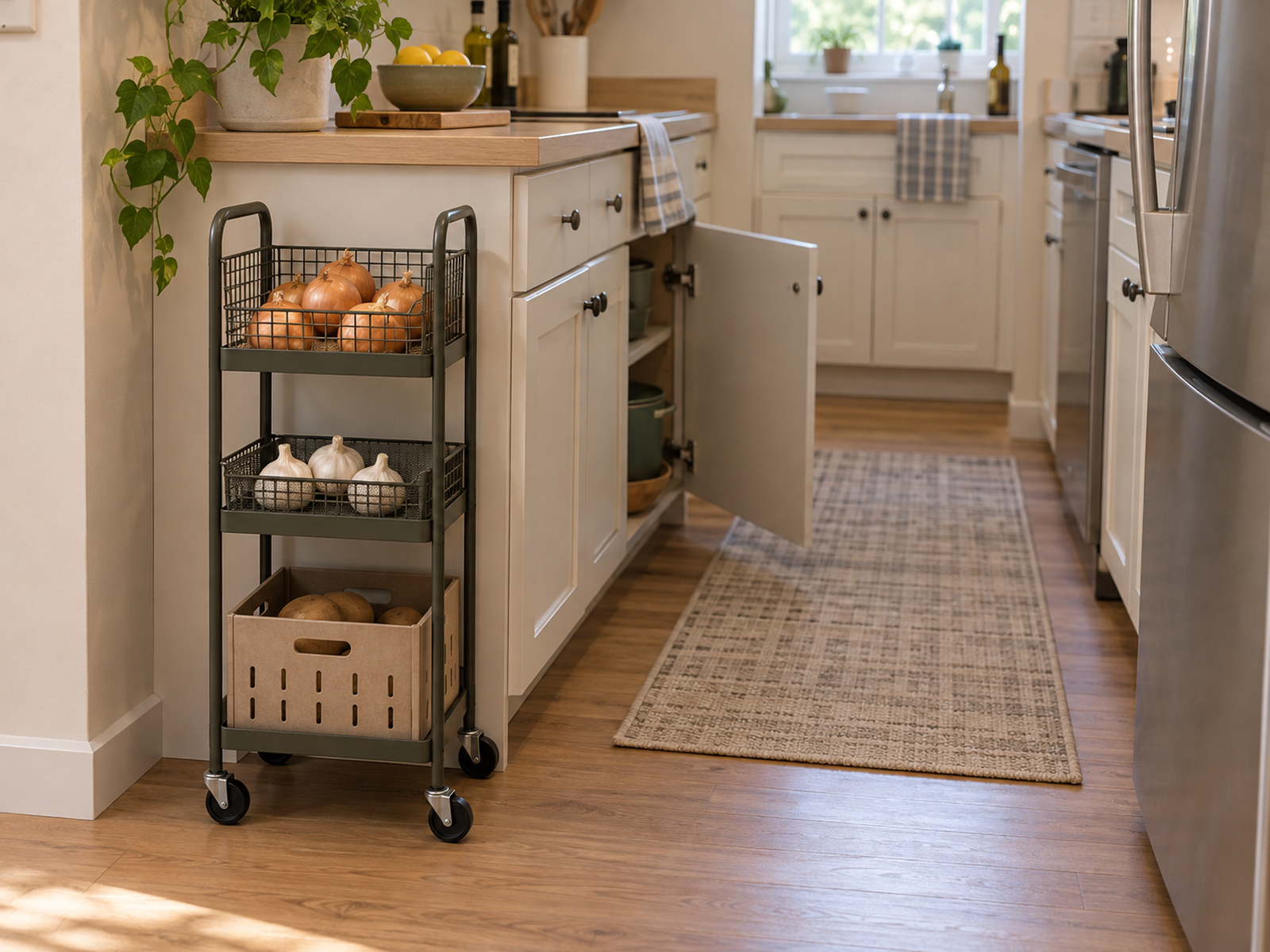
A narrow rolling cart or freestanding produce tower can create dedicated ventilated storage when the cabinets are genuinely full or unsuitable. But it converts a food-storage problem into a floor-space decision.
Measure the entire footprint, including casters and the room needed to pull the cart out. Keep it outside door swing, appliance ventilation, trash and recycling access, and the normal walking path.
Mounted or hanging baskets move the cost from floor space to wall or ceiling area. Verify the exact loaded weight, fastener or anchor requirements, surface compatibility, light exposure, and lease permission. Do not replace required mechanical hardware with an improvised adhesive method.
Vertical baskets are not automatically a complete produce system. Potatoes still need light protection, potatoes and onions still need separate zones, and an empty tier can encourage more buying than the kitchen can realistically store.
09
Buy Less When the Kitchen Cannot Support More
If the best available cabinet is warm, the counter is tiny, and there is no good floor or wall zone, the highest-value change may be the shopping quantity rather than the storage furniture.
Set a capacity stop rule: when the assigned potato, onion, or garlic zone is full, use what is already there before adding another bag or basket. This prevents storage from expanding beyond the kitchen’s environmental and spatial limits.
Buying smaller amounts more often can reduce forgotten produce and keep the storage system shallow enough to inspect. The trade-off may be more frequent shopping or a higher unit price, so it is not automatically the right answer for every household.
The goal is not to recreate cellar conditions inside an apartment. It is to keep a realistic quantity in the best location the kitchen can provide while protecting prep space, airflow, light-sensitive produce, and the household’s ability to see and use what it bought.
Closing Decision
Let the Kitchen’s Best Microclimate Set the Size of the Produce System
A pantryless kitchen does not need one decorative produce station. Give potatoes a dark ventilated zone, keep onions separate, give whole garlic airflow, and use the least valuable existing cabinet or shelf that meets those conditions before spending counter, wall, or floor space.
Then let capacity control the grocery load. A small cabinet basket that gets checked and refilled can outperform a large produce tower in a warm bright kitchen. The system succeeds when the food conditions are credible, the produce stays visible enough to use, and the counter remains a place to prepare food rather than permanent storage.
RELATED GUIDES
What to Read Next
NEXT GUIDE
How to Organize Food Storage in a Small Kitchen With No Pantry
Use this next if the produce zone is only one part of a larger pantryless-kitchen problem and packaged food, backstock, and cabinet zoning still need a coherent storage system.
GUIDE
How to Organize High Kitchen Cabinets When Upper Shelves Are Hard to Reach
Use this if moving produce into a lower, more suitable cabinet pushes low-frequency kitchen items upward and you need to make that higher storage usable without turning produce itself into a hard-to-check category.