
Small Apartment Storage Ideas
Where to Put a Robot Vacuum Dock in a Small Apartment With Limited Floor Space
Choose the dock before you choose the corner: measure the station, protect the robot’s approach lane, leave the bag or water tanks room to come out, and give the system a permanent hard-floor, powered home that still works when the apartment is in its normal lived-in state.
In This Guide
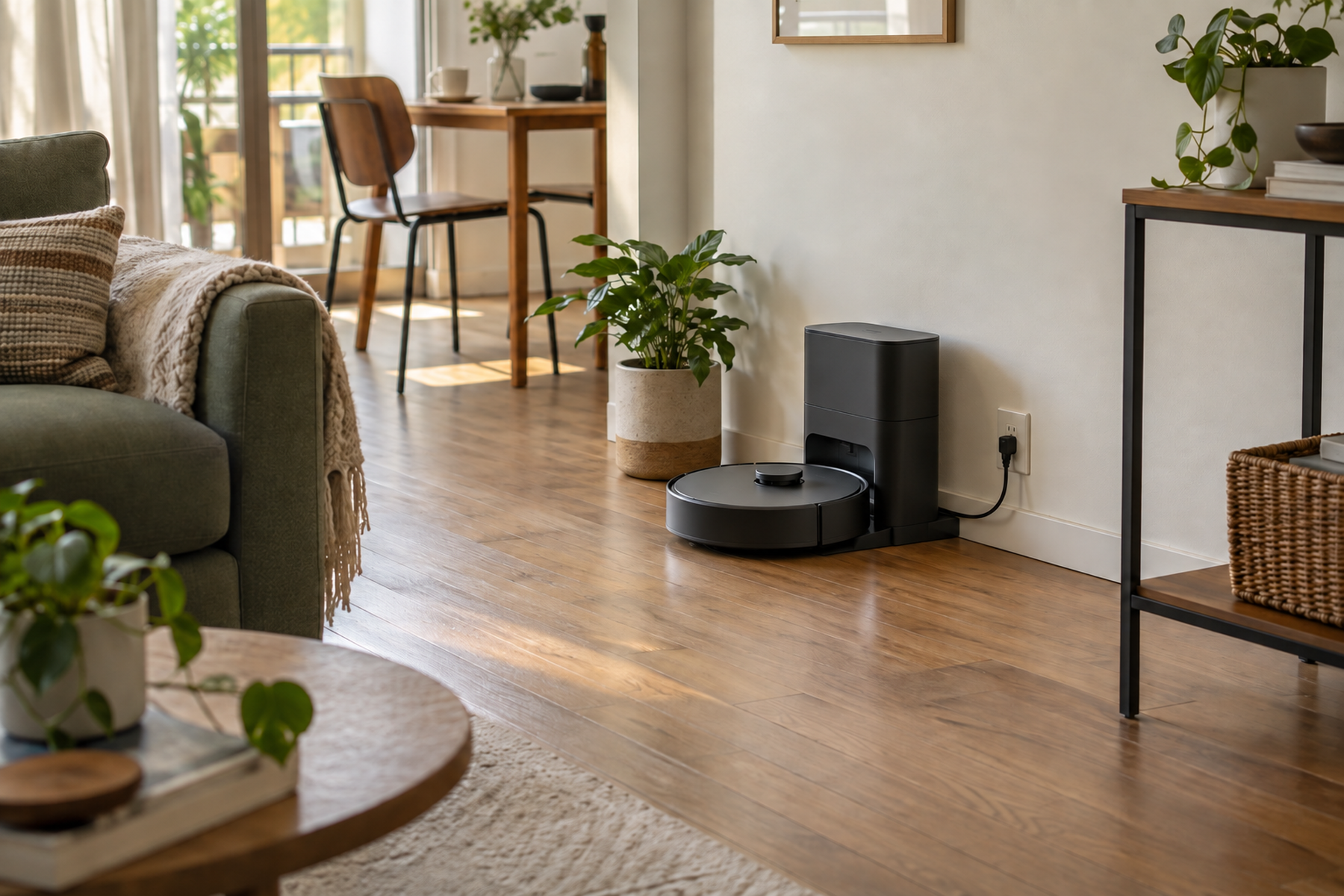
A robot vacuum can disappear under furniture while it cleans, but its dock is a permanent appliance zone. Depending on the system, that station may need charging clearance, a clear return lane, hard level flooring, wall alignment, power, Wi-Fi, dust-bag access, water-tank access, and enough room to remove the robot by hand.
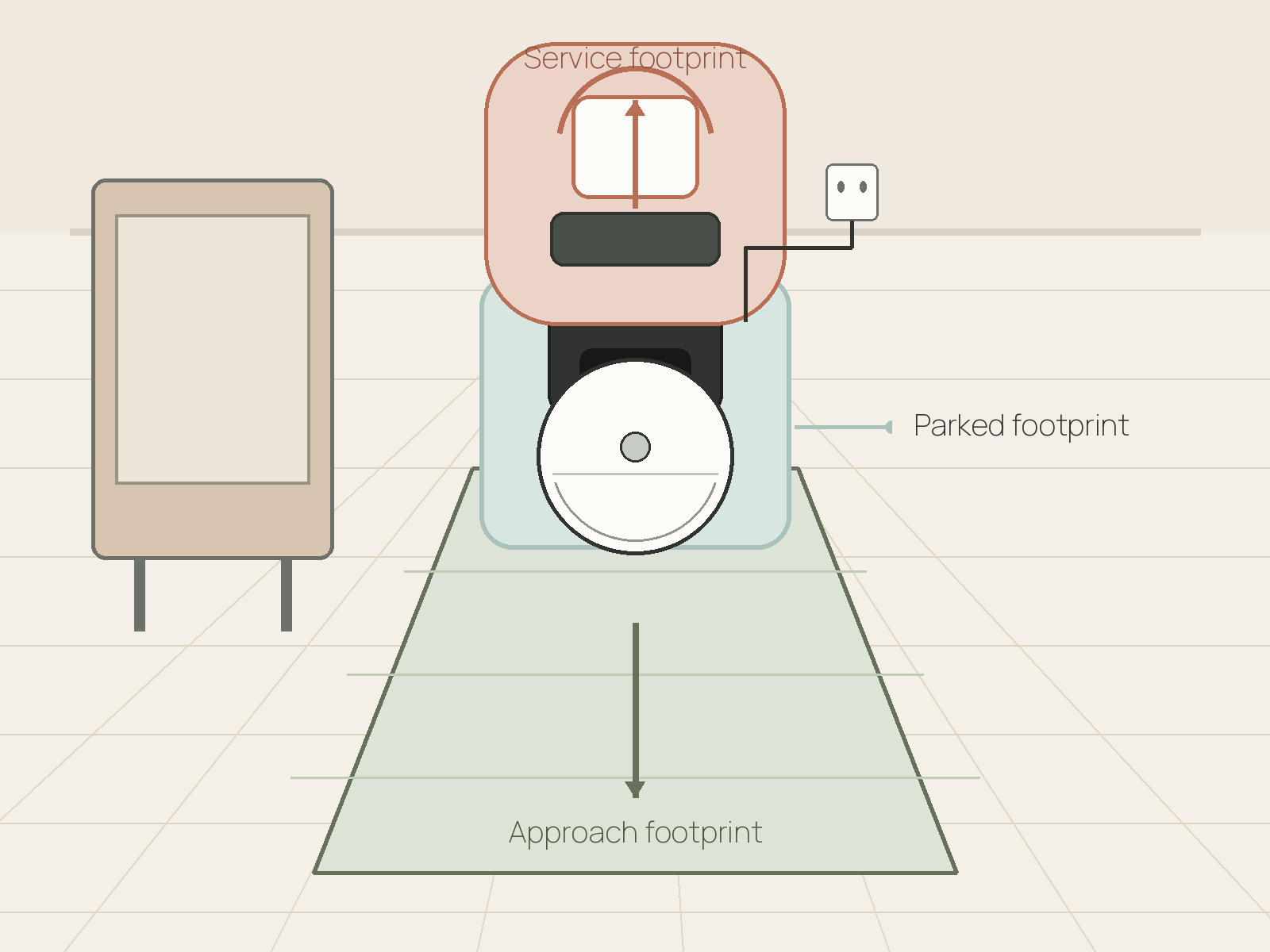
That makes dock placement a three-part fit problem rather than a simple parking problem. The apartment has to afford the parked footprint, the approach footprint, and the service footprint at the same time—without depending on dining chairs, baskets, doors, or furniture being moved out of the way before every cleaning cycle.
Quick Answer
Give the Dock a Permanent Operating and Service Zone
Treat the station as infrastructure, not a loose appliance. The strongest location is one the dock can stay in permanently while the robot leaves and returns reliably and the household can still reach bags, tanks, trays, cables, and controls.
01
Match the dock type to the apartment
A charging-only base, self-empty station, and full wash/refill dock create very different floor, height, and maintenance demands. Do not evaluate the robot body without evaluating the station that comes with it.
02
Measure the runway and the service actions
Use the exact manual for front, side, top, stair, floor, power, and connectivity requirements, then test the robot’s approach lane and every bag, lid, tank, or tray action the household will perform.
03
Protect the dock home from daily drift
Keep the approach lane and service envelope from becoming default storage for chairs, pet bowls, laundry baskets, or movable furniture. A station that works only after clearing the room is not a stable small-space system.
01
Choose the Dock Type Before the Spot
Robot-vacuum docks are not one storage category. A charging-only base may need little more than power, stable placement, and docking clearance, while a self-empty station adds a larger debris compartment and a full-service wash dock can add clean water, dirty water, a dust bag, cleaning trays, and drying hardware.
Those extra functions trade household labor for permanent station volume. A full-service dock may reduce how often the robot’s onboard bin or mop needs attention, but it can demand more height, more depth, more frequent tank handling, and a clearer service route.
For a very small apartment, choosing less automation can therefore be a rational spatial decision rather than a downgrade. A compact charging base may fit under open furniture or along a short wall run where a tall wash station simply cannot live.
Start by deciding which dock functions are worth permanent floor and service space. That prevents the apartment from being forced to solve a large-station problem after the robot has already been chosen.
02
Measure Three Footprints, Not One
The parked footprint is only the first measurement. It includes the station and the robot when everything is idle, but it does not show the floor the robot needs to approach, align, leave, and return.
The second measurement is the approach footprint. Manufacturer guidance for current dock families varies materially, but the common principle is the same: obstacles, corners, doors, furniture, and stairs can interfere with reliable docking even when the station body fits.
The third measurement is the service footprint. A self-empty lid may need to open above the dock, a water tank may need to lift vertically, a dust bag may need hand clearance, and a cleaning tray may need to slide or lift out.
Measure those actions in the apartment, not just the product dimensions on a specification page. A station that fits beneath a console while parked can still fail if the console blocks the tank, bag, lid, or the user’s hands.
Measure / Check First
Before assigning permanent floor space to the station, measure the dock in both parked and serviced states and test the robot’s full return route with the apartment furnished normally.
Check Parked Fit, Approach Lane, and Service Access Together
01
Parked and vertical fit
Measure the dock and parked robot, then add the height needed to open the lid, lift tanks, replace bags, remove trays, or use any other service action required by the exact system.
02
Approach lane and normal-state obstacles
Use the exact manual for front, side, stair, and obstacle clearances, then test doors, chairs, pet items, baskets, and movable furniture in their normal positions rather than assuming the runway will stay empty.
03
Floor, wall, power, and service route
Confirm the required floor surface, wall position, outlet and cable path, connectivity conditions where relevant, and the human route for bags or water tanks before the station is treated as permanently placed.
If the dock only works after moving furniture, opening a cabinet, violating the manual’s clearance, or carrying water through an impractical route, change the dock class or location before building the room around it.
03
Use the Exact Dock Manual Instead of a Generic Clearance Rule
Current manufacturer guidance shows why one universal robot-dock clearance rule is unreliable. Different iRobot, Roborock, Samsung, eufy, and Dreame systems publish different side, front, top, stair, floor, wall, and connectivity requirements.
Use the exact current manual or support page for the dock family you own or plan to buy. Community reports that a tighter setup happens to work do not replace the manufacturer’s placement requirements.
Treat dynamic movement as part of the fit as well. Current user reports show custom low-clearance robot garages failing because a robot’s navigation hardware rises during docking and catches under the opening, even though the parked body seems to fit.
The result is a stricter pre-purchase test: measure the dock, robot, operating movement, and human service actions as one system. Do not design a permanent furniture opening around the robot’s resting height alone.
04
Give the Station the Floor, Wall, Power, and Door Geometry It Needs
Several current manufacturers place their referenced docks on hard, flat, level flooring and against or close to a wall. That makes a convenient carpet corner or soft mat a poor generic assumption for docking stations.
Power belongs in the location test too. The station is permanent charging infrastructure, so the cable should reach the required outlet without crossing the robot runway, a doorway, or the household’s walking path. Use any built-in cord storage the exact station provides.
Open every nearby door, cabinet, drawer, and movable furniture item before approving the wall section. The dock should not be struck by a bedroom or closet door, trapped by a dining chair, or forced into the same path people use to enter the room.
Also check model-specific requirements around stairs, direct light, Wi-Fi, and other sensors or connected functions. These conditions vary, so a visually discreet corner only works when the exact system still treats it as a valid base location.
05
Put Under-Furniture Docking Through the Service Test
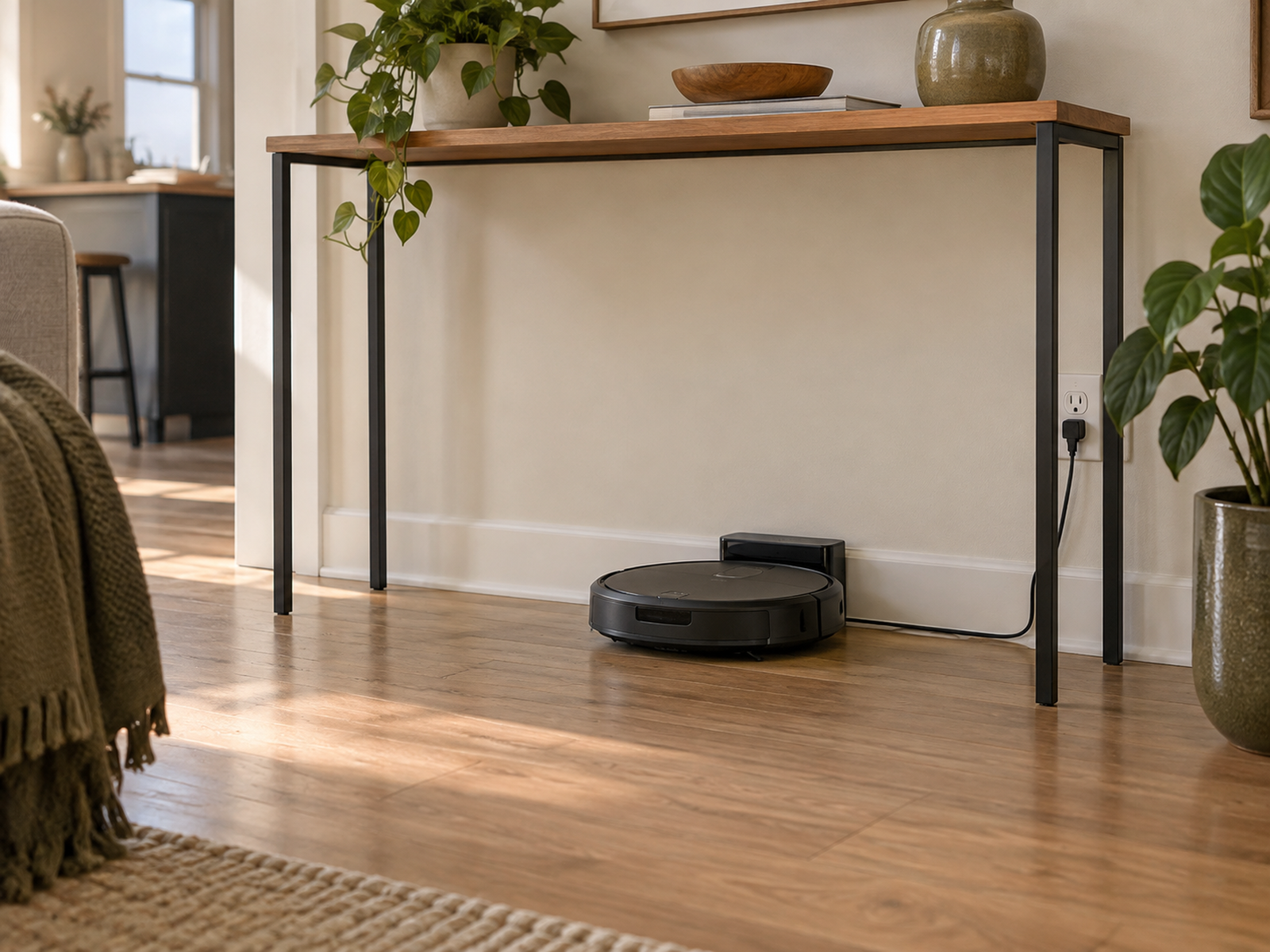
Hiding the dock beneath a table, console, desk end, or cabinet opening can reduce visual clutter, but concealment only works when the furniture stays outside the robot’s approach and the dock’s service envelope.
For a compact charging-only base, open under-furniture space can be excellent when the exact clearance passes and the robot has an unobstructed route. For a tall self-empty or wash station, the same idea often fails because lids, bags, tanks, or cleaning modules need vertical access.
Test service with the furniture in place. If the table has to be dragged away every week so a dirty-water tank can be lifted or a bag can be changed, the station is technically hidden but operationally high-friction.
Use furniture to frame the dock rather than automatically boxing it in. Partial visual screening can keep the station intentional without sacrificing the open approach, top access, airflow, moisture handling, or hand clearance the system actually needs.
Use / Skip
Under-Furniture Docking
Use
Use it when the furniture stays outside every operating and service action
An open table, console, or desk end can visually screen a charging base or compatible dock when the exact side, front, top, floor, power, and navigation requirements still pass and the robot can dock without furniture being moved.
Skip
Skip it when concealment blocks the lid, tanks, bags, robot movement, or moisture management
Choose an open wall zone instead when furniture has to move for service, the top opening is too low, the robot’s dynamic height catches under the opening, a water-handling dock would be enclosed too tightly, or the furniture occupies the approach lane.
06
Treat Full-Service Docks as Water and Maintenance Stations
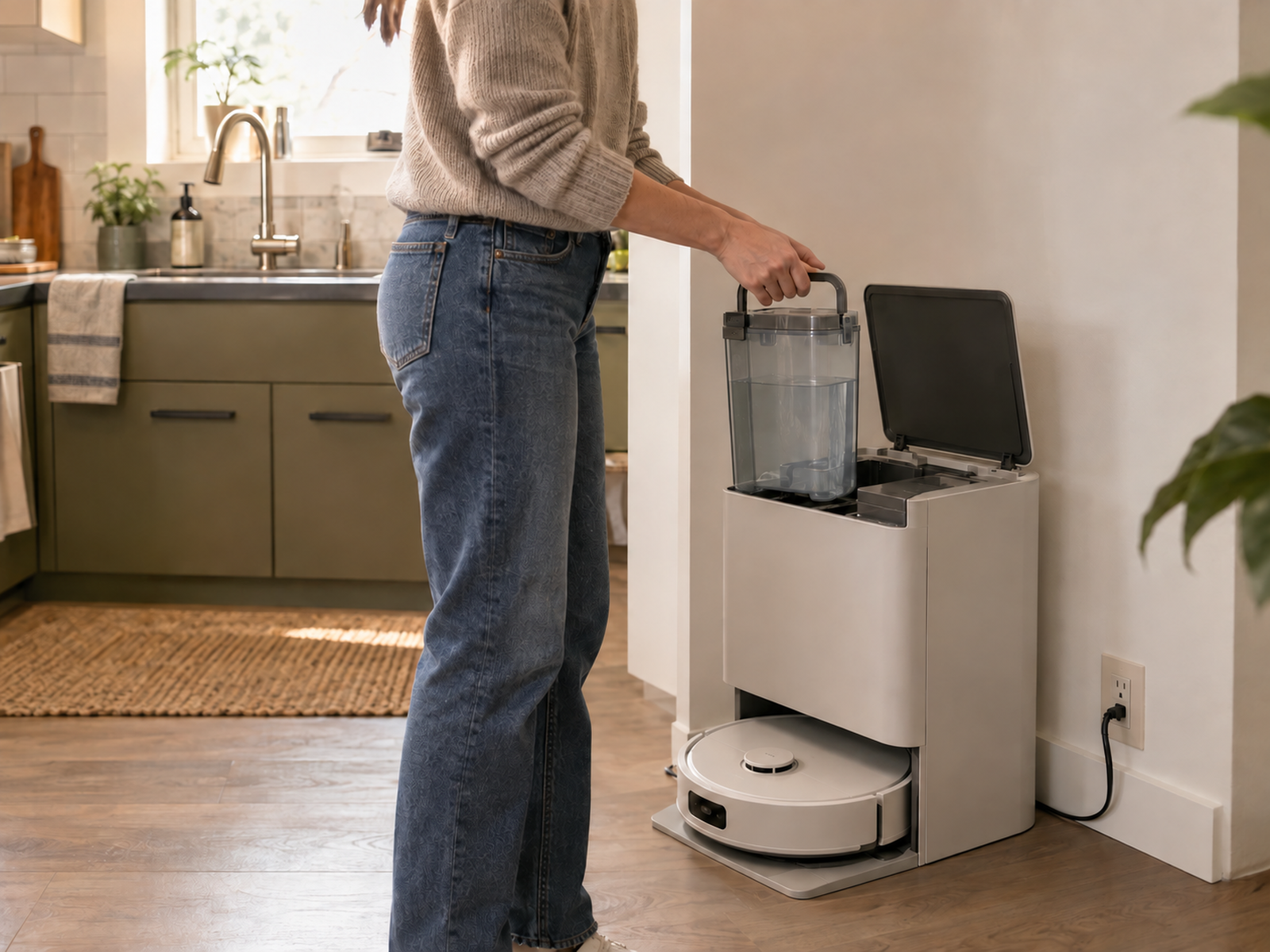
A wash, refill, and dry station is not just a larger charger. Current Roborock documentation, for example, includes routine dirty-water tank removal, disposable bag replacement, and cleaning-tray service on supported dock families.
That turns the dock location into a water-carrying route. The user may need to lift a dirty-water tank, carry it to a sink, rinse it, refill clean water, and return everything without crossing bedding, electronics, narrow doorways, or fragile furniture.
Water-handling docks also deserve more caution around enclosed furniture. Current eufy support for one Omni system specifically warns against placing its station inside a wardrobe because moisture can make the wardrobe damp; that warning is product-specific, but it shows why a wet-service station should not be treated like a dry charging puck.
If the apartment cannot give a full-service dock practical tank access and a believable sink route, the automation may be costing more spatial friction than it saves. A simpler dock with more manual robot maintenance can be the better small-space system.
07
Protect the Robot Runway From Normal Daily Clutter
Open floor in front of the dock is functional infrastructure even though the station is not physically occupying every inch of it. The robot needs that lane to leave, approach, align, and return.
Do not count the same floor as the permanent home for a dining chair, laundry basket, pet bowl, shopping bag, folding stool, or rolling cart if those objects will routinely block the return path.
Test docking with the apartment in its normal state, not after staging the room for a demonstration. A robot that returns only when furniture has been moved creates another household reset task and weakens the point of automation.
The strongest small-apartment dock location is often a visually ordinary open wall run where the runway can stay protected every day. Reliability can be better organized than a clever hiding place that constantly has to be cleared.
08
Use Dock Fit as a Pre-Purchase Stop Rule
A dock is also different from many portable appliances because moving it out of the way can affect mapping, return behavior, cable arrangement, or setup on some current systems. Treat the chosen station location as a permanent home unless the exact manufacturer says otherwise.
That makes dock feasibility a buying filter. Before choosing the robot, verify the exact parked dimensions, approach clearance, service height, floor requirement, outlet, door swing, water route if applicable, and any Wi-Fi or stair constraints that matter to that model.
If no location satisfies those requirements in the apartment’s normal state, do not assume the answer is a custom built-in. Cabinet cutouts, toe-kick garages, new outlets, and plumbed refill or drain systems introduce model lock-in, lease constraints, and more permanent intervention.
A no-valid-dock result is useful information. Choose a smaller charging base, a less automated station, or another floor-cleaning system that the apartment can support without turning daily circulation and furniture into part of the docking routine.
Closing Decision
Give the Dock a Home the Apartment Can Afford Every Day
A robot vacuum saves labor only when its permanent station also works without daily furniture choreography. The real space claim is the dock plus the robot’s runway plus the human service envelope, and the exact manufacturer requirements decide whether that system fits.
If the apartment cannot protect those three footprints, reduce the dock before redesigning the room around it. A visible charging base that stays reliable can be a better small-space solution than a highly automated station that is hidden beautifully but impossible to approach, open, clean, refill, or leave in place.
RELATED GUIDES
What to Read Next
NEXT GUIDE
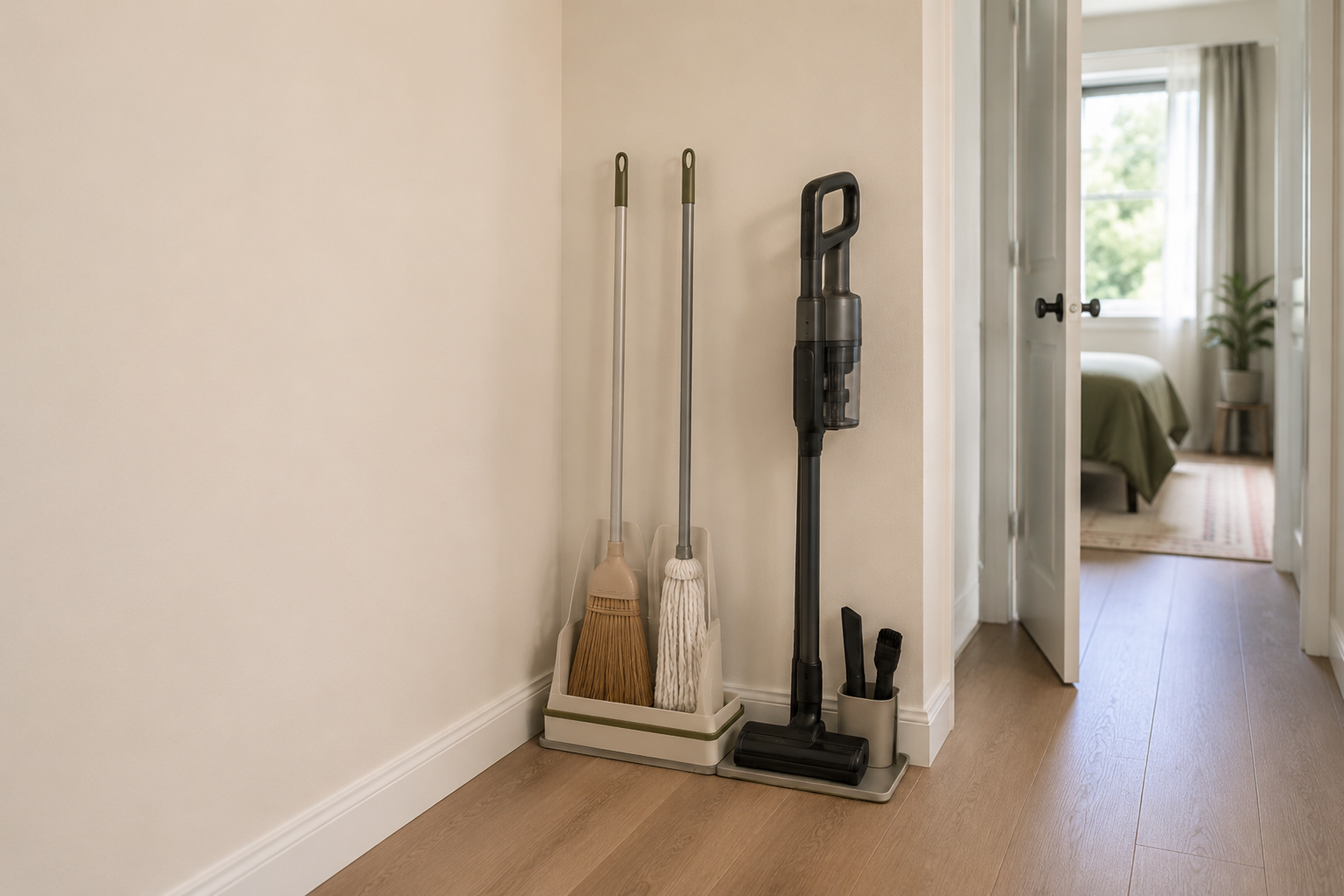
How to Store a Broom, Mop, and Vacuum in a Small Apartment With No Utility Closet
Use this next if the robot dock is competing with other floor-cleaning equipment for the same apartment zones; that guide focuses on retrieval, charging, equipment-specific storage, and renter-friendly organization without a utility closet.
GUIDE
Where to Put an Air Purifier in a Small Apartment With Limited Floor Space
Use this if several always-on appliances are competing for perimeter floor space; that guide focuses on operating clearance, service access, room relevance, and keeping a functional appliance zone from becoming clutter.
GUIDE
Where to Put a Wi-Fi Router in a Small Apartment With a Fixed Internet Jack
Use this if the dock location also has to coexist with always-powered network equipment and connectivity constraints; that guide focuses on separating fixed infrastructure from the device placement that still has flexibility.