
Small Closet Organization
How to Make More Room on a Small Closet Rod Without Using the Wrong Hangers
A closet rod can feel full partly because the hanger hardware is consuming more width than the clothes need. The useful fix is not to put every garment on the thinnest hanger possible, but to use the thinnest hanger that still provides appropriate support—and leave enough room to retrieve what you own.
In This Guide
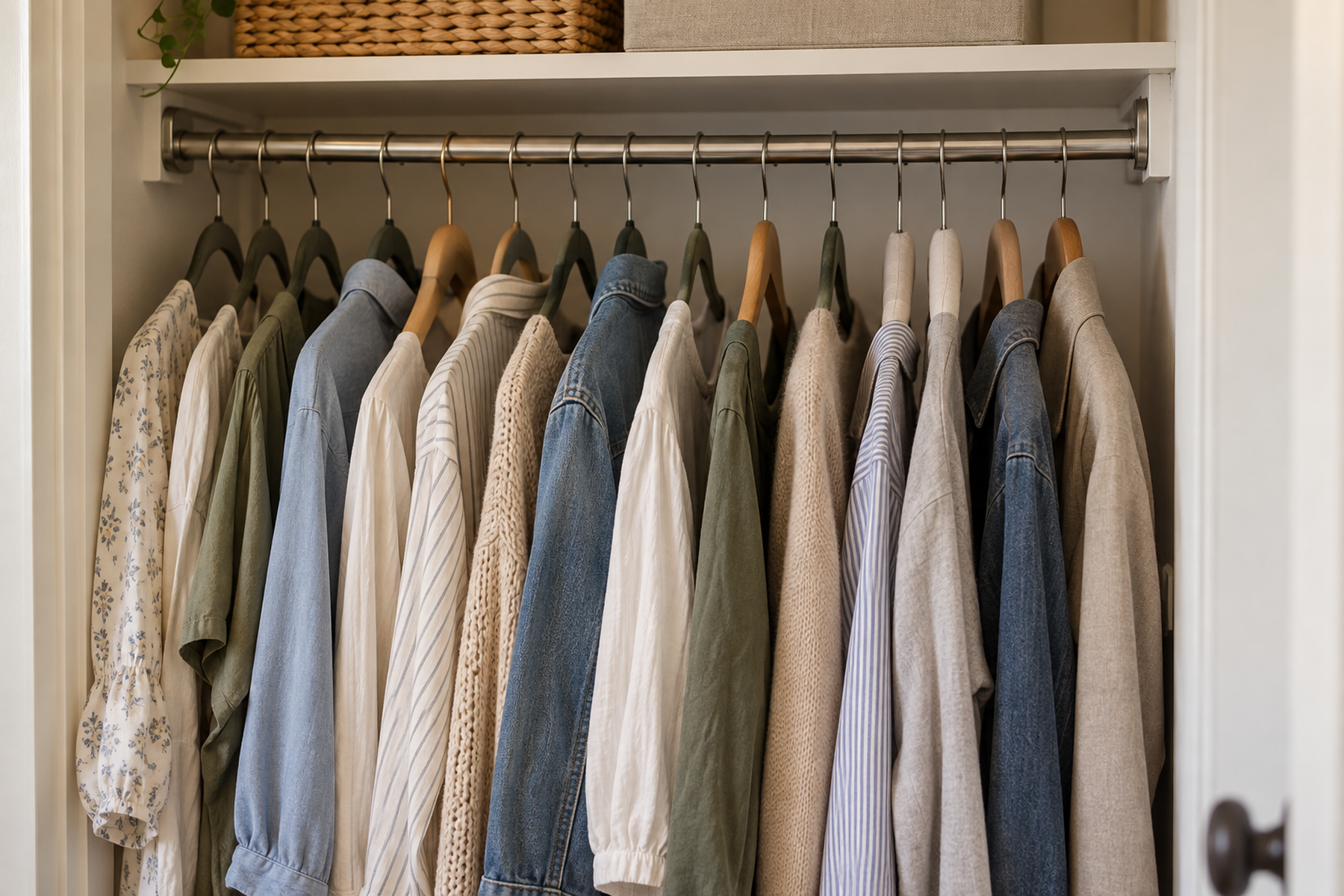
A closet rod has several capacity limits at once. The hanger consumes horizontal width, the garment has its own thickness, some clothes need more shoulder support than others, and the finished row still needs enough movement for everyday retrieval.
That is why hanger thickness and closet capacity are related without being interchangeable. A much thinner hanger can recover some rod width, but the clothing itself prevents that hardware difference from translating into the same percentage gain in usable wardrobe capacity.
Quick Answer
Use the thinnest appropriate hanger
Start with categories that can move to slim hangers without sacrificing useful support. Keep wider or specialty hangers where the garment actually needs them, move poor hanging candidates to folded storage when practical, and stop compressing the rod before retrieval or structural load becomes the next problem.
01
Slim the easy categories
Convert lightweight everyday shirts, blouses, dresses, and similar garments first when the chosen hanger fits them properly.
02
Spend width on support
Keep wider, contoured, padded, or specialty hangers for garments that genuinely benefit from that structure.
03
Preserve working room
Leave enough rod movement to slide garments, remove one from the middle, and return it without dragging several neighboring pieces.
Measure / Check First
Before replacing a full closet of hangers, separate hanger-generated congestion from clothing volume.
Measure the rod and audit the hardware
01
Usable rod width
Measure the accessible hanging section rather than assuming the entire wall-to-wall rod is equally usable.
02
Hanger profile
Group the current hangers into slim, medium, bulky, and specialty/support types so you can see where hardware is consuming unnecessary width.
03
Garment needs
Separate lightweight everyday garments from structured, heavy, knit, fragile, or shape-sensitive pieces before deciding which hanger profiles can change.
Do not calculate a guaranteed capacity percentage from hanger thickness alone. Garment thickness and the retrieval room you preserve will determine the real result.
01
Audit the hangers before the wardrobe
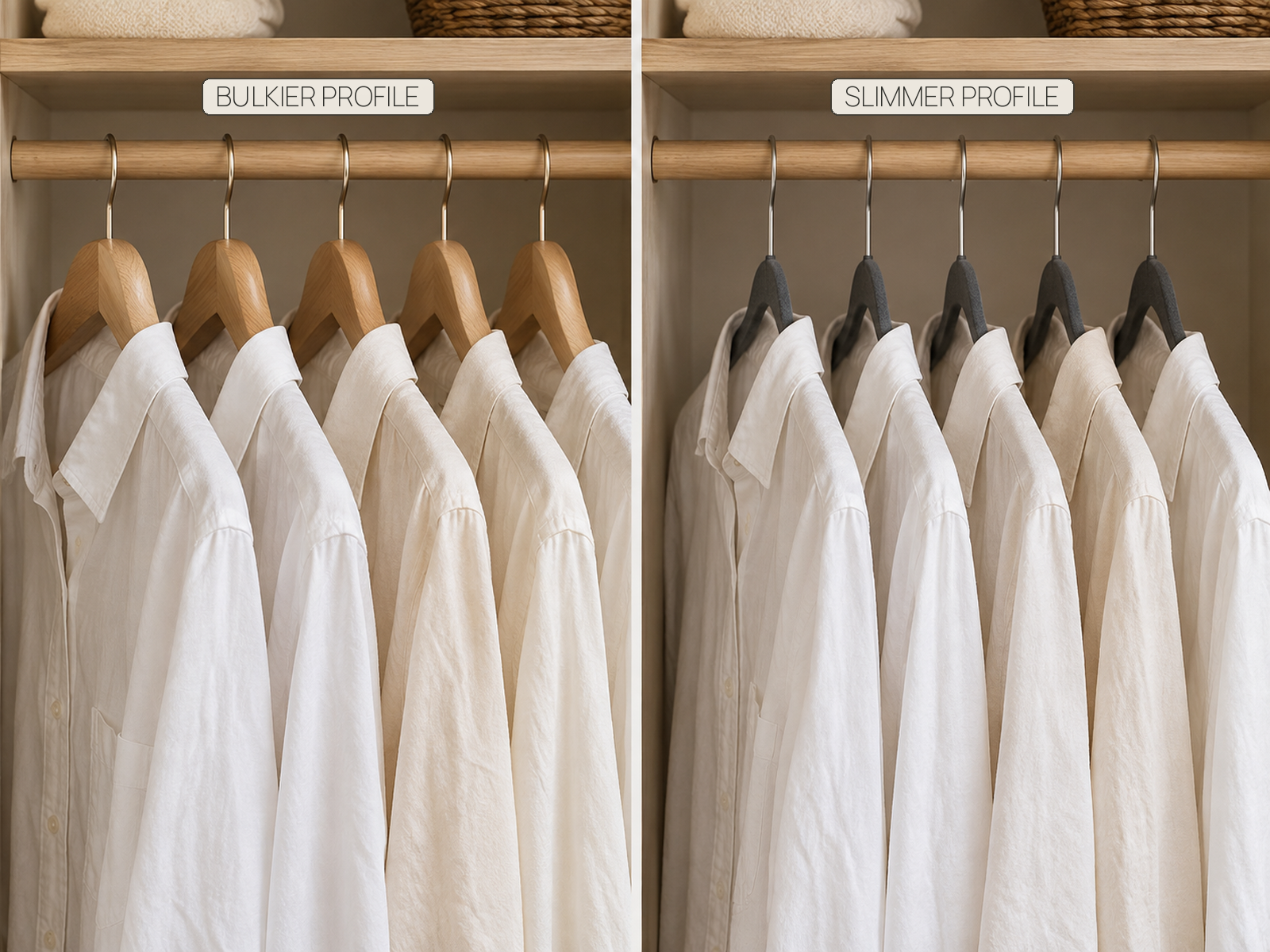
If the rod feels crowded, look at the hardware before concluding that the wardrobe itself is too large. Thick wooden hangers, padded hangers, broad shoulder profiles, clips, and mismatched hanger shapes can consume noticeably different amounts of horizontal space.
Current product specifications illustrate the hardware difference. IKEA’s current BUMERANG wooden hanger is listed at 9/16 inch thick, while current slim velvet examples in the research are listed around 0.16 to 0.24 inch deep. Those are product-specific measurements, not a promise that a closet will gain the same ratio in clothing capacity.
Once garments are hanging, shirts, jackets, coats, and other clothing still occupy their own width. The goal is to remove unnecessary hanger bulk, not to turn a hardware measurement into a theoretical maximum garment count.
02
Convert lightweight categories first
Start with garments that do not need broad shoulder support and that fit the chosen slim hanger properly. Lightweight shirts, blouses, dresses, and similar everyday pieces are often the most straightforward first conversion.
A flocked or velvet surface can also help garments that tend to slip, but non-slip is not automatically better for every item. The hanger still needs the right width and shape for the garment.
Convert in stages rather than replacing everything at once. Change one useful category, observe the actual rod gain and daily retrieval, then decide whether converting another category adds meaningful capacity.
03
Keep wider support where it earns the space
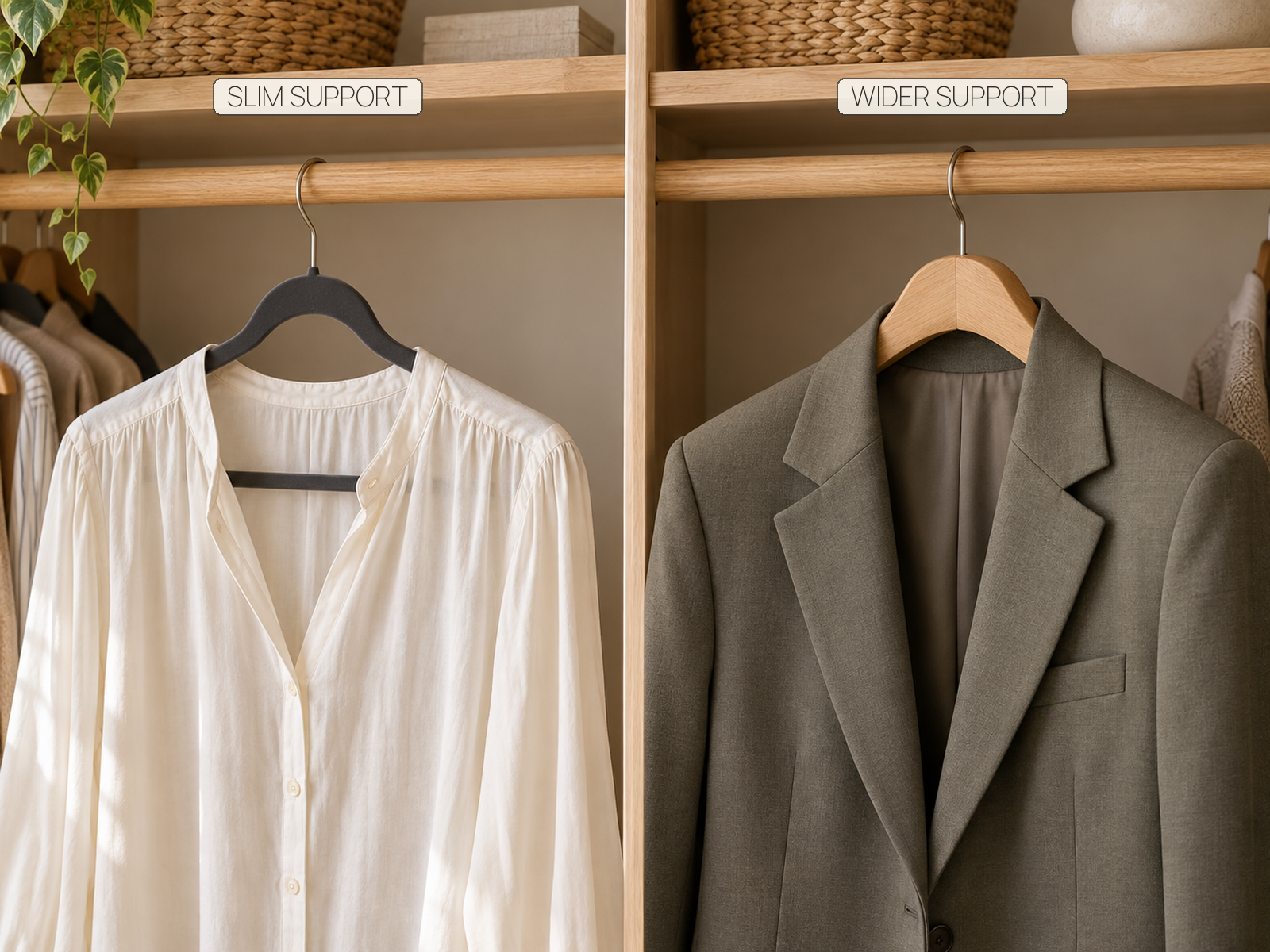
Some garments justify spending more rod width on support. Coats, blazers, suit jackets, and other structured pieces may benefit from a wider or more contoured hanger instead of the slimmest possible profile.
IKEA’s current BUMERANG shoulder shaper is 1 1/2 inches deep and is intended to add shoulder support to selected garments. That is a useful example of the trade-off: more hanger profile can be deliberate rather than wasteful when it protects the garment’s shape.
The broader principle is also consistent with textile-conservation guidance from the U.S. National Park Service and Canadian Conservation Institute: hanger selection should account for garment construction, weight, condition, and shoulder fit. That guidance is written for collection care, not as a household mandate, but it reinforces why hanger suitability should not be decided by rod capacity alone.
04
Move poor hanging candidates off the rod
Some garments should not stay on the rod merely because hanging space exists. Heavy, fragile, embellished, unstable, or shape-sensitive garments can be poor hanging candidates depending on their construction.
Knits are especially context-dependent. Do not turn “fold sweaters” into a universal rule, but if a garment stretches, develops shoulder points, or deforms on its hanger, change the support or storage method.
This is where folded storage can recover rod space without forcing the wrong hanger solution. Ask whether the garment is on the rod because hanging suits it or because no other storage location has been assigned.
Use / Skip
Decide where slim hangers actually belong
Use
Use slim hangers for appropriate everyday categories
Use them where the garment fits the hanger, does not need broader support, and the slimmer profile creates useful rod room without making retrieval worse.
Skip
Skip the all-slim rule when support is the priority
Keep a wider or specialty hanger—or use folded storage—when the garment’s weight, structure, shoulder shape, or condition makes the thinnest profile a poor fit.
05
Build a mixed hanger system on purpose
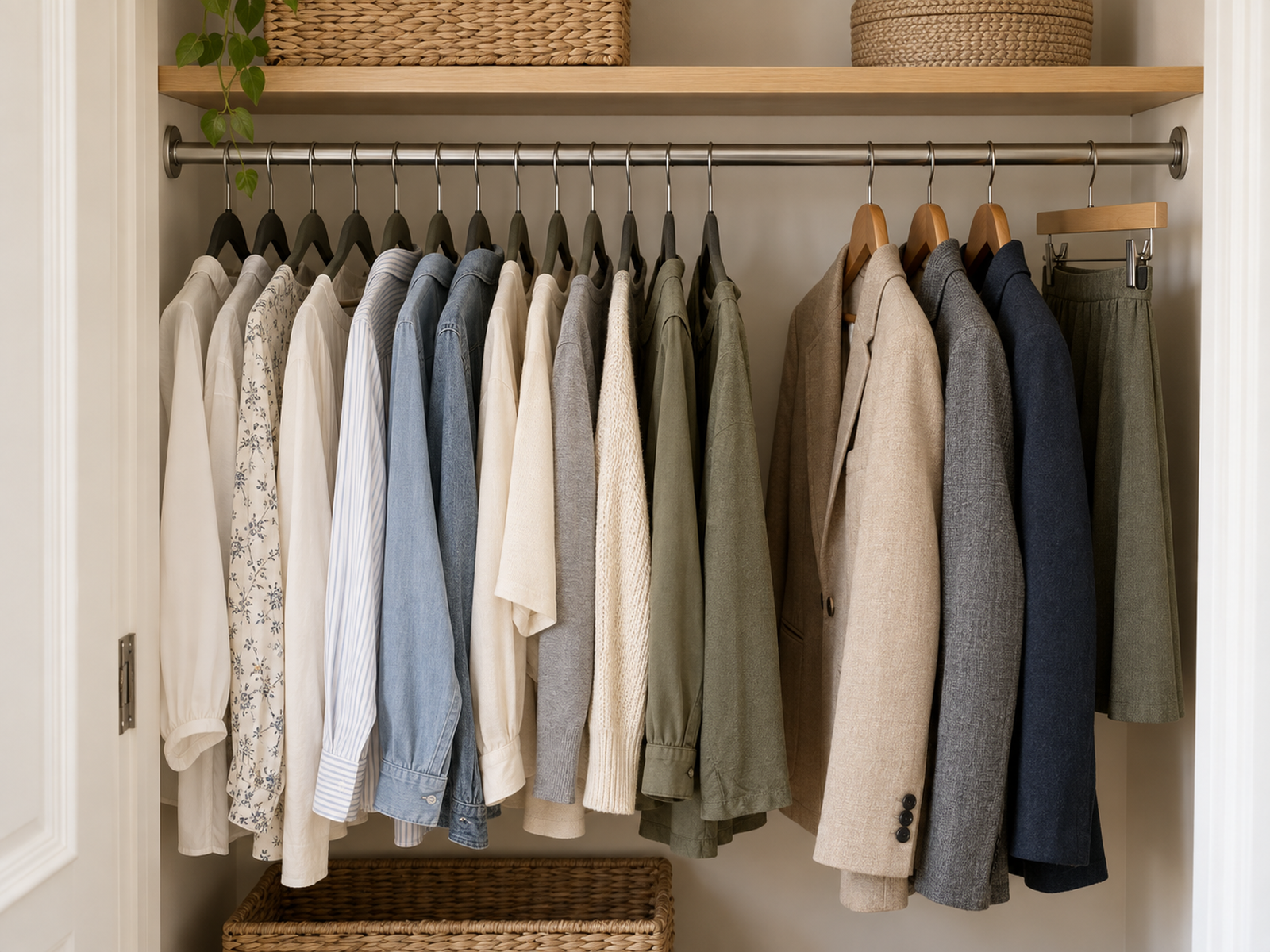
Perfect visual uniformity is not the same as a functional closet. A mostly slim system can still reserve wider hangers for coats and blazers, specialty clips for selected pants or skirts, and folded storage for garments that do not belong on the rod.
Keep the exceptions deliberate. If every hanger is different for no reason, the system becomes harder to read; if every hanger is identical despite different garment needs, uniformity has started driving the wrong decision.
A useful rule is simple: use the thinnest appropriate support for each garment category.
06
Stop before density becomes the next problem
A rod packed edge-to-edge can hold a high theoretical hanger count and still function badly. Test the closet in use: slide the garments, remove one item from the middle, return it, and reach the categories beside it.
There is no universal percentage of empty rod that this article can prescribe. The stopping point is functional: when everyday retrieval starts requiring yanking, dragging, or compressing neighboring clothes, the rod has become too dense.
More hanger positions also do not increase structural capacity. If the rod, shelf, brackets, or wall attachments are sagging or loose, do not add clothing simply because slimmer hangers created visible room.
What Not to Do
Do not confuse hanger count with usable capacity
- Do not assume slim hangers create a universal percentage increase in closet capacity.
- Do not replace appropriate garment support just to save rod width.
- Do not force every sweater, coat, blazer, skirt, or delicate garment onto one hanger type.
- Do not keep hanging a garment that is visibly stretching or developing shoulder distortion.
- Do not pack the rod so tightly that garments cannot slide or be removed cleanly.
- Do not add more clothing to a weak or sagging rod because thinner hangers made more positions available.
The better target is usable hanging density: less unnecessary hardware width, appropriate garment support, and enough working room to use the closet normally.
RELATED GUIDES
What to Read Next
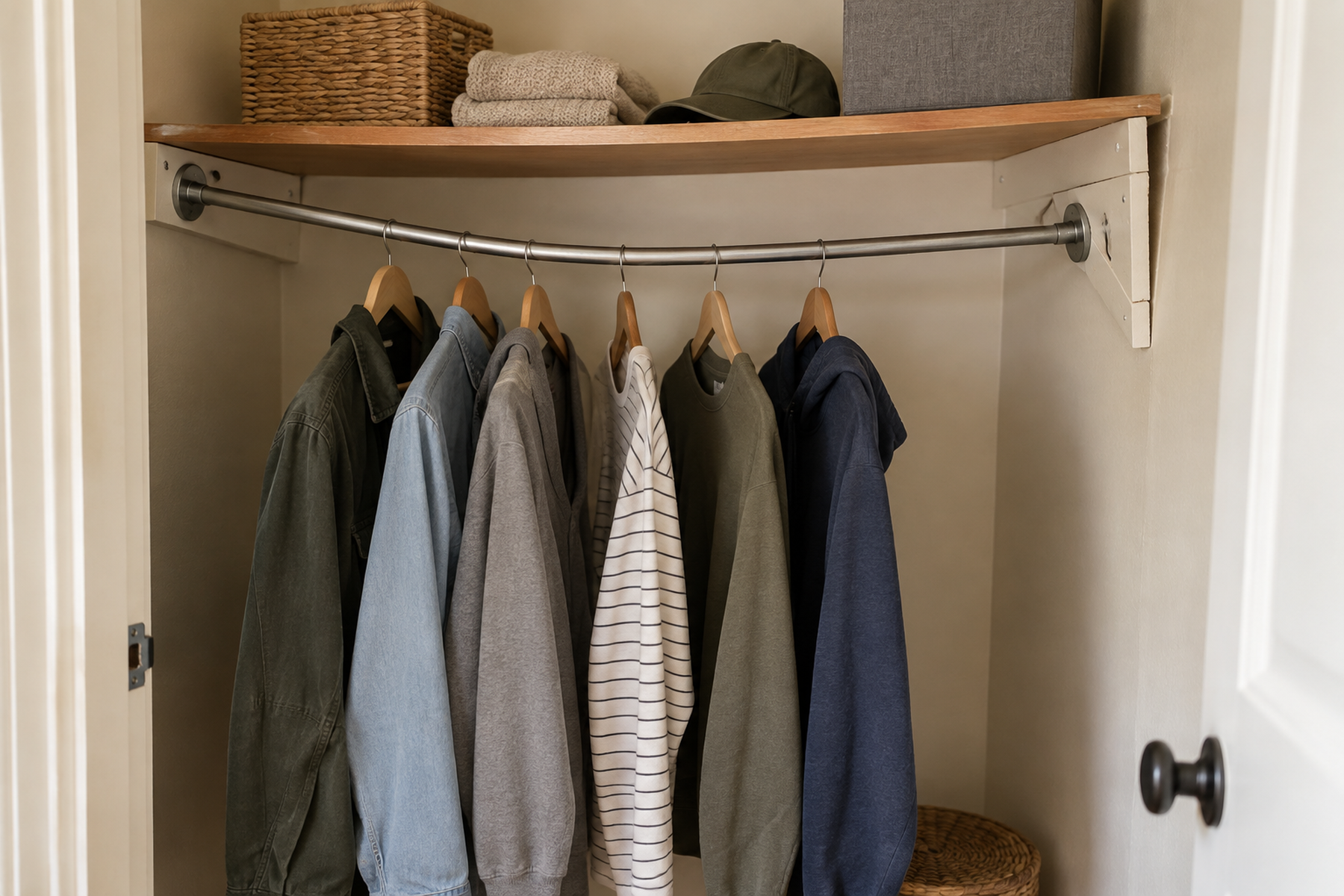
NEXT GUIDE
What to Do When a Closet Rod Sags or Pulls Away From the Wall
Read this before using newly recovered hanger space to add more clothing when the rod, shelf, or supports already show signs of structural stress.
GUIDE
What to Do When a Closet Is Too Shallow for Hangers
Use this when the hanger problem is depth and door clearance rather than horizontal rod congestion.
GUIDE
How to Make Room for Long Dresses and Coats in a Small Double-Hang Closet
This helps when garment length and vertical hanging zones—not hanger profile—are consuming the closet’s usable capacity.