
Small Apartment Storage Ideas
How to Store Books in a Small Apartment With No Room for a Bookcase
Split the collection before you add furniture: keep active books easy to reach, move low-frequency books into dry hidden storage, support books correctly, and treat every shelf, wall, box, and bookcase as a load-and-access decision rather than free space.
In This Guide
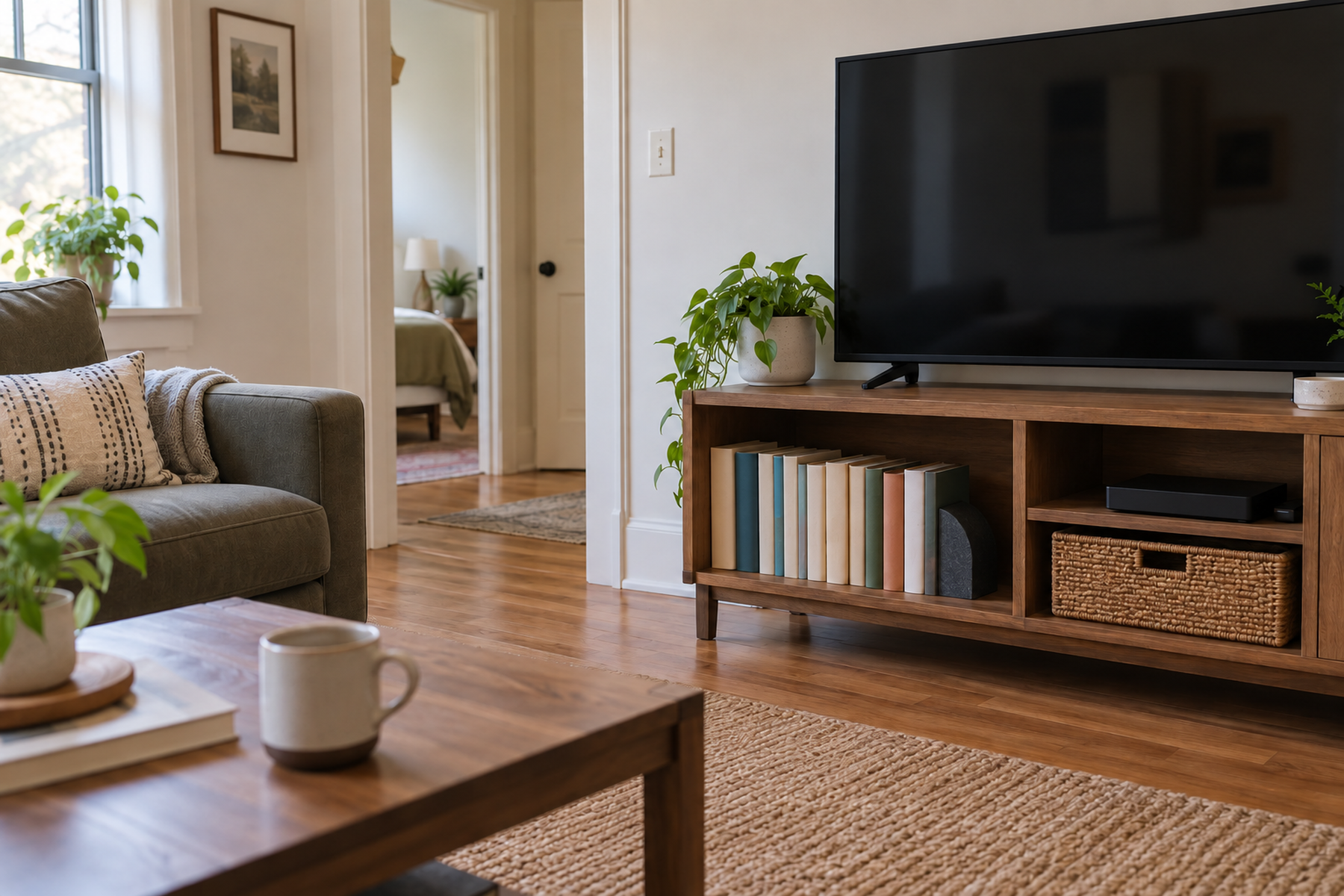
A physical book collection does not have to live in one bookcase. In a small apartment, forcing every title into prime visible shelving can spend the same wall and floor area the resident needs for a desk, sofa, dresser, dining zone, or circulation.
A stronger system treats the collection as several access layers. Current reads and frequently used references earn convenient space; favorite editions may earn visible display; low-frequency books can move into closed or under-bed storage; and future acquisition can slow when safe capacity is full.
Quick Answer
Give Each Part of the Collection the Cheapest Space It Can Use Well
Start with access frequency and value, then check environment, book support, furniture load, and renter intervention. The apartment does not need one perfect library wall; it needs a collection system that keeps books usable without taking over the room.
01
Keep active books easy to reach
Reserve the most visible, convenient shelf or cabinet space for current reads, study material, and references used weekly or monthly instead of giving every book the same access.
02
Move the archive into lower-cost space
Low-frequency books can use dry under-bed bins, closed cabinets, or labeled boxes when retrieval is manageable and the books remain properly supported.
03
Stop before storage becomes unsafe or intrusive
Do not assume wall shelves, tall bookcases, wardrobe tops, or decorative furniture can carry dense book loads. Verify load and anchoring requirements, and slow physical acquisition when safe capacity is genuinely full.
01
Split the Collection Before You Add Furniture
Start with the collection rather than the room. Separate current reads and frequently used references from favorite display books, sentimental or collectible volumes, low-frequency archive books, and titles you no longer value enough to keep paying apartment space for.
This is not a decluttering quota. There is no universal correct number of books for a small apartment, and a serious physical collection can be worth preserving even when the room cannot support a conventional bookcase.
The useful question is what level of access each group deserves. A textbook used several times a week should not live under a bed behind three heavy boxes, while a completed series read once every few years may not need premium eye-level wall space.
Future books belong in the same decision. If the collection keeps growing, either leave deliberate capacity or define an acquisition rule such as borrowing first, using digital editions selectively, or buying physical copies mainly when they are worth long-term ownership.
02
Reserve Visible Space for Books That Benefit From It
Visible shelving is a premium apartment resource. It supports browsing, keeps active titles easy to remember, and lets favorite editions contribute to the room, but it also consumes wall area and can make every book compete for display.
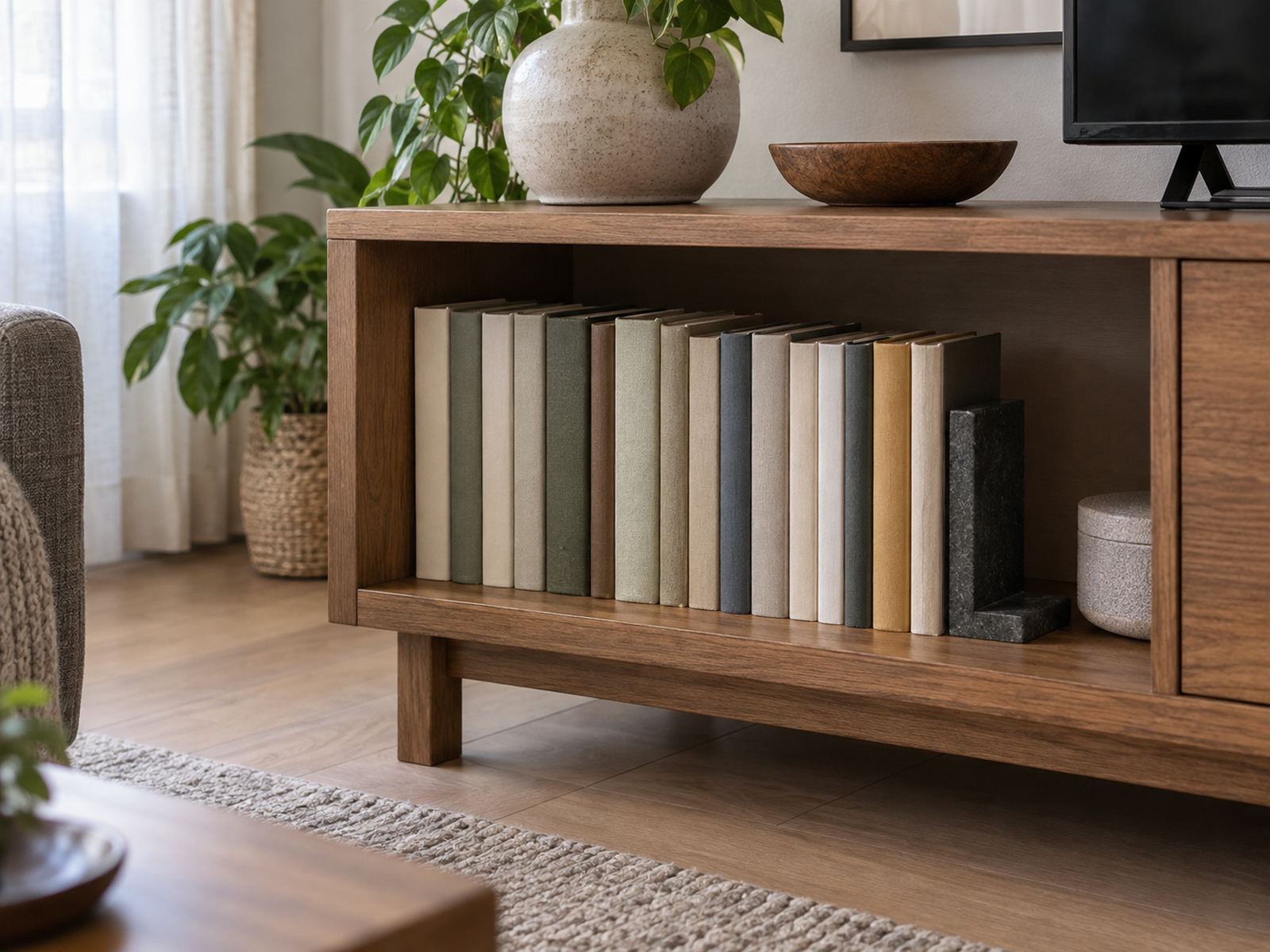
Use the small amount of open book storage the apartment already has for titles that genuinely benefit from visibility. That might be one shelf of a media unit, a sturdy desk shelf, a bedside shelf, or a short run inside an existing cabinet rather than a new furniture footprint.
Closed storage is not automatically worse. It can reduce visual pressure and direct-light exposure while giving low-frequency books a place to live, but it also makes browsing less spontaneous and can turn a collection into forgotten boxes if retrieval is poor.
A mixed system is often stronger than one storage mode. Keep the active layer visible, give meaningful editions intentional display, and let archive books trade visibility for lower-cost storage.
03
Protect Book Shape, Light, and Humidity
The Library of Congress recommends storing most books upright, not leaning, with support from neighboring books or bookends and with books of similar size grouped so the covers are properly supported.
Oversized books are a different branch. The Library of Congress says books too large to stand upright can be stored flat and fully supported; if a large book must be vertical, its spine should be down rather than up.
Environment can override a visually convenient location. Library of Congress guidance favors a cool, relatively dry, stable setting—around 70°F or below and roughly 30–55% relative humidity for most books—and minimal light, with no direct or intense exposure.
Those are preservation-oriented conditions, not a demand to run an ordinary paperback shelf like a museum. The practical apartment rule is to avoid obvious high-risk zones for valued books: direct sun, persistent dampness, heat, leaks, and large environmental swings.
Measure / Check First
Before assigning any hidden shelf, cabinet, box, or wall zone to books, check the environment, the load, and the retrieval path together.
Check Environment, Load, and Access Before You Fill the Space
01
Dry, stable, low-light conditions
Reject storage with known leaks, persistent dampness, direct intense sun, or major heat and humidity swings when the books are worth preserving.
02
Verified load and stability
Check the exact shelf, drawer, cabinet, bookcase, mounting system, and wall requirements before dense books are added. Do not transfer one product’s load rating to another.
03
Retrieval that matches access frequency
Put frequently used books where they can be reached without unloading furniture or moving heavy boxes; reserve deeper, lower, or closed storage for books that genuinely tolerate slower access.
A storage zone is only useful when the books fit physically, remain in an appropriate environment, and can be retrieved at a frequency that matches how the collection is actually used.
04
Use Existing Furniture Capacity Before Adding a Bookcase
A piece of furniture that already earns floor space can be a better book zone than another dedicated shelf. Media consoles, sideboards, storage benches, bedside units, desks, and sturdy closed cabinets may all contain usable book volume.
Do not treat that capacity as automatic. Books are dense, so the exact shelf, cabinet, drawer, or furniture manufacturer needs to support the expected load and the unit itself needs to remain stable in the apartment.
Match the furniture to access frequency. Frequently used books work best where the door, drawer, or shelf opens easily; archive books can tolerate deeper or lower storage if retrieval does not require unloading the rest of the furniture.
This also prevents one common small-space mistake: buying a narrow bookcase because it appears space-efficient while ignoring the sideboard, media unit, or under-bed system that is already occupying the same apartment.
05
Use Under-Bed Storage for the Archive Layer
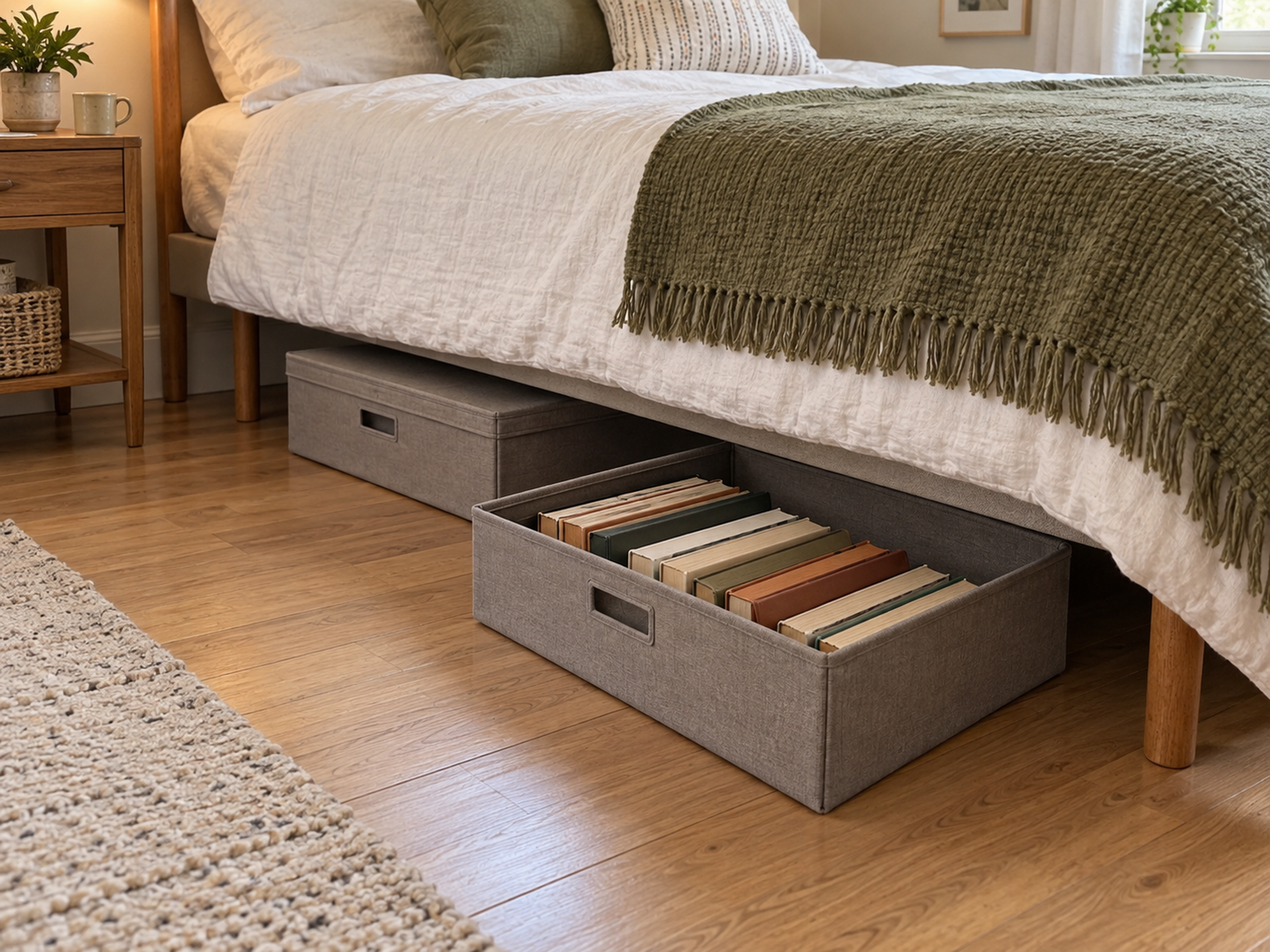
Under-bed storage can be a strong archive zone because it preserves wall and walking space. Current small-apartment users report keeping large book boxes under the bed when a proper bookcase is not available.
The trade is access. Low-frequency books fit this location better than current reads because a shallow bin or box still has to clear the bed frame, supports, rugs, other stored categories, and the user’s lifting or pulling path.
Keep the environment in the decision. Under-bed storage is not automatically harmful, but it should be dry, clean, away from known leaks, and practical to inspect. A low container does not compensate for a damp floor or recurring moisture problem.
Also keep the load manageable. No universal safe book-box weight was established in the research, so avoid creating one oversized container that is technically compact but too heavy to retrieve comfortably or safely.
Use / Skip
Under-Bed Archive Storage
Use
Use it for dry, low-frequency books with a manageable retrieval path
Under-bed storage can work well when the floor area is dry and clean, the books fit in shallow manageable containers, the bed frame does not block extraction, and the titles are used infrequently enough to tolerate hidden access.
Skip
Skip it when moisture, weight, or access makes the archive hard to use
Choose another zone when the floor has leak or dampness risk, the containers become too heavy to handle, the bed must be moved for retrieval, or the books are active reads that will disappear from use when hidden.
06
Treat Bookcases and Wall Shelves as Load Decisions
Going vertical can increase capacity per square foot, but wall area is not free storage when the category is books. Dense loads make shelf ratings, furniture stability, fasteners, wall material, and manufacturer instructions part of the space plan.
CPSC guidance says top-heavy furniture should be secured and users should follow manufacturer instructions. Current IKEA BILLY documentation provides a product-specific example: the referenced 31 1/2-inch-wide model lists a 66-pound maximum load per shelf and says the bookcase must be securely anchored.
Shorter furniture is not automatically exempt. A current lower BILLY model also carries a secure-anchoring warning, so renter logic should follow the actual furniture instructions rather than assuming a low unit can always remain unattached.
Wall-mounted shelves create the same renter boundary in another form. Do not recommend an adhesive shelf or generic no-drill solution for dense books without verified load, substrate, hardware, and lease compatibility.
07
Store Oversized and High Books Without Creating a New Hazard
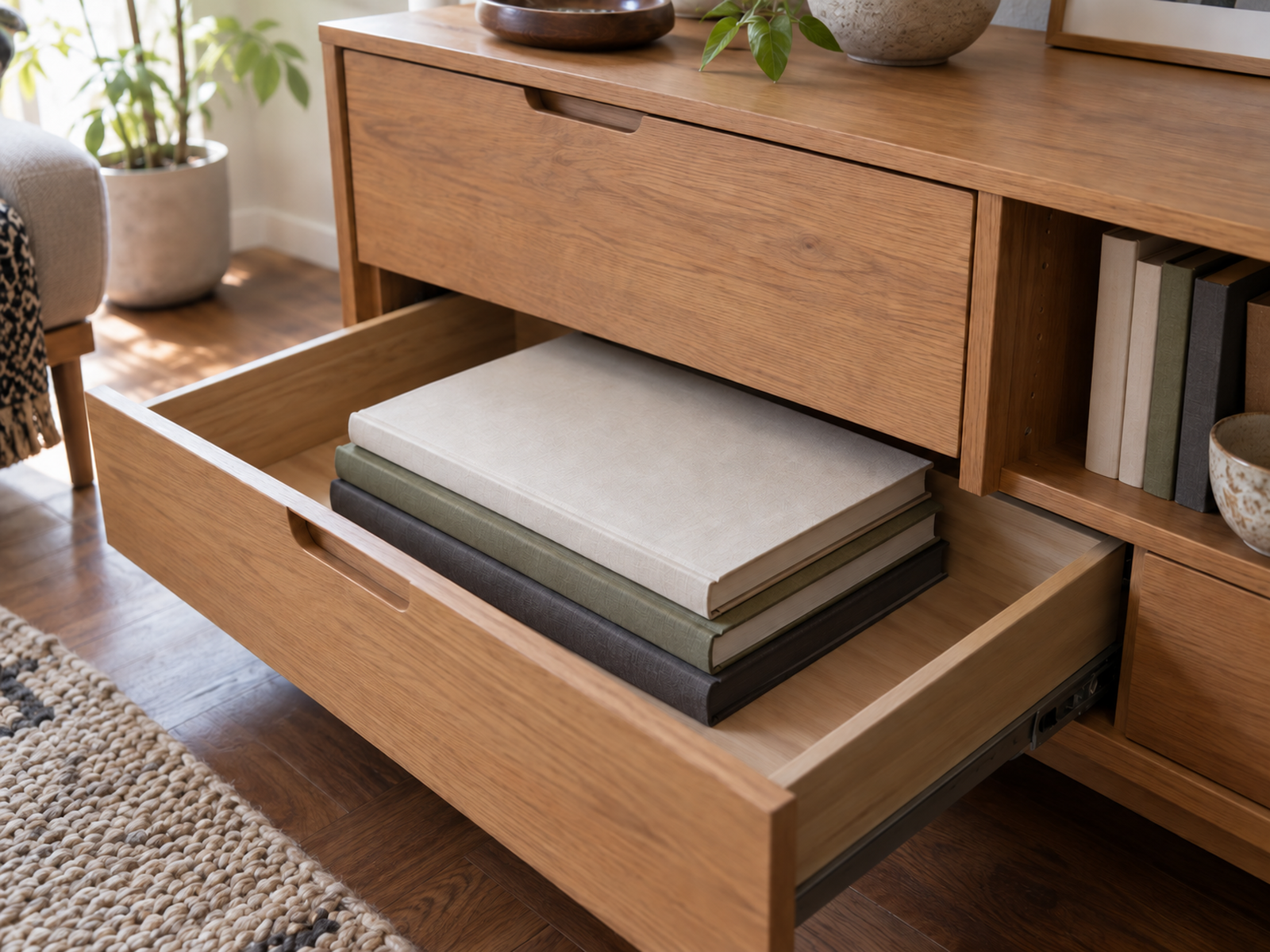
Large art books, atlases, and other oversized volumes may be better on a low shelf, in a deep drawer, or in a fully supported horizontal stack than forced upright into shelving that does not fit them.
Keep horizontal stacks modest enough to remain usable. The research did not establish a universal safe stack height, and a tall pile can become heavy to lift, awkward to search, and hard on the books at the bottom.
High perimeter shelving or the top of a wardrobe can look like free capacity, but book weight, anchoring, reach, and falling-object risk all increase. Do not normalize climbing on a chair to retrieve books or placing dense collections overhead without verified support.
Homes with children add another constraint. A current 2026 user specifically rejected a normal bookcase because toddlers climb, while CPSC furniture-tip-over guidance reinforces treating anchoring and stability as a first-stage decision rather than a finishing detail.
08
Set a Capacity Boundary Before the Collection Spills Onto the Floor
A storage system that is completely full on the day it is organized has already created its next overflow problem. Physical collections need either some deliberate growth capacity or a rule for what happens when the available safe storage is full.
That rule does not have to mean giving up physical books. It can mean borrowing new releases, using ebooks or audiobooks selectively, rotating visible favorites, selling or donating books that no longer earn space, or making future purchases more intentional.
Off-site storage is another branch, but not every cheap external space is appropriate. The Library of Congress advises against basements, attics, and garages for valued collections because environmental extremes and leak or flood risk can damage books; plastic bins do not correct a bad environment.
When safe hidden storage is full, visible space is full, and another bookcase would reduce circulation or require an installation the lease cannot support, the correct next step may be to stop adding storage furniture rather than keep compressing the apartment.
Closing Decision
Build a Collection System, Not a Second Furniture Problem
The strongest no-bookcase solution rarely puts every title in one place. It gives active books convenient access, protects the books that matter most, uses existing furniture and hidden space where the load and environment permit, and spends wall or floor area only when that intervention is justified.
When those safe zones are full, let capacity become part of collecting. A small apartment can support a serious physical library without turning every free wall, closet, and walkway into book storage.
RELATED GUIDES
What to Read Next
NEXT GUIDE
How to Store Household Backstock in a Small Apartment With No Storage Closet
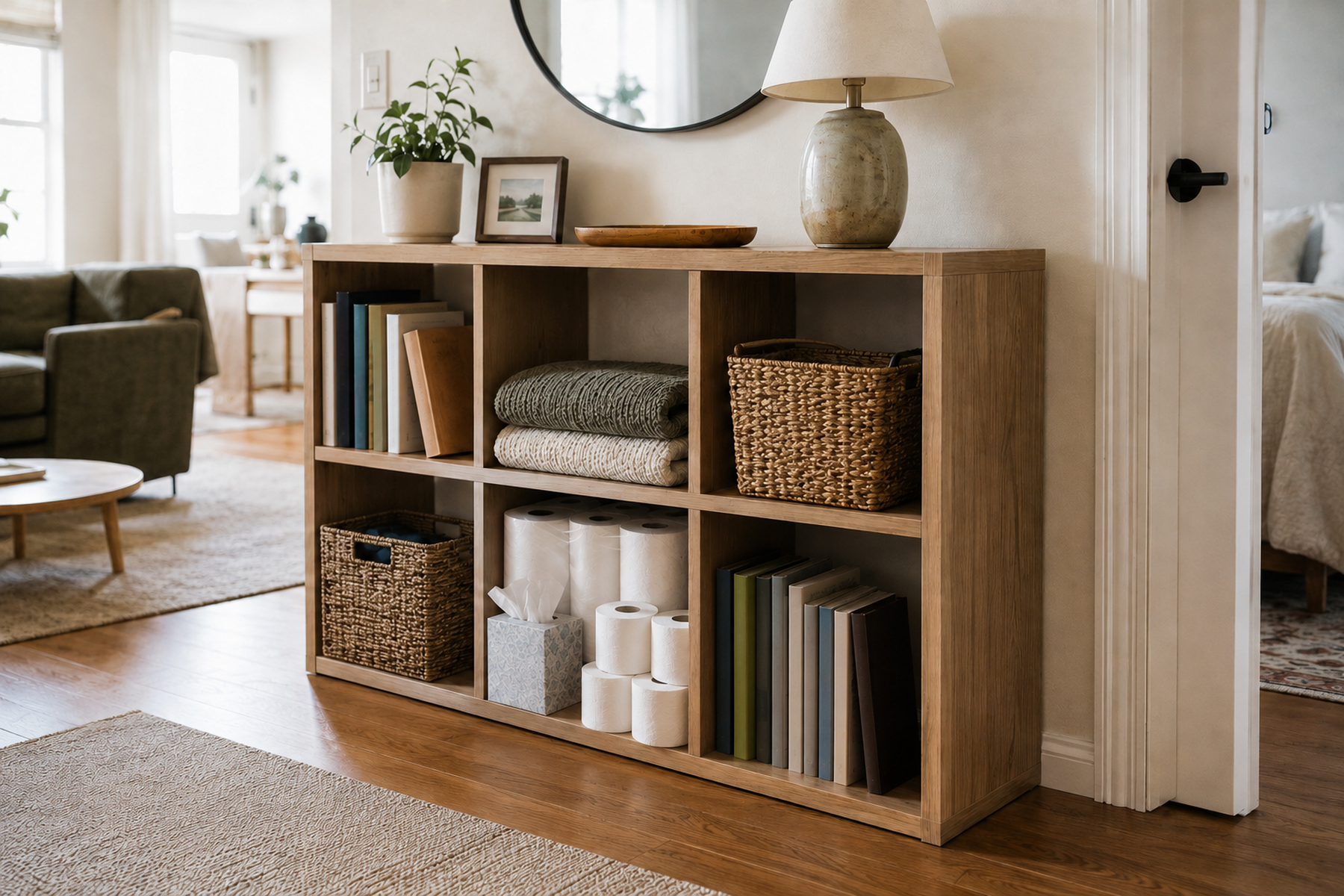
Use this next if the active-versus-archive split feels useful beyond books; that guide applies a similar current-use versus reserve-inventory logic to household supplies without giving every item prime access.
GUIDE
How to Store Towels and Bedding in a Small Apartment With No Linen Closet
Use this if books are competing with linens for under-bed or closed storage; that guide helps assign bulky soft goods to hidden zones without letting them consume every accessible cabinet.
GUIDE
How to Store Suitcases in a Small Apartment With No Storage Closet
Use this if low-frequency books are competing with luggage for the same under-bed, closet, or high-value hidden volume; that guide focuses on access frequency and bulky-object storage geometry.