
Small Apartment Storage Ideas
How to Make Under-Bed Storage Work When Your Bed Is Too Low
Under-bed space is only useful storage when a container clears the lowest part of the frame, can actually come out in the room you have, and is easy enough to reach for what you plan to keep there. Measure the retrieval path before buying bins—or raising the bed just to make them fit.
In This Guide
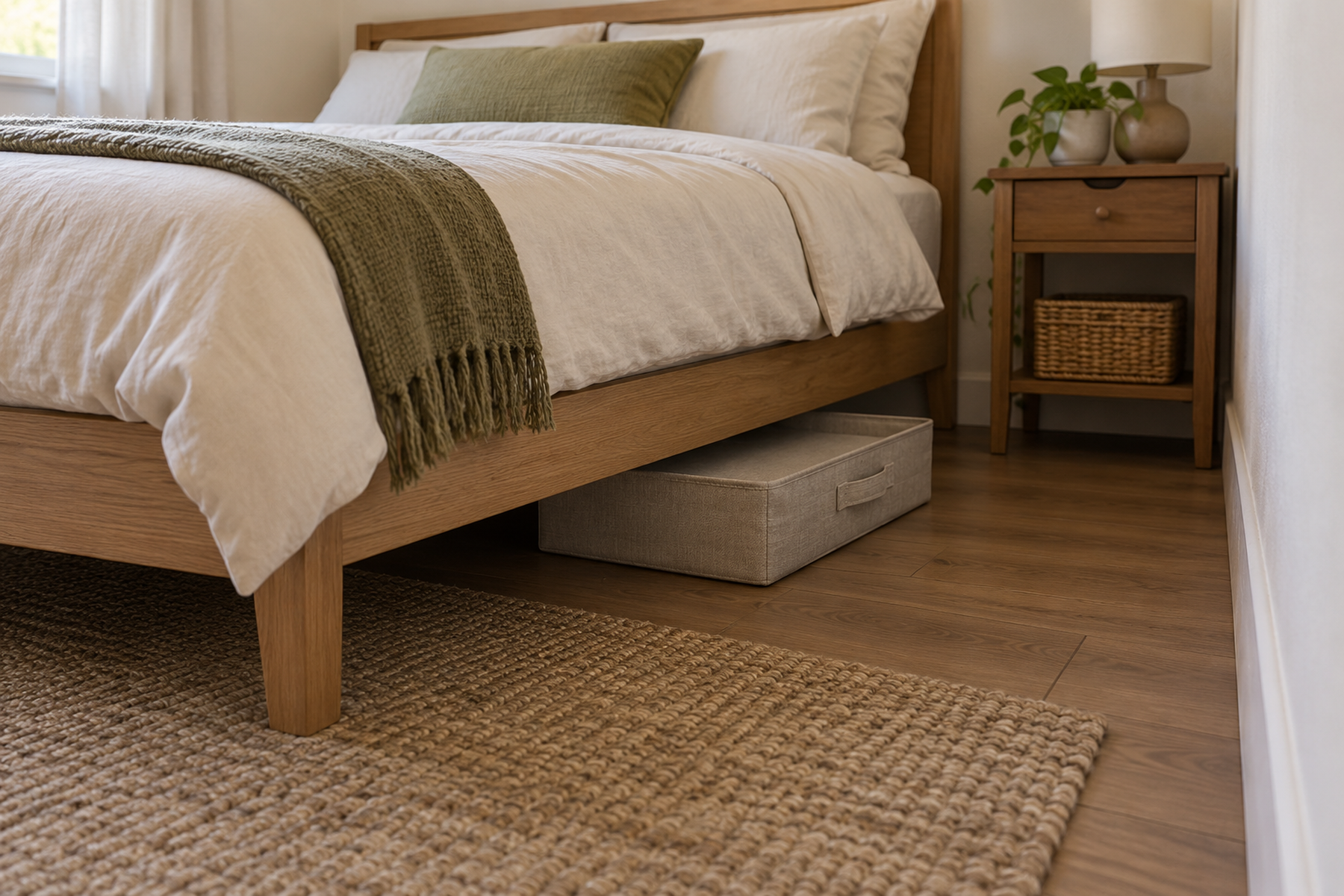
Under-bed storage is often described as free square footage. In a small bedroom, it is better understood as a storage system with three separate fit tests: vertical clearance, retrieval direction, and access frequency.
A container can pass one test and still fail the others. A soft case may fit under a low rail but be annoying for everyday clothes; a drawer may fit under the frame but have nowhere to extend; a lift-up bed may solve side clearance while adding more effort every time you need something.
Quick Answer
Test fit, retrieval, and frequency
Do not choose the container first. Check the bed and room first, then match the storage mechanism to what the space can actually support.
01
Find the lowest point
Measure from the floor to the lowest rail, beam, bracket, upholstered edge, caster, or other obstruction in the container path.
02
Map where it comes out
Check which side or foot of the bed is accessible and whether a bin or drawer can fully move into that floor area.
03
Match the access effort
Use easier retrieval for frequently needed categories and reserve higher-friction under-bed zones for lower-frequency items.
Measure / Check First
Before buying containers or changing the bed, check the geometry that controls whether the storage will work.
Measure the storage path, not just the visible gap
01
Lowest clearance
Measure floor to the lowest obstruction the container must pass beneath—not simply floor to the most open-looking side rail.
02
Usable footprint
Measure the width and depth between legs, center supports, hardware, and other frame elements that reduce the apparent storage area.
03
Pull-out room
Measure the open floor area in the direction the container, drawer, or bag must move, including nearby walls, nightstands, rugs, and other furniture.
Leave margin for real-world friction. External container dimensions, lids, wheels, handles, soft contents that bulge, rugs, and carpet can all reduce a fit that looked exact on paper.
01
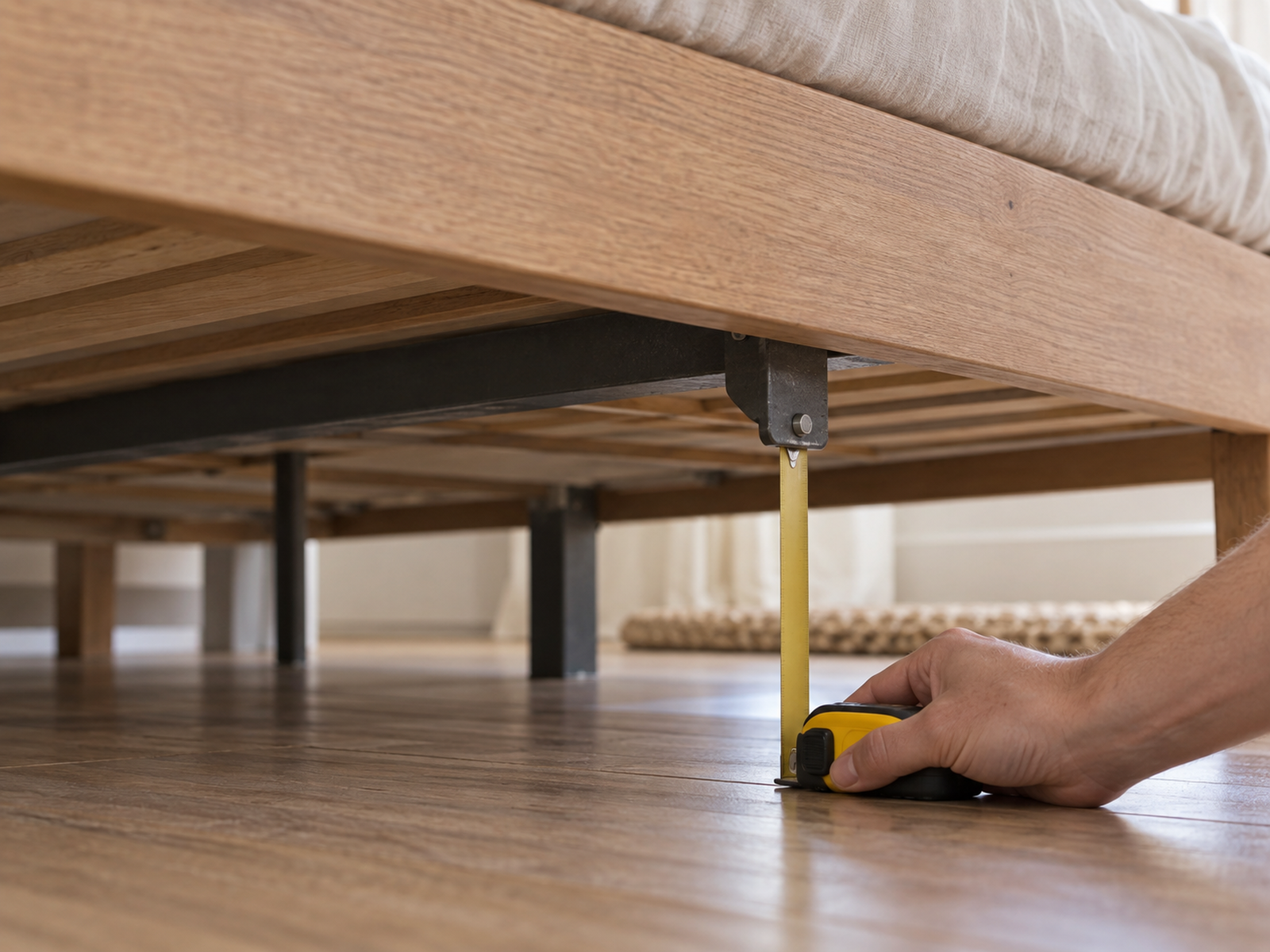
Measure the lowest usable clearance
The height that matters is the lowest point in the path the container must travel. A center beam or bracket can sit lower than the visible edge of the bed and catch a bin that appears to fit from the side.
Manufacturer dimensions show how little margin can exist in a specific pairing. IKEA currently lists 8 1/4 inches of height under the Queen MALM bed frame, while one current SKUBB under-bed storage case is 7 1/2 inches high. Those figures are a model-specific example, not a universal rule.
For rigid bins and rolling boxes, use external dimensions including lids, wheels, and handles. Internal capacity does not tell you whether the object can enter and leave the space.
02
Design the pull-out path
Decide where the storage can physically come out. A bed against a wall may leave only one usable side. A nightstand can block part of that side. A narrow room may make a full-depth drawer impossible to extend even when the drawer itself fits beneath the frame.
If both sides are tight, foot-access containers can be more workable for lower-frequency categories. But long containers become harder to retrieve when the items you want migrate toward the head end.
Floor surface matters too. Casters that roll easily on hard flooring may behave differently on a rug or thicker carpet. Treat the room and container as one mechanism rather than assuming “wheeled” automatically means easy access.
03
Match access effort to the contents
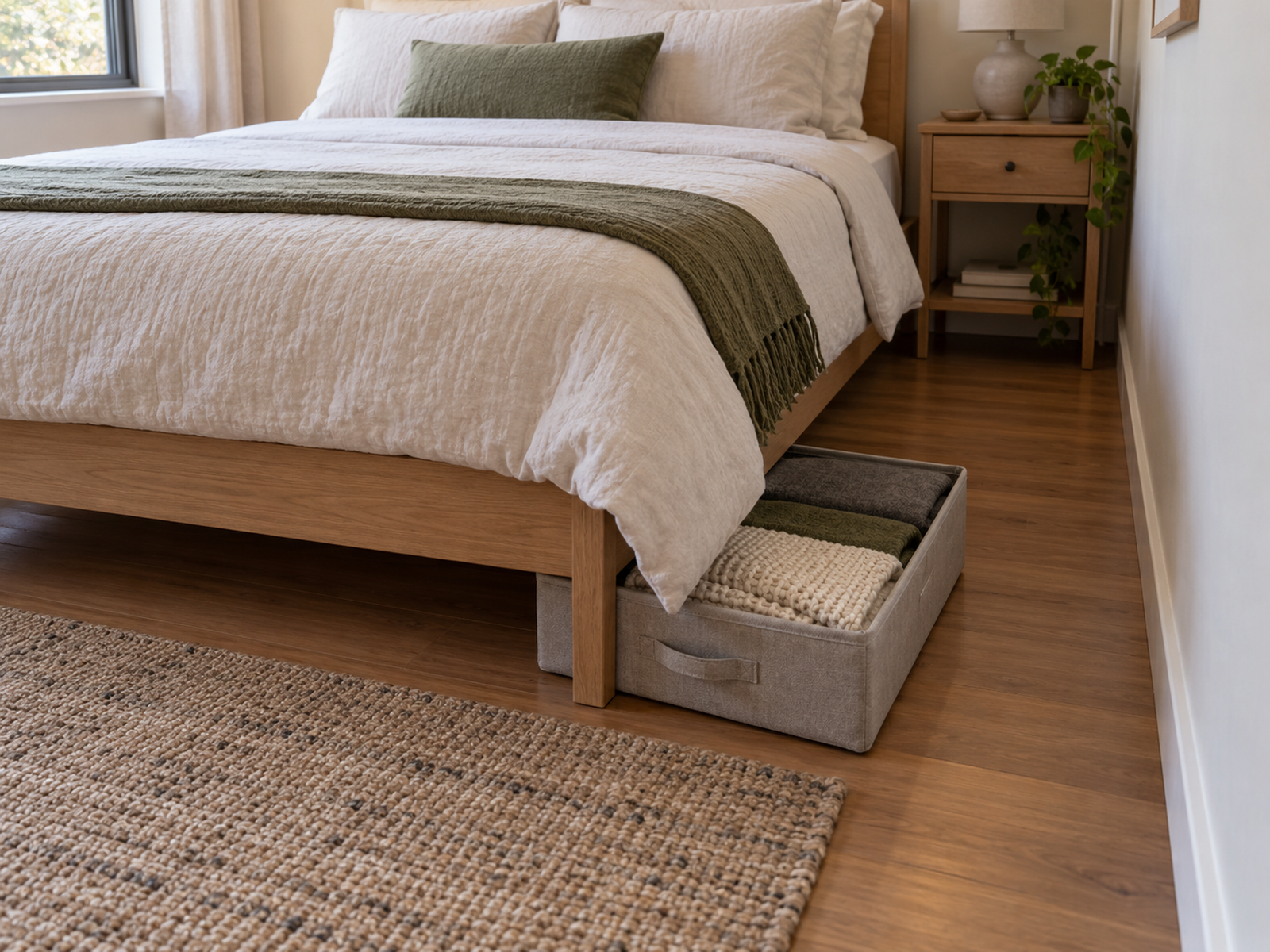
Retrieval frequency should decide what earns the easiest under-bed position. Weekly or frequently rotated items belong on the easiest side and in a mechanism that opens with little handling.
Seasonal bedding, off-season clothing, holiday textiles, luggage accessories, and occasional-use gear can tolerate more friction. They are better candidates for the far side, a zippered soft case, or another protected zone that does not need to behave like a dresser drawer.
Daily sweaters, underwear, pajamas, or work clothes are different. If getting one item means kneeling, pulling out a bag, unzipping it, repacking it, and pushing it back every day, the hidden capacity is costing too much effort.
04
Choose the container for the job
Low-profile soft cases suit tight clearance and compressible, lower-frequency textiles. Rigid low bins hold their shape for shoes or accessories but need enough clearance for lids and handles. Rolling boxes can make repeated access easier only when both the bed and the room provide a compatible retrieval path.
Do not assume a storage box designed for one higher or compatible bed frame will work under another. The useful comparison is mechanism and geometry, not the promise of “under-bed storage” on the label.
05
Choose the bed mechanism that fits the room
Sometimes the bed itself should become part of the storage decision.
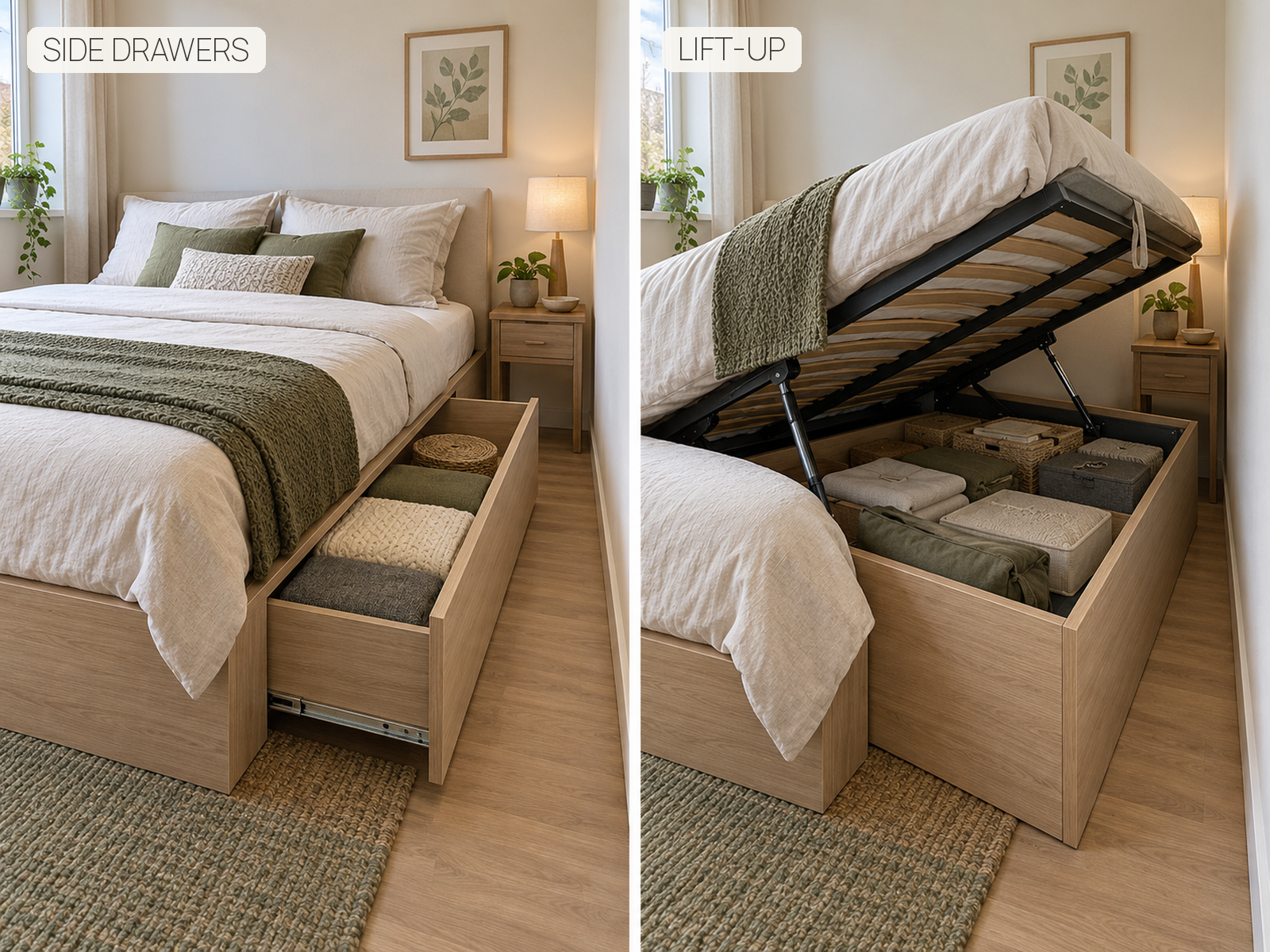
An integrated side-drawer bed can replace some dresser capacity and make frequent access easier, but each drawer still needs clear lateral floor space while open. That trade-off can fail in a narrow bedroom even though the storage is built into the bed.
A lift-up or ottoman-style storage bed solves a different constraint. It can expose a large storage cavity without requiring full drawer travel beside the bed, which makes it useful when side access is poor. The trade-off is retrieval effort: lifting the mattress/base is not automatically the best routine for daily clothing.
A higher open frame offers more container flexibility, but replacing a bed has cost, assembly, mattress-height, and room-height consequences. Change the frame when the storage gain solves a real recurring problem.
Use / Skip
Decide whether under-bed storage is the right zone
Use
When all three fit tests pass
Use the zone when the container clears the lowest frame point, the room provides a real retrieval direction, and the access effort matches how often you need the contents.
Skip
When the storage works only on paper
Skip it for that category when the bin barely clears, a drawer cannot extend, multiple containers must move first, or daily retrieval is awkward enough that the items will stop being easy to use.
What Not to Do
Do not create storage height by compromising the bed
- Do not stack improvised blocks or unsupported extensions under bed legs.
- Do not assume generic bed risers are compatible with every frame.
- Do not let containers displace or interfere with center supports, brackets, or other bed hardware.
- Do not treat a product’s maximum drawer load as an organization target.
- Do not buy a drawer or rolling box without checking the room needed to open or retrieve it.
If raising the bed is still attractive, verify the exact frame and riser compatibility, intended load, stability, and resulting bed height. There is no universal bed-riser recommendation.
06
Make the easiest side earn the easiest categories
Once the mechanism is chosen, zone the space by retrieval effort. Put weekly or monthly categories on the easiest side or nearest the foot. Push seasonal or rarely used categories toward the harder-to-reach zone.
Keep categories contained and labeled so the area does not become a miscellaneous archive. For textiles, use appropriate dust protection and keep them away from damp floor conditions.
The useful capacity is not the volume hidden beneath the mattress. It is the part of that volume you can fit, retrieve, and keep organized without making ordinary use of the bedroom harder.
RELATED GUIDES
What to Read Next
NEXT GUIDE
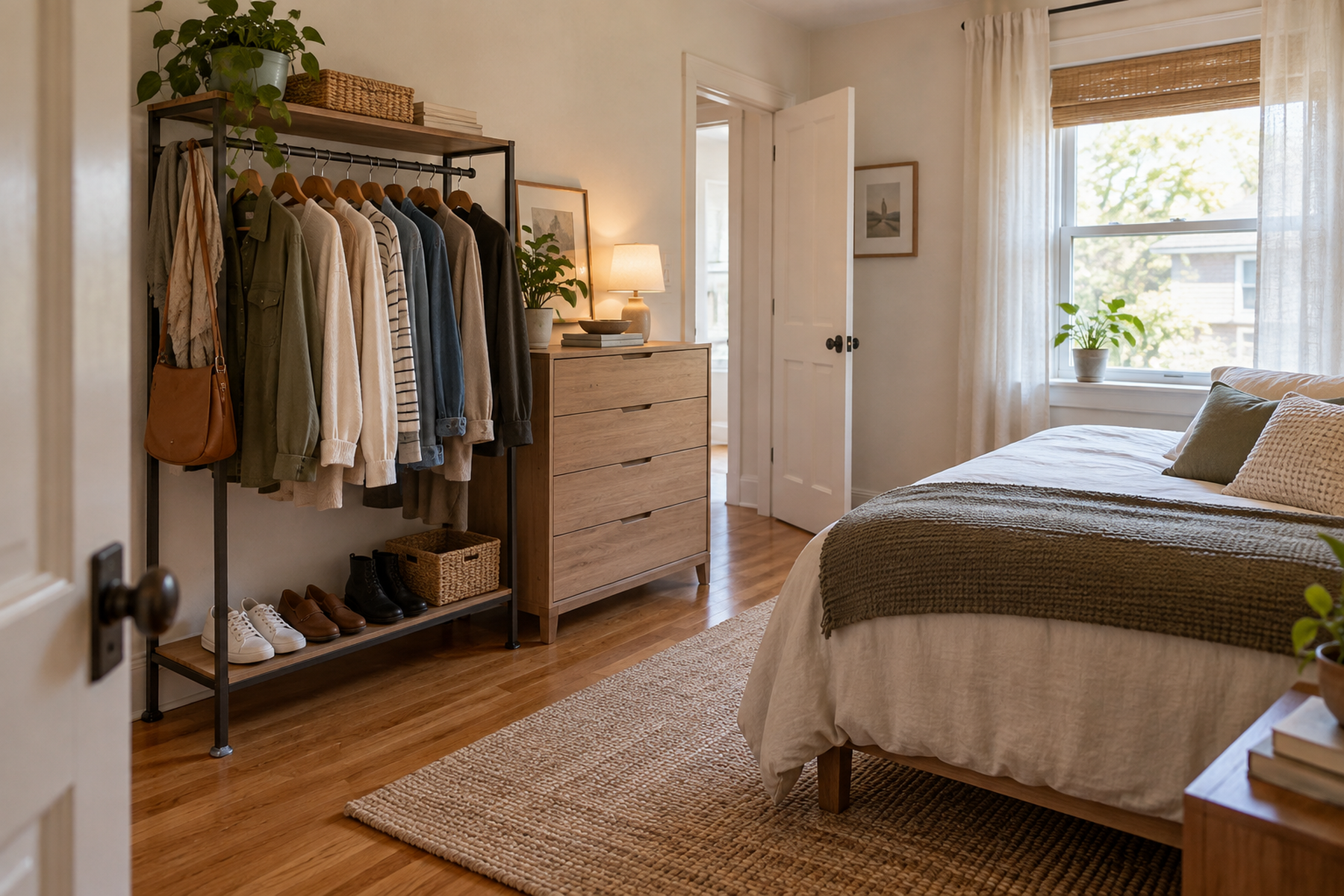
How to Store Clothes in a Small Bedroom With No Built-In Closet
Use this broader bedroom-storage plan when under-bed space cannot carry enough of the clothing load or frequent categories need a more accessible home.
GUIDE
How to Store Off-Season Clothes When Your Small Closet Has No Extra Space
This is a strong next step for lower-frequency clothing—the category most naturally suited to a higher-friction under-bed zone.
GUIDE
How to Store Suitcases in a Small Apartment With No Storage Closet
Read this when the bulky item competing for hidden storage is luggage and you need to decide whether under-bed space is actually a workable fit.