
Small Apartment Storage Ideas
How to Use a Water-Heater Closet for Storage Without Blocking Service or Airflow
Treat the water-heater closet as mechanical space first and storage space second. Identify the exact heater type and model, protect combustion or heat-pump airflow, valves, drains, controls, leak visibility, and service access, then use only the leftover space the equipment does not need.
In This Guide
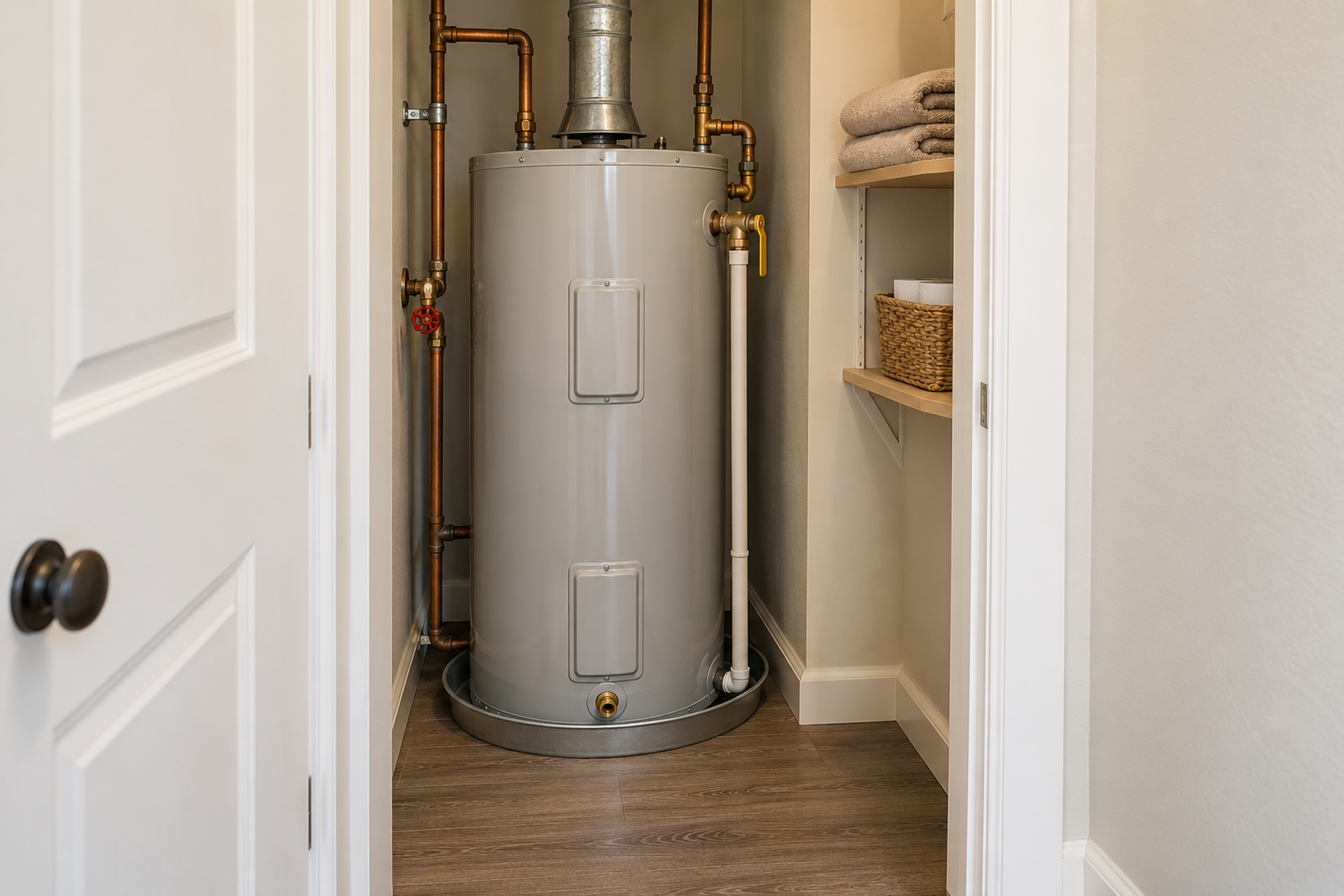
A water-heater closet can look half empty and still have very little true storage capacity. The open space beside or above the appliance may be needed for combustion air, venting, heat-pump intake or exhaust, controls, the temperature-and-pressure relief valve, drains, leak visibility, filters, condensate, or technician access.
The useful rule is simple: mechanical space first, storage second. Identify the equipment and its exact requirements, map the operating and service envelope, and treat only the space left outside that envelope as ordinary household storage.
Quick Answer
Protect the Equipment Zone Before You Store Anything
Do not plan a water-heater closet from the empty cubic volume you can see. Plan from the heater’s required air, safety, valve, drain, and service zones, then decide whether any meaningful storage space remains.
01
Identify the heater type and exact model first
Gas storage heaters, standard electric tanks, and integrated heat-pump water heaters can have very different airflow, venting, service, and clearance needs. Use the external label, manufacturer manual, or property maintenance to identify the equipment.
02
Keep every functional opening and service point visible
Do not cover or crowd combustion-air openings, louvers, transfer grilles, door undercuts, intake or exhaust, T&P-valve areas, drains, filters, controls, piping, shutoffs, or leak paths.
03
Accept zero storage when the equipment needs the space
A tiny mechanical closet may have no practical household-storage capacity after the actual equipment envelope is protected. That empty space is performing a building-service function rather than being wasted.
01
Identify the Water Heater Before You Plan Storage
Start with the brand, model number, fuel or energy type, and the manufacturer manual when it can be identified from the outside of the appliance.
A gas storage water heater, standard electric resistance tank, gas tankless unit, integrated heat-pump water heater, and split-system heat-pump water heater can all create different storage boundaries. Do not use one generic clearance rule for all of them.
If the equipment type is unclear, ask property maintenance or the landlord rather than opening service panels or guessing from the closet layout. Renters should not remove electrical covers, alter gas or plumbing components, or change venting simply to identify the equipment.
This first step determines every later storage decision. The empty space around the heater cannot be classified as usable until the heater’s own operating and service needs are known.
02
Map the Mechanical and Service Envelope
Use the exact manufacturer manual to mark the areas needed for front, side, and top clearance, service access, air intake or exhaust, controls, drains, valves, piping, and other model-specific components.
Include the temperature-and-pressure relief valve and discharge path, drain valve, drain pan or condensate drainage, control panels, filters, and any inspection points that should remain visible and reachable.
Service space can be larger than the minimum separation from nearby construction. A unit may physically fit close to a wall while still requiring much more open room for filter removal, controls, valve access, anode service, drain work, or technician access.
Also preserve leak visibility. Dense bins and stacked household goods should not hide water on the floor, corrosion, leaking fittings, condensate problems, or drain-pan overflow.
Measure / Check First
Before adding a shelf, bin, door organizer, curtain, screen, or stored category, map the complete appliance envelope.
Check the Air Path, Service Points, and Residual Storage Zone First
01
The exact equipment requirements
Record the heater type/model, published clearances, combustion or ventilation requirements, intake and exhaust paths, louver or door-opening requirements, and any manufacturer warnings about stored materials.
02
The valves, drains, filters, and controls
Locate the T&P valve and discharge pipe, drain valve, drain pan, condensate path, filters, control panels, shutoffs, piping, and any access panels that need to remain visible or reachable.
03
The genuine leftover storage volume
Only after those zones are marked should you measure a residual wall, shelf, or floor area for household storage. Confirm that stored items can stay there without being moved for normal inspection or routine service.
If you cannot explain why a gap is outside every required air, safety, service, and drainage zone, do not treat that gap as storage.
03
Keep Gas and Heat-Pump Air Paths Clear
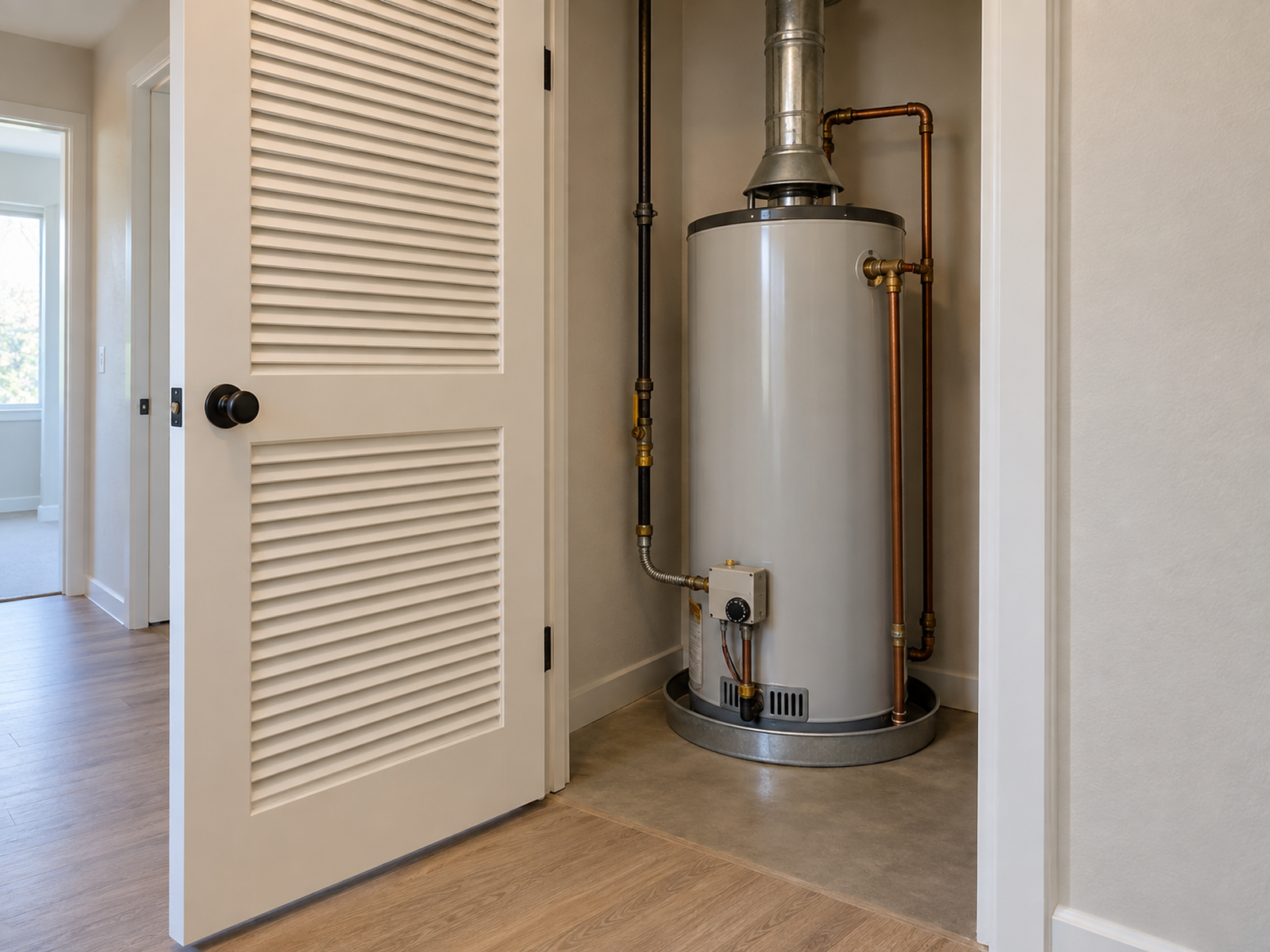
Gas-fired water heaters can depend on combustion air and venting arrangements that are specific to the heater and closet configuration.
Rheem’s current gas-water-heater guidance warns against storing gasoline, flammable vapors or liquids, and combustible-material accumulation near covered gas appliances. Do not use a gas-water-heater closet as the automatic home for solvents, paint products, flammable aerosols, oily rags, or similar maintenance supplies.
Integrated heat-pump water heaters create a different air problem. ENERGY STAR guidance notes that they need sufficient surrounding air or an engineered closet strategy such as louvers, transfer grilles, door undercuts, or ducting, subject to the exact manufacturer requirements.
Do not cover or load shelves against those openings. Towels, bins, organizers, curtains, or door-mounted storage should never be allowed to turn an intentional air path into a storage surface.
04
Keep Electric-Tank Service Areas Open Even Without Combustion Air
A standard electric storage water heater does not need burner combustion air, but that does not make every nearby gap available for storage.
A. O. Smith’s current residential electric guidance calls for adequate space around the heater for future maintenance and for the T&P relief-valve discharge piping.
Keep electrical control covers, piping, the T&P valve, discharge pipe, drain valve, shutoffs, drain pan, and the floor around the appliance accessible enough to inspect and service.
Avoid stacking dense storage directly around the tank simply because there is no flame. Electric equipment can still leak, need maintenance, and require safe access to electrical and plumbing components.
05
Use Only Verified Residual Storage Space
Residual storage is the space that remains after every equipment, air, valve, drain, and service zone has been excluded.
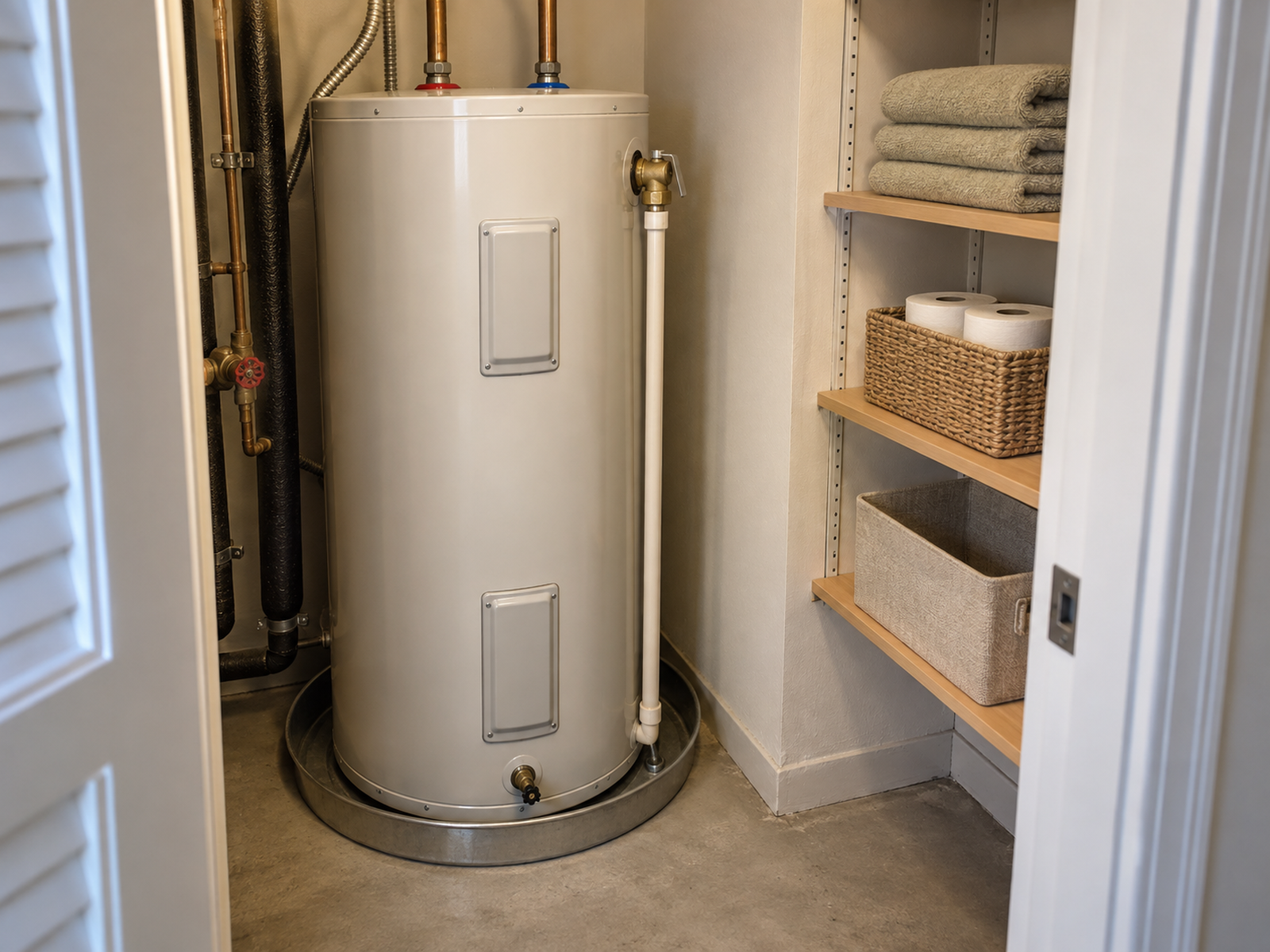
A shallow shelf on an unrelated wall, a light bin on an existing approved shelf, or a small hook outside the equipment envelope may be reasonable when the exact setup leaves that area genuinely unused by the heater.
Keep the stored categories simple and low-risk. Towels, paper goods, or lightweight household backstock may be more appropriate than chemicals, dense tool bins, or anything that hides leaks or must be removed before every service visit.
Do not use the top of the water heater as a shelf. Also avoid placing storage where it blocks labels, controls, drain paths, or the technician’s normal approach to the appliance.
Use / Skip
Ordinary Household Storage Inside the Water-Heater Closet
Use
Use it only in a verified residual zone
Household storage can be appropriate when the exact heater manual and property conditions leave a clearly separate zone outside all combustion, ventilation, intake/exhaust, valve, drain, filter, control, piping, leak-visibility, and service requirements.
Skip
Skip it when the closet is mechanically dense or any requirement is uncertain
Move towels, toiletries, cleaners, paper goods, pet supplies, or backstock elsewhere when storage would block equipment access, cover air openings, hide leaks, crowd valves or drains, interfere with service, or depend on a clearance assumption that has not been verified.
06
Treat Curtains, Screens, and New Shelves as Conditional—not Automatically Renter-Friendly
A curtain or screen may feel like a reversible way to hide an exposed water heater, but reversibility does not prove compatibility with the equipment.
Fabric can interfere with combustion air, heat-pump airflow, vents, controls, leak visibility, or service access. It may also be inappropriate around hot surfaces or gas-appliance zones depending on the exact installation.
A new shelf beside or above the heater has the same problem. It should only be considered after the model-specific top, side, air, venting, and service requirements are known.
In a rental, built-in enclosures, new cabinetry, altered louvers, changed ducting, moved piping, or permanent shelves around mechanical equipment belong to the property-owner and qualified-professional branch rather than renter DIY.
07
Move Towels, Cleaning Supplies, and Backstock Elsewhere When the Closet Is Too Constrained
The most efficient storage decision can be to stop asking the mechanical closet to carry household storage.
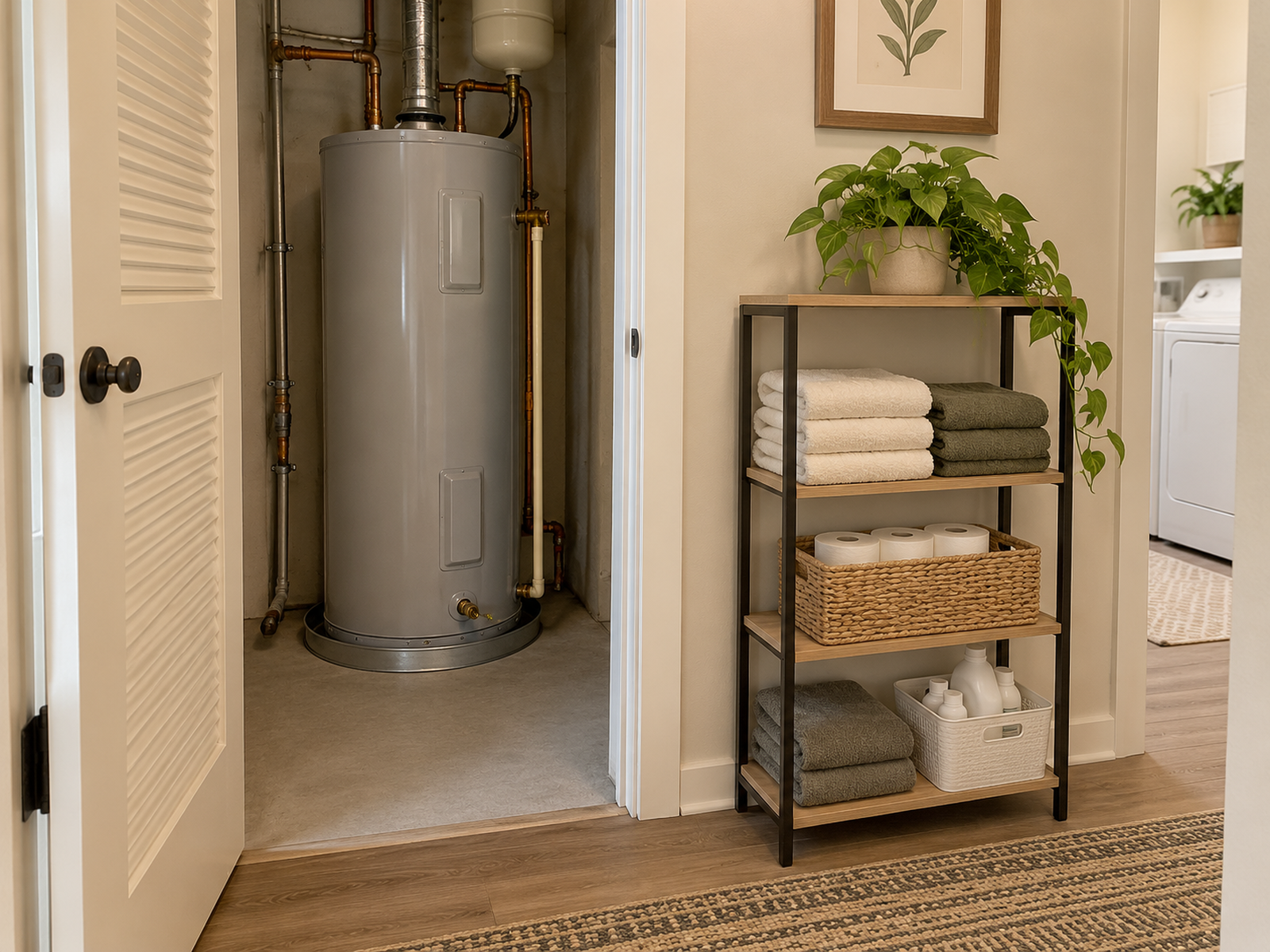
Move towels or toiletries to vanity, over-toilet, or bathroom-door storage when those zones can support them. Laundry products can move to shelving outside the mechanical envelope or to another laundry storage zone.
Cleaning tools and household backstock can move to a hall closet, bedroom closet, under-bed area, or another low-frequency zone when the apartment has no safe residual space around the heater.
This may increase retrieval distance, but it preserves appliance operation, inspection, leak visibility, and maintenance. In a small apartment, distributing storage can be better than filling one mechanical closet aggressively.
08
Leave the Closet Mostly Empty When the Equipment Needs the Volume
Some water-heater closets are simply too small or too mechanically active to serve as dual-purpose storage.
An integrated heat-pump water heater may need the closet’s air volume. A gas unit may need combustion or venting conditions. Any heater may need controls, valves, drains, filters, piping, and service space that consume the apparent leftover volume.
Do not interpret that as failed organization. The closet is successfully doing its primary job when the equipment can operate, be inspected, reveal leaks, and be serviced without household goods in the way.
If the exact equipment envelope leaves no verified residual zone, the correct storage capacity for the mechanical closet is zero.
Closing Decision
Let the Mechanical Envelope Define the Storage Capacity
A water-heater closet is not an ordinary closet with an appliance occupying one corner. The heater type, combustion or airflow needs, vents, valves, drains, filters, controls, leak visibility, and service paths define the real usable space.
Identify the exact equipment first, use only storage zones that remain clearly outside those requirements, and move household goods elsewhere when the residual capacity is small or uncertain. Empty mechanical space is functional space.
RELATED GUIDES
What to Read Next
NEXT GUIDE
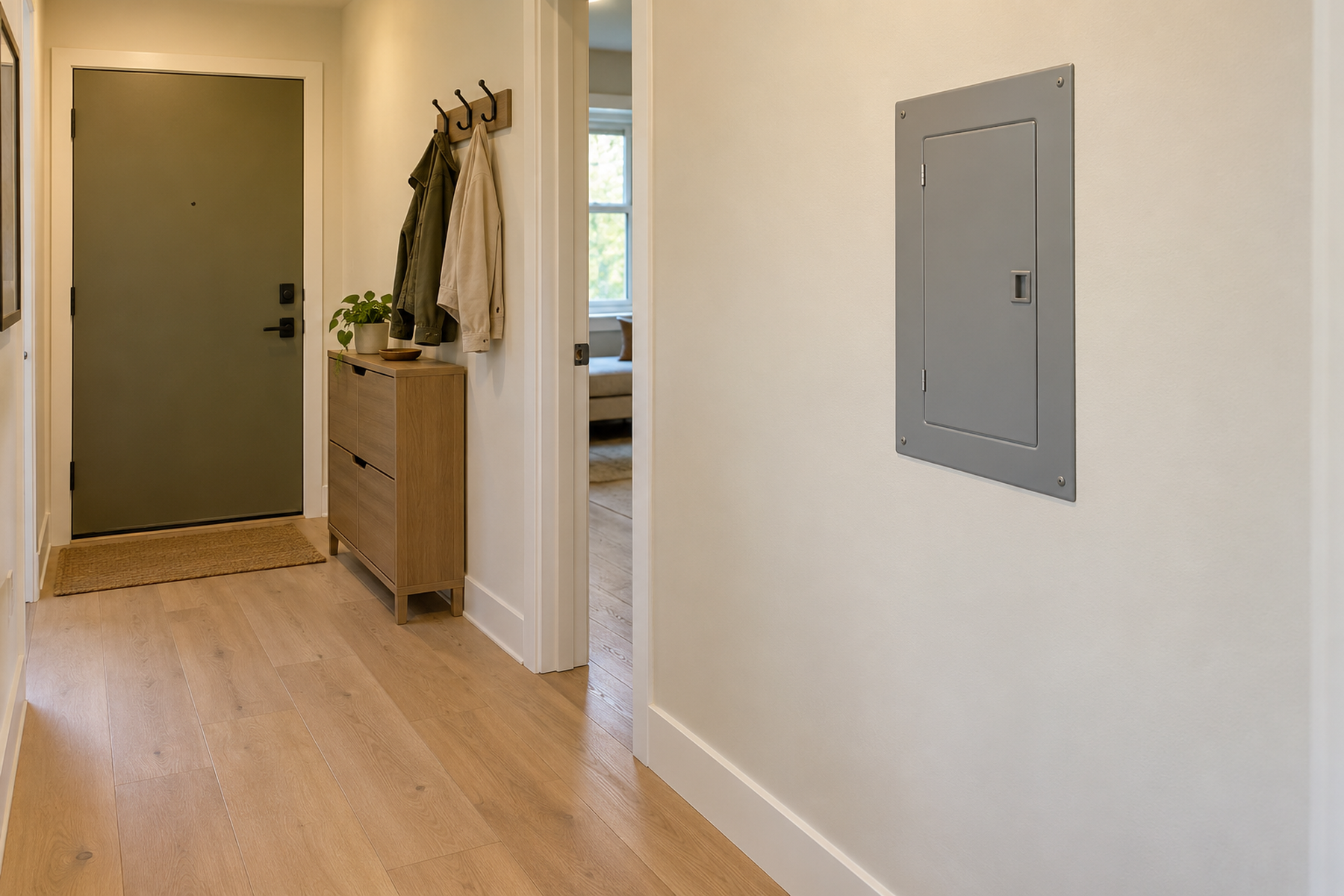
How to Organize Around an Electrical Panel Without Blocking Access
Use this next if the apartment has another fixed service zone that looks like available wall or floor space but must remain accessible for building systems.
GUIDE
How to Store a Broom, Mop, and Vacuum in a Small Apartment With No Utility Closet
Use this if cleaning tools and supplies need a new home because the water-heater closet cannot safely serve as general utility storage.
GUIDE
How to Store Laundry Supplies in a Small Closet With a Stacked Washer and Dryer
Use this if the water heater shares a laundry zone and the remaining non-mechanical storage needs to be organized around stacked laundry equipment.