
Small Apartment Storage Ideas
How to Dry and Store Wet Umbrellas in a Small Apartment With No Entryway
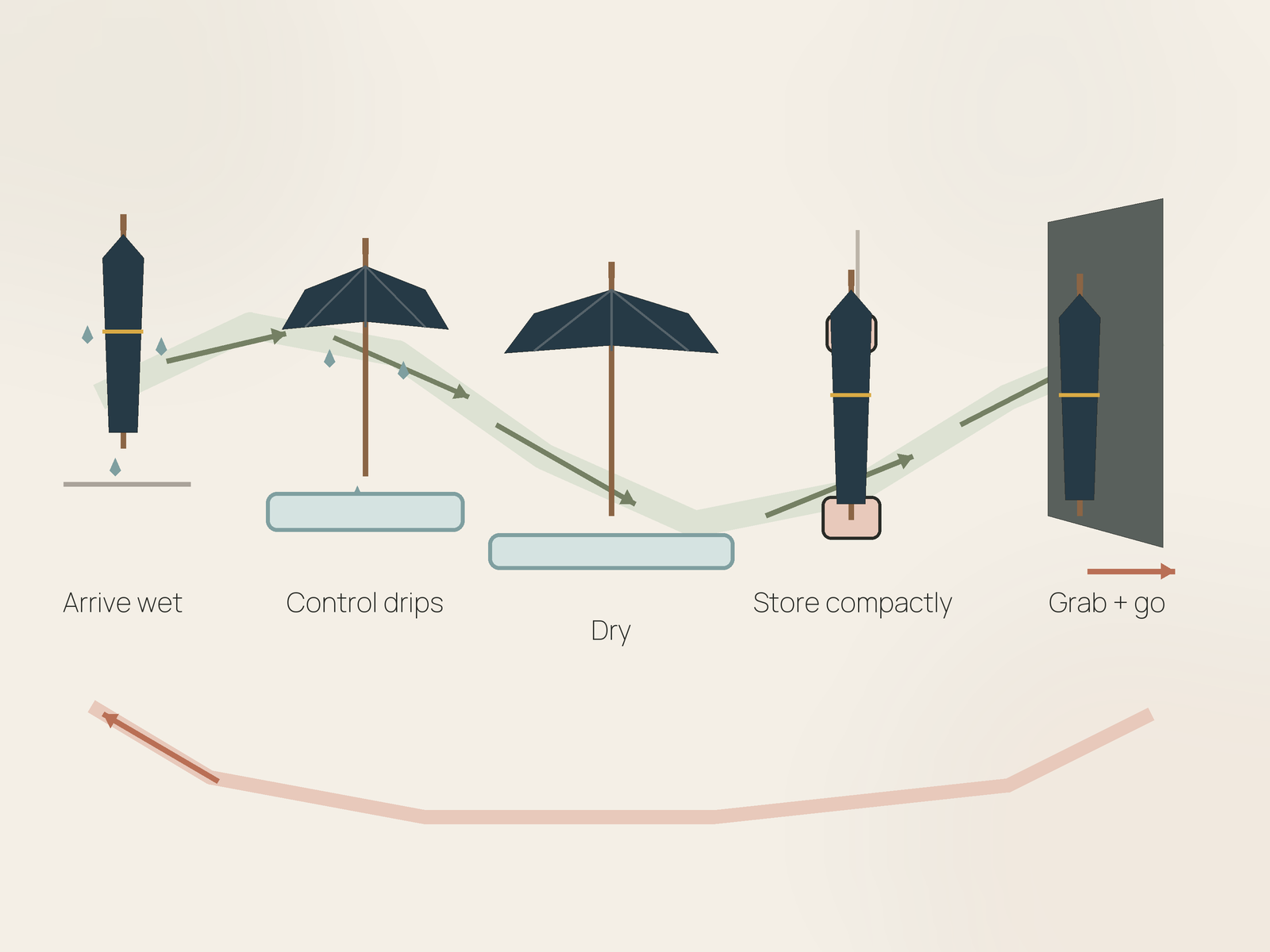
Give the umbrella a temporary wet-state home first, then move it to a smaller dry-state home after it has dried. That lets a small apartment control drips without paying for a permanent umbrella-stand footprint every day.
In This Guide
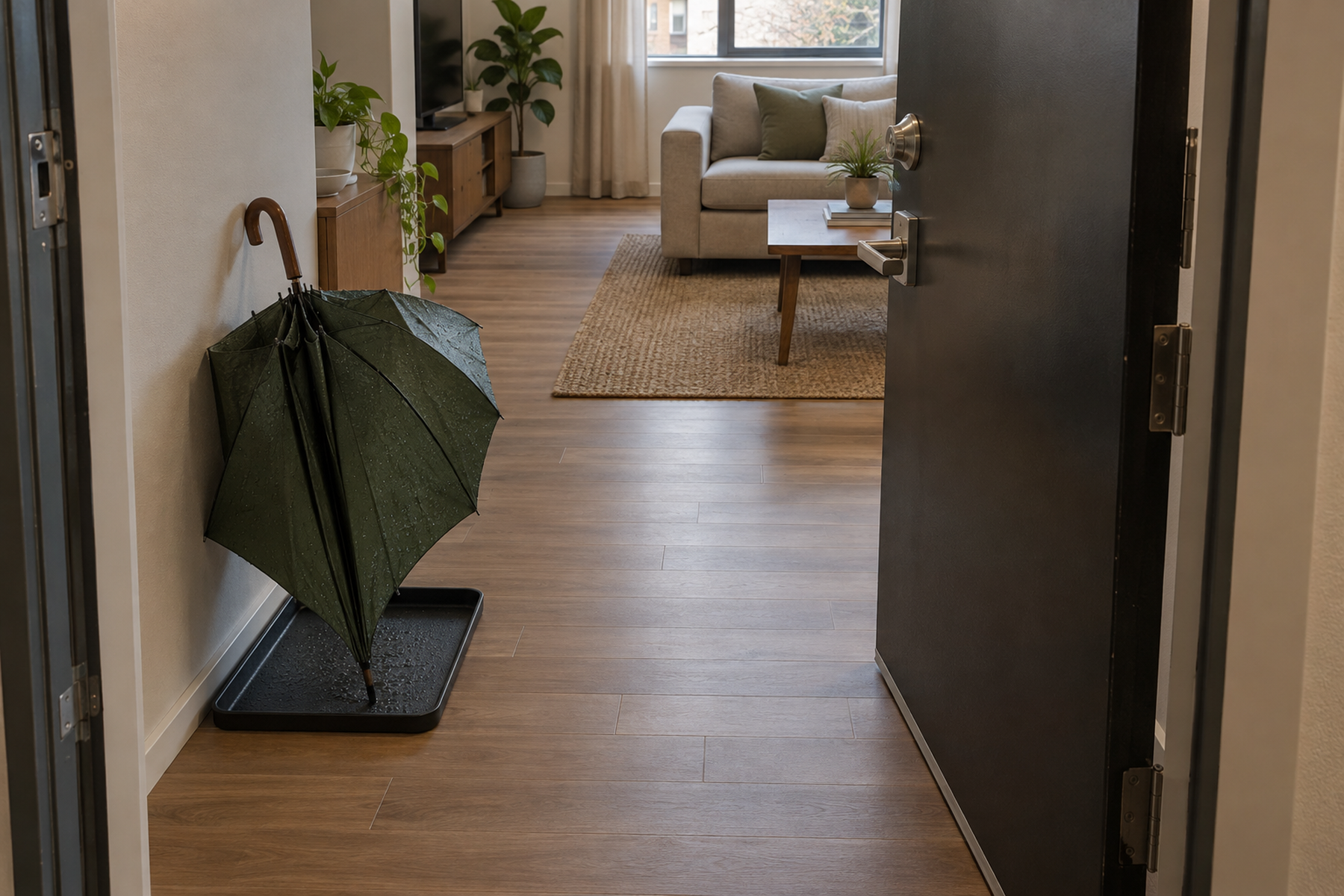
A wet umbrella needs more room than a dry umbrella, and that difference is exactly what makes the category awkward in a small apartment. The canopy may need temporary space to drip and dry even though the umbrella can later live in a much narrower vertical or folded storage zone.
Instead of choosing one permanent holder to solve every state, design the reset in sequence: control drips at arrival, let the umbrella dry according to its care guidance, then move it into compact dry storage that survives the front-door swing and does not permanently consume scarce floor space.
Quick Answer
Give the Umbrella a Wet Home First, Then a Smaller Dry Home
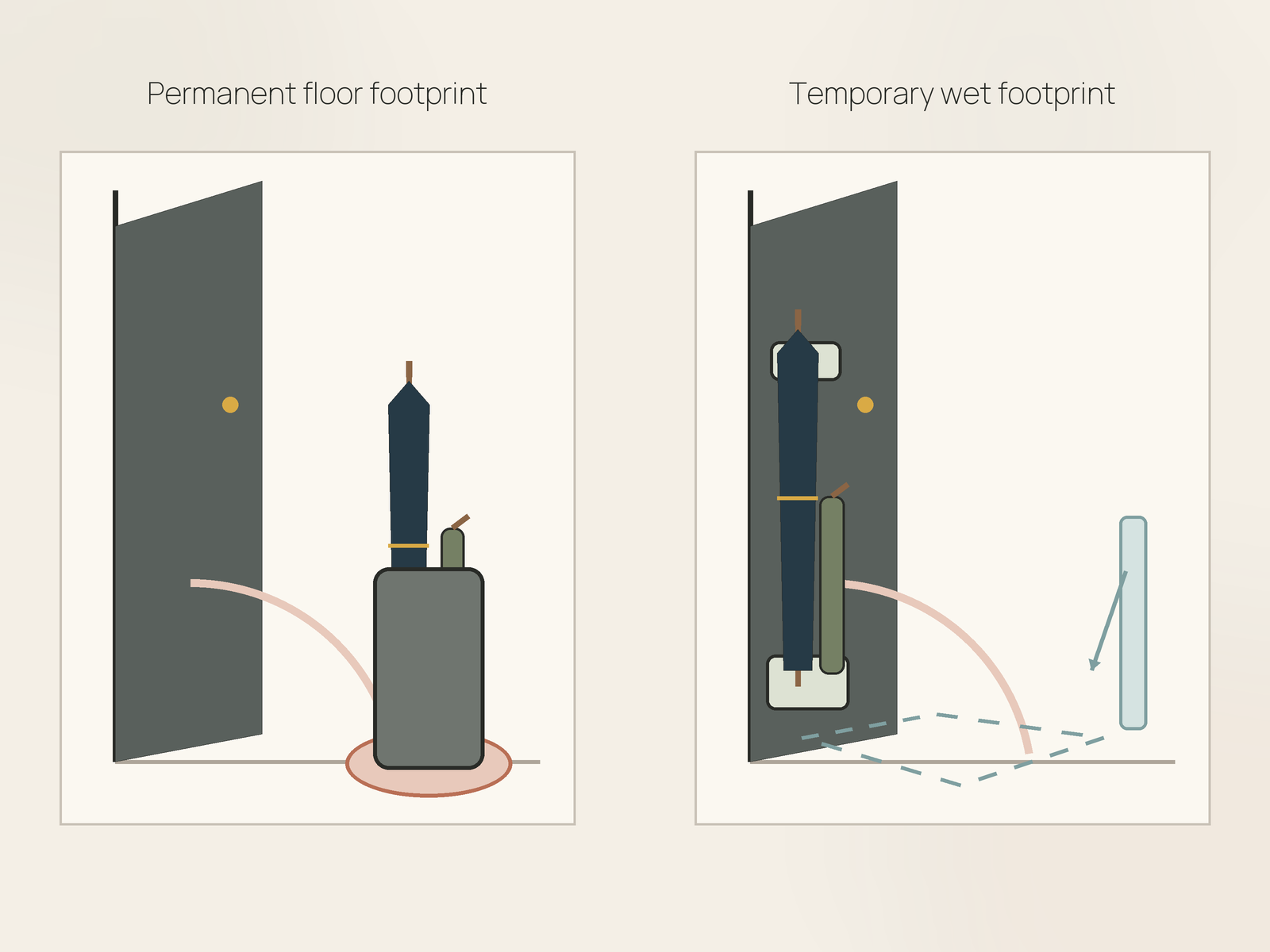
Treat the larger drying footprint as temporary. The permanent storage zone only needs to fit the dry umbrellas the household actually uses and keep them easy to grab without interfering with the door.
01
Create a temporary drip-and-dry zone
Use a stable washable tray, mat, or other protected in-apartment surface where the wet umbrella can drain and dry without blocking the door or main walking line.
02
Move the umbrella after it is dry
Manufacturer care guidance supports drying umbrellas before prolonged closed storage. Once dry, a long umbrella can move to vertical storage and a folding umbrella can use a much smaller hook, pocket, or tray.
03
Make the door swing the fit test
A stand, magnetic holder, or hanging umbrella only earns the entry zone if the door opens normally, handles do not strike the wall, and the resident can enter while carrying bags without moving the storage.
01
Treat Wet and Dry Umbrellas as Two Storage States
The wet umbrella and the dry umbrella are different organization problems. Immediately after rain, the umbrella needs drip control and drying space. Later, it needs compact storage and easy departure access.
Fox Umbrellas advises leaving an umbrella open to dry whenever possible and warns against leaving it wet and creased. Hogo Umbrella likewise advises letting the umbrella dry open completely and not storing it in a wet bag. Those are manufacturer-care principles, not a universal drying-time rule.
That distinction makes a two-location system reasonable rather than inefficient. A temporary tray near the door or a bathroom drying zone can handle the wet state, while a magnetic door holder, closet hook, or small dry-storage pocket handles the rest of the time.
Do not ask a sleeve, closed stand, or narrow hook to replace the drying step simply because it contains the umbrella neatly. Containment controls where water goes; it does not prove the canopy is ready for longer closed storage.
02
Test the Entry With the Door Fully Open
The front door is a moving surface, not a blank wall. Test the storage zone with the door fully open, partly open, and while someone is entering with the umbrella in one hand and a bag or groceries in the other.
A narrow stand can still fail if the door hits its rim, umbrella handles strike the wall, or the resident has to sidestep around it. A magnetic holder can fail for the same reason when long handles project into the wall or the stored umbrellas make the door awkward to operate.
Also trace the wet transfer. The umbrella should move from the doorway to the temporary drip zone without crossing the main living room or leaving a water trail through the apartment.
If the only spot near the door works when the apartment is empty but not during real arrival, it is not usable entryway capacity. Move the wet state somewhere else rather than turning the door swing into a daily negotiation.
Measure / Check First
Before buying a stand or mounting anything on the front door, test the wet footprint, the moving doorway, and the final dry-storage location together.
Check Door Swing, Drip Control, and Dry-Storage Fit First
01
Full door and arrival path
Open the front door through its normal range and simulate entering with the umbrella and a bag. Confirm that the wet zone, stand, holder, and umbrella handles stay outside the door swing and main walking line.
02
Temporary drip-and-dry footprint
Measure the tray, mat, or open umbrella state you plan to use after rain. Make sure water stays on a washable protected surface and that the temporary footprint can disappear after drying.
03
Dry-storage compatibility
For magnetic, adhesive, over-door, or fixed storage, verify the exact door or wall surface, total umbrella load, projection, removal or mounting instructions, and lease conditions before treating the location as renter-friendly.
If the wet zone blocks arrival, the tray cannot contain routine drips, the door hits the storage, or the dry holder depends on an unverified surface or load, change the location before adding hardware.
03
Use a Temporary Protected Floor Zone When the Entry Can Spare It
A washable mat, boot tray, or shallow waterproof tray can be one of the most space-efficient wet-state solutions because it needs to exist only during rain. After the umbrella dries, the tray can be wiped and stored or returned to another job.
The footprint should stay outside the door swing and the main walking line. The tray also needs enough stability that an umbrella tip or handle does not push it across smooth flooring.
This is a strong place to spend temporary space because the cost disappears after the reset. A small apartment may tolerate a larger drying footprint for a short period far more easily than a freestanding umbrella stand occupying the same area every dry day.
The tray still needs maintenance. Wipe or empty collected water before it spreads beyond the edge, and choose a form that is easy to clean rather than treating water capture as a finished storage system.
04
Use the Tub or Shower When the Entry Has Zero Wet-State Capacity
If the door opens directly into a narrow living area and there is no safe temporary floor zone, the bathtub or shower can act as an overflow drying location. It contains water without asking the entrance to support a permanent stand.
The trade is the carry path. Bring the umbrella through the apartment carefully enough that the trip to the bathroom does not create the drip trail the system was meant to avoid.
This fallback also adds a second reset. The umbrella needs to leave the bathroom after drying and return to its dry home near the departure route, otherwise the household will either forget it or start storing it permanently in the tub.
Use this branch only when the bathroom can temporarily spare the space and the umbrella can be placed without scratching surfaces, blocking the shower, or interfering with another immediate use.
05
Use a Slim Umbrella Stand Only When the Permanent Footprint Is Worth It
A slim stand can be the simplest single-location answer when the apartment genuinely has a narrow floor strip beside the door and the household uses several long umbrellas often enough to justify permanent capacity.
Current products show how the form separates support from water capture. IKEA’s NIPÅSEN stand uses a high-edged bottom tray to catch raindrops, while Yamazaki’s Tower Slim Umbrella Stand is listed at about 12 centimeters deep and includes a removable water tray. Those dimensions and features are product-specific.
A tray solves drip location, not canopy drying. Do not interpret a water-catching base as proof that a tightly closed wet umbrella should remain there indefinitely.
Size the stand to the actual household rather than the largest model that fits. A two-person apartment rarely gains anything by devoting entryway floor area to capacity for eight umbrellas.
06
Use Magnetic Front-Door Storage for Dry Umbrellas When It Fits
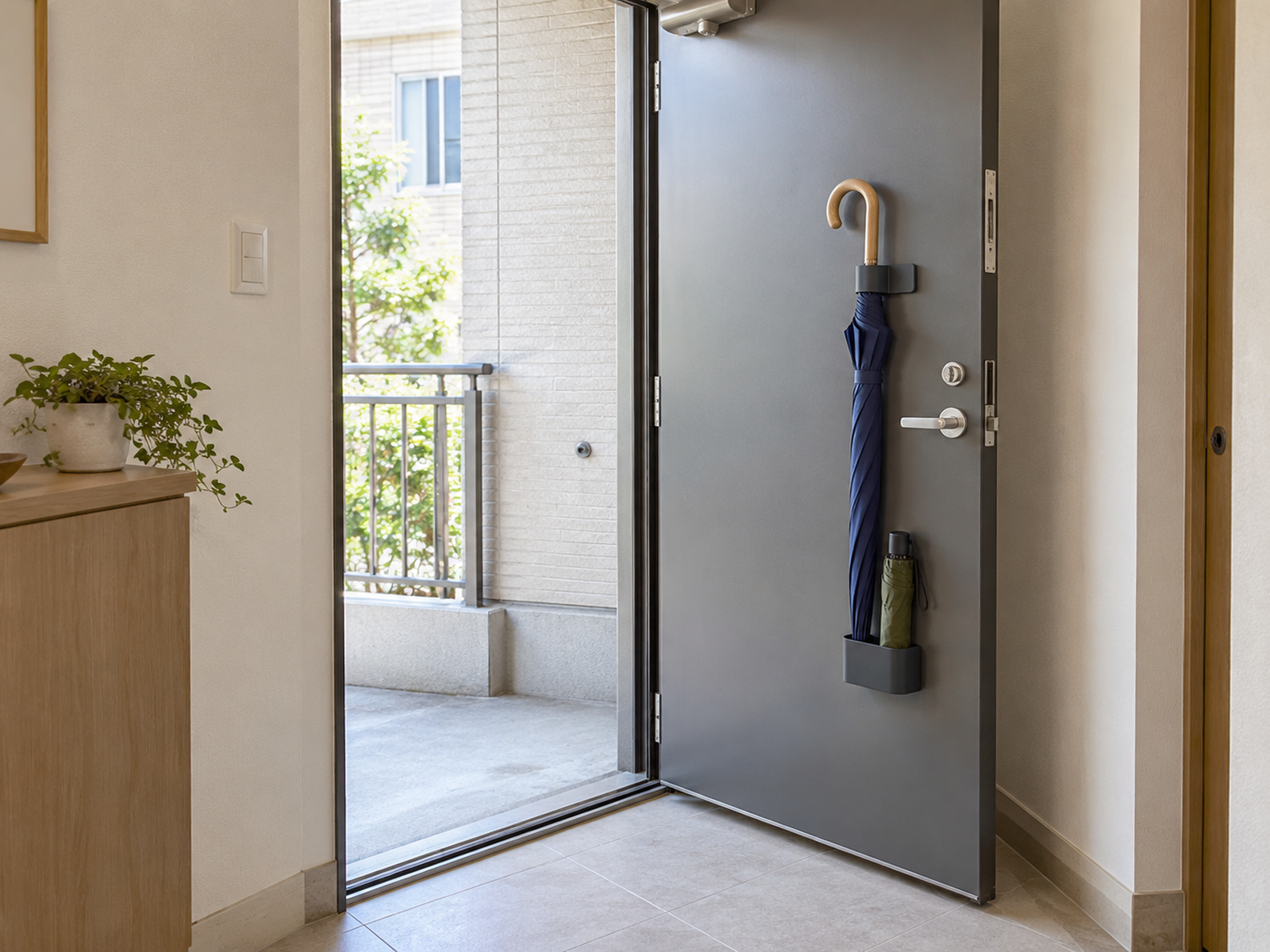
A compatible steel or magnetic entrance door can become unusually valuable storage real estate because it uses no floor area and requires no drilling. This is especially strong for the dry state after the umbrella has completed its drip-and-dry cycle.
Yamazaki’s current Smart Magnet Umbrella Stand is one verified product form that mounts to a front door and publishes a 2-kilogram load capacity. Its Tower Magnet Umbrella Stand likewise describes use on magnetic surfaces such as iron apartment entrance doors.
Do not assume every apartment door is magnetic or that a holder rated for one product class suits every umbrella load. Test the actual door surface, follow the exact holder rating, and include the umbrella weight rather than checking the empty mount.
Then test the moving geometry. Open the door fully and confirm that umbrella handles, tips, and the holder itself do not strike the wall, trim, latch area, or resident. Magnetic storage is low-intervention only when the door still works like a door.
07
Give Folding Umbrellas a Smaller Dry Home Than Long Umbrellas
Long and folding umbrellas do not need the same permanent storage geometry. A long umbrella benefits from vertical support and tip control, while a dry folding umbrella can often move to a much smaller hook, pocket, tray, or basket near the departure point.
The small dry home should not become the wet home by accident. Hogo’s care guidance specifically warns against storing an umbrella in a wet bag, so a sleeve or compact pocket belongs after drying rather than immediately after arrival.
This is where the two-stage system saves real space. A folding umbrella can temporarily open or loosen in the wet zone, then collapse into a footprint far smaller than any freestanding umbrella stand once dry.
Keep the dry location easy to remember. A compact umbrella buried in a deep closet may save the entryway visually but fail the next rainy morning when the resident cannot find it quickly.
08
Size Permanent Storage to the Umbrellas You Actually Use
Before adding a stand, magnetic holder, over-door rack, or adhesive hook, count the umbrellas that actually deserve near-door access. Broken umbrellas, duplicates, and rarely used promotional umbrellas can make the storage problem look larger than it is.
The dry inventory sets the permanent-capacity requirement. The wet footprint can be larger for a short period after rain without forcing the apartment to buy furniture sized to that temporary state.
Adhesive or over-door storage can be reasonable when the exact surface, load, door clearance, removal method, and lease conditions support it, but it should remain a dry-state branch unless drip handling is separately solved.
The final system should reset completely after rain: water is contained, the umbrella dries according to its care needs, the temporary wet zone disappears, and the dry umbrella returns to a compact location that is ready for the next departure.
Closing Decision
Let the Wet Footprint Be Temporary and the Dry Footprint Stay Small
A no-entryway apartment does not need to permanently display the amount of space a wet umbrella needs for drying. Use a temporary protected zone for arrival and drip control, then move the umbrella into a smaller dry home after the canopy has dried.
That dry home might be a slim stand, a verified magnetic front-door holder, a hook for a folding umbrella, or a nearby closet position. The right choice is the one that survives the moving door, keeps shared circulation clear, respects the rental, and stores only the umbrellas the household actually uses.
RELATED GUIDES
What to Read Next
NEXT GUIDE
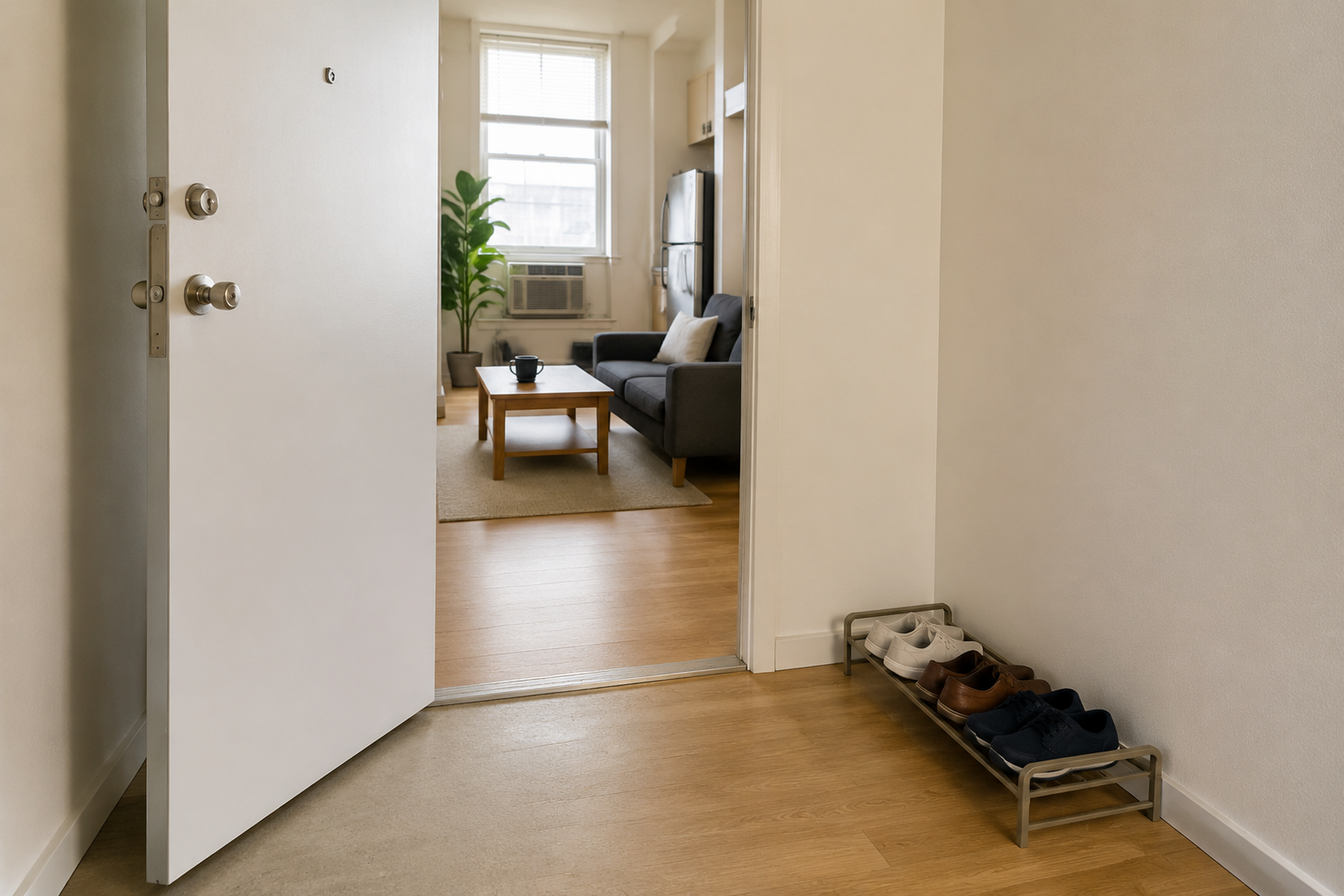
How to Create Entryway Storage When Your Apartment Has No Entryway
Use this next if the umbrella is only one part of the arrival-zone problem and shoes, bags, outerwear, keys, and the front-door swing still need a compact daily system.
GUIDE
How to Dry Clothes Indoors in a Small Apartment With No Dryer
Use this if wet umbrellas are part of a broader indoor-drying problem; that guide handles larger temporary drying footprints, airflow, and renter-friendly room placement.
GUIDE
How to Store a Bike in a Small Apartment With No Bike Room
Use this if another arrival-zone item is competing with the same doorway and circulation path; that guide focuses on bulky equipment, wall or floor trade-offs, and renter installation.